You bought a nice automatic espresso machine. Maybe it cost $700, maybe $1,500. The coffee was great for the first few months. Then the shots started pulling slow. The steam wand sputtered. One morning, the machine just stopped heating. The repair tech says you need a new boiler. That’ll be $400 plus labor.
This is the hard water story. It plays out in kitchens everywhere, and most owners never see it coming. The culprit isn’t the machine. It’s the water you feed it. Hard water contains dissolved calcium and magnesium. When heated, those minerals precipitate out and form limescale. That scale builds up on the heating element, inside the boiler, and through the narrow passages of the group head. It’s slow, silent, and expensive.
In this guide, I’ll walk you through exactly what hard water does inside your automatic espresso machine, how to tell if the damage is already done, and how to prevent it. You’ll also get a simple water recipe that costs under $50 and takes ten minutes to mix. By the end, you’ll know whether your machine is at risk and what to do about it.
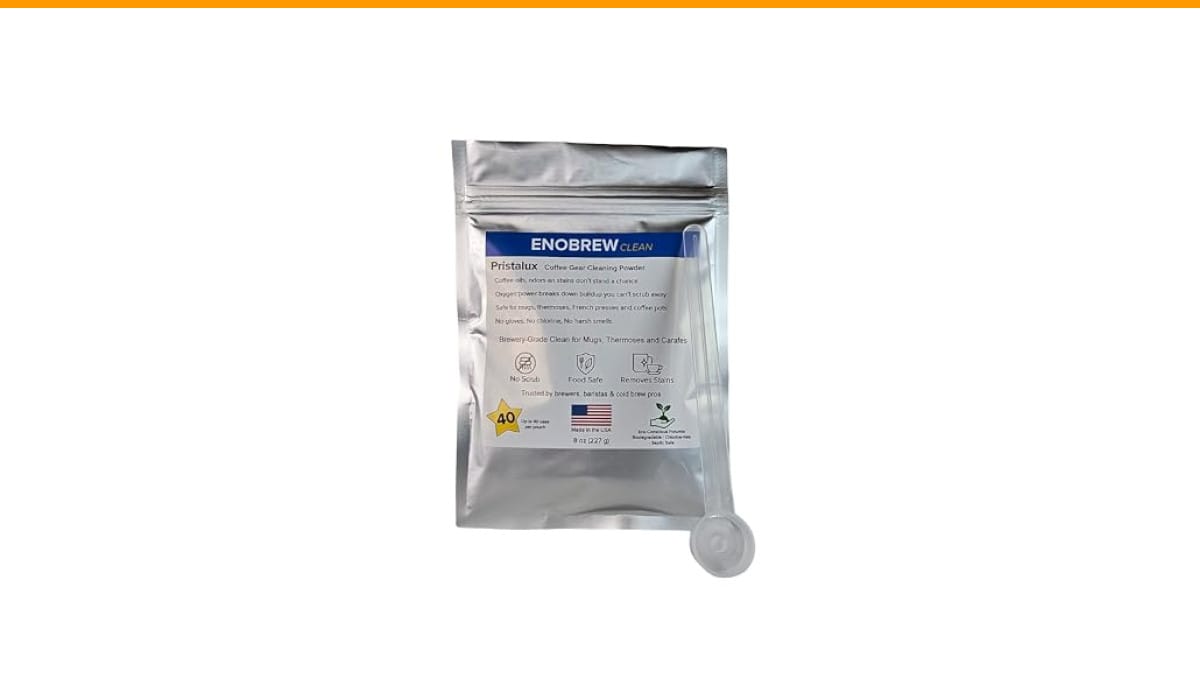
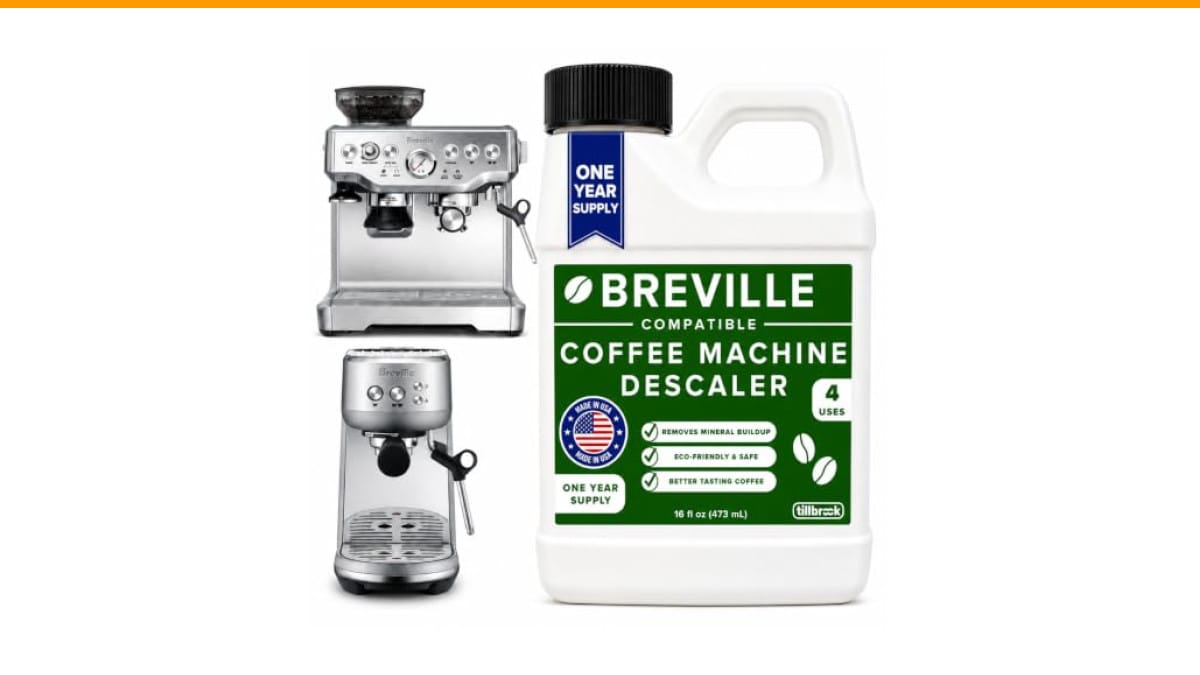
If you’re already dealing with scale buildup, a good descaler is your first line of defense. The Tillbrook Coffee Machine Descaler is formulated for Breville machines but works on most automatic espresso machines. It’s a concentrated solution that removes mineral deposits, oils, and residue. One bottle gives you four cleanings, which is about a year of maintenance if you descale every three months.
The Hidden Cost of Hard Water: More Than Just Bad Taste
Most people think hard water just makes coffee taste off. That’s true, but it’s the least of your problems. The real cost is mechanical failure. Scale doesn’t just sit there. It actively destroys your machine.
Here’s the financial math. A new boiler for a typical automatic espresso machine costs $150 to $400 in parts. Labor adds another $100 to $200. A full replacement machine runs $500 to $2,000. Compare that to a water softener pitcher at $30 or a descaling solution at $15 per use. The prevention is cheap. The cure is not.
Water hardness is measured in grains per gallon (gpg) or parts per million (ppm). The US Geological Survey classifies water above 7 gpg (120 ppm) as hard. Many municipal water supplies in the Midwest and Southwest hit 10 to 20 gpg. If you live in a hard water area and don’t treat your water, your machine is on borrowed time.
What Hard Water Actually Does Inside Your Machine (Step-by-Step)
To understand why scale is so destructive, you need to see the path water takes through your automatic espresso machine. It’s not a single pipe. It’s a series of narrow channels, valves, and heated chambers. Scale forms at every step.
The Boiler: Where Scale Becomes an Insulator
The boiler is the heart of your espresso machine. It heats water to around 200°F. That heat causes calcium bicarbonate to break down and deposit as calcium carbonate—limescale. Over time, a layer of scale builds up on the heating element.
Here’s the kicker: scale is an insulator. It doesn’t conduct heat well. So the heating element has to work harder and hotter to heat the water through the scale layer. The element overheats. It may trip a thermal fuse, or it may burn out completely. Even if it doesn’t fail, the scale reduces efficiency. Your machine uses more energy and takes longer to heat up.
In extreme cases, the scale can completely block the boiler outlet. Then the pump pushes against a closed system, and you get leaks or pressure relief valve discharge. That’s a mess you don’t want on your counter.
The Group Head and Solenoids: The Clogging Points
The group head is where water meets coffee. It’s a complex assembly with tiny passages, a shower screen, and a solenoid valve. The solenoid opens and closes to control water flow. It has a small orifice, often less than 2mm wide. Scale crystals love to collect there.
When the solenoid gets clogged, the machine can’t build proper pressure. Your shots pull slow, or water just drips out. The shower screen gets coated with scale, which affects water distribution. You get channeling, where water finds the path of least resistance through the coffee puck. That means under-extracted, sour shots.
The steam wand is another victim. Milk residue and scale combine to form a sticky paste that clogs the tip. You’ll notice the steam pressure drops, and the wand takes forever to froth milk. I’ve seen wands completely blocked after a year of hard water use.
The Real Damage: Repair Bills vs. Prevention Costs (The ROI)
Let’s put real numbers on this. I’ve talked to espresso machine repair technicians, and the stories are consistent. A typical scale-related repair costs $150 to $350. That includes replacing a heating element, a solenoid valve, or a steam wand assembly. If the boiler itself is cracked or corroded, you’re looking at $400 to $700 for a new boiler plus labor.
Now consider prevention. A basic water softener pitcher costs $20 to $40. Refills are about $10 per month. A descaling solution like the Tillbrook descaler runs about $15 per bottle and lasts a year. That’s roughly $100 per year for complete protection. Over five years, you spend $500 on water treatment. One major repair costs more than that. And you still have to descale regularly even with soft water, because minerals from coffee oils and residue still accumulate.
The return on investment is obvious. Spend $50 to $100 per year on water treatment and descaling. Avoid a $300 repair every two years. Plus, your machine lasts longer. A well-maintained automatic espresso machine should last 8 to 10 years. A scale-damaged machine might die at 3 to 4 years.
Here’s a comparison table to make it clear:
| Water Type | Maintenance Cost/Year | Repair Cost (over 5 years) | Machine Lifespan |
|---|---|---|---|
| Hard water, no treatment | $0 (but you’ll pay later) | $500–$1,000 | 3–4 years |
| Hard water, regular descaling | $60–$100 | $0–$150 | 5–7 years |
| Softened water, regular descaling | $100–$150 | $0 | 8–10 years |
| Reverse osmosis with remineralization | $150–$200 | $0 | 10+ years |
The table assumes you actually follow a maintenance schedule. Most people don’t. That’s why I recommend setting a calendar reminder every three months.
Diagnosing Scale: Is It Too Late for Your Machine?
Before you spend money on a fix, you need to know if your machine is already damaged. Some scale is reversible. Severe scale is not. Here’s how to tell the difference.
Symptoms of Existing Scale Buildup
Watch for these signs:
- Slower extraction time. A shot that used to take 25 seconds now takes 40 seconds and still looks watery.
- Weak steam pressure. The steam wand barely produces enough pressure to froth milk.
- Loud gurgling or hissing from the boiler. Scale can cause hot spots that create steam pockets.
- Water leaks from the bottom of the machine. Often a sign of a blocked outlet or a cracked boiler.
- Error messages on the display. Many modern machines have sensors that detect abnormal temperature or pressure.
- Unusual noises from the pump. It may sound strained or cycle more frequently.
If you notice any of these, your machine has significant scale. Descaling might help, but if the boiler is already cracked or the heating element is burned out, you’ll need professional repair.
How to Check Your Machine’s ‘Health’ Before Buying a Fix
Here’s a quick test you can do at home. Run a blank shot (no coffee) and time how long it takes to fill a small cup. Compare that to when the machine was new. If it takes more than 50% longer, you have scale.
Check the water hardness yourself. You can buy a GH/KH test kit for about $10 at a pet store. It’s used for aquariums, but it works for your espresso machine. Dip a strip, wait, and compare the color. If your general hardness (GH) is above 7 dH (German degrees), you have hard water.
If you’re not sure whether your machine is worth fixing, consider the age. If it’s more than 5 years old and the repair quote is over $200, it’s often cheaper to buy a new machine. That’s a tough call, but it’s a realistic one.
The Water Recipe: A $50 Solution for Perfect Water
You don’t need a fancy water filtration system. You can make your own espresso water with a few grocery store items. Here’s the recipe I use and recommend:
- Buy a gallon of distilled water (about $1).
- Buy a small bottle of Epsom salt (magnesium sulfate) and a box of baking soda (sodium bicarbonate).
- Mix 1/8 teaspoon of Epsom salt and 1/8 teaspoon of baking soda into the gallon of distilled water.
- Shake well. That’s it. You now have water with about 100 ppm TDS, ideal for espresso extraction.
This water has the right mineral content for good flavor and low scale potential. The magnesium helps extract coffee flavors. The bicarbonate buffers the water to a neutral pH. Most importantly, it contains no calcium, so it won’t form scale.
Cost: about $2 per gallon. A gallon lasts a week if you make 2-3 coffees a day. That’s $100 per year. You can cut costs by buying distilled water in bulk at a wholesale store.
One caveat: this water is not ideal for machines that require a certain mineral content for the boiler’s water level sensor. Some machines use conductivity to detect water level. Pure distilled water may not trigger the sensor. If your machine has that issue, add a pinch more Epsom salt to increase conductivity. Test it first.
Why Your Water Report Isn’t Enough (Seasonal Changes)
You might have checked your city’s water quality report and seen a hardness of 5 gpg, which is moderate. That report is an annual average. The actual hardness can swing wildly by season.
In many municipalities, the water source changes between summer and winter. Summer surface water tends to be softer. Winter groundwater is often harder. Also, water treatment plants adjust their processes. A report from January might say 8 gpg. By July, it could be 12 gpg. If you only check once, you’re guessing.
I recommend testing your water every season. Buy a simple test strip kit and test at the start of each season. Record the results. If you see a jump, adjust your water treatment accordingly. For example, you might need to descale more often during the hard months.
The Descaling Myth: Why ‘Just Clean It’ Fails
Some owners think they can just run a descaling cycle and be done. That works if you descale regularly—every 3 months. But if you’ve let scale build up for a year, descaling alone won’t restore your machine.
Here’s why. Descaling solutions dissolve the outer layer of scale. But thick scale can be impermeable. The acid can’t reach the metal surface. You end up with a soft, chalky residue that doesn’t wash away. Worse, if the scale has already caused physical damage—like a cracked heating element—descaling won’t fix that.
Also, many descaling products are not compatible with all machines. Some contain sulfamic acid, which is harsh on aluminum boilers. Others have citric acid, which is gentler but less effective on heavy scale. The Tillbrook descaler uses a concentrated formula that’s safe for most machines, but always check your manual.
My advice: descale regularly, but don’t expect it to be a miracle cure. If your machine is already showing symptoms, descaling might help, but you may still need a professional inspection.
Your Action Plan: A Simple 3-Step Maintenance Routine
Here’s what I do with my own automatic espresso machine. It takes about 10 minutes a month and keeps the machine running like new.
- Test your water every month. Use a test strip. If hardness is above 7 gpg, use the distilled water recipe or a water softener.
- Descale every 3 months. Use a high-quality descaler like the Tillbrook. Follow the instructions: add the concentrate, run the cycle, then rinse twice with clean water.
- Clean the group head and steam wand weekly. Wipe the shower screen with a damp cloth, and purge the steam wand after each use. This prevents oil buildup and milk residue.
If you have a leaking automatic espresso machine, that’s a sign of scale damage or a worn seal. Address it early, or it’ll get worse.
For those considering a new machine, check out our best automatic espresso machine under $1000 guide. It includes models with better water filtration systems.
FAQ: Quick Answers on Hard Water and Your Espresso Machine
How often should I descale my automatic espresso machine?
Every 3 months is the standard recommendation. If you have very hard water (over 10 gpg), do it every 2 months. If you use the distilled water recipe, you can stretch it to 4 months.
Can I use vinegar to descale my espresso machine?
You can, but I don’t recommend it. Vinegar is acetic acid, which is weak and leaves a strong smell. It can also damage rubber seals over time. Use a commercial descaler designed for espresso machines. It’s worth the $10 to $15.
Will a water softener fix my espresso machine’s water?
Yes, a water softener removes calcium and magnesium ions, replacing them with sodium. That prevents scale. But it also adds sodium, which can affect coffee flavor. If you use a softener, test the water to make sure the sodium level isn’t too high. You can mix softened water with distilled water to balance it.
What is the best water for espresso machines?
The Specialty Coffee Association recommends water with 50-100 ppm TDS, pH between 6.5 and 7.5, and no chlorine. The distilled water recipe above hits those numbers. You can also buy pre-made espresso water packets, but they’re more expensive.
How do I know if my machine has scale damage?
Look for slow extraction, weak steam, unusual noises, or leaks. If you can, open the machine and look at the boiler. White or gray crusty deposits are scale. If the heating element has cracks or blisters, it’s damaged beyond descaling.
Bottom Line: Protect Your Investment, Not Just Your Coffee
Hard water is the silent killer of automatic espresso machines. It doesn’t announce itself until the damage is done. But you have control.
- Test your water hardness at least once a season. It costs $10 and takes 30 seconds.
- Use the distilled water recipe or a water softener if your water is above 7 gpg.
- Descale every 3 months with a quality descaler. Set a reminder on your phone.
- Clean the group head and steam wand weekly to prevent oil and milk buildup.
- Watch for symptoms of scale: slow shots, weak steam, leaks, or odd noises.
- If your machine is over 5 years old and needs a major repair, consider replacing it rather than fixing it.
- Protect your investment. A $50 water solution can save you $500 in repairs.
Your espresso machine is a precision tool. Treat its water like you would treat the oil in your car. Change it regularly, and it’ll last. Ignore it, and you’ll be shopping for a new machine sooner than you planned.
If you’re dealing with other issues, like a loud espresso machine or burnt tasting espresso, those can also be related to water quality. Check those guides for more troubleshooting tips.
Products related to this article
Sponsored / affiliate links. As an Amazon Associate I earn from qualifying purchases. I may earn additional commission from eligible campaigns.
 Coffee Espresso Machine Handle Replacement Parts, Cafe Bracket Handle for Lidl Silvercrest CM4621 CM4218 KF5002 KF500S Barista (for 51mm Portafilter Basket - Not included)
 SOLUSTRE Electric USB Coffee Cup Warmer with Temperature Settings Portable Milk and Beverage Heating Coaster for Office Desk Small Lightweight Design Easy to Clean Surface Multi Functional
 Bring It On Cleaner Hard Water Stain Remover for Shower Glass, 32 fl oz