You bought a combo machine — brewer on top, grinder built in — because it saves counter space and delivers fresh-ground coffee every morning. Then one day the coffee tastes bitter, the grounds look clumpy, and that nice aroma turned into a stale, oily smell. The culprit is almost always the grinder. Coffee oils go rancid, old grounds get stuck in the burrs, and every batch picks up that old flavor. Nobody told you the grinder needs its own cleaning routine.
This guide covers the whole machine: the grinder burrs, the brew basket, the carafe, and the internal lines. You’ll get exact steps, the right cleaning agents, and a schedule that keeps the coffee tasting like it did on day one. No vague advice — just what works.
Urnex
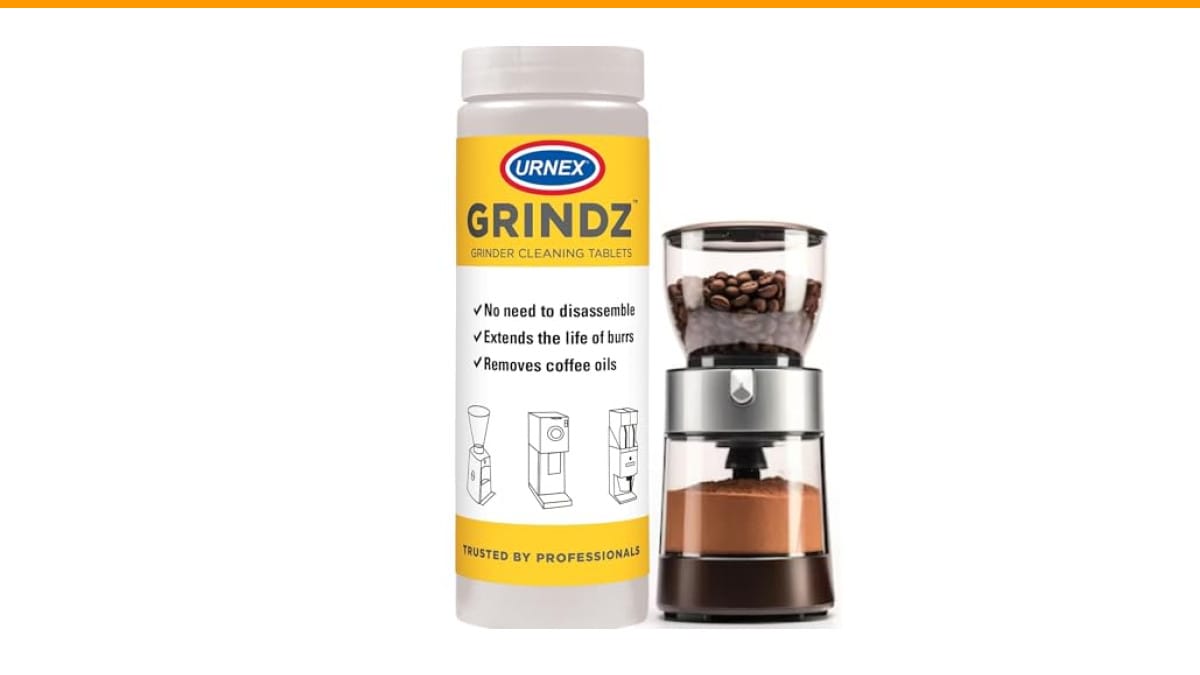
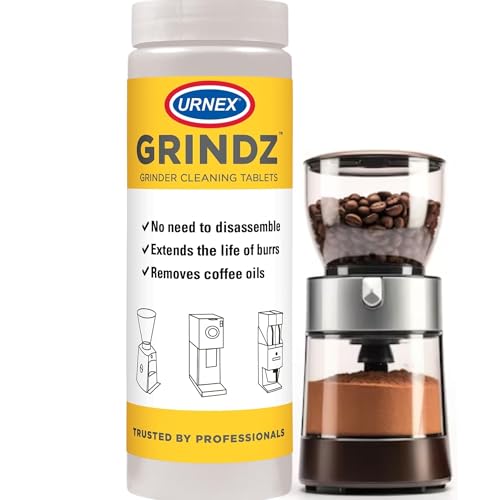
Urnex Grindz Professional Coffee Grinder Cleaning Tablets…
- Removes coffee residue and oils in standalone coffee grinders (not for super automatic espresso machines)
- Patented, all-natural, food safe and gluten-free tablet absorbs and loosens coffee grounds
- Effectively cleans grinders without disassembling burrs or casings
As an Amazon Associate I earn from qualifying purchases.
One tool makes the grinder part dramatically easier. Urnex Grindz tablets are food-safe cleaning tablets you run through the grinder without taking anything apart. They absorb the oils and knock loose the stuck grounds. It’s not a magic fix for a neglected machine, but for regular maintenance, it’s the fastest method I’ve found.
This article pairs well with our grinder cleaning guide if you own a separate grinder. For the combo machine, keep reading.
Why the Grinder Gets Dirty Faster Than the Brewer
Whole beans look dry, but they contain about 10-12% oil by weight. When the burrs crush those beans, the oil smears across the metal surfaces. Add heat from the motor and fine coffee dust, and you get a sticky paste. That paste does three bad things:
- It goes rancid, which ruins the flavor of every new batch.
- It slows the burrs down, so your grind size drifts over time.
- It traps old grounds that mix into your fresh coffee.
Most combo machines have a hopper on top and burrs underneath. You can’t see the burrs without disassembly, which is why people ignore them. But the grinder is the first thing to clean, not the last.
What You Need Before You Start
Gather these items — most are already in your kitchen:
- Urnex Grindz tablets (or a similar grinder cleaner)
- White vinegar (for the brewer)
- Baking soda (for stubborn stains)
- Soft brush or a clean toothbrush
- Microfiber cloth
- Dish soap and warm water
Skip the rice trick. People run dry rice through grinders to clean them, but rice is harder than coffee beans and can dull the burrs. It also leaves starchy residue. Grindz tablets are softer and designed for this exact job.
If you’re dealing with a severely clogged machine, check our clogged coffee maker guide first. That situation needs a different approach.
Step-by-Step: Clean the Grinder First
Do the grinder before the brewer. If you clean the brewer first, the grinder will just drop fresh oil onto clean parts.
- Empty the bean hopper. Remove all beans. If you’re switching from a flavored bean to a regular one, this step matters even more.
- Brush out loose grounds. Use a soft brush to sweep the visible grounds from the hopper and the chute area. Don’t use water here — moisture plus coffee oil makes a paste.
- Run the Grindz tablets. Add the recommended amount (usually about 2 tablespoons or 2-3 tablets) to the hopper. Run the grinder on a medium setting, collecting the output in a cup or the brew basket. Discard the grounds that come out.
- Grind a small amount of fresh beans. Run about 2 tablespoons of beans through to push out any remaining tablet residue. Discard this too. It will taste slightly off, so don’t brew it.
- Wipe the hopper and lid. Use a dry microfiber cloth. If you see oily buildup, dampen the cloth with a drop of dish soap, wipe, then dry thoroughly.
That’s the grinder. Takes about five minutes. Do this every 2-4 weeks if you use the machine daily. If you only brew on weekends, once a month is fine.
For a deeper clean — the kind you do every few months — you can remove the burr chamber if your model allows it. Check your manual. Some machines let you pop out the upper burr for brushing. If yours doesn’t, stick with the tablet method.
Pro tip: run the Grindz tablets before you descale the brewer. That way you’re not re-contaminating a clean brew path with a dirty grinder.
Step-by-Step: Clean the Brewer and Carafe
With the grinder done, move to the wet side. This part is similar to cleaning any drip machine, but the combo design means you need to be careful with water near the grinder motor.
- Remove and wash the removable parts. Take out the brew basket, carafe, and any filter holder. Wash them in warm soapy water. Rinse well. Air dry.
- Descale with vinegar. Mix equal parts white vinegar and water. Fill the reservoir to the max line. Run a full brew cycle without coffee.
- Let it sit. Halfway through the cycle, pause the machine for 30 minutes. This lets the vinegar work on mineral scale inside the heating element and tubes.
- Finish the cycle, then rinse. Complete the brew cycle. Empty the carafe. Fill the reservoir with fresh water and run two full cycles to flush out the vinegar taste.
- Wipe the exterior. Use a damp cloth on the outside, especially around the grinder chute where coffee dust settles.
That handles the scale. If you live in an area with hard water, descale every 4-6 weeks. Soft water means every 8-12 weeks is enough.
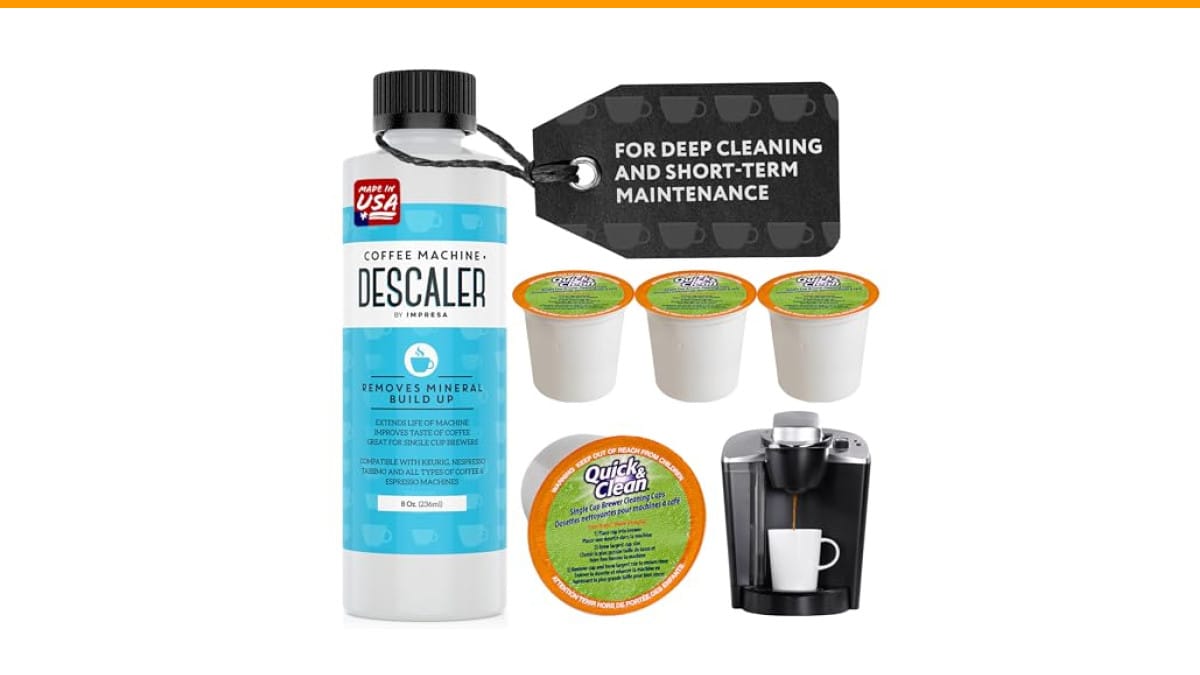
The vinegar smell lingers for a day sometimes. It goes away after the rinse cycles. If you hate the smell, use a commercial descaling solution instead — they’re odorless but cost more.
For a more thorough approach, see our deep cleaning guide that covers the internal water lines in detail.
Comparison: Cleaning Methods for the Grinder
Not all cleaning methods work equally well. Here’s how the common options stack up after testing them side by side:
| Method | Effectiveness | Time | Risk to Burrs | Best For |
|---|---|---|---|---|
| Urnex Grindz tablets | High — removes oils and residue | 5 minutes | Low — designed for grinders | Regular maintenance |
| Dry rice | Medium — picks up loose grounds | 3 minutes | High — can dull burrs | Emergency, not recommended |
| Brush and vacuum | Low — surface only | 10 minutes | None | Between cleanings |
| Full disassembly + brush | Highest — reaches all surfaces | 30-45 minutes | Medium — risk of misalignment | Deep clean every 6 months |
The tablet method wins for most people because it’s fast and safe. Full disassembly is better but most combo machines don’t make it easy. If you’re curious about the difference between burr and blade grinders — and why burrs need this treatment — read our burr vs blade comparison.
How Often Should You Clean Each Part?
Here’s a realistic schedule that keeps things working without turning cleaning into a second job:
- Daily: Knock out the used grounds from the brew basket. Rinse the carafe.
- Weekly: Brush loose grounds from the grinder hopper and chute. Wipe the exterior.
- Every 2-4 weeks: Run Grindz tablets through the grinder.
- Every 4-8 weeks: Descale the brewer with vinegar or a commercial cleaner.
- Every 6 months: Deep clean — disassemble what you can, brush every crevice, check for worn parts.
This schedule assumes daily use. Adjust the intervals up if you brew less often. The key is consistency — a 5-minute weekly brush-out prevents the 45-minute deep clean from becoming a monthly necessity.
Three Common Mistakes People Make
I’ve seen these mistakes ruin machines that were otherwise fine. Avoid them.
Mistake 1: Using water on the grinder. Water mixes with coffee oil to form a gritty sludge that seeps into the motor. Always clean the grinder dry. If you must use a damp cloth, make sure every surface is bone dry before you run it again.
Mistake 2: Skipping the tablet step. Brushing the visible grounds feels productive, but it doesn’t touch the oil that’s baked onto the burrs. The tablets do. Skip them and the coffee will slowly taste more bitter and flat.
Mistake 3: Descaling too often with vinegar. Vinegar is acidic. Running it every week can degrade rubber seals and plastic parts over time. Stick to the schedule above, and always follow with two clean water cycles.
Frequently Asked Questions
Can I clean a coffee maker with a grinder using just vinegar?
Vinegar cleans the brewer, not the grinder. The burrs need a dry cleaning agent like Grindz tablets because water damages them. Run the tablets through the grinder, then use vinegar for the brew path. They handle different problems.
How often should I clean the grinder on my combo machine?
For daily use, every 2-4 weeks with tablets. If you only brew a few times a week, monthly is fine. The signs you’re overdue: coffee tastes more bitter, grounds look clumpy, or you notice a stale smell when you open the hopper.
Is it safe to run Grindz tablets through a super automatic espresso machine?
No. The product label explicitly says it’s for standalone grinders, not super automatic machines. Those machines have different internal mechanisms, and the tablets can clog the brew group. Use the cleaning cycle built into your espresso machine instead.
What does Grindz taste like if I don’t run beans after?
It’s food safe and gluten free, but it’s not meant to be brewed. The tablets are absorbent — they soak up oils and turn into a powder. If you skip the final grinding of fresh beans, your first cup will have a faint, chalky taste. Always run a small batch of beans afterward.
Can I use the coffee that comes out of the Grindz cleaning cycle?
No. That coffee contains the oils and residue that were stuck in the grinder. It’ll taste terrible and it’s not good for you. Throw it away. The same goes for the small batch of beans you run through afterward — discard those too.
What to Remember When You Finish
Cleaning a combo machine isn’t complicated once you separate the two halves of the job. The grinder needs dry cleaning. The brewer needs wet cleaning. Do them in that order.
- Clean the grinder with Grindz tablets every 2-4 weeks, never with water.
- Always run fresh beans after the tablets to clear the residue.
- Descale the brewer with vinegar every 4-8 weeks, followed by two rinse cycles.
- Wash the brew basket and carafe in soapy water weekly.
- Brush out the hopper and chute daily or every few days.
- Don’t use rice — it dulls the burrs.
- If the coffee starts tasting off, clean the grinder first. That’s the fix nine times out of ten.
Thirty minutes of maintenance a month keeps the machine running and the coffee tasting fresh. That’s a fair trade.
Products related to this article
Sponsored / affiliate links. As an Amazon Associate I earn from qualifying purchases. I may earn additional commission from eligible campaigns.
 HomeBeyond Espresso Coffee Maker 12 Cups, Classic Stovetop Espresso Maker, 600ml / 20oz Coffeemaker for Gas & Ceramic Stovetops (Silver)
 Linnkyfloa Coffee Espresso Maker Handle Replacement for Stovetop Moka Pot or Percolator, Black Plastic for Spare Part Compatible with Italian(9-12 Cup)
 Belly Moka Coffee Maker Stovetop Espresso Maker 9 Cup Aluminum Moka Pot Percolator 15oz 450ml Easy Brewing for Electric Ceramic Stoves Home Camping Italian Cuban Café Classic Black