You bought a self heating coffee mug so your last cup stops tasting like lukewarm regret. It worked great for a month. Then you noticed the coffee isn’t staying as hot, and there’s a faint chalky film on the inside. That’s limescale. Every time you heat water, minerals from hard water cling to the heating element and the inner walls. Over time, that buildup acts like insulation—it traps heat instead of passing it to your drink.
This article walks you through the safe way to descale a self heating coffee mug. You’ll learn what cleaning solutions actually work, which ones will void your warranty, and how often you need to do this. I’ll also cover why some popular methods (like boiling vinegar) are a bad idea for electronics.

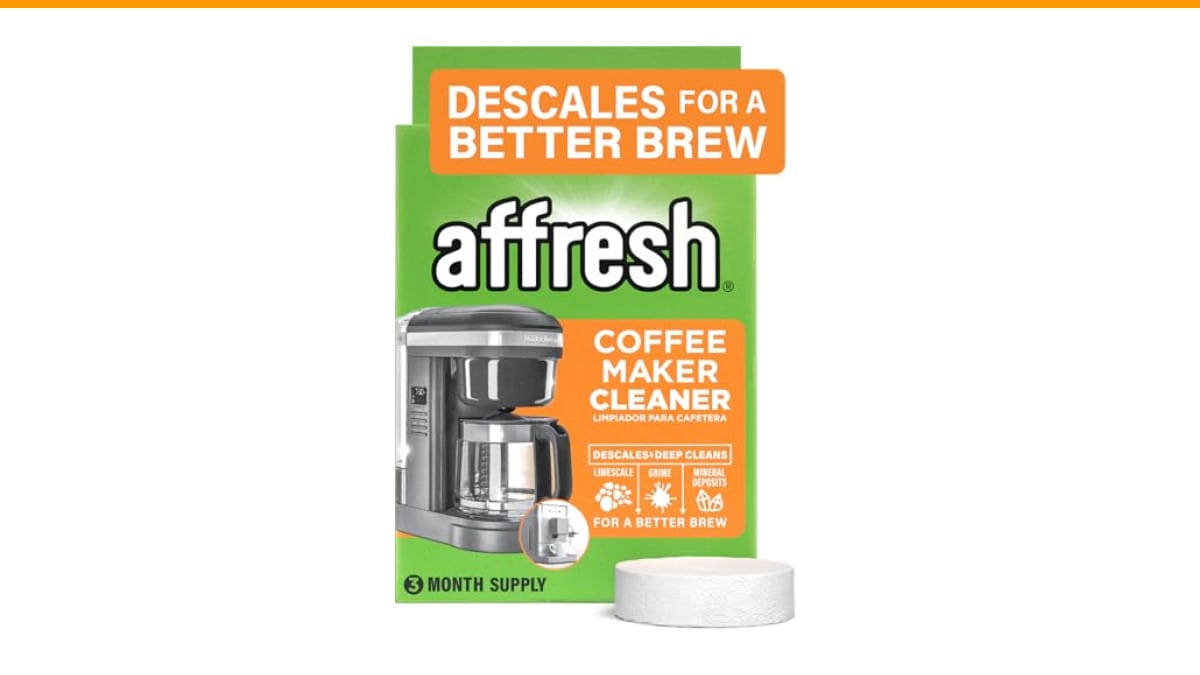
Affresh
Affresh Coffee Maker Cleaner, Unscented, Descales &…
- Descales your coffee maker, fighting hard water deposits and mineral buildup for a better tasting brew
- Deep cleans without the odor of vinegar
- Compatible with multi-cup and single-serve coffee makers
As an Amazon Associate I earn from qualifying purchases.
Here is the short version: you need a mild acid, a soft cloth, and patience. The exact process depends on whether your mug has a removable heating base or a sealed bottom. I’ll cover both.
Affresh Coffee Maker Cleaner, Unscented, Descales & Cleans, 3 Tablets
If you’re already cleaning your drip machine or single-serve brewer, the same tablets work for descaling. They’re unscented, so no vinegar smell lingers in your kitchen. You drop one tablet in the water reservoir and run a cycle. It’s U.S. EPA Safer Choice Certified and fights hard water deposits without the odor. Check the current price on Amazon if you want a no-fuss option for your regular coffee maker.
Why Self Heating Mugs Need Different Care Than Regular Mugs
Standard ceramic mugs can handle boiling water, bleach, and abrasive scrubbers. A self heating mug cannot. The heating element sits either in the base or embedded in the walls. That element is connected to a battery and a microcontroller. If water seeps into those components, the mug dies.
Most manufacturers warn against submerging the mug past a marked line. Some mugs are fully sealed and can go in the dishwasher, but many are not. Check the bottom of your mug for a symbol or text. If it says ‘hand wash only,’ treat the entire mug as water-sensitive.
The heating element itself is the tricky part. Limescale forms directly on the metal surface. You can’t scrub it off without scratching the coating. Scratching creates rough spots where more scale clings. The only safe way to remove it is to dissolve it with a weak acid.
One thing I learned the hard way: do not use a metal spoon to stir the cleaning solution. Use a wooden or silicone stirrer. A metal spoon can scratch the inner coating, and those scratches become permanent coffee stains.
What Solution Should You Use?
You have three practical options. Each has trade-offs.
White vinegar (diluted) is the cheapest and most accessible. Mix one part white vinegar with two parts water. This concentration is strong enough to dissolve calcium carbonate but weak enough to avoid damaging seals. Do not use full-strength vinegar. It can degrade rubber gaskets and plastic components over time.
Citric acid powder is my personal preference. You can buy a small bag for a few dollars. Dissolve one tablespoon in one cup of warm water. Citric acid works faster than vinegar and leaves no smell. It’s also gentler on the plastic parts of the mug. The trade-off is that you have to measure and mix it yourself.
Commercial descaling tablets (like the Affresh tablets mentioned above) are the most convenient. They are formulated to be safe for coffee equipment and often include anti-corrosion agents. The downside is cost per use. For a single mug, a tablet is overkill—you only need a fraction of the solution.
| Method | Concentration | Time Needed | Best For | Watch Out For |
|---|---|---|---|---|
| White vinegar | 1 part vinegar: 2 parts water | 20-30 minutes | Light to moderate buildup | Vinegar smell; can damage rubber seals if overused |
| Citric acid powder | 1 tbsp per 1 cup warm water | 10-15 minutes | Heavy buildup; no smell | Must rinse thoroughly to avoid sour taste |
| Commercial tablets | Follow packet instructions | 15-20 minutes | Regular maintenance | Cost per use; some tablets foam a lot |
My rule of thumb: start with vinegar if you’re on a budget. Switch to citric acid if you have hard water and need to descale monthly. Use tablets if you also own a drip coffee maker and want one product for everything.
Never use baking soda. It’s a base, not an acid. It won’t dissolve limescale—it just sits there. You’ll end up scrubbing anyway, and that’s when you damage the coating.
Step-by-Step: Descaling a Mug with a Removable Base
This is the easier scenario. If your mug’s heating base detaches from the cup (common in travel mugs), you can clean the cup more aggressively. Here’s the process.
- Unplug the mug and remove the base. Set the base aside—do not get it wet.
- Fill the cup with your chosen descaling solution. Leave about half an inch of space at the top to prevent overflow.
- Let it sit. For vinegar, wait 20 minutes. For citric acid, 10 minutes is usually enough. You’ll see small bubbles forming if there’s scale.
- After soaking, pour the solution down the drain. Do not drink it.
- Rinse the cup thoroughly with warm water. Fill and empty it three times to ensure no acid residue remains.
- Use a soft sponge or cloth to wipe the interior. If you see white flecks, that’s loosened scale—wipe them away gently.
- Dry the cup completely with a towel. Reattach the base only when both the cup and the base contacts are dry.
One detail people skip: wipe the metal contact points on the base with a dry cloth. If those get corroded, the mug won’t charge or heat properly. A dry cotton swab works well for the small crevices.
Step-by-Step: Descaling a Mug with a Sealed Bottom
Sealed-bottom mugs (where the electronics are built into the base and cannot be removed) need more care. The risk is water intrusion through the top opening.
- Unplug the mug and let it cool to room temperature. Never descale a hot mug—thermal shock can crack the inner lining.
- Fill the mug with solution, but only fill it to the halfway mark. This reduces the chance of splashing into the electronics if you accidentally tip it.
- Let it soak for 10 minutes. Do not stir aggressively. Gentle swirling is fine.
- Pour out the solution. Rinse with warm water by filling and emptying the mug four times. Tilt the mug slowly when pouring to avoid splashing.
- Dry the inside with a lint-free cloth. Then turn the mug upside down on a towel and let it air dry for at least two hours before using it again.
- Wipe the exterior with a damp cloth, not a running faucet. Pay attention to the seam where the base meets the cup.
If your mug has a non-stick interior, skip the soaking entirely and just wipe it with a vinegar-dampened cloth. Non-stick surfaces don’t hold scale as aggressively, and prolonged acid exposure can degrade the coating over time.
The trickiest part is the lid. Most self heating mugs have a sealed lid with a drinking spout. Limescale can build up in the spout. You can’t soak the lid if it has electronics. Instead, dip a cotton swab in your vinegar solution and wipe the spout inside and out. Rinse with a wet cloth.
I’ve tested mugs where the lid is not sealed. If your lid comes apart, soak the plastic parts in the solution for 10 minutes, then rinse. Just check the manufacturer’s manual first—some lids have a silicone gasket that vinegar can stiffen.
How Often Should You Descale?
It depends on your water hardness. If you live in an area with hard water (more than 120 ppm calcium carbonate), you’ll see scale within three to four weeks of daily use. If you have soft water, you might go two months.
A simple test: fill the mug with tap water and let it sit for an hour. Pour it out and look at the inside. If you see a white ring or cloudy spots, it’s time to descale.
Another sign is performance. If your coffee isn’t staying hot as long as it used to, scale is likely insulating the heating element. The mug isn’t failing—it’s just working harder to push heat through a mineral barrier.
For daily users, I recommend a quick descale every three weeks with citric acid. For occasional users (once a week or less), monthly is fine. Don’t wait for visible scale. By the time you see it, the heating efficiency has already dropped.
If you want to reduce the frequency, use filtered water. A basic Brita filter removes most of the calcium and magnesium that cause scale. That alone can double the time between descaling sessions.
What Not to Do
I’ve seen a few bad suggestions online. Let’s clear them up.
Do not boil vinegar in the mug. The heat accelerates the acid’s reaction with the rubber seals and plastic vents. It can also warp the battery housing if your mug has a built-in battery. Cold or lukewarm solution works fine—you don’t need heat to dissolve limescale, just time.
Do not use a dishwasher. Even if the mug says dishwasher safe, the detergent is alkaline and can corrode the heating element’s coating. Hand washing is safer.
Do not scrub with steel wool or a stiff brush. The inner surface of most self heating mugs has a ceramic or non-stick coating. Scratches trap coffee oils and scale, making future cleaning harder.
Do not leave the solution in for more than 30 minutes. Acid will eventually eat into the aluminum or copper components if the coating has any micro-cracks. 20 minutes is the maximum I recommend.
One more thing: if your mug stops heating entirely after descaling, you likely got water into the electronics. Let it dry for 48 hours in a warm, dry place before testing again. Rice works in a pinch, but a longer air dry is more reliable.
Comparing Fresh vs. Descaling Frequency
Here’s a quick reference for how often you should be cleaning versus descaling. Regular cleaning removes coffee oils and residue. Descaling removes mineral buildup. They are different tasks.
| Task | Frequency | What It Removes | Solution |
|---|---|---|---|
| Daily rinse | After each use | Loose coffee residue | Warm water only |
| Deep clean | Weekly | Coffee oils, stains | Dish soap + soft sponge |
| Descale | Every 3-4 weeks | Limescale, mineral deposits | Citric acid or vinegar solution |
| Deep descale | Every 3 months | Heavy buildup, clogged spout | Soak in citric acid for 20 minutes |
Notice the difference between weekly deep cleaning and descaling. Soap does nothing for limescale. Acid does nothing for coffee oils. You need both in your routine.
If you’re curious about how this compares to cleaning your main coffee machine, the same principles apply—just with larger volumes. For a full guide on that process, check out our coffee machine descaling guide.
Extending the Life of Your Mug
Descaling is part of maintenance, but it’s not the whole story. Here are a few habits that keep your mug working for years instead of months.
- Always empty the mug after use. Don’t let coffee sit overnight—it accelerates both scale and odor buildup.
- Store the mug upright with the lid off. This allows moisture to evaporate instead of pooling at the bottom.
- Use filtered water for both brewing and cleaning. Hard water is the number one killer of heating elements.
- Charge the base regularly. A fully drained battery can develop a memory effect in some models, reducing long-term capacity.
- Wipe the exterior with a damp cloth weekly. Fingerprints and splatters can corrode the finish over time.
If you notice rust or discoloration on the heating element after descaling, stop using the mug. That’s a sign the protective coating has worn through. It’s cheaper to replace the mug than to risk a short circuit.
For general upkeep of your larger coffee equipment, our coffee maker cleaning routine covers the maintenance schedule for drip machines and single-serve brewers.
Frequently Asked Questions
Can I use lemon juice instead of vinegar or citric acid?
Yes, but it’s messier. Lemon juice contains citric acid naturally, but it also has sugars and pulp. Those leave a sticky residue that requires extra rinsing. If you’re out of everything else, squeeze half a lemon into a cup of water and use that. Just rinse thoroughly afterward.
Will descaling damage the battery in my self heating mug?
Only if the solution reaches the battery compartment. If your mug has a removable base, keep the base completely dry. If the battery is sealed inside the mug, do not fill the mug past the halfway mark and avoid tilting it. The acid itself doesn’t damage batteries—water does.
Why does my coffee taste metallic after descaling?
That’s usually leftover acid residue. You didn’t rinse enough. Fill the mug with warm water and let it sit for 5 minutes, then dump it. Repeat twice. If the taste persists, wipe the interior with a cloth dipped in plain water. It should clear up after one or two uses.
How do I know if my mug needs descaling or if it’s just broken?
If the mug heats unevenly (hot on one side, cold on the other), that’s scale. If it doesn’t heat at all, that’s an electrical problem. Try descaling first—it’s cheaper than a replacement. If the issue persists after a thorough descale and dry-out, the heating element is likely dead.
Can I use the same descaling solution for my espresso machine?
You can use the same citric acid or vinegar solution, but the concentration matters. Espresso machines have more internal tubing and brass components. They need a slightly stronger mix and a longer flush cycle. For a dedicated approach, read our guide on removing limescale from coffee machines.
What I Recommend You Do This Weekend
Grab your mug and check the inside. If you see any white film or if your coffee isn’t staying hot for the full promised time, descale it today. Use the citric acid method—it’s fast, odorless, and safe for the electronics.
Here are the points that matter most:
- Use one part vinegar to two parts water, or one tablespoon citric acid per cup of water.
- Soak for 10-20 minutes max. No boiling, no scrubbing.
- Rinse at least three times to remove all acid residue.
- Never submerge the base or let water near the battery compartment.
- Descale every 3-4 weeks if you use the mug daily.
- Use filtered water to cut down on scale buildup in the first place.
- If the mug stops heating after cleaning, dry it for 48 hours before giving up on it.
Taking care of a self heating mug is a five-minute job every few weeks. It’s the difference between a gadget that lasts two years and one that dies in six months. The process isn’t hard—you just have to do it before you notice a problem.
Products related to this article
Sponsored / affiliate links. As an Amazon Associate I earn from qualifying purchases. I may earn additional commission from eligible campaigns.