You pour your morning coffee, screw on the lid, and forget about it. Three hours later you take a sip and the coffee is still hot. That’s the magic of an insulated mug. But after a few weeks of daily use, you notice a brown ring inside the lid and a faint sour smell coming from the mouthpiece. The insulation still works, but the mug doesn’t feel clean.
Most people treat insulated mugs like regular cups. They rinse them with water and call it done. That’s a mistake. The double-wall design that keeps your coffee hot also creates a hidden zone where oils and residue can linger. This guide walks through the exact steps to keep your mug fresh, odor-free, and working like new. You’ll learn the daily routine, the weekly deep clean, how to handle stubborn stains, and what not to do.
Enobrew
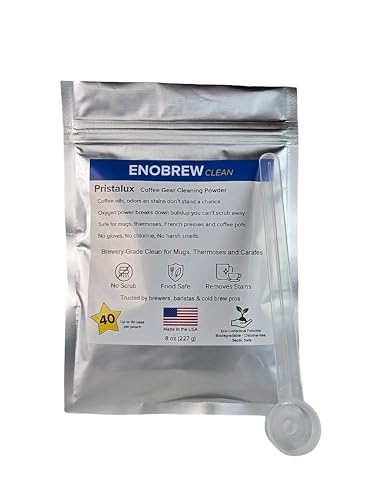
Enobrew Pristalux Coffee Gear Cleaner Powder –…
- Deep Clean Without Scrubbing Eliminates stubborn brown stains and oily film inside coffee mugs, insulated tumblers and carafes—jus…
- Removes Coffee Oils & Odors Breaks down residue that ruins flavor. Your mug smells fresh, tastes clean, and looks brand new again.
- Safe for Stainless & Coffee Gear Non-abrasive and chlorine-free—formulated for stainless steel, French press, moka pots, drip cara…
As an Amazon Associate I earn from qualifying purchases.
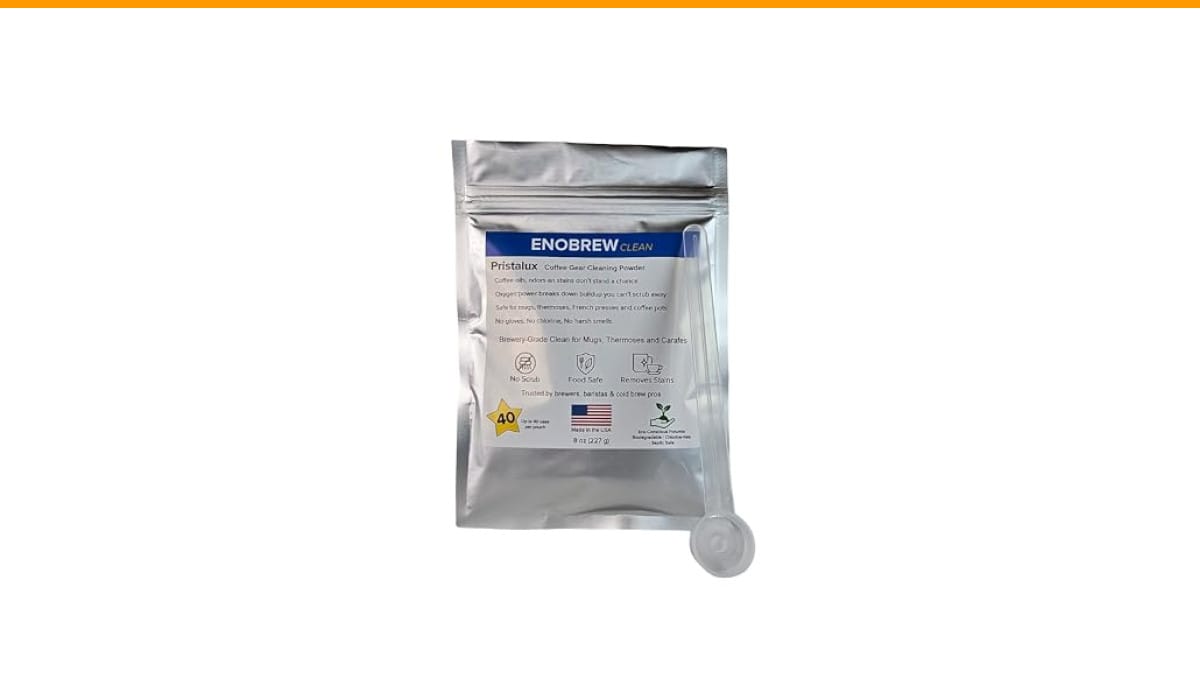
One tool that helps with the deep-cleaning part is the Enobrew Pristalux Coffee Gear Cleaner Powder. It’s a no-scrub overnight soak designed for stainless steel mugs and tumblers. We’ll cover how it fits into a proper maintenance routine later in this guide.
Why Insulated Mugs Need Different Care Than Regular Cups
Insulated mugs have two layers of steel with a vacuum or air gap between them. That gap is what stops heat from escaping. But it also means you can’t just throw the mug in the dishwasher and expect everything to come out clean. The interior is a narrow, deep cylinder. Your hand doesn’t fit inside, and a sponge barely reaches the bottom.
Here’s what actually happens inside a used mug. Coffee oils cling to the steel surface. These oils polymerize over time, forming a sticky film that traps bacteria and odors. The lid is worse. It has grooves, gaskets, and a sliding mechanism that collects residue in every crevice. If you’ve ever smelled a mug that was left closed with coffee in it for two days, you know exactly what we’re talking about.
Regular dish soap and water removes the surface dirt but leaves the oil film behind. That film is why your mug starts to taste slightly bitter even with fresh coffee. The solution is a two-part approach: daily maintenance to prevent buildup, and weekly deep cleaning to remove what does accumulate.
Daily Maintenance: The 60-Second Routine
Doing this every day takes less than a minute and prevents 90% of the problems. Start by emptying any leftover coffee immediately after you finish drinking. Don’t let it sit for hours. Stale coffee is acidic and accelerates the breakdown of the rubber gasket in the lid.
Follow these steps every day:
- Rinse with hot water. Fill the mug halfway with hot tap water, put the lid on, and shake it for ten seconds. Dump it out. This dislodges loose oils before they dry onto the steel.
- Wash the lid by hand. Pop the gasket out of the lid and wash both pieces with mild dish soap and warm water. The gasket is where odors hide. If you skip this, you’re leaving the dirtiest part of the mug untouched.
- Air dry with the lid off. Leave the mug upside down on a drying rack and keep the lid separate. Trapped moisture inside a closed mug is a breeding ground for mold.
Pro tip: keep a dedicated bottle brush near your sink. A standard sponge can’t reach the bottom of a tall tumbler, and a brush with stiff bristles does a better job on the steel walls. Use it with the soapy water in step one if you have visible residue.
Weekly Deep Clean: Removing Coffee Oils and Odors
Once a week, the daily rinse isn’t enough. Coffee oils have built up on the steel surface, and you’ll notice a dull film or a faint smell even after washing. This is when you need a proper soak.
The most reliable method we’ve tested is an overnight soak with a dedicated cleaner. The Enobrew Pristalux cleaner is designed for this exact job. You dissolve a scoop in warm water, fill the mug, and let it sit overnight. The powder breaks down the coffee oils without any scrubbing. In the morning, you rinse it out and the mug looks brand new inside.
Here’s the step-by-step for a weekly deep clean:
- Disassemble everything. Remove the gasket from the lid, take the slider apart if your lid has one, and remove any other removable parts.
- Prepare the soak solution. Fill your mug with warm water and add the recommended amount of cleaner powder. For the Pristalux, one scoop is enough for a standard 16-20 oz mug. Stir to dissolve.
- Soak the lid parts too. Put the gasket and lid pieces in a small bowl with the same cleaning solution. They need the same treatment as the mug body.
- Wait overnight. Let it sit for at least 6-8 hours. The longer it soaks, the more residue it lifts. If your mug is heavily stained, a full 12 hours works better.
- Rinse thoroughly. Empty the solution, rinse the mug with hot water, and wash the lid parts with soap and water to remove any remaining cleaner residue.
- Dry completely. Air dry everything with the lid off.
This routine takes about five minutes of active time. The soak does the hard work while you sleep. We’ve used this method on mugs that had brown stains that wouldn’t budge with scrubbing, and the overnight soak lifted them completely.
Dealing With Stubborn Stains and Limescale
Sometimes a weekly soak isn’t enough. Hard water leaves white limescale deposits on the interior, especially if you live in an area with mineral-heavy tap water. Coffee stains that have been baking on for months might need a second treatment.
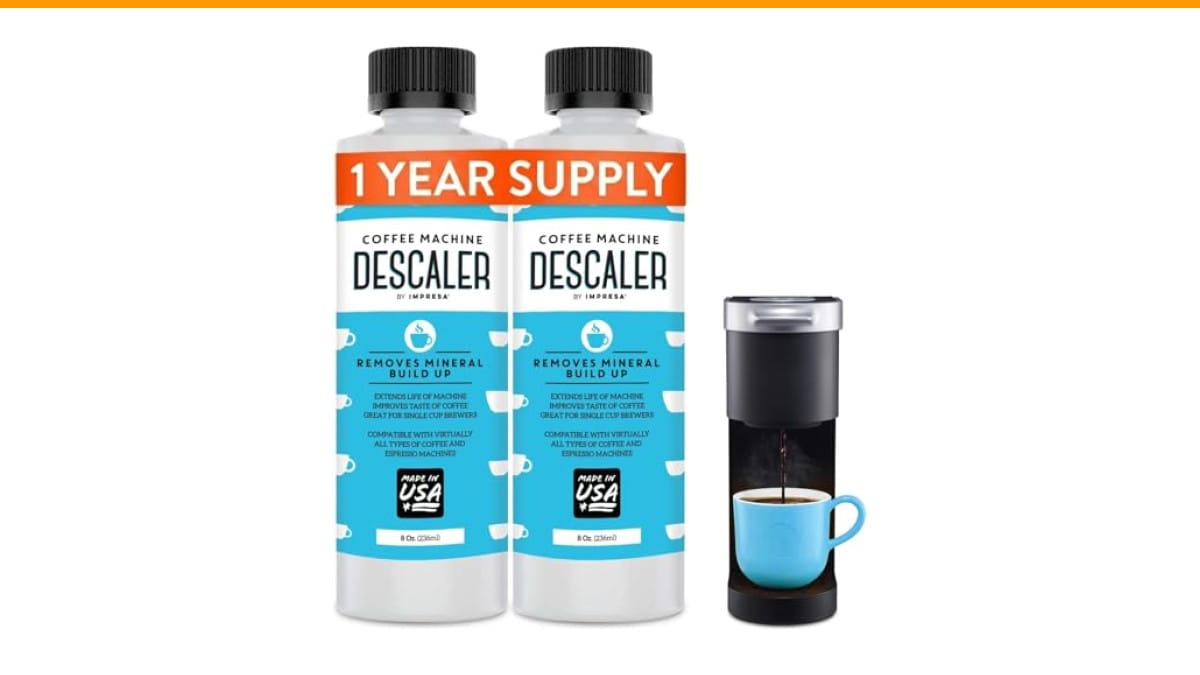
For limescale, use a descaling solution. White vinegar diluted 50/50 with water works in a pinch, but it leaves a smell that can linger in the porous gasket. A dedicated descaler is more effective and doesn’t leave a taste. Soak for 30 minutes, then rinse thoroughly. You can find detailed steps in our descaling guide — the same principles apply to your mug.
For coffee stains that resist the first overnight soak, run a second cycle. Don’t scrub with abrasive pads. Steel wool or a scouring pad will scratch the interior surface, and those scratches become tiny traps for future residue. The scratches also make the mug harder to clean going forward because oils cling to the rough surface.
One thing to avoid: bleach. Chlorine-based cleaners can damage the stainless steel finish and leave a chemical smell that’s nearly impossible to remove. The Pristalux powder is chlorine-free, which is one reason it’s safe for regular use on coffee gear.
Comparing Cleaning Methods
There are several approaches to cleaning an insulated mug, and they’re not all equal. Here’s how the common methods stack up in our testing.
| Method | Time Required | Effectiveness on Oils | Risk to Mug | Residual Taste |
|---|---|---|---|---|
| Dishwasher | 1-2 hours | Low — doesn’t reach all surfaces | High — heat can warp gaskets | Possible detergent smell |
| Hand wash with dish soap | 5 minutes | Medium — removes surface dirt only | Low | None if rinsed well |
| Baking soda paste | 15 minutes | Medium — abrasive action helps | Medium — can scratch steel | None |
| Vinegar soak | 30 minutes | Medium — good for limescale | Low | Strong vinegar smell persists |
| Dedicated cleaner (Pristalux) | Overnight soak | High — breaks down oil film | Low — non-abrasive | None |
The dishwasher is the worst option for insulated mugs. The high heat can damage the vacuum seal in some cheaper models, and the detergent doesn’t reach the bottom of a tall tumbler anyway. We’ve seen mugs come out of the dishwasher with the gasket warped and the lid no longer sealing properly.
Lid Care and Gasket Replacement
The lid is the weakest point of any insulated mug. The sliding mechanism has small moving parts that collect coffee residue. The gasket, usually made of silicone or rubber, absorbs odors and can stain permanently.
You should remove the gasket every time you wash the lid. Most lids have a small notch where you can pry the gasket out. It pops back in with a little pressure. If you don’t remove it, you’re washing around the dirt, not washing the dirt itself.
Check the gasket every few months for signs of wear. If it’s cracked, stretched, or no longer fits snugly, replace it. A worn gasket means the lid leaks, and leaks mean your coffee spills in your bag. Many manufacturers sell replacement gaskets separately, which is cheaper than buying a whole new lid.
Common Mistakes to Avoid
After testing dozens of mugs and talking to owners, these three mistakes come up repeatedly.
Mistake 1: Leaving coffee in the mug overnight. This is the single biggest contributor to permanent stains. Coffee is acidic, and the longer it sits, the more it etches into the steel. Even with a good weekly clean, a mug that’s been left with coffee overnight dozens of times will develop a brown tint that never fully comes out.
Mistake 2: Putting the lid in the dishwasher. The dishwasher detergent is harsh, and the heat distorts the gasket. After a few cycles, the lid doesn’t seal properly and you’ll have a leaky mug. Hand wash the lid, always.
Mistake 3: Using abrasive cleaners. A scouring pad or a metal sponge will scratch the interior. Those scratches become permanent collection points for coffee oils, making the mug harder to clean every time. Stick to non-abrasive methods and let the soak do the work.
Frequently Asked Questions
How often should I deep clean my insulated mug?
Once a week is the sweet spot for daily coffee drinkers. If you only use your mug a couple times a week, every two weeks works fine. The sign that you’re waiting too long is a sour smell from the lid or a visible film on the interior after washing.
Can I put my insulated mug in the dishwasher?
Technically, some mugs are labeled dishwasher safe. In practice, we don’t recommend it. The dishwasher doesn’t clean the interior of a tall tumbler effectively, and the heat can damage the gasket over time. Hand washing takes two minutes and keeps the mug in better condition.
Why does my coffee taste different after a few weeks of using the same mug?
That’s the polymerized coffee oil film we talked about. It builds up on the steel and imparts a bitter, stale flavor to fresh coffee. A proper overnight soak with a cleaner that targets coffee oils will fix it. This is the same reason you need to descale your coffee maker regularly — the oils affect the taste.
Is baking soda safe to use on my stainless steel mug?
Baking soda is mildly abrasive, so it’s safer than steel wool but not completely risk-free. It works in a pinch for spot cleaning, but it won’t break down the oil film as effectively as a dedicated cleaner. If you use it, make a paste with water and rub gently with a soft cloth. Rinse thoroughly.
How do I get the musty smell out of my mug lid?
The smell is usually trapped in the gasket. Soak the gasket and lid pieces in a cleaning solution overnight, just like the mug body. If the smell persists after a soak, the gasket has absorbed the odor permanently and needs replacement. Gaskets are cheap — replace it rather than drinking coffee that tastes like mildew.
What Actually Matters for Long-Term Care
- Rinse your mug with hot water immediately after each use — 60 seconds prevents 90% of buildup.
- Remove the gasket from the lid every time you wash it. This is non-negotiable.
- Deep clean once a week with an overnight soak. A dedicated cleaner like the Enobrew Pristalux is the easiest way to handle this.
- Never use abrasive scrubbers on the interior. Scratches trap oils and make future cleaning harder.
- Keep the dishwasher away from your insulated mug, especially the lid.
- Replace the gasket when it shows signs of wear — a leaking lid defeats the purpose of insulation.
- Dry everything completely with the lid off before storing. Moisture is the enemy.
Your insulated mug should last for years if you treat it right. The insulation doesn’t wear out — the buildup and the degraded gasket make it seem like it has. A few minutes of daily care and a weekly soak are all it takes. If you’re also dealing with a dirty coffee machine at home, the same principles apply. Check our guide on coffee machine maintenance to keep your whole setup in good shape.
Products related to this article
Sponsored / affiliate links. As an Amazon Associate I earn from qualifying purchases. I may earn additional commission from eligible campaigns.
 VOBAGA Mug Warmer & Coffee Mug Warmer with 4 Hours Auto Shut-Off, Coffee Warmer Plate for Office Home Desk Use with 3 Temperature Settings, Cup Warmer for Cocoa, Tea, Milk, Water, Coffee Gifts(No Cup)
 VOBAGA Coffee Mug Warmer with 15oz Mug Set, Electric Coffee Cup Warmer
 House Gem Coffee Mug Warmer for Desk, Candle Warmer Plate, 12H Timer, Wood