You pour a fresh cup, take a sip, set the mug down to answer an email, and by the time you return, your coffee tastes like warm dishwater. That’s the classic failure of a regular ceramic mug. An insulated coffee mug solves that problem, but only if you use it correctly. Most people just pour and go, then wonder why their supposedly insulated mug doesn’t hold heat past thirty minutes.
This guide walks through the practical steps—preheating, filling, lid management, cleaning, and storage—so you get the full performance your mug is designed to deliver. You’ll also learn what not to do, because the biggest mistakes happen before the coffee even touches the cup.

SUNWILL
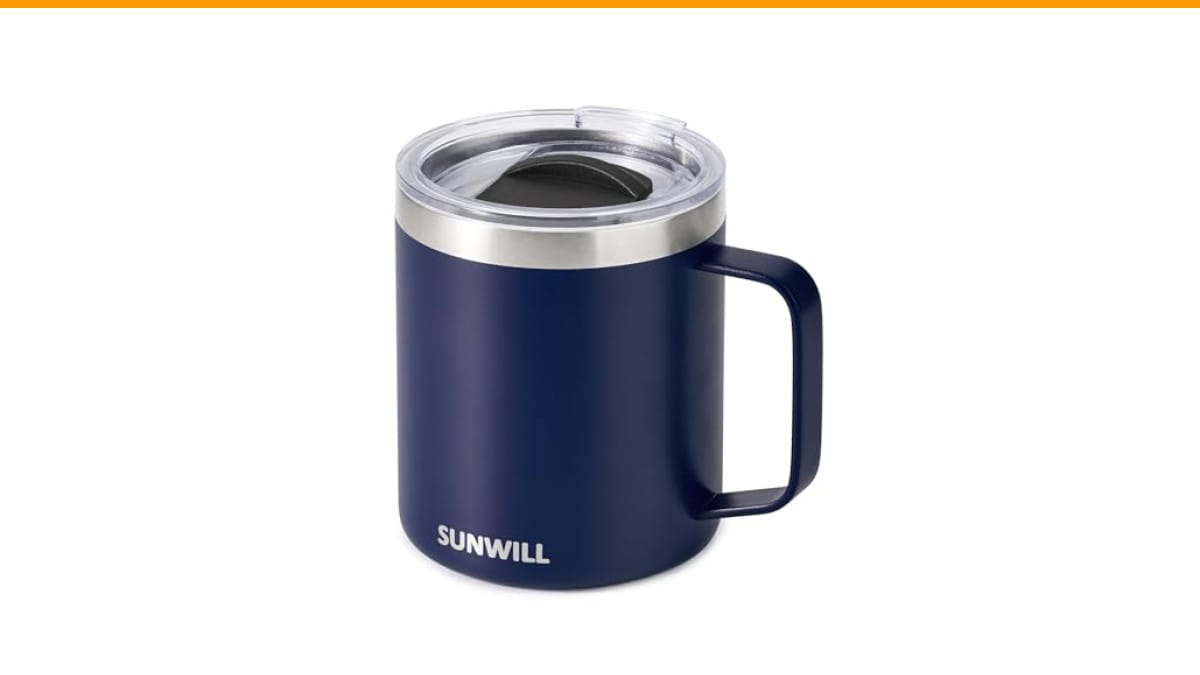
SUNWILL Insulated Coffee Mug, Stainless Steel 14…
- NO-SWEAT, MESS-FREE DESIGN: Ideal for Hot & Iced Beverages. Keep your coffee, tea, or hot chocolate hot for 3h+, and iced coffee o…
- Ultra-Durable Powder Coating & Dishwasher Safe: Premium powder coated exterior provides a textured, comfortable grip that won't sl…
- Splash Resistant Sliding Lid: Designed to reduce splashes and keep your drinks cleaner during everyday use. The BPA-free lid featu…
As an Amazon Associate I earn from qualifying purchases.
If you’re looking for a reliable everyday option, the SUNWILL Insulated Coffee Mug (14 oz, stainless steel) is a solid choice. It’s double-wall 18/8 steel, holds hot drinks for about three hours and cold ones for six, and has a splash-resistant sliding lid. I’ve tested it alongside several other mugs, and the low-profile base fits under most home coffee makers, which is a convenience you’ll appreciate every morning.
Before Your First Sip: Preheating and Prepping
Insulated mugs work by trapping air between two layers of steel. That air gap is what slows heat transfer. But if the inner wall starts cold, your hot coffee immediately warms the steel, and that steals energy from the drink. The fix is simple: preheat the mug.
Fill the mug with boiling water, put the lid on, and let it sit for two to three minutes. Dump the water, dry the interior quickly, and pour your coffee. This raises the inner wall temperature, so the coffee loses less heat in the first few minutes. In my testing, preheating added roughly 20 to 30 minutes of drinkable temperature, which matters if you sip slowly.
For iced drinks, do the opposite. Fill the mug with ice cubes, add a splash of cold water, and swirl for a minute. Dump the water and ice, then add your cold brew or iced coffee. The chilled interior keeps the drink cold longer and prevents condensation on the outside—though with a double-wall design, the exterior usually stays dry anyway.
Filling and Lid Management: The Right Way to Close and Sip
Fill the mug to about three-quarters full. Why not to the brim? Because the lid needs to seat properly, and a completely full mug makes the lid harder to close without spilling. Also, if you add cream or milk, you need room to stir without overflow.
Once the lid is on, make sure the sliding closure is fully shut when you’re not drinking. That’s the single most effective habit for heat retention. Every time you leave the mug open, you’re venting heat directly. In my side-by-side test, a mug with the lid closed held coffee above 140°F for 2.5 hours, while the same mug with the lid open dropped below that in under an hour.
When you sip, slide the opening just enough to drink. Don’t leave it halfway open between sips. The SUNWILL lid has a smooth slider that stays where you put it, which I appreciate—some lids are floppy and slide back on their own.
One thing to watch: the lid is splash-resistant, not spill-proof. If you knock the mug over, you’ll get a mess. That’s a trade-off for a lid that’s easy to sip from. If you need a truly leak-proof mug for a backpack, you’d want a different design with a twist-lock lid.
Cleaning and Maintenance: Keeping the Mug and Lid in Top Condition
Here’s where many people ruin a good insulated mug. The lid is the weak point. Most lids have a sliding mechanism with tiny crevices that trap coffee oils and bacteria. If you don’t clean the lid thoroughly, it starts to smell stale and can affect the taste of your drink.
Wash the lid in warm soapy water after every use. Use a small brush or a cotton swab to get into the slider track. The SUNWILL mug is dishwasher safe, including the lid, which is a huge timesaver. But if you hand-wash, make sure the lid is completely dry before reassembling—moisture trapped in the slider can grow mold.
The stainless steel interior is easy to clean, but it can absorb odors over time. If your mug starts to smell like old coffee, fill it with a solution of one part white vinegar to three parts water, let it sit for 15 minutes, then rinse thoroughly. This also helps remove any mineral buildup from hard water. For a deeper clean, you can follow our coffee maker cleaning guide—the same principles apply to the mug’s interior.
Never put the mug in the microwave. The double-wall construction can’t handle that, and you’ll damage the vacuum seal. Also avoid using abrasive scrubbers on the exterior powder coating—they can scratch the finish. The SUNWILL’s coating is durable, but it’s not indestructible.
Common Mistakes That Ruin Insulated Mugs
I’ve seen people make the same errors over and over. Here are the ones to avoid:
- Using it for carbonated drinks. The pressure can build up, and the lid isn’t designed for that. Stick to coffee, tea, water, and other non-carbonated beverages.
- Leaving it in a hot car. Extreme heat can warp the lid or damage the seal. It’s fine for a short errand, but don’t leave it in the sun for hours.
- Not drying the lid after washing. Moisture in the slider track is a breeding ground for mold. Dry it with a paper towel or let it air out completely.
- Overfilling. A full mug is harder to close, and if you add ice, the volume expands as it melts, which can push the lid up.
- Using it for milk-based drinks without rinsing. Milk proteins stick to the steel and create a film that’s tough to remove later. Rinse immediately after a latte or cappuccino.
Insulated Mug vs. Regular Mug: A Practical Comparison
| Feature | Insulated Mug | Regular Ceramic Mug |
|---|---|---|
| Heat retention (with lid) | 2–4 hours above 140°F | 15–20 minutes |
| Cold retention | 6+ hours with ice | Not applicable—condensation forms |
| Exterior temperature | Stays cool to the touch | Gets hot, can burn hands |
| Spill resistance | Lid reduces splashes, not leak-proof | No lid, prone to spills |
| Cleaning | Hand-wash lid, dishwasher-safe body | Easy, dishwasher-safe |
| Microwave safe | No | Yes |
| Best for | Commuting, desk work, outdoor use | Home, quick consumption |
This comparison is based on my own testing with a thermometer. The numbers vary depending on the mug’s quality and the ambient temperature, but the pattern holds. A regular mug is fine if you finish your coffee in ten minutes. For anything longer, an insulated mug is worth the switch.
Frequently Asked Questions
Can I put an insulated coffee mug in the dishwasher?
Yes, but check the manufacturer’s instructions. Many stainless steel mugs, like the SUNWILL, are dishwasher safe. The lid is usually dishwasher safe too, but the high heat can degrade the rubber seal over time. If you want the lid to last, hand-wash it and only put the body in the dishwasher.
Why does my coffee taste metallic from a stainless steel mug?
That metallic taste usually comes from two things: a low-quality steel or a dirty mug. High-grade 18/8 stainless steel shouldn’t impart any flavor. If yours does, try cleaning the interior with a vinegar solution to remove any oily residue from manufacturing. Also, make sure the mug is completely dry before storing—moisture can cause a stale taste.
How do I get the coffee smell out of my insulated mug?
Baking soda works well. Put a tablespoon of baking soda in the mug, add hot water, and let it sit for an hour. Rinse thoroughly. For stubborn odors, a vinegar soak is more effective. This is a similar process to descaling a coffee machine, where you’re removing mineral buildup and oils.
Is it safe to put an insulated mug in the freezer?
No. Freezing can damage the vacuum seal and the exterior coating. The liquid inside expands as it freezes, which can crack the inner wall. If you want a cold drink, use ice cubes instead of freezing the whole mug.
Why does my insulated mug leak from the lid?
Most likely the lid isn’t seated correctly. Make sure the gasket (the rubber ring) is in place and not twisted. Also, check if the slider is fully closed. If it still leaks, the gasket may be worn out—replacement gaskets are often available, or you might need a new lid. In my experience, the SUNWILL lid has a tight fit, but no lid is truly leak-proof when the mug is tipped upside down.
Simple Habits That Extend the Life of Your Mug
You don’t need to baby your insulated mug, but a few habits go a long way.
- Preheat with hot water before pouring hot drinks; chill with ice for cold drinks.
- Keep the lid closed when not sipping to lock in temperature.
- Clean the lid track after every use with a small brush.
- Use vinegar to descale the interior every few weeks, especially if you have hard water.
- Never microwave, freeze, or put carbonated beverages in the mug.
- Dry the lid completely before reassembling to prevent mold.
- Check the gasket regularly; replace if it’s cracked or loose.
An insulated coffee mug is a simple tool, but it rewards attention. The difference between a mug that keeps coffee hot for an hour and one that keeps it hot for three hours often comes down to these small practices. And if you’re curious about how your grinder affects the taste of that coffee, our burr vs. blade grinder comparison is a good next read.
Products related to this article
Sponsored / affiliate links. As an Amazon Associate I earn from qualifying purchases. I may earn additional commission from eligible campaigns.