You bought a hand grinder because you wanted fresher coffee, but the first few attempts left you with a pile of dust in the catch cup and a brew that tasted bitter or sour. Most people quit manual grinding after a week because nobody explained the basics. The truth is, using a hand grinder well takes about ten minutes of learning and a small amount of daily discipline.
This guide covers everything: how to hold the grinder, how to set the burr gap, how fast to crank, and how to clean it without ruining the alignment. You’ll also see how a larger-capacity grinder changes your morning routine. The CEVING 60g manual grinder is one option that removes the mid-brew refill problem, but the techniques below apply to almost any hand grinder on the market.

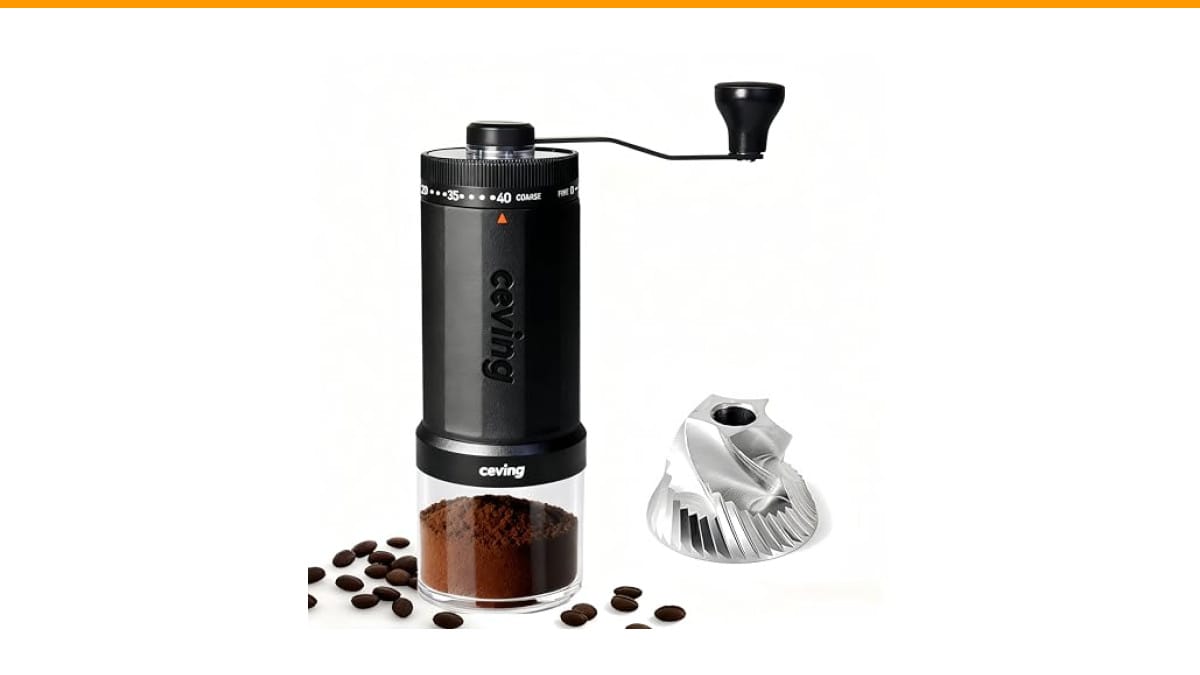
CEVING
CEVING World's First 60g Large Capacity Manual…
- Tired of small batches? Meet the world's first manual grinder with a massive 60g capacity—Hold twice the beans of the standard gri…
- 40 EXTERNAL SETTINGS - DIAL IN PERFECT BREWS INSTANTLY. Our external click-ring delivers 40 precise settings—effortlessly switch f…
- MASTER-LEVEL PRECISION - LAB-ACCURATE GRINDS, BARISTA-APPROVED FLAVOR. Each click adjusts by just 0.05mm—the finest difference det…
As an Amazon Associate I earn from qualifying purchases.
Let’s get the fundamentals right first, then move to advanced stuff like dialing in for espresso.
If you are tired of grinding twice for a large French press or a batch of cold brew, the CEVING World's First 60g Large Capacity Manual Coffee Grinder holds twice the beans of a standard model. That means one grind session for a full 1-liter press, not two. It also has 40 external click settings, so you don’t have to disassemble the shaft to change grind size.
Before You Crank: Setup and Grip
Set the grinder on a stable, non-slip surface. A rubber mat or a folded kitchen towel works better than a bare counter. Hold the body with your non-dominant hand, placing your palm over the top cap and your fingers wrapped around the glass or stainless catch cup. Keep the grinder vertical. Tilting it causes beans to sit unevenly on the burrs, which produces boulders and fines in the same batch.
Insert the handle with the crank arm pointing outward. Most people grip the knob with their whole fist, but you get better torque by using just your thumb and index finger on the top of the knob while the other fingers guide the arm. This reduces wrist fatigue over a 60-gram grind.
Start turning clockwise. The first few rotations will be stiff as the beans crack. Once the beans break down, the resistance drops noticeably. That is normal. Do not force the handle faster to speed things up; a steady 60-80 rotations per minute produces more uniform particle sizes than a frantic 120 RPM.
Dialing In Grind Size: From Espresso to Cold Brew
The click ring on the CEVING grinder has 40 external settings. Each click moves the burrs by 0.05mm, which is roughly the thickness of a human hair. That might sound overly precise, but it matters when you switch brew methods.
Here is a practical starting point for each method. These are not universal truths, but they work for most medium-roast beans:
- Espresso (1-8 clicks): fine as table salt. You need a very fine grind to build pressure. Start at 5 clicks and adjust based on your shot time.
- Moka pot (8-12 clicks): slightly coarser than espresso, like fine sand. You want a bit of resistance but not a choked flow.
- Pour-over / V60 (15-20 clicks): medium-fine, like granulated sugar. The water should drain in 2.5 to 3.5 minutes for a single cup.
- French press (25-30 clicks): coarse, like kosher salt. You want visible chunks, not powder.
- Cold brew (35-40 clicks): very coarse, like cracked peppercorns. Steep for 12-18 hours without over-extracting.
Do not trust the number alone. Different beans have different densities. A light roast from Ethiopia will grind finer at the same setting than a dark roast from Brazil because the beans are denser. Always do a visual check after the first grind and adjust by two clicks if the size looks off.
One thing I learned the hard way: if you change brew methods often, write the click number on the bean bag with a marker. You will forget by Tuesday.
Grinding Technique: Speed, Pressure, and the Pause
Speed matters more than most people think. If you crank too fast, the burrs generate heat and the beans fracture unevenly. If you go too slow, the grind takes forever and you lose patience. Aim for a rhythm where you hear a consistent crunch, not a whine or a stutter.
For larger doses (40-60g), use a two-stage grind. Grind the first half, stop for 10 seconds, then continue. This pause lets the burrs cool and prevents the fines from clumping at the bottom. It also gives your wrist a break.
When the grind is done, tap the grinder gently on the counter a few times. This settles the grounds and lets you open the catch cup without a cloud of coffee dust exploding everywhere. Then, use a small brush or a chopstick to sweep any grounds stuck to the burr carrier before you dump the cup.
If you are grinding for espresso, do not skip the pause. A 20-gram espresso dose takes about 45-60 seconds on a hand grinder. Rushing that produces a shot that runs too fast because the fines clog the basket unevenly.
Cleaning is part of the technique. You don’t need to deep-clean every day, but a quick brush-out every three or four uses prevents stale coffee oil from building up. For a full teardown, check out our grinder cleaning guide.
Comparing Manual Grinders: What to Look For
Not all hand grinders are equal. The burr material, capacity, and adjustment mechanism change the experience dramatically. Here is a side-by-side look at what matters:
| Feature | Entry-Level (Ceramic Burr) | Mid-Range (Steel Burr) | Premium (Large Steel Burr) |
|---|---|---|---|
| Burr Material | Ceramic | CNC Steel | CNC Steel |
| Capacity | 20-30g | 30-40g | 50-60g |
| Grind Settings | 5-10 steps | 20-30 clicks | 40+ clicks |
| Grind Speed (30g) | 90-120 sec | 60-75 sec | 45-60 sec |
| Consistency | Fair, some fines | Good, minimal fines | Excellent, uniform |
| Best For | Occasional use | Daily pour-over | Espresso + large batches |
The CEVING grinder sits in the premium category for capacity and settings, but it weighs only 416g. That is lighter than many 40g-capacity grinders, which makes it a solid travel companion. The trade-off is that the catch cup is glass, so you need to be careful when camping.
If you are still deciding between a manual and an electric grinder, read our comparison of burr grinders vs blade grinders to understand why burrs matter for flavor.
Common Mistakes and How to Fix Them
Most people mess up in the same three ways. First, they grind too fine for the brew method. A French press with espresso-fine grounds will be muddy and bitter. Fix it by going coarser and adjusting down gradually.
Second, they hold the grinder at an angle. This causes the beans to pile on one side of the burr, making the grind size uneven. Keep it vertical, always.
Third, they never clean the burrs. Coffee oils turn rancid, and the residue alters the flavor of fresh beans. A quick brush after every few uses prevents this. If your grinder is not working properly, check our guide on grinder troubleshooting.
Frequently Asked Questions
How long does it take to grind coffee with a manual grinder?
For 20 grams (one espresso dose), expect 45-60 seconds with a steel burr grinder. For 60 grams, plan on 2-3 minutes. Ceramic burrs take about twice as long. The CEVING grinder’s steel burrs cut faster than ceramic, so you won’t be cranking forever.
Can I use a manual grinder for espresso?
Yes, but only if the grinder has fine enough settings. The CEVING grinder goes down to 1 click, which is fine enough for most espresso machines. You will need to adjust by one click at a time to dial in your shot. This takes practice, but it is doable.
Why is my coffee bitter when I use a hand grinder?
Bitterness usually means you ground too fine and over-extracted the coffee. Go coarser by 3-4 clicks and brew again. Also check your water temperature; if it is above 205°F, it can scorch the grounds.
How do I know when the grind size is correct?
Look at the particles. For pour-over, they should look like granulated sugar with no visible dust. For French press, like coarse sea salt. If you see both boulders and powder, your grinder is misaligned or you are cranking too fast.
Does a manual grinder make better coffee than an electric one?
At the same price point, yes. A $50 hand grinder produces more consistent grounds than a $50 electric blade grinder. But a $300 electric burr grinder beats a $100 hand grinder in speed and consistency. For travel and single-cup brewing, a hand grinder is the better value.
What to Do Next
- Start with a medium grind (around 15 clicks) and adjust based on your brew time.
- Grind only what you need for each cup. Stale grounds lose flavor within 15 minutes.
- Keep the grinder vertical while cranking to avoid uneven particle sizes.
- Brush out the burrs after every few uses to prevent oil buildup.
- Write your preferred click setting on the bean bag so you don’t forget.
- If you brew large batches, consider a 60g capacity grinder to avoid splitting the grind.
- Clean your grinder thoroughly once a month with a dry brush; never rinse the burrs with water.
Products related to this article
Sponsored / affiliate links. As an Amazon Associate I earn from qualifying purchases. I may earn additional commission from eligible campaigns.
 Stainless Steel Moka Pot Pressed Powder Tool for 2 4 6 9 Cup Espresso Coffee Brewer(6 Cups)
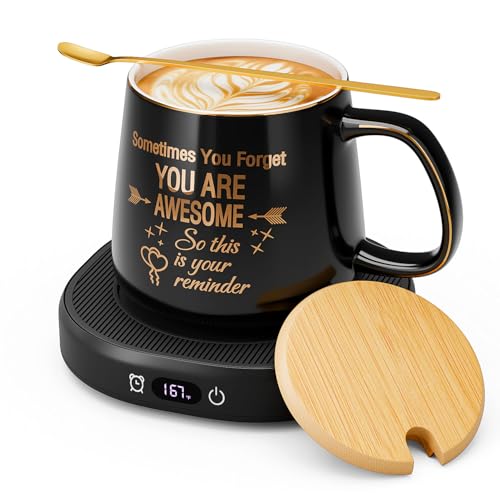 Coffee Mug Warmer & You are Awesome Mug Set, Electric Cup Warmer for Desk
 VOBAGA Mug Warmer & Coffee Mug Warmer with 4 Hours Auto Shut-Off, Coffee Warmer Plate for Office Home Desk Use with 3 Temperature Settings, Cup Warmer for Cocoa, Tea, Milk, Water, Coffee Gifts(No Cup)