You bought a bag of loose leaf tea, got it home, and now it sits in the cabinet because you’re not sure what to do with it. Or maybe you tried once, ended up with bitter tea and leaves floating in your cup, and went back to bags. I get it. That first experience with a tea infuser can be discouraging.
But the truth is, most infuser problems come down to three things: wrong water temperature, too much tea, or steeping too long. Fix those three and you’ll get better tea than any bag can give you. This guide walks through exactly how to use a tea infuser, from choosing the right one to cleaning it properly.

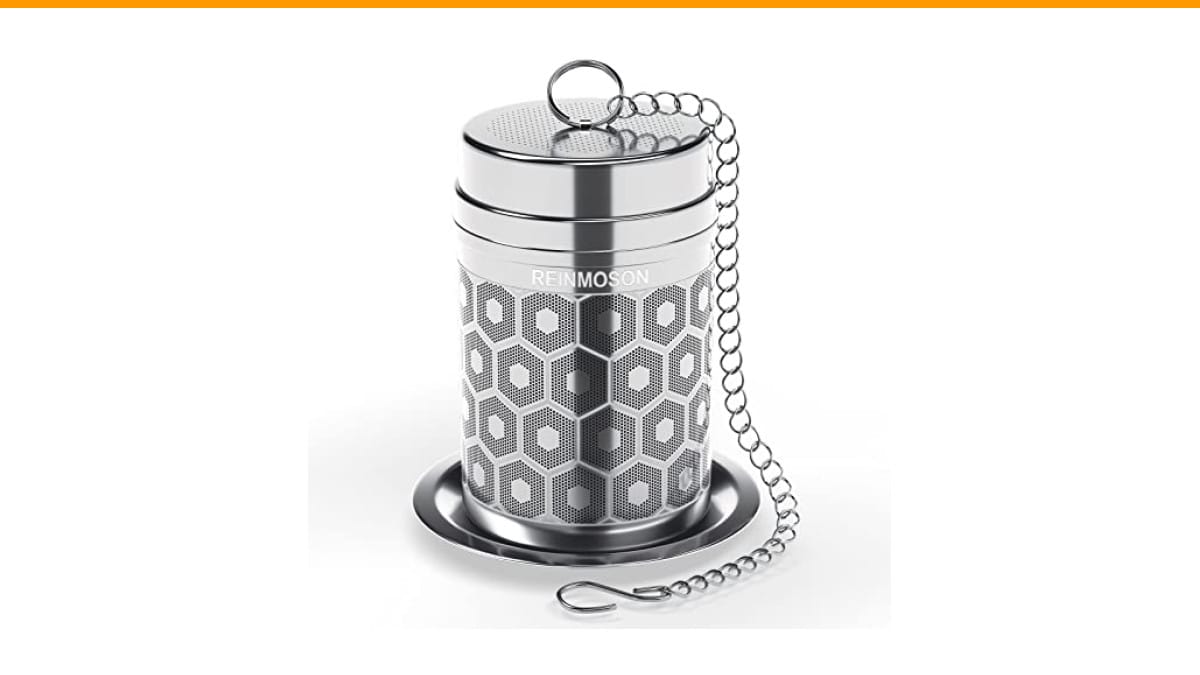
Reinmoson
Reinmoson Extra Fine Mesh Tea Infuser for…
- Upgraded Micron Mesh: Loose leaf tea steeper is Ideal to hold tea leaves, particles, or ground coffee. Compared to traditional tea…
- High-Quality Materials: Made of 304 food-grade stainless steel, loose tea infuser is easier to clean. Besides, tea diffusers for l…
- Easy to Open and Close: With the design of thread top, the lids screw easily and are much more secure than the traditional twist l…
As an Amazon Associate I earn from qualifying purchases.
One tool that makes the process easier is the Reinmoson Stainless Steel Tea Infuser. It uses a fine micron mesh instead of the wide holes you find on cheap infuser balls, which means small tea particles stay put while flavor flows through. The screw-top lid stays closed during steeping, and the attached chain hooks onto any mug rim. It’s a solid option if you want something that does the job without fuss.
Step-by-Step: How to Use a Tea Infuser Correctly
Here’s the process I use every day. It takes about five minutes total, and most of that is waiting.
- Heat your water to the right temperature. Different teas need different heat. Green tea wants 170-180°F (77-82°C). Black tea wants 200-212°F (93-100°C). Herbal teas can take a full rolling boil. If you don’t have a kettle with temperature settings, boil water and let it sit for a minute or two before pouring.
- Fill the infuser about halfway. For most infusers, that’s roughly one teaspoon of loose leaf tea per 8-ounce cup. Don’t pack it tight. Leaves need room to expand as they steep. A packed infuser produces weak, uneven tea because water can’t circulate.
- Close the lid and place the infuser in your cup. Hook the chain over the rim or rest the infuser in the cup. Make sure it sits fully submerged. If it floats or hangs above the water line, you’ll get weak tea.
- Pour the hot water over the infuser. This ensures the leaves get wet immediately. Fill your cup to the top.
- Set a timer. Don’t guess. The difference between 2 minutes and 4 minutes for green tea is the difference between a pleasant cup and a bitter one. Start with 2 minutes for green, 3-4 for black, and 5+ for herbal.
- Remove the infuser when the timer goes off. Lift it out, let it drip for a second, and set it on a saucer or small plate. Leaving the leaves in the water over-extracts them and turns the tea bitter.
- Rinse the infuser immediately. Run hot water through it right after use. Dried tea residue is much harder to remove than fresh.
That’s the whole routine. Once you do it a few times, it becomes automatic.
Choosing Between Different Types of Tea Infusers
Not all infusers work the same way. I’ve tested several styles side by side, and each has trade-offs worth knowing about.
| Type | Best For | Pros | Cons |
|---|---|---|---|
| Ball infuser with chain | Single cups at home | Inexpensive, easy to clean, portable | Small capacity, chain can be fiddly |
| Basket infuser (sits in mug) | Mugs and small teapots | More room for leaves to expand, better flavor | Doesn’t fit narrow cups |
| Teapot with built-in strainer | Multiple cups at once | Large capacity, great for entertaining | Harder to clean, takes up cabinet space |
| Fine mesh infuser (like the Reinmoson) | Small leaf teas, rooibos, ground coffee | Keeps particles out, screw lid stays secure | Slightly harder to rinse than open baskets |
If you brew one cup at a time, a fine mesh ball infuser works well. If you make tea for two or more people regularly, get a basket infuser that fits a teapot. You can always have both — they’re cheap enough.
Water Temperature and Steeping Time by Tea Type
This is where most people go wrong. The same tea leaves can produce completely different cups depending on water temperature and steep time.
- Green tea: 170-180°F, steep 2-3 minutes. Too hot and you get a bitter, vegetal taste.
- White tea: 160-170°F, steep 3-4 minutes. Delicate leaves need gentle heat.
- Black tea: 200-212°F, steep 3-4 minutes. Full rolling boil is fine.
- Oolong: 185-205°F, steep 3-5 minutes. Re-steepable multiple times.
- Herbal tea: 212°F, steep 5-7 minutes. Tougher ingredients need more time.
- Rooibos: 212°F, steep 5-7 minutes. Never gets bitter, so longer is fine.
Your infuser’s capacity matters too. A 1.5-inch diameter ball holds about a teaspoon of tea. That’s enough for one cup. If you want a stronger brew, add more time, not more tea — overfilling restricts water flow.
One thing I learned the hard way: rinse the infuser with hot water before adding tea. It warms the metal so the temperature of your brew stays consistent. Cold metal steals heat from the water right at the start of steeping.
Cleaning and Maintaining Your Tea Infuser
Tea leaves leave behind tannins that stain metal and clog mesh. A quick rinse after each use handles most of it. For deeper cleaning, here’s what works:
- Rinse the infuser under hot running water immediately after use.
- If you see residue, soak it in a small bowl of hot water with a drop of dish soap for 10 minutes.
- Use a soft bottle brush or old toothbrush to gently scrub the mesh. Don’t use steel wool — it scratches the surface and creates spots where tea particles get trapped.
- For stubborn stains, soak in a 50/50 water and white vinegar solution for 15 minutes, then rinse thoroughly.
- Dry completely before storing. Leaving it damp in a drawer invites rust, even on stainless steel.
Stainless steel infusers like the Reinmoson are easier to keep clean than plastic ones because they don’t absorb odors. If you ever taste soap in your tea, you didn’t rinse well enough. Hot water only, no soap, is often all you need.
If you’re also dealing with milk frothing equipment, the same rinse-immediately principle applies to your steam wand cleaning routine.
Common Mistakes and How to Avoid Them
Three mistakes show up constantly in my conversations with tea drinkers. Avoid these and you’re already ahead of most people.
Mistake 1: Using boiling water for everything. Boiling water destroys delicate green and white teas. It extracts too much tannin and produces a harsh, bitter cup. Check the temperature for what you’re brewing. A simple thermometer or an electric kettle with temperature presets solves this.
Mistake 2: Leaving the infuser in the cup while you drink. The tea keeps steeping the entire time you’re sipping. By the time you’re halfway through, it’s bitter. Remove the infuser as soon as the timer goes off. That’s non-negotiable.
Mistake 3: Overfilling the infuser. More tea doesn’t mean stronger tea in a good way. It means the leaves can’t expand, water can’t circulate, and you get a muddy, uneven extraction. Use about a teaspoon per cup and adjust steep time if you want more strength.
Another mistake I see: using a tea infuser for coffee grounds. It works, but only with coarse grounds. Fine coffee grounds will slip through most mesh and turn your cup muddy. If you’re trying to brew ground coffee, check the mesh size first. The Reinmoson’s fine mesh handles this better than most, but it’s still not a substitute for a proper coffee maker. If you’re curious about coffee maker cleaning frequency, that’s a separate topic worth reading.
Answers to Common Tea Infuser Questions
Can I use a tea infuser for ground coffee?
Yes, but only with coarse ground coffee. Fine or espresso-ground coffee will pass through most infuser mesh and end up in your cup. Use a coarse grind, steep for 4 minutes, and expect a lighter brew than a French press. The Reinmoson’s fine mesh handles coarse grounds well, but it’s not designed for espresso.
How much loose tea should I put in the infuser?
One teaspoon per 8 ounces of water is a good starting point. That’s roughly 2-3 grams. Adjust based on your taste and the tea type. Some voluminous teas like chamomile need more volume, while dense teas like gunpowder green need less. Start with a teaspoon, taste, and adjust from there.
Why does my tea taste bitter?
Three likely causes: water too hot, steeped too long, or too much tea. Fix those one at a time. Most often it’s the water temperature — green tea at boiling temperature will always taste bitter. Back the temperature down and shorten the steep time.
How do I keep tea leaves from escaping the infuser?
Use an infuser with fine mesh. The Reinmoson has a micron mesh that catches small particles. Also, don’t overfill — packed leaves force smaller pieces through gaps. If you’re still getting sediment, your tea might be very broken or dusty. In that case, consider a paper filter or a finer infuser.
Is a metal tea infuser better than a silicone one?
For most people, yes. Stainless steel doesn’t absorb odors, doesn’t stain, and lasts longer. Silicone infusers are flexible and sometimes easier to squeeze clean, but they can hold onto smells from previous teas. The Reinmoson uses 304 food-grade stainless steel, which means no metallic taste and no rust over time.
What to Remember Before Your Next Cup
You don’t need expensive equipment or a tea sommelier certificate to brew good loose leaf tea. You need the right temperature, the right amount of leaf, and a timer. That’s it.
- Match water temperature to tea type — green tea hates boiling water.
- Use about one teaspoon of tea per cup, not more.
- Set a timer and remove the infuser when it goes off.
- Rinse the infuser right after use to keep it clean.
- Buy a fine mesh infuser if small leaves or particles annoy you.
- Don’t be afraid to experiment — adjust steep time and leaf amount until it tastes right to you.
- Check the current price on Amazon for the Reinmoson tea infuser if you want a reliable option.
One more thought: loose leaf tea is cheaper per cup than bags, and it tastes noticeably better. Once you get the basics down, you won’t want to go back. The infuser is a small investment that pays for itself within a few weeks. And if you ever need to clean a clogged drip coffee maker, the cleaning process is a different beast entirely.
Products related to this article
Sponsored / affiliate links. As an Amazon Associate I earn from qualifying purchases. I may earn additional commission from eligible campaigns.
 Coffee Mug Warmer 3 Temperature Settings Desk Tea Coaster
 3 Piece Wooden Mixing Spoon Set for Cooking, Tea, Coffee, Dessert
 SOLUSTRE Electric USB Coffee Cup Warmer with Temperature Settings Portable Milk and Beverage Heating Coaster for Office Desk Small Lightweight Design Easy to Clean Surface Multi Functional