You bought a compact coffee maker to save counter space. Now it’s spitting out bitter, slow-brewing coffee, and the carafe has a film that soap won’t touch. That’s scale and old coffee oil, and it’s not going away with a rinse.
Small machines are more vulnerable than full-size ones. Less water volume means mineral deposits concentrate faster. A 4-cup brewer can clog in half the time of a 12-cup unit. This guide walks you through the actual process, the tools that work, and the mistakes that send compact machines to the trash early.

IMPRESA
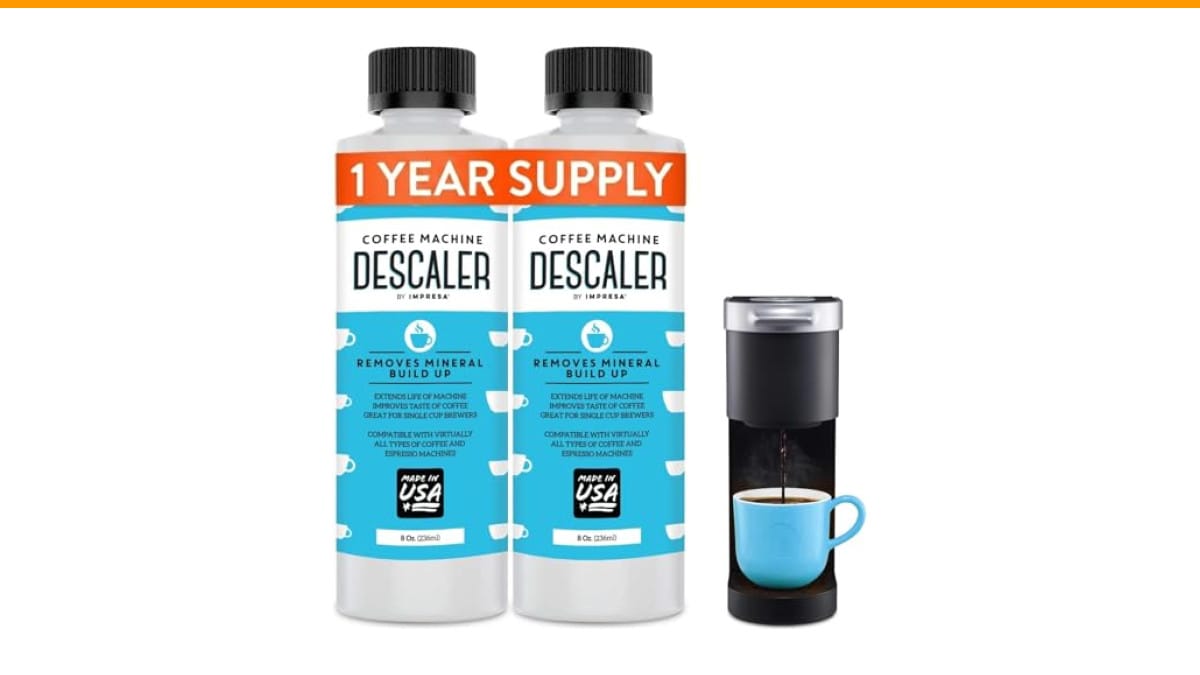
IMPRESA Coffee Machine Descaler, 2-Pack (1-Year Supply)…
- 2-Pack Coffee Descaler and Cleaner - Clean and rinse away residue and oil buildup in your coffee maker with Impresa's Coffee Desca…
- Highly Effective, Made in USA Formula - Unlike most common solutions, our coffee machine cleaner uses just 4 ounces (1/2 bottle) p…
- Preserves Your Machine - Using a coffee descaling solution eliminates limescale and mineral build-up to prevent corrosion, signifi…
As an Amazon Associate I earn from qualifying purchases.
You’ll leave knowing exactly how to clean a small coffee maker, what to use instead of vinegar when you’re out, and how often to do it so this doesn’t sneak up on you again.
For stubborn buildup, a dedicated descaler like the IMPRESA Coffee Machine Descaler, 2-Pack handles the job in one session. It’s a US-made liquid formula that uses 4 ounces per cleaning, so one bottle covers two descales and the pack lasts about a year. It works across Keurig, Nespresso, Breville, Cuisinart, and most other single-serve or drip machines.
What Actually Builds Up Inside a Small Machine
Two things gunk up your brewer: limescale and coffee oil. Limescale is calcium and magnesium left behind when water evaporates. It coats the heating element and the internal tubing. Coffee oil is the brown residue from beans that turns rancid over time.
Scale is the bigger problem. It insulates the heating element, so your machine works harder and heats slower. That’s why a clean machine brews hotter coffee. Oil affects flavor directly. It goes rancid, and that’s the bitter, flat taste you get from a neglected brewer.
Small machines suffer more because they heat smaller amounts of water. The minerals concentrate faster. If you use tap water, expect visible scale within two months. Filtered water stretches that to four or five months.
One sign you’re overdue: the brew cycle takes noticeably longer than when it was new. A 3-minute cycle stretching to 5 minutes means scale is restricting flow.
Step-by-Step: Vinegar Method for a Small Coffee Maker
Vinegar is the cheapest effective cleaner, and it’s fine for most machines. The trick is getting the ratio right for a small reservoir. Too much vinegar leaves a smell that takes three cycles to clear. Too little doesn’t dissolve the scale.
For a 4-cup machine (about 20 ounces of water), use 4 ounces of white vinegar and 16 ounces of water. For a 5-cup machine, use 5 ounces of vinegar and 20 ounces of water. The ratio is roughly 1 part vinegar to 4 parts water.
- Empty the carafe and remove any paper filter. Discard old grounds.
- Mix the vinegar and water directly in the reservoir. Swirl it gently.
- Start a brew cycle with the carafe in place. Let half the solution brew through, then turn the machine off.
- Wait 30 minutes. This soak time lets the acid work on the scale inside the heating element.
- Turn the machine back on and finish the cycle.
- Discard the vinegar solution. Fill the reservoir with fresh water and run two full brew cycles to rinse.
The soak step matters more than the brew itself. Skipping it means you’re only cleaning the shower head, not the internal tubing where scale hides.
If your machine has a clean cycle setting, use that instead of a manual brew. It’s designed to stop and start automatically, which mimics the soak step without you babysitting it.
Descaler vs. Vinegar: What’s the Difference?
Vinegar is acetic acid at about 5% strength. It works, but it’s not formulated for coffee machines. Descaler solutions use food-grade acids like citric or lactic acid, buffered to dissolve scale without attacking rubber seals or plastic parts.
The practical difference is speed and residue. Vinegar often takes two rinse cycles to fully flush out. A good descaler clears in one rinse. Descaler also doesn’t leave that pickle smell in your kitchen.
Cost is the trade-off. Vinegar costs pennies per cleaning. A descaler like the IMPRESA descaler runs a few dollars per session, but it’s a set-it-and-forget-it product. You measure 4 ounces, pour it in, add water to the fill line, and run the cycle. No mixing, no guessing.
For machines with plastic reservoirs, descaler is gentler long-term. Vinegar is fine occasionally, but repeated monthly use can cloud some plastics. If you clean every 3 months, vinegar is acceptable. If you clean monthly, spend the money on descaler.
How Often Should You Clean a Small Coffee Maker?
The standard rule is every 3 months for descaling. That assumes you’re using filtered water. Tap water users should move to every 6 to 8 weeks, especially in hard-water areas.
But descaling isn’t the only cleaning. The carafe, lid, and filter basket need attention weekly. Coffee oil builds up on those surfaces fast, and it’s the main source of off-flavors. Wash them in warm soapy water after every few uses, not just when you remember.
One habit that helps: rinse the carafe immediately after pouring your last cup. Dried coffee residue is much harder to remove than fresh. It takes ten seconds and prevents the brown film that scrubbing pads struggle with.
If you notice a film on the water surface of your brewed coffee, that’s oil buildup. It means the internal parts are dirty, not just the carafe. Time for a full clean.
There’s more detail on timing in our guide on cleaning frequency, and a deeper process in our proper cleaning walkthrough.
Method Comparison: Vinegar, Descaler, and Citric Acid
| Method | Cost per Session | Rinse Cycles Needed | Best For | Watch Out For |
|---|---|---|---|---|
| White Vinegar | ~$0.10 | 2–3 | Occasional cleaning, budget use | Smell, plastic clouding over time |
| Commercial Descaler | ~$2–$4 | 1 | Regular monthly cleaning, hard water | Cost adds up over a year |
| Citric Acid Powder | ~$0.30 | 2 | Heavy scale, no smell | Must dissolve fully; undissolved crystals can clog |
| Baking Soda | ~$0.05 | 2–3 | Deodorizing, mild oil removal | Does NOT dissolve scale effectively |
Citric acid powder is the middle ground. It’s cheap and odorless, but you have to mix it thoroughly. If any powder sits undissolved, it can settle in the reservoir and block the intake valve. That’s a common cause of a machine that won’t pull water. If you go this route, stir it for a full minute before pouring.
Baking soda is useful for removing odors, not scale. Don’t rely on it for descaling. It’s a base, and scale is alkaline too. It simply doesn’t react.
Small Machine Mistakes That Cause Early Failure
People treat small coffee makers like they’re disposable. They’re not, but certain habits guarantee a short lifespan.
Running the machine dry is the fastest killer. The heating element gets hot enough to warp plastic within seconds without water. Always fill to at least the minimum line before brewing.
Ignoring the clean cycle light is another one. Many machines have a light that triggers after a set number of brews. It’s not a suggestion. That light means the internal sensor detected restricted flow. Running it anyway strains the pump.
Using vinegar without rinsing is also common. The acid doesn’t hurt you at food-safe levels, but it does leave a taste. That taste gets into the rubber gaskets. If you’ve rinsed twice and still smell vinegar, run a cycle with just water and a pinch of baking soda.
Lastly, don’t put the carafe in the dishwasher if it has a metal rim. The detergent degrades the seal between glass and metal, and you’ll get a leaky carafe. Hand wash it.
For machines that are already clogged and won’t brew, check our guide on unclogging a coffee maker before you give up on it.
Cleaning the Parts People Forget
The reservoir and carafe get attention, but the shower head and the one-way valve don’t. The shower head is the disc that sprays water over the grounds. It has tiny holes that clog with coffee oil. Use a paperclip or a toothpick to gently poke each hole open, then wipe it with a damp cloth.
The one-way valve is a small rubber flap near the water intake or in the filter basket. It prevents water from flowing backward. If it gets sticky with oil, the machine won’t draw water correctly. Wipe it with a vinegar-dampened cotton swab.
If your machine has a permanent filter, that needs cleaning too. Soak it in a bowl of hot water with a drop of dish soap for 15 minutes. Rinse thoroughly. A clogged mesh filter slows the brew just as much as scale does.
Frequently Asked Questions
Can I use apple cider vinegar instead of white vinegar?
Technically yes, but it’s not ideal. Apple cider vinegar contains sediment and a darker color that can stain the reservoir and tubing. White vinegar is clear and leaves no residue. Stick with white.
How do I know if my coffee maker has hard water scale?
Look at the bottom of the carafe after brewing. If you see white or tan flakes floating, that’s scale. Another sign is a visibly longer brew time. If the machine is quieter than usual during brewing, the heating element may be insulated by scale and not heating efficiently.
Is it safe to use bleach to clean a coffee maker?
No. Bleach is toxic and will leave harmful residue in the reservoir and internal tubing. Even after multiple rinses, you can’t guarantee it’s fully gone. Use vinegar, citric acid, or a commercial descaler only.
Why does my coffee taste like plastic after cleaning?
That’s usually a sign you used too much vinegar or didn’t rinse enough. The acid can temporarily affect the plastic. Run two or three fresh-water cycles. If the taste persists, the plastic itself may be degrading from repeated vinegar exposure. Consider switching to a descaler for future cleanings.
Can I descale a pod machine the same way as a drip brewer?
Mostly, but you need to remove the pod holder first. Pod machines have a needle that pierces the pod, and it can clog with grounds. Run the descaling solution through a cycle with the pod holder removed. Then run a cleaning cycle with a blank pod or a pod-cleaning tool if your machine supports one. The process is similar to our deep cleaning guide.
What to Do Right Now to Extend Your Machine’s Life
- Mark a calendar reminder for descaling every 8 weeks if you use tap water, 12 weeks if filtered.
- Rinse the carafe immediately after your last cup. Don’t let coffee dry in it.
- Run a water-only cycle once a week to flush loose oils from the internal lines.
- Poke the shower head holes with a toothpick every month to keep them clear.
- Use a descaler like the IMPRESA 2-pack instead of vinegar if you clean monthly — it’s gentler on plastic and needs only one rinse.
- Never run the machine with less than the minimum water line.
- If the clean light comes on, don’t ignore it. That’s your machine telling you it’s struggling.
Cleaning a small coffee maker takes about 20 minutes of active time, most of it waiting for the solution to soak. It’s the cheapest insurance you can buy for a machine that costs $30 to $100 to replace. A clean machine also brews noticeably hotter and tastes better, which is the whole point of owning one.
Products related to this article
Sponsored / affiliate links. As an Amazon Associate I earn from qualifying purchases. I may earn additional commission from eligible campaigns.