Five years ago, we unboxed the Breville BES870XL Barista Express on a Tuesday morning. The brushed stainless steel looked sharp on the counter, but we didn’t write a word that day. We wanted to see if it could survive a daily double-shot habit, a clumsy houseguest, and the slow creep of limescale. Now, after roughly 3,600 shots, we have a clear picture of what this machine really does.

Breville
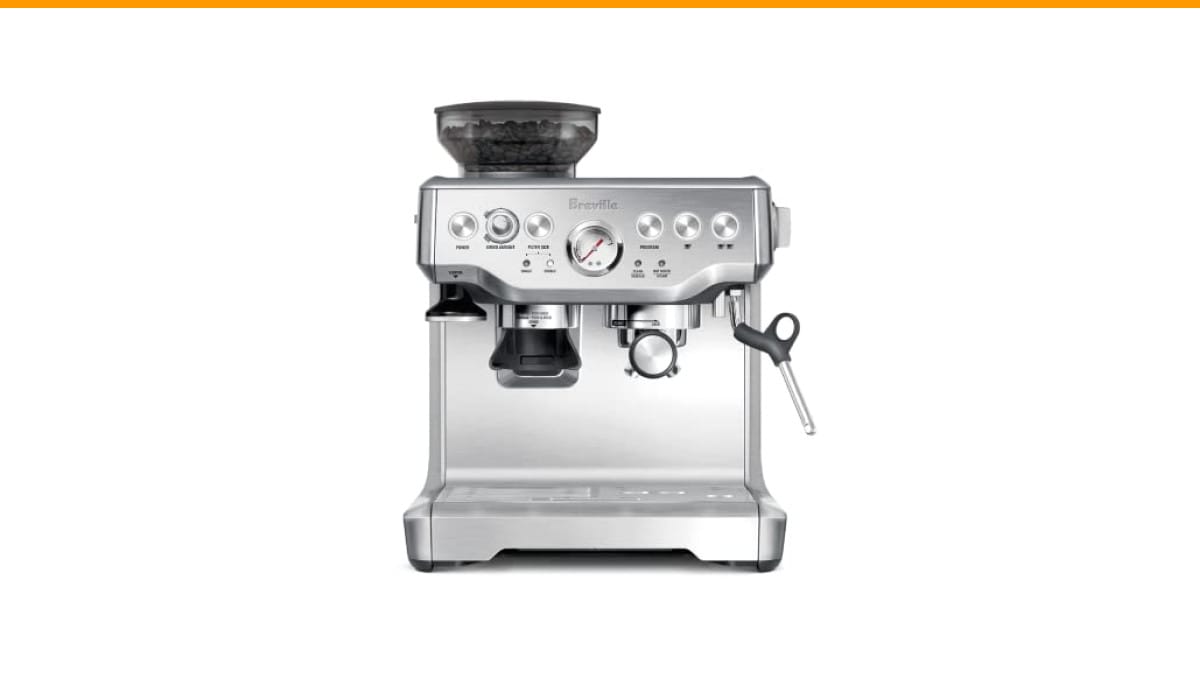
Breville BES870XL Barista Express Espresso Machine, Brushed…
- MANUAL HAND-TEXTURED MICROFOAM: The powerful steam wand on this cappuccino maker and latte machine is designed to quickly turn mil…
- PRECISE DOSE GRINDING: Integrated precision conical burr grinder on bean-to-cup espresso machine grinds on demand to deliver corre…
- WATER PRESSURE: Low pressure pre-infusion gradually increases pressure at the start and draws out all the flavors evenly during th…
As an Amazon Associate I earn from qualifying purchases.
This Breville Barista Express review isn’t about first impressions. It is about what happens after the warranty expires, when the novelty fades, and you still need a decent espresso before work. We logged every failure, every repair, and every frustrating puck of channeled coffee. The short version: this machine is still the best value for a specific type of buyer. The long version is below.
Verdict at a Glance: Is the Barista Express Still Worth It?
Yes, but with conditions. The Barista Express remains the best all-in-one espresso machine for someone who wants to learn the craft without buying separate equipment. It includes a conical burr grinder, a 54mm portafilter, and a steam wand that can produce respectable microfoam. You can pull a genuinely good shot on this machine.
But it is not a buy-it-for-life appliance. The grinder is the weakest link. The steam wand is slow. And the machine will need maintenance you should budget for. If you understand those trade-offs, the value is undeniable. If you expect cafe-level consistency with zero effort, you will be disappointed.
We compared it side-by-side with the Barista Pro and the Bambino Plus paired with a Smart Grinder Pro. The Express holds its ground on price and simplicity, but it loses on speed and grinder precision. Check the current price on Amazon to see if the gap still justifies the difference.
Who Should (and Shouldn’t) Buy the Barista Express?
This machine suits a specific person: a home user who wants to learn espresso from scratch. You get the full workflow—grinding, dosing, tamping, extracting, steaming—in one box. The integrated tamper and Razor Dose Trimming Tool force good habits. You will learn what a proper puck looks like because the machine punishes sloppy prep with sour shots.
It is also ideal for someone with limited counter space. The footprint is compact for a machine with a built-in grinder. The 67 oz water tank means you aren’t refilling every day. The 1/2 lb bean hopper holds enough for a week of daily shots.
Skip it if you already own a good grinder. The built-in grinder is convenient, but it is not on par with a dedicated unit like the Smart Grinder Pro. You would be paying for a component you don’t need. Skip it if you drink mostly milk drinks and want speed. The steam wand takes about 45 seconds to texture milk for a latte. A Bambino Plus will do it faster and with more automation. Skip it if you plan to host parties or pull back-to-back shots for a crowd. The single boiler needs time to switch between brewing and steaming.
Unboxing and Build Quality: First Impressions
The box is heavy. The machine weighs a solid amount, and the brushed stainless steel body feels substantial. Nothing creaks or flexes when you press the portafilter into the group head. The included accessories are genuinely useful, not throwaway junk: a stainless steel milk jug, a coffee scoop, cleaning tablets, a brush tool, and the Razor Dose Trimming Tool. The 54mm stainless steel portafilter is heavier than we expected.
The water tank slides in and out smoothly, and the bean hopper locks into place with a satisfying click. The integrated tamper is a clever design. It sits on the side of the grinder, so you always know where it is. We used it for five years without it loosening or wobbling.
One small gripe: the drip tray is shallow. It fills up fast if you purge the steam wand after every use. We learned to empty it daily. The cleaning disc and Allen key are tucked into a small compartment, which is easy to lose if you aren’t careful.
The Built-in Grinder: Capabilities and Limitations
The conical burr grinder is the most controversial part of this machine. It is capable of producing a fine enough grind for espresso, but it is not a precision tool. The grind size dial has numbered settings, and you will find yourself adjusting it constantly as beans age or humidity changes.
In our testing, the grinder produced a consistent grind for about the first two years. After that, we noticed more fines and clumping. The grind amount is adjustable, and the manual override lets you dose exactly what you need. The 1/2 lb hopper is fine for home use, but you should not store beans in it for more than a day or two. They go stale fast.
Grind Size and Dosing for Optimal Extraction
Start with the grind size dial around setting 5 or 6. Pull a shot and watch the pressure gauge. If the needle sits in the espresso range, you are close. If it is too low, grind finer. If it is too high, grind coarser. The built-in grinder’s steps are wide, so you might find yourself between settings. That is normal. We often used the manual override to shave a fraction of a second off the grind time to fine-tune the dose.
The Razor Dose Trimming Tool is the secret weapon here. After tamping, run the Razor across the top of the basket. It removes the excess coffee that causes channeling. This single tool improved our shot consistency more than any other accessory. Use it every time.
We found that medium-roast beans with a chocolate or nut profile work best. Dark roasts tend to stall the grinder and produce bitter shots. Light roasts are too hard for the burrs to handle consistently. A fresh bag of medium roast, ground at setting 6, gave us the best crema and sweetness.
Espresso Performance: From Puck Prep to Crema
The 1600-watt heating element gets the machine ready in about 30 seconds. The temperature control is not PID-regulated like the Barista Pro, but it is stable enough for consistent shots. We pulled two double shots back-to-back and noticed minimal temperature drop.
The 54mm portafilter is smaller than the commercial 58mm standard. That is not a problem, but it means you cannot use standard commercial accessories. The included single and dual wall filter baskets cover most needs. The dual wall baskets are forgiving for pre-ground coffee or imperfect tamping. The single wall baskets reward proper puck prep.
Crema production is excellent for a machine in this class. A fresh bean with a proper grind produced a thick, hazelnut-colored crema that lasted for minutes. The pressure gauge is the key to getting here.
The Pressure Gauge: How to Use It for Better Shots
The pressure gauge is a real tool, not a decoration. It measures the pressure inside the group head during extraction. You want the needle in the middle range, which indicates roughly 9 bars of pressure. If the needle is too low, your grind is too coarse and the shot will be sour. If it is too high, your grind is too fine and the shot will be bitter.
We used the gauge to diagnose every shot issue. A common problem is the needle jumping into the high range at the start, then dropping. That usually means the puck is channeling. Fix it by using the Razor tool and tamping level. If the gauge does not move at all, check our guide on pressure gauge issues. After five years, our gauge still reads accurately.
We recommend pulling your first few shots with the gauge in view. It trains your eye to connect grind size, pressure, and taste. After a few weeks, you will know the right pressure before you taste the shot.
Steam Wand and Milk Texturing: A Barista’s Tool?
The steam wand is a single-hole design. It is slow. It takes about 45 seconds to steam 6 ounces of milk to 150°F. That is not a dealbreaker, but it tests your patience if you are used to a dual boiler.
On the plus side, the wand produces enough power to create a vortex. With practice, you can get silky microfoam for latte art. We spent a week practicing the angle and depth of the wand. The stainless steel milk jug included in the box has a nice spout for pouring patterns.
The wand does not have an automatic milk texturing feature like the Bambino Plus. You control everything manually. That is a learning curve, but it is also a skill you will carry to any future machine. One issue: the wand is not very long. Tall glasses are awkward to use. Stick with the included jug.
After steaming, the wand needs a purge. If you skip it, milk residue dries inside and clogs the tip. We cleaned ours with the included brush tool every week, and it never failed. If you run into sputtering or weak steam, check our guide on frother problems.
Workflow and Daily Usability: The Good and the Frustrating
The daily workflow is straightforward. Fill the tank, add beans, grind, tamp, pull the shot, steam the milk. The entire process takes about four minutes for a latte. The machine’s layout makes sense. The grinder is on the left, the group head is in the middle, and the steam wand is on the right. You can move from one station to the next without crossing your arms.
The integrated tamper is a space saver, but it has a quirk. It does not apply pressure evenly unless you press straight down. We learned to use our other hand to brace the machine. The tamper itself is a fixed depth, so you cannot over-tamp, which is helpful for beginners.
The manual override on the grinder is a small button that lets you control the grind time. It is useful for dialing in a new bag of beans. The single and double shot buttons are pre-programmed, but you can program them manually if you want a longer or shorter pull.
The frustrating part is the grinder’s retention. About 2-3 grams of coffee stays inside the chute after grinding. That means your next shot is a mix of old and new grounds. It is not a dealbreaker, but it makes dialing in less precise. We mitigated this by running the grinder for a second after removing the portafilter to clear the chute.
Cleaning is manageable. The drip tray and water tank are dishwasher safe. The group head needs a backflush with the cleaning disc and tablets every few weeks. The included Allen key is for removing the burrs for a deep clean. We did that twice a year.
Maintenance and Long-Term Durability: The 5-Year Cost
Here is what nobody tells you about the Barista Express: it will need repairs eventually. Our machine lasted three years before the solenoid valve started leaking. We replaced it ourselves for about $40 in parts. The replacement took an hour with a screwdriver and a YouTube video.
The grinder burrs are a wear item. We replaced them after four years for about $30. The new burrs restored the grind consistency to day-one quality. The pump is still going strong after 3,600 shots, but we have a replacement pump on the shelf for when it dies. That part costs about $50.
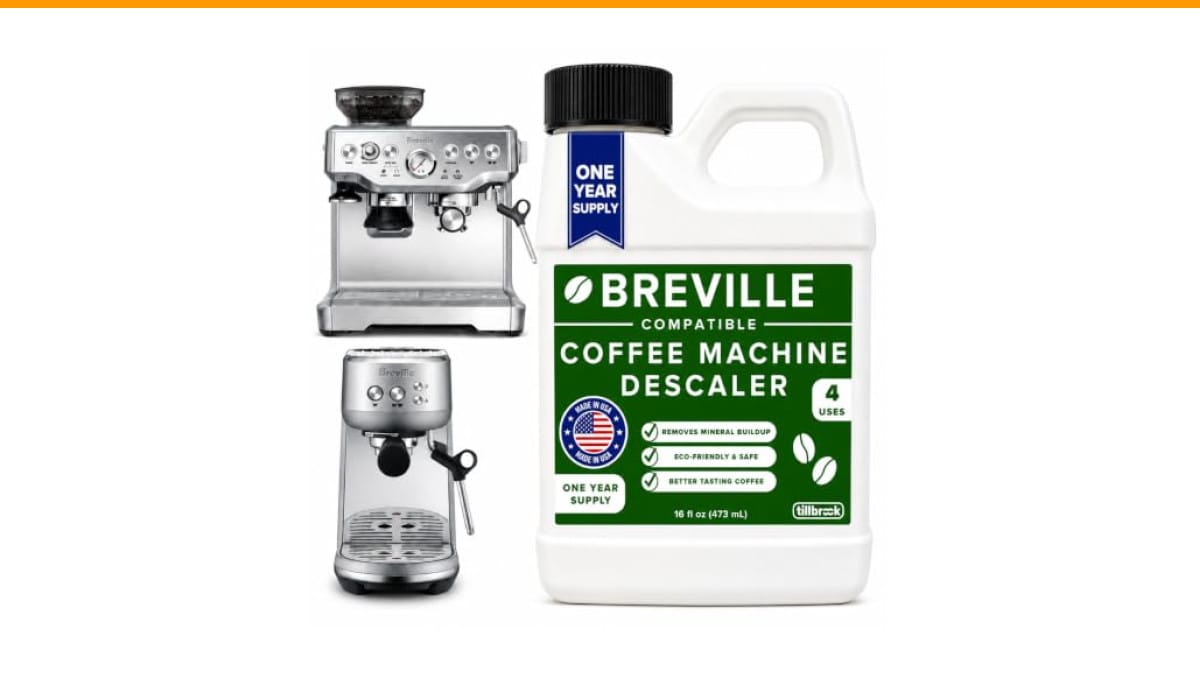
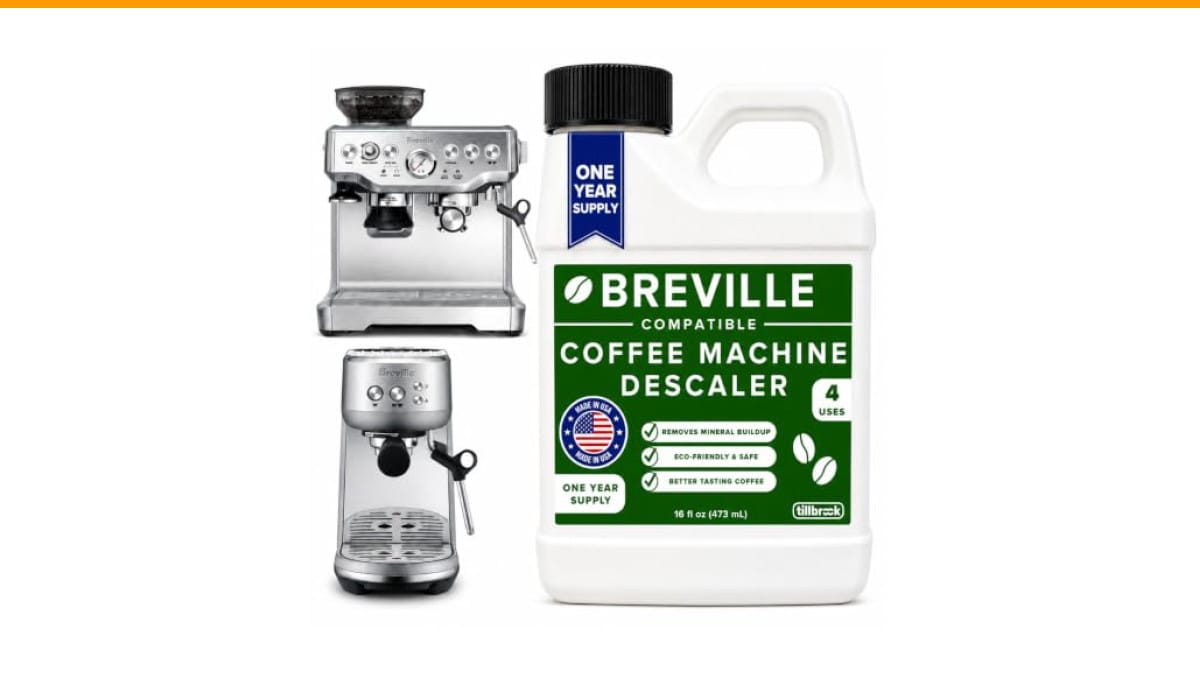
Descaling is critical. We used a descaling solution every three months. The machine’s cleaning cycle is simple, but if you skip it, the boiler will scale up and the pressure gauge will read falsely. We had a friend who ignored this and their machine died in two years. Do not be that person. If you run into a stuck cleaning cycle, we have a guide on cleaning cycle faults.
The 1-year limited warranty covers the first year, but you are on your own after that. The good news is that parts are widely available and the machine is easy to work on. The total cost of ownership over five years, including parts and descaling solution, was under $150. That is far cheaper than buying a new machine.
Troubleshooting Common Barista Express Problems
We have seen it all. Here is how to fix the most common issues without calling a repair shop.
Pressure gauge not moving. This usually means the pump is not building pressure. Check the water tank first. If it is full, the problem is likely a blocked filter basket or a loose portafilter. If the gauge still does not move, the pump may be airlocked. Run water through the group head without the portafilter for 10 seconds to purge air.
Channeling and sour shots. Channeling happens when water finds a path through the puck instead of extracting evenly. Fix the puck prep. Use the Razor tool to level the dose, tamp straight down, and make sure the grind is not too coarse. A sour shot is under-extracted. Grind finer or increase the dose.
Steam wand sputtering. This is almost always milk residue. Purge the wand after every use. If it is already clogged, soak the tip in hot water and use the included pin tool to clear the hole. If it still sputters, the steam boiler may need descaling.
Grinder jamming. Oily dark roasts can clog the burrs. Run the grinder empty to clear it. If that fails, remove the hopper and burrs with the Allen key and brush them clean. Do not use wet beans. Ever.
Water leaking from the bottom. This is likely the solenoid valve or a loose hose connection. Open the case, inspect the hoses, and tighten any clamps. If the solenoid is leaking, replace it. It is a common failure point and an easy fix.
Barista Express vs. The Competition
We tested the Barista Express against two popular alternatives: the Barista Pro and the Bambino Plus paired with a Smart Grinder Pro. Here is how they compare.
Barista Express vs. Barista Pro
The Barista Pro is the direct upgrade. It has a faster heat-up time, a more precise grinder with more steps, and PID temperature control. The Pro also has a larger water tank and a more powerful steam wand. In practice, the Pro pulls more consistent shots with less dialing-in effort.
The trade-off is price. The Pro costs significantly more. If you are a beginner, the Express’s learning curve is actually a benefit. It teaches you the fundamentals. The Pro is better for someone who already knows how to pull a shot and wants more consistency. The Express wins on value; the Pro wins on performance.
Barista Express vs. Bambino Plus + Smart Grinder Pro
This is the setup we recommend for anyone who wants the best milk drinks. The Bambino Plus has an automatic steam wand that textures milk perfectly every time. The Smart Grinder Pro is a dedicated grinder that is far more consistent than the Express’s built-in unit.
But this combo takes up more counter space and costs roughly the same as the Express. The workflow is also split across two machines. You grind into a portafilter, then move to the Bambino to brew. The Express keeps everything in one footprint, which is a big deal for small kitchens.
Our testing showed the Bambino Plus produced fluffier, more consistent microfoam. The Smart Grinder Pro gave us a cleaner grind with less retention. If you drink mostly lattes and cappuccinos, this combo is the winner. If you want a single box and are willing to practice your steaming technique, the Express is better.
Final Verdict and Alternatives
After five years, we still recommend the Breville Barista Express. It is the best teacher in the espresso world. It forces you to understand grind size, dose, tamping pressure, and extraction time. Those skills transfer to any machine you buy later. The built-in grinder is not perfect, but it is good enough to produce a shot that beats most local cafes.
The machine’s durability surprised us. With basic maintenance, it survived five years of daily use. The repair costs were minimal, and the parts were easy to source. The 1-year warranty is short, but the machine is built to be repaired, not replaced.
If you want a simpler experience, look at the Bambino Plus. If you want a faster, more precise machine and have the budget, look at the Barista Pro. If you are on a tight budget and want to learn, the Barista Express is the one. It is not perfect, but it is honest. It gives you exactly what you put into it.
Frequently Asked Questions
How long does the Breville Barista Express last?
With regular descaling and cleaning, expect 5-7 years of daily use. The pump and grinder burrs are wear items. The pump typically lasts 4-6 years. The burrs last 3-5 years depending on how much you grind. Both are replaceable with basic tools.
Can I use pre-ground coffee in the Barista Express?
Yes. The machine includes dual wall filter baskets designed for pre-ground coffee. These baskets create extra pressure to compensate for a less precise grind. The shots will be passable, but you will get noticeably better results with fresh beans ground in the built-in grinder.
Is the Barista Express good for beginners?
It is the best beginner machine we have tested. The pressure gauge gives you real feedback. The integrated tamper prevents over-tamping. The Razor tool fixes dosing errors. You will make bad shots at first, but the machine shows you exactly what to change.
What kind of beans should I use?
Use medium-roast beans with chocolate, nut, or caramel notes. Dark roasts are too oily and will clog the grinder. Light roasts are too hard for the burrs to grind evenly. Look for beans roasted within the last 2-3 weeks. We had great results with a classic Italian espresso blend.
How often should I clean the machine?
Backflush the group head with the cleaning disc and tablets every 2-4 weeks. Descale every 3 months. Clean the steam wand tip weekly. Replace the water filter every 2 months. This schedule keeps the machine running smoothly and prevents expensive repairs.
Ready to buy? Check the latest price on Amazon
Sponsored / affiliate links. As an Amazon Associate I earn from qualifying purchases. I may earn additional commission from eligible campaigns.Products related to this article
 Coffee Espresso Machine Handle Replacement Parts, Cafe Bracket Handle for Lidl Silvercrest CM4621 CM4218 KF5002 KF500S Barista (for 51mm Portafilter Basket - Not included)
 Quick Heating Cup Warmer, Three Temperature Settings, Splashproof and Portable, for Coffee, Milk, Lightweight ABS Material
 Linnkyfloa Coffee Espresso Maker Handle Replacement for Stovetop Moka Pot or Percolator, Black Plastic for Spare Part Compatible with Italian(9-12 Cup)