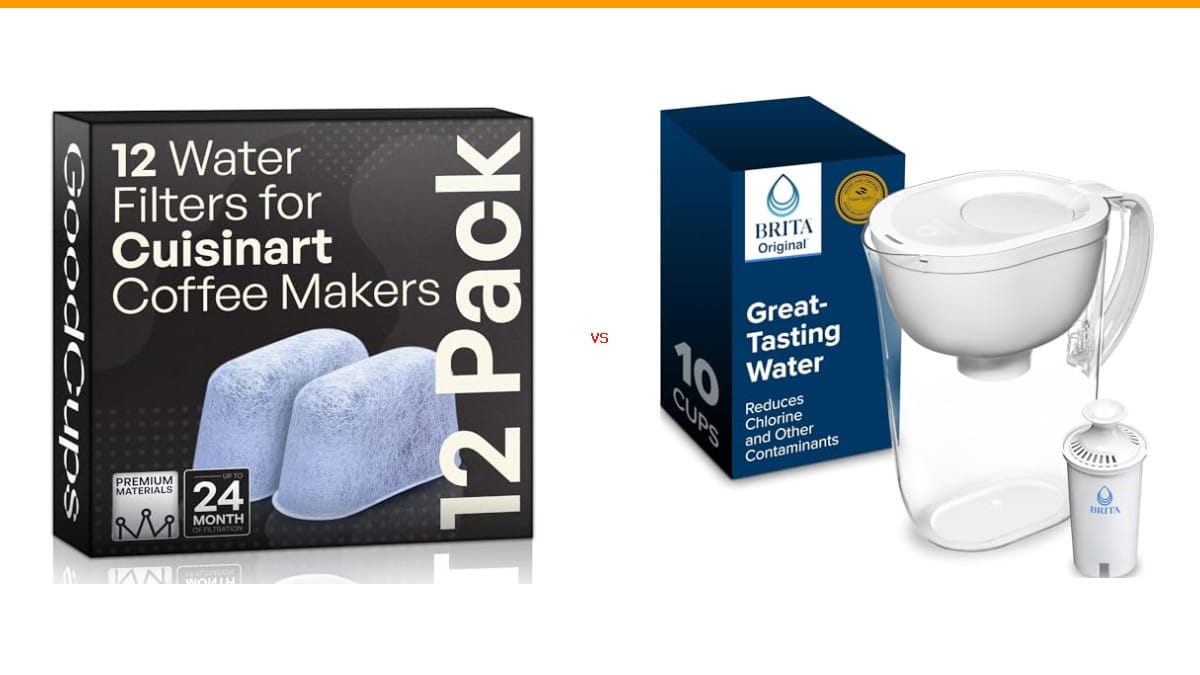
You’re staring at two very different ways to get better coffee water. On one side, a pack of GoodCups charcoal filters that drop right into your Cuisinart’s built-in water reservoir. On the other, a Brita 10-cup pitcher that sits in your fridge and filters a whole batch of tap water at once.
| Our Pick | Runner Up |
|

|
| GoodCups 12 Pack Charcoal Water Filters for Cuisinart… | BRITA Brita Large 10 Cup Water Filter Pitcher,… |
| See on Amazon | See on Amazon |
As an Amazon Associate I earn from qualifying purchases.
I’ve used both setups in my own kitchen, and they solve different problems. The GoodCups filter only treats the water that goes into your coffee maker. The Brita pitcher filters water for drinking, cooking, and yes, also for your coffee machine if you pour it in. That difference matters more than you’d think.
Here’s the short version: if you own a Cuisinart and only care about coffee taste, the GoodCups filter is the cheaper, simpler fix. If you want filtered water for everything — drinking, tea, oatmeal, and coffee — the Brita pitcher earns its counter space. But there are trade-offs with both, and I’ll walk you through exactly what they are.
Why Water Chemistry Matters More Than the Filter Itself
Your coffee is 98% water. If your tap water tastes like chlorine or has high mineral content, no fancy beans or grinder will save the final cup. The filter you choose directly affects extraction — the process where hot water pulls flavor out of coffee grounds.
Water hardness plays a big role here. Hard water, loaded with calcium and magnesium, extracts coffee compounds aggressively and can make your brew taste bitter or harsh. Soft water, on the other hand, can make coffee taste flat and sour because it doesn’t extract enough. The ideal brewing water has moderate mineral content — enough to extract well but not so much that it leaves scale buildup in your machine.
Both the GoodCups and Brita filters use activated carbon to remove chlorine and odors. That’s the main thing you’ll taste. But neither one softens water or removes significant TDS (total dissolved solids). So if your tap water is extremely hard, you’ll still get scale buildup over time, no matter which filter you pick. That’s a key point I’ll come back to.
GoodCups Cuisinart Water Filters: The Built-In Solution
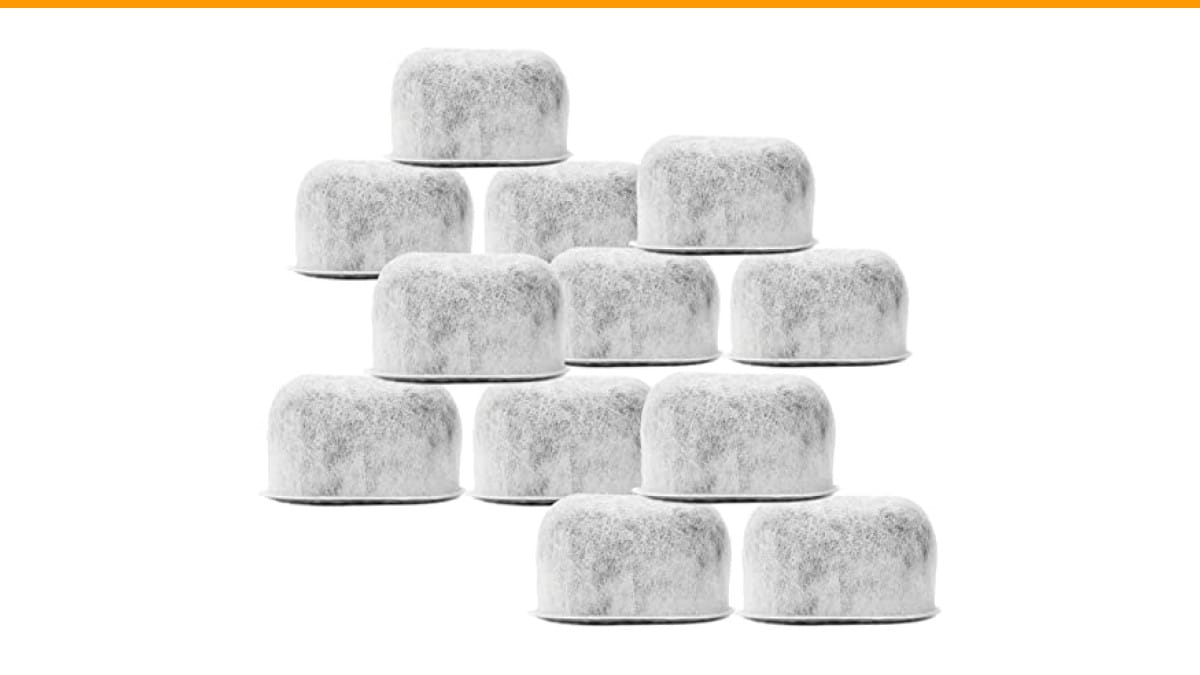
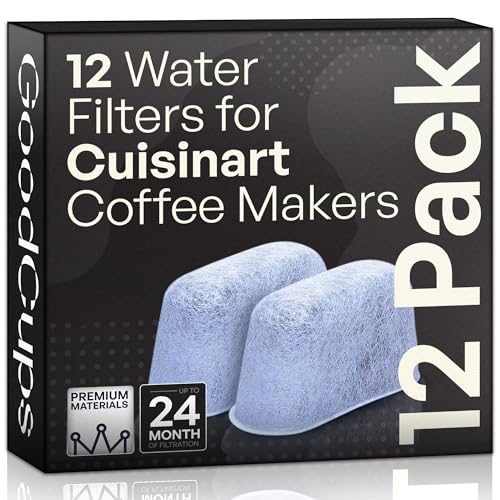
GoodCups makes replacement charcoal filters designed to fit all Cuisinart coffee makers. The 12-pack means you won’t think about buying filters again for a year or more, depending on how often you brew.
Installation takes about 30 seconds. You soak the filter in water for a few minutes, rinse it, drop it into the reservoir, and snap the holder shut. My Cuisinart 12-cup accepted it without any issues. The design allows for proper water flow — I never noticed a slower brew cycle or clogging.
What you actually get is a subtle but real improvement in taste. Chlorine is the biggest culprit in bad tap water coffee, and the activated carbon in these filters grabs it effectively. My morning brew tasted cleaner, with less of that metallic edge I’d been blaming on the beans.
The downside? These filters only work in Cuisinart machines. If you switch coffee makers, the rest of the pack is useless. And they only filter the water going into your coffee — not the water you drink throughout the day.
Pros of GoodCups Filters
- Easy, tool-free installation in any Cuisinart model
- 12 filters per pack means low cost per filter
- Removes chlorine and odors for better-tasting coffee
- Protects your brewer from scale buildup
- Made from recyclable materials
Cons of GoodCups Filters
- Only works with Cuisinart coffee makers
- Doesn’t filter water for drinking or other uses
- No way to know when to replace — you just guess every 60 days or so
Brita 10-Cup Pitcher: The Versatile Option
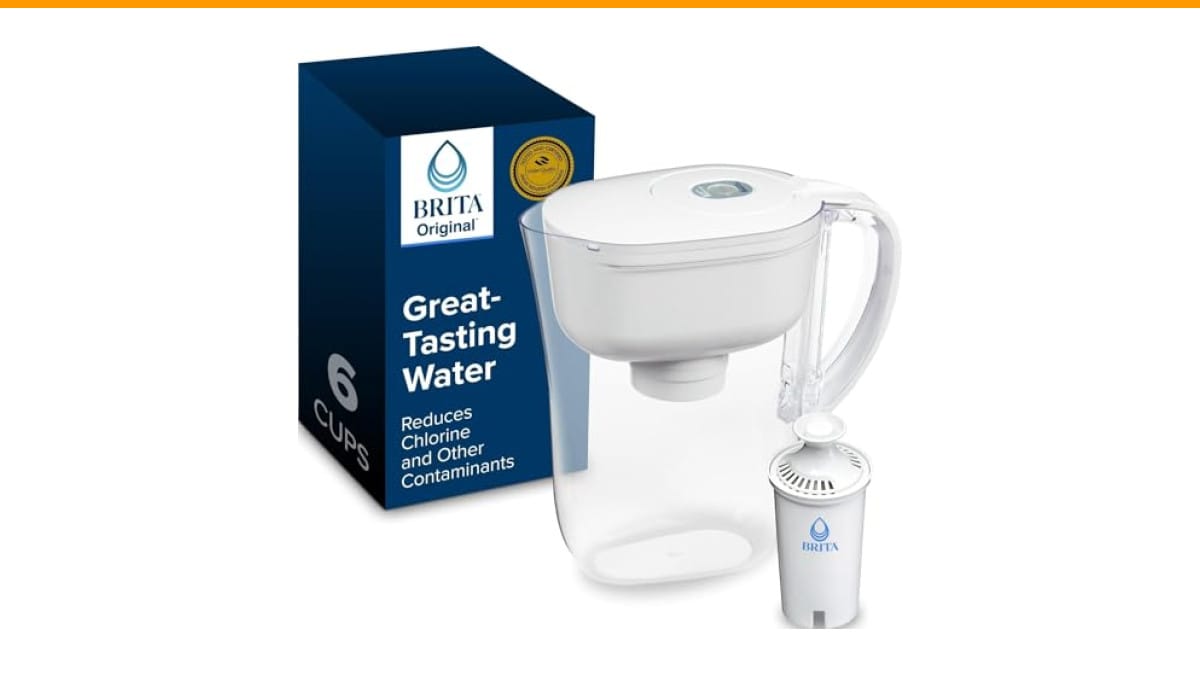
The Brita Large 10 Cup Pitcher is a household name for good reason. It holds 10 cups of water, which fills three 24-ounce reusable bottles. The bright white body fits on a refrigerator shelf without hogging space, and the locking lid makes pouring easy without spills.
I used this pitcher for months before I ever thought about coffee. The taste difference from tap water is immediate — no chlorine smell, no weird aftertaste. That’s because Brita’s standard filter reduces chlorine (taste and odor), mercury, copper, zinc, and cadmium. It’s a more complete reduction list than the GoodCups filter, which only mentions calcium, chlorine, and odors.
For coffee, you fill the pitcher, let it filter, then pour that water into your coffee maker. It’s an extra step, but it means you’re using filtered water for everything — espresso machines, pour-overs, French presses, even your kettle for tea. That versatility is the Brita’s biggest strength.
The trade-off is filter lifespan. The standard Brita filter lasts about 40 gallons or two months. The Longlast filter stretches to 120 gallons or six months. Either way, you’ll replace it more often than you might expect, and the replacement filters cost more than the GoodCups ones.
Pros of Brita Pitcher
- Filters water for drinking, cooking, and all coffee makers
- Reduces more contaminants than the GoodCups filter
- BPA-free plastic, easy to pour and store
- Works with standard and Longlast filters
Cons of Brita Pitcher
- Requires manual refilling and waiting for filtration
- Standard filters need replacing every 2 months
- Takes up counter or fridge space
Head-to-Head Comparison Table
| Feature | GoodCups Filters (12-pack) | Brita 10-Cup Pitcher |
|---|---|---|
| Compatibility | All Cuisinart coffee makers | Any water container or coffee machine |
| Filtration range | Calcium, chlorine, odors | Chlorine, mercury, copper, zinc, cadmium |
| Filter lifespan | ~60 days each (typical) | ~2 months (standard) or ~6 months (Longlast) |
| Quantity per purchase | 12 filters | 1 pitcher + 1 filter |
| Installation | Drop into reservoir | Fill and wait |
| Use cases | Only Cuisinart coffee | Drinking, cooking, all coffee makers |
| Space needed | None (inside machine) | Counter or fridge shelf |
The Differences That Actually Change Your Decision
Let’s cut through the specs. Here’s where these two genuinely differ in daily life.
Convenience
The GoodCups filter wins outright. You install it once and forget it. Every pot of coffee automatically uses filtered water. The Brita requires you to remember to refill the pitcher, wait for it to filter, and then pour it into the coffee maker. On busy mornings, that extra step is easy to skip — and then you’re back to brewing with unfiltered tap water.
Versatility
The Brita pitcher wins here. It filters water for your kids’ sippy cups, your afternoon iced tea, your pasta water. The GoodCups filter can’t do any of that. If you’re already thinking about drinking more water, the Brita is the better investment.
Cost Per Gallon
This is where numbers matter. A 12-pack of GoodCups filters costs roughly the same as one Brita pitcher plus a few replacement filters. But the GoodCups pack lasts a year or more, while you’ll buy Brita replacement filters every few months. Over 12 months, the GoodCups is significantly cheaper per gallon of filtered coffee water.
That said, if you’re comparing the Brita to buying bottled water, the pitcher pays for itself in a few weeks. It’s all about your baseline.
Filter Lifespan Management
The Brita has a visible indicator? Actually, no — the standard pitcher doesn’t include a digital indicator. You have to track dates yourself. The GoodCups filters don’t have an indicator either, so you’re guessing both ways. I marked my calendar for both, and that worked fine.
Who Should Buy the GoodCups Filters
You own a Cuisinart coffee maker and you only care about coffee taste. You don’t want extra gadgets on your counter. You want a set-and-forget solution that improves your brew without any thought. The GoodCups 12-pack is perfect for you.
Budget-conscious buyers will also appreciate the low cost per filter. And if you’re tired of descaling your machine every month, these filters will reduce scale buildup, which means fewer maintenance headaches. Check the current price on Amazon — it’s hard to beat for the value.
Who Should Buy the Brita Pitcher
You drink a lot of water and want it to taste good. You also brew coffee, tea, or use a French press. You don’t mind an extra step in your morning routine. The Brita pitcher gives you filtered water for everything, not just coffee.
If you’re a renter or live in a dorm, the pitcher is portable and doesn’t require installation. You can move it to the office or take it camping. It’s the more flexible option, even if it costs more over time.
My Verdict: Which One Wins?
For most people with a Cuisinart, the GoodCups filters are the smarter buy. They’re cheaper, easier, and directly improve your coffee without changing your routine. The Brita pitcher is better if you want filtered drinking water as a lifestyle change, but it costs more and demands more effort.
I kept both in my kitchen — the GoodCups in the Cuisinart for daily brews, and the Brita for drinking water and pour-overs. That’s the honest answer: they serve different purposes, and many households will benefit from having both. But if I had to pick one for coffee alone, I’d take the GoodCups every time.
One caveat: neither filter softens water. If your tap water is very hard, you’ll still get scale buildup in your coffee maker. You’ll need to descale regularly no matter what. I wrote a guide on how to descale coffee machine that covers the process step by step.
Frequently Asked Questions
Can I use Brita-filtered water in my Cuisinart coffee maker?
Yes, absolutely. Pour the filtered water from the Brita pitcher into your Cuisinart’s reservoir. It’s a common practice and will give you the same taste benefits as the GoodCups filter, plus the additional contaminant reduction. Just remember to replace the Brita filter regularly to maintain water quality.
How often should I replace GoodCups filters?
GoodCups recommends replacing the filter every 60 days or after 60 pots of coffee, whichever comes first. If you brew a pot daily, that’s about two months. The 12-pack will last you two years, which is why it’s such a good value. Mark your calendar or set a reminder on your phone.
Will the Brita pitcher fit in my refrigerator?
The Brita Large 10 Cup Pitcher measures 10.47 inches tall, 5.59 inches wide, and 10.94 inches deep. It fits on most refrigerator shelves, but I had to adjust mine to the top shelf because the spout area is tall. Measure your fridge shelf height before buying if you’re tight on space.
Do these filters remove limescale and hard water minerals?
No. Both the GoodCups and Brita standard filters use activated carbon, which removes chlorine, odors, and some heavy metals, but not calcium or magnesium — the minerals that cause hardness and scale. If you have hard water, you’ll need a water softener or a filter with ion-exchange resin for that. For now, regular descaling is your best defense. Check out my limescale removal guide for more details.
If you’re dealing with a machine that’s already clogged from scale, you might need to troubleshoot water flow issues. My article on Mr. Coffee not pumping water covers similar problems that can happen with any drip machine.
Products related to this article
Sponsored / affiliate links. As an Amazon Associate I earn from qualifying purchases. I may earn additional commission from eligible campaigns.