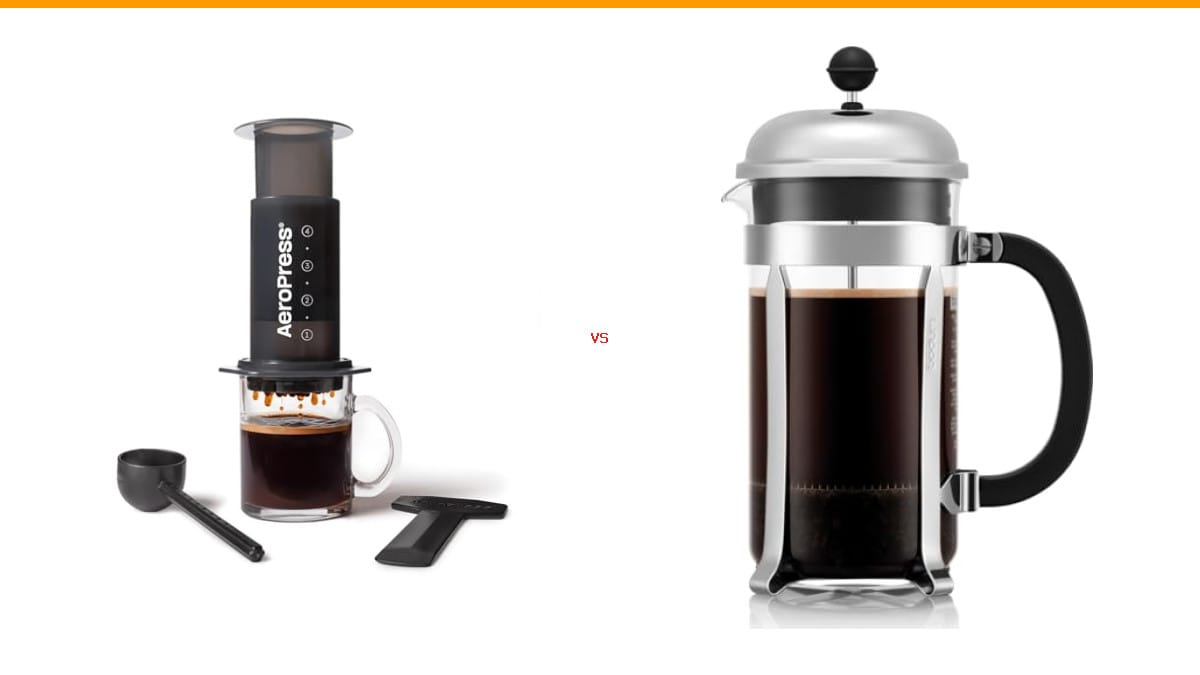
The Short Answer: Which One Should You Buy Today?
Most people should buy the AeroPress. It brews faster, cleans up in seconds, and makes a smoother cup with less bitterness. The French press wins if you need to brew for two or more people, or if you love the heavy, oily body of immersion coffee.
| Our Pick | Runner Up |

|

|
| AeroPress AeroPress Original Coffee Press, French Press, Pour-Over… | Bodum Bodum 34oz Chambord French Press Coffee Maker,… |
| See on Amazon | See on Amazon |
As an Amazon Associate I earn from qualifying purchases.
I own both. I have used the AeroPress daily for two years and the Bodum Chambord for three. They sit on different shelves for a reason. The AeroPress is my weekday workhorse. The French press comes out on weekends when my wife wants a second cup.
This comparison is not about which is objectively better. It is about which fits your morning routine, your taste preferences, and your budget. Let’s walk through the real differences.
How Each Brewer Works (And Why It Changes the Cup)
AeroPress: Pressure, Paper, and Speed
The AeroPress uses air pressure to push water through coffee grounds and a paper micro-filter. You add coffee and hot water, stir, wait about 30 seconds, then press the plunger down. The whole process takes under two minutes.
The paper filter catches fine particles and most of the coffee oils. That is why the cup comes out clean, with no grit and very little bitterness. The pressure also speeds up extraction, so you get a full-flavored cup without the long steep time of other methods.
You have full control over brew time, water temperature, and grind size. That makes it easy to experiment. You can make a concentrated shot for a latte or dilute it for a regular cup. The AeroPress is also shatterproof and compact, so it travels well.
French Press: Immersion, Metal Mesh, and Body
The Bodum Chambord uses immersion brewing. You steep coarsely ground coffee in hot water for four minutes, then push down a metal mesh plunger to separate the grounds. The mesh lets fine particles and coffee oils pass through into your cup.
That is why French press coffee has a thicker, heavier body. It also means you will see some sediment at the bottom of your mug. Some people love that texture. Others find it gritty.
The Chambord is made of heat-resistant borosilicate glass and polished stainless steel. It looks great on a counter and can brew up to 34 ounces, which is roughly four standard cups. It is not for stovetop use, so you need a kettle or microwave to heat water.
Head-to-Head: The 7 Variables That Actually Matter
Brewing Time and Daily Effort
The AeroPress takes about 90 seconds from start to finish. The French press takes four minutes of steeping plus a few minutes to boil water. If you are rushing out the door, the AeroPress wins.
Winner: AeroPress — faster brew, less waiting.
Flavor Profile: Clarity vs. Body
The AeroPress produces a clean, bright cup with high clarity. You taste the origin and roast notes clearly. The French press gives you a fuller body with more oils and sediment, which can mask subtle flavors but feels richer on the tongue.
If you drink black coffee and want to taste the beans, choose the AeroPress. If you like a heavy, syrupy texture, the French press is better.
Winner: Tie — depends on your preference.
Cleanup and Maintenance
The AeroPress cleans up in about 10 seconds. You pop out the used coffee puck into the trash, rinse the chamber and plunger under water, and you are done. The French press requires you to dump the wet grounds, rinse the glass carafe, and wash the plunger assembly. It takes longer and is messier.
Winner: AeroPress — far less hassle.
Price and Long-Term Cost
Both are budget-friendly compared to electric espresso machines. The AeroPress comes with 50 paper micro-filters. You will need to buy more filters eventually, which adds a small recurring cost. The French press has no ongoing filter cost, but you may need to replace the glass carafe if it breaks.
Over five years, the AeroPress with filter refills will cost slightly more than the French press, but the difference is small. Check the current prices on Amazon for both.
Winner: French press — slightly cheaper over time.
Durability and Portability
The AeroPress is made of shatterproof plastic and is lightweight. It fits in a backpack or carry-on. You can take it camping, to the office, or on a road trip without worrying about breaking it. The French press has a glass carafe that can crack or shatter if dropped. It is also heavier and bulkier.
Winner: AeroPress — built for travel.
Capacity: One Cup vs. A Whole Carafe
The AeroPress brews a single cup (about 8-10 ounces) at a time. If you want more, you have to brew again. The Bodum Chambord brews 34 ounces, enough for four cups. For a household with multiple coffee drinkers, the French press is more practical.
Winner: French press — bigger batch capacity.
Environmental Footprint
The AeroPress uses paper filters that you throw away after each brew. That is a small amount of waste, but it adds up over a year. The French press uses a reusable metal mesh, so no paper waste. However, the glass carafe is fragile and may need replacing sooner than a plastic AeroPress.
Winner: French press — less waste per cup.
The Hidden Costs: Filters, Replacement Parts, and Waste
The AeroPress comes with 50 paper micro-filters. Once you run out, you have to buy more. A pack of 350 filters costs around $10 on Amazon, which breaks down to about 3 cents per brew. That is negligible.
The French press has no consumable filters, but the glass carafe can break. Replacement carafes are available on Amazon, but they cost more than a pack of filters. If you drop the carafe, you are out $20-30. If you drop the AeroPress, it bounces.
Also consider the learning curve. The AeroPress has a steeper learning curve because you can control so many variables. It took me about five brews to get a consistently good cup. The French press is simpler: just steep and press. You can get a decent cup on your first try.
How to Brew the Best Cup on Each (Two Proven Recipes)
The AeroPress Standard Method (90-Second Recipe)
Use 15 grams of medium-fine ground coffee. Add 200 grams of water at 175°F (80°C). Stir for 10 seconds, wait 30 seconds, then press gently for 20 seconds. This gives a clean, balanced cup. For a stronger concentrate, use 20 grams of coffee and 150 grams of water.
The French Press Hoffmann Method (10-Minute Recipe)
Use 30 grams of coarsely ground coffee per 500 ml of water. Pour hot water (just off boil) over the grounds, stir, and let steep for 4 minutes. Then break the crust with a spoon, skim off the foam, and wait 5 minutes. Press the plunger down slowly. This method reduces bitterness and sediment.
The Verdict: A Decision Framework Based on Your Habits
Ask yourself three questions:
- How many cups do you brew at once? If more than one, get the French press.
- Do you value speed and easy cleanup? If yes, get the AeroPress.
- Do you prefer a clean, bright cup or a heavy, oily cup? The AeroPress gives you the former; the French press the latter.
For most single-cup drinkers, the AeroPress is the better choice. It is faster, easier to clean, and more portable. For households that brew a full carafe, the French press is more practical.
Frequently Asked Questions
Can the AeroPress make espresso-like shots?
Yes, but it is not real espresso. The AeroPress uses pressure, but it is much lower than an espresso machine. You can make a concentrated brew that works well for lattes and Americanos, but it will not have the crema or intensity of true espresso.
Is the French press hard to clean?
It is messier than the AeroPress, but not difficult. You dump the grounds, rinse the carafe, and wash the plunger. The mesh can trap coffee oils, so you need to clean it thoroughly to avoid rancid flavors. Check our guide on how to clean coffee maker properly for tips.
Can I travel with a French press?
You can, but it is risky. The glass carafe can break in a backpack. The AeroPress is much better for travel because it is shatterproof and compact. If you camp or fly often, the AeroPress is the obvious choice.
Which method is more forgiving for a beginner?
The French press is more forgiving because you only need to control steeping time and grind size. The AeroPress has more variables, but it is also harder to ruin a cup. I recommend starting with the AeroPress and using the included scoop and paper filters.
Final Take: Why You Might Want Both
If you have the counter space and budget, owning both is the best of both worlds. Use the AeroPress on busy mornings and for travel. Use the French press on weekends when you have time to brew a full carafe and enjoy a leisurely cup.
I keep the AeroPress next to my kettle and the French press on a shelf. They serve different purposes, and I would not want to give up either. But if I had to choose one, I would pick the AeroPress. It is the most versatile, portable, and forgiving brewer I have used.
If you are dealing with a clogged or dirty brewer, check our guide on how to clean clogged coffee maker. And if you are comparing other brewers, our site has in-depth reviews of espresso machines and grinders.
Products related to this article
Sponsored / affiliate links. As an Amazon Associate I earn from qualifying purchases. I may earn additional commission from eligible campaigns.
 HomeBeyond Espresso Coffee Maker 12 Cups, Classic Stovetop Espresso Maker, 600ml / 20oz Coffeemaker for Gas & Ceramic Stovetops (Silver)
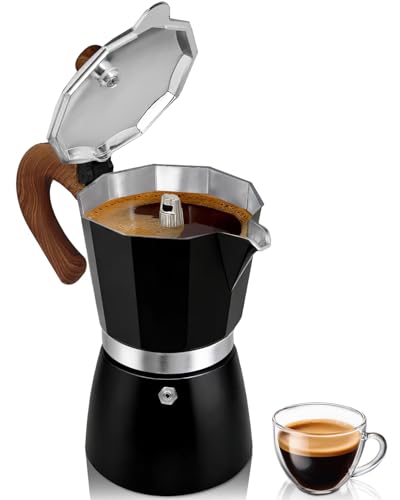 Belly Moka Coffee Maker Stovetop Espresso Maker 9 Cup Aluminum Moka Pot Percolator 15oz 450ml Easy Brewing for Electric Ceramic Stoves Home Camping Italian Cuban Café Classic Black
 Belly Moka Coffee Maker Stovetop Espresso Maker 6 Cup Aluminum Moka Pot Percolator 10oz 300ml Easy Brewing for Electric Ceramic Stoves Home Camping Italian Cuban Café Classic Silver