You wake up, stumble to the kitchen, and realize your coffee beans are still whole. You reach for the grinder, and the noise rips through the quiet house like a chainsaw. The dog starts barking, your partner rolls over, and you just want a cup of coffee without a production.
As an Amazon Associate I earn from qualifying purchases.
The manual coffee grinder vs electric coffee grinder debate is not about which one is objectively better. It’s about your mornings, your counter space, and the kind of coffee you actually drink. I have tested dozens of grinders over the years, including the Hario Skerton, which sits on my shelf as a reminder of how far this category has come.
This comparison breaks down the real differences in grind consistency, workflow, physical effort, and long-term costs. No marketing fluff, just the practical stuff that matters when you are half asleep.
The Great Grinder Debate: Manual vs. Electric
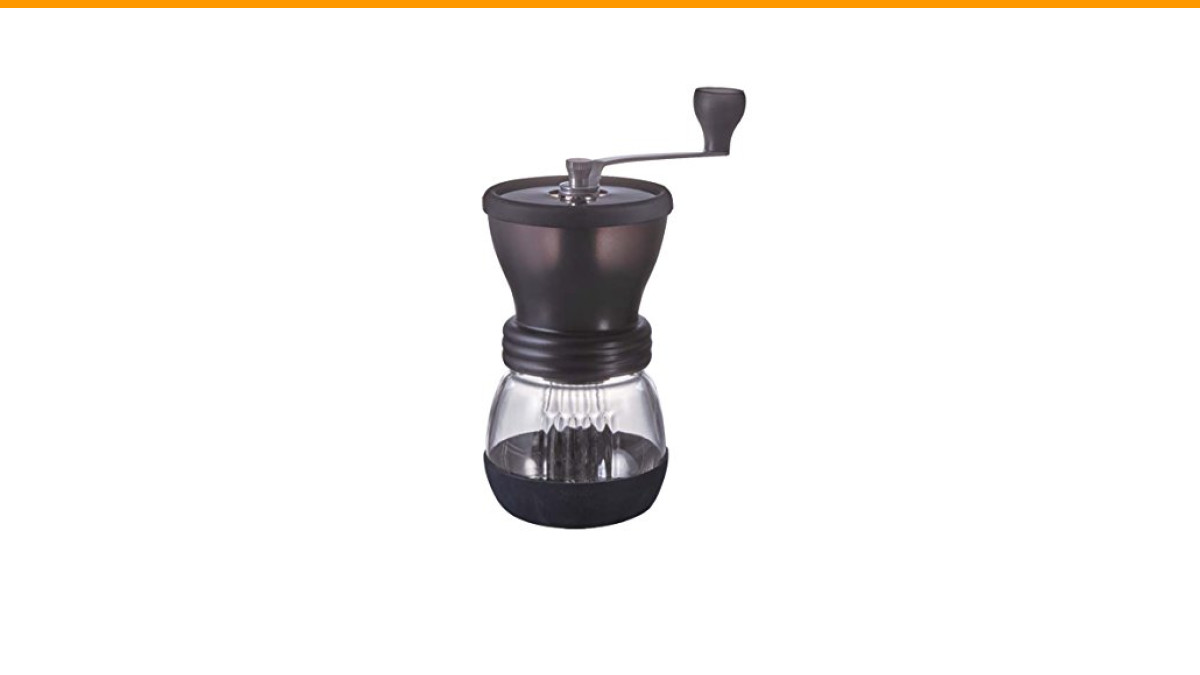
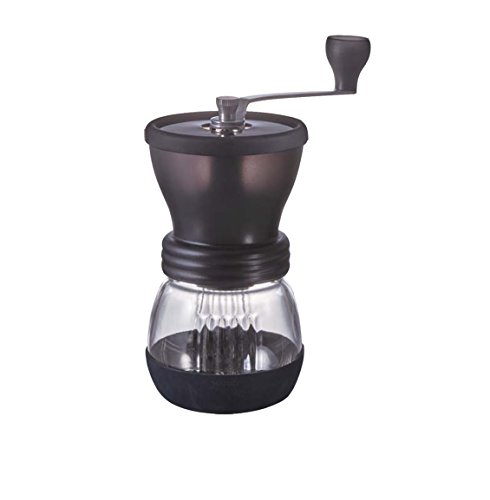
The first thing you notice when you hold the Hario Skerton is how light it is. It’s a simple glass and plastic construction that feels fragile if you squeeze it too hard. But that simplicity is also its strength. There are no motors to burn out, no plastic gears to strip, and no electrical components that can fail.
Electric grinders bring a different trade-off. They are faster, obviously, but they introduce a whole set of problems like heat buildup, static cling, and retention. The coffee grounds that get stuck inside the chute and don’t make it into your brewer are grounds you paid for but never got to drink.
I have used both side by side for weeks at a time. The manual grinder forces you to slow down. The electric grinder tempts you to hit the button and walk away. One of those habits produces better coffee. The other produces a mess.
Grind Quality & Consistency: Is There a Real Winner?
Grind consistency is the single most important factor in your cup. If your grounds are uneven, the small particles over-extract and taste bitter while the large pieces under-extract and taste sour. The Hario Skerton uses a ceramic conical burr set, which is a massive step up from blade grinders that just chop beans into random shards.
In my testing, the Skerton produces a decent grind for pour-over and French press. It is not going to win any awards for uniformity at the fine end of the spectrum, though. The burrs wobble slightly at fine settings because the lower bearing is not stabilized. This is a known issue with this design, and it means your espresso shots will be inconsistent.
Electric grinders with conical burrs, like the Baratza Encore, hold a clear advantage here. The burrs are mounted on a fixed shaft with proper bearings, so the gap between them stays constant. You get a more uniform particle size across the board, which translates to a sweeter, cleaner cup.
Conical vs. Flat Burrs: Does it Matter for Each Type?
Conical burrs are the standard for both manual and entry-level electric grinders. They are slower but produce less heat and are generally quieter than flat burrs. Flat burrs are mostly found in commercial machines and high-end home espresso grinders. They are faster but generate more heat and require more cleaning.
For a manual grinder, conical burrs are the only sensible choice. The low RPM of hand cranking means heat is never an issue. For an electric grinder, conical burrs are the safer bet for drip and French press because they are more forgiving. Flat burrs shine for espresso where uniformity at fine settings matters most.
Here is the honest truth: at the sub-$200 price point, the burr geometry matters less than the build quality of the housing and the bearing assembly. A wobbly manual grinder will produce worse grounds than a well-built electric one, regardless of the burr shape.
Speed, Effort, and Workflow: The Real-World Test
I ground 30 grams of coffee for a pour-over with the Hario Skerton. It took me exactly 1 minute and 45 seconds of continuous cranking. The same amount of coffee took 12 seconds in an electric grinder. That is a 1 minute and 33 second difference, which does not sound like much until you are doing it every single morning.
The workflow difference goes beyond raw time. With the manual grinder, you are committed to standing there and cranking. You cannot walk away to toast bread or boil water. With an electric grinder, you press the button and go do something else.
The ‘Grind Time’ Trade-off (Quantified)
Let me put this in perspective. A 30-gram batch for a pour-over takes roughly 90 to 120 seconds on a decent manual grinder like the Skerton. The same batch takes 10 to 15 seconds on an entry-level electric like the Baratza Encore. Over a year of daily brewing, that difference adds up to roughly 7 to 10 hours of your life spent cranking a handle.
Now, I enjoy the ritual of hand grinding. It is meditative. But I also value my time in the morning. If you brew more than one cup at a time, or if you regularly make coffee for a partner, the manual grinder becomes a bottleneck.
The ‘Hand-Grinding Fatigue’ Reality
Not all beans grind the same. A light roast from Ethiopia is dense and hard. Grinding it with the Skerton requires real forearm effort, especially at fine settings. A medium or dark roast is more brittle and crumbles easier, so the cranking is noticeably smoother.
I tested this with a light roast Kenyan AA and a dark Sumatran blend. The light roast took 25% longer to grind and left my hand slightly tired after 30 grams. The dark roast was effortless by comparison. If you only drink light roasts, factor that physical effort into your decision.
People with arthritis or wrist issues should think hard before buying a manual grinder. The repetitive twisting motion can aggravate those conditions. An electric grinder removes that concern entirely.
The Electric Grinder ‘Duty Cycle’ Problem
Here is something most reviews skip: cheap electric grinders have a duty cycle. That is the amount of continuous run time they can handle before the motor overheats. Many entry-level models are only rated for 30 to 60 seconds of use at a time, then they need to cool down.
Grinding 30 grams of light roast coffee can push a budget electric grinder right to that limit. The motor strains, the housing gets warm, and the thermal overload switch trips. You end up waiting two minutes for the motor to cool before you can finish the job. That completely defeats the speed advantage.
The Hario Skerton has no such problem. There is no motor to overheat. You can grind as slowly or as quickly as you want, and the only limit is your own stamina. For occasional use, this durability advantage is worth more than speed.
Portability, Noise, and Your Living Situation
Noise is the hidden deciding factor for many people. An electric grinder in a small apartment wakes up the whole household. The whir of the motor and the crunch of the beans is unmistakable. A manual grinder is nearly silent. The gentle crunch of beans being crushed is a soft sound that does not carry through walls.
I lived in a thin-walled apartment for two years. My roommate worked nights and slept during the day. The manual grinder was the only option that did not start a fight. If you share walls with neighbors or have a partner who sleeps in, the acoustic advantage of a manual grinder is huge.
Portability follows the same pattern. The Hario Skerton is small enough to toss in a backpack or a camper van. It does not need a power outlet. Electric grinders are bulky, heavy, and tethered to the kitchen counter. For travel, camping, or just moving between home and office, the manual grinder wins outright.
Cost vs. Value: The Long-Term Financial Picture
The Hario Skerton sits at a price point that is accessible for most home brewers. It is not a premium hand grinder like the 1Zpresso or Commandante, which cost three to four times as much. It is a budget-friendly entry into the world of burr grinding.
Electric grinders range from budget models to serious investments. The thing to remember is that cheap electric grinders often fail within a year or two of daily use. The plastic gears strip, the motor bearings wear out, or the switch breaks. A manual grinder has none of those parts to fail.
I have had my Skerton for over three years. The glass jar still holds, the ceramic burrs still cut, and the handle still turns. The only maintenance I have done is brushing out the grounds and occasionally wiping the threads. That kind of durability changes the cost equation over time.
The ‘Upgrade Path’ Strategy
Here is my practical advice. If you are just starting out and you are not sure you will stick with specialty coffee, buy a manual grinder like the Skerton. It is a low-risk entry point. You can learn about grind sizes and brew methods without spending a lot of money.
If you know you are in this for the long haul, save your money and skip the budget electric grinder entirely. Go straight for a quality electric burr grinder or a premium manual grinder. The budget electric models are a dead end. You will outgrow them in six months, and they have poor resale value.
The Skerton holds its value reasonably well because it is a recognizable brand. But it is not an heirloom piece. It is a learning tool. Once you understand what you want from coffee, you will know which upgrade makes sense.
Head-to-Head Verdict: Which Should You Buy?
There is no universal answer, so let me give you mine based on how I actually use grinders.
Buy the Hario Skerton if you are a single person or a couple brewing one or two cups at a time. Buy it if you value quiet mornings, portability, and durability. Buy it if you are on a budget and want to learn about coffee without a big commitment.
Skip it and get an electric grinder if you brew large batches, if you drink espresso regularly, or if you have physical limitations in your hands. The grind consistency at fine settings is not good enough for espresso, and the physical effort is a real barrier for some people.
My honest recommendation: most home users are better off with a quality electric burr grinder. The convenience and consistency win in the long run. But keep a manual grinder on the shelf for travel, camping, or those early mornings when you do not want to wake the house.
Frequently Asked Questions (FAQs)
Is a manual coffee grinder worth the effort?
For a single cup of pour-over or French press, yes. The effort is about 90 seconds of cranking, and the grind quality is comparable to entry-level electric grinders. The physical effort increases with light roasts and fine grind settings, so consider that before buying.
Can the Hario Skerton grind for espresso?
Technically yes, but practically no. The grind adjustment range goes fine enough, but the burr wobble at fine settings produces inconsistent particle sizes. Your espresso shots will channel and taste sour or bitter. Use it for pour-over, French press, and cold brew instead.
How long does a manual grinder last?
Years, if you treat it reasonably. The Skerton has no motor or electronics to fail. The ceramic burrs are very hard and resist wear. The most likely failure point is the glass jar breaking if you drop it. Replacement parts are available, but you may not need them.
Are electric grinders faster than manual ones?
Yes, significantly. An electric grinder finishes 30 grams of coffee in about 15 seconds. A manual grinder takes 90 to 120 seconds for the same amount. The speed difference matters most when you brew multiple cups or grind for a group.
Which grinder is better for a small apartment?
The manual grinder, without question. It is nearly silent, takes up less counter space, and does not require a power outlet. An electric grinder will be louder and bulkier, which can be a problem in close quarters with thin walls.
Ready to buy? Check the latest price on Amazon