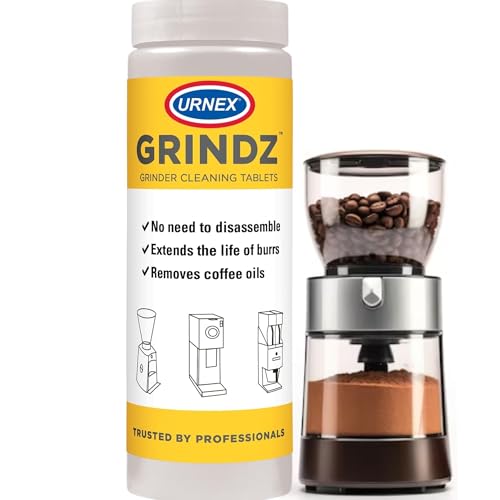
That stale, oily taste in your morning cup isn’t the beans. It’s the leftover coffee residue trapped between your grinder’s burrs. You can’t see it, but you can taste it in every shot. The fix comes down to two tools: a simple brush or a chemical cleaning tablet. Most people pick one and stick with it, but that’s a mistake.

As an Amazon Associate I earn from qualifying purchases.
The real answer is a division of labor. A brush handles the daily loose grounds; a tablet dissolves the baked-on oils that a brush can never reach. The coffee grinder cleaning tablets vs coffee grinder brush debate isn’t about which is better. It’s about knowing which job each tool is built for. I tested the Urnex Brands 17-GRINDZ12-430 Grindz Grinder Cleaner Tablet (a set of 12 per case) against my usual brush routine to find out where the line really is.
The Core Difference: Physical Removal vs. Chemical Dissolution
A brush is mechanical. It scrapes away ground coffee that sits on the surface of the burrs, the chute, and the lid. It does this job well, but it only gets what it can touch. Coffee oils are sticky. They cling to the microscopic ridges of your burrs and polymerize over time, turning into a varnish-like coating that changes your extraction yield.
A tablet like Urnex Grindz is chemical. You run it through the grinder like coffee, and the food-safe, biodegradable formula dissolves those residual coffee oils without you having to disassemble anything. The tablets are odorless and tasteless, so they won’t leave a chemical aftertaste in your next batch of beans. The set of 12 gives you a full year of monthly cleanings if you stick to the schedule.
Think of the brush as your toothbrush and the tablet as your mouthwash. One removes the physical debris; the other kills the bacteria you can’t see. Skipping either one leaves your grinder—and your coffee—worse off.
When a Brush is the Only Tool You Need
Daily maintenance is a brush job. Every time you grind coffee, a fine dust settles on the burrs and in the chute. If you leave it there, it goes rancid within hours. That rancid coffee residue is what ruins the flavor profile of your next brew, even if you’re using expensive, freshly roasted beans.
A brush is also the only safe option for a blade grinder. Tablets can damage the blades and the plastic housing of these cheaper units, and the abrasive action of the tablet against a spinning blade creates unnecessary wear. For blade grinders, a brush is non-negotiable.
The 10-Second Daily Brush Routine
You don’t need a fancy ritual. After you grind your beans, give the grinder a quick once-over with the brush. Sweep the loose grounds out of the burr chamber and the chute. Tap the brush handle against the side of the grinder to dislodge anything stuck in the bristles. That’s it. Ten seconds, twice a day if you grind frequently.
For a deeper physical clean, you can brush the burrs directly and then use a vacuum attachment to pull out anything the brush loosened. This keeps static cling from holding grounds in place. A brush won’t fix a clogged chute caused by oily beans, but it will prevent most buildup before it starts.
When Tablets are Non-Negotiable
Here’s the part most people get wrong. A brush can’t remove the oil film that builds up on burrs over weeks of use. That film changes the grind size distribution, which directly impacts your extraction yield and makes your coffee taste bitter or hollow. No amount of brushing will fix it.
That’s where Urnex Grindz comes in. The tablets are designed to be ground through your burr grinder, and the inert, food-safe material scrubs the oils off the burrs as it passes through. The process takes about a minute per tablet, and you can see the difference in the grounds that come out—they’re dark and oily, which means they’re pulling out the gunk that was coating your burrs.
The Science of Oil Breakdown and Stale Flavors
Coffee beans contain about 10% oil by weight. When you grind them, that oil coats the burrs. Over time, exposure to air oxidizes the oil, making it go rancid. Rancid oil tastes like cardboard and dust. It also mixes with fresh grounds, contaminating your next batch. The Urnex tablets bind to these oils and carry them out of the grinder, restoring a clean surface for your beans to pass through.
This matters most for espresso drinkers. A dirty grinder produces uneven particles, which leads to channeling in the portafilter and a sour, under-extracted shot. If you’re pulling shots that taste off and you haven’t cleaned your grinder in a month, the tablets are the fix.
The Hybrid Protocol: A Step-by-Step Weekly Schedule
Stop treating this as an either/or choice. The best routine uses both tools on a set schedule. Here’s the exact workflow I use and recommend to anyone with a burr grinder.
Daily (after each use): Brush out loose grounds from the burr chamber, chute, and lid. This takes 10 seconds and prevents stale coffee from building up.
Weekly (every 7 days): Do a deeper brush session. Remove the hopper and upper burr if your grinder allows it. Brush the burrs directly, then vacuum out the chamber. Check the chute for clogs and clear them with a skewer if needed.
Monthly (every 4 weeks): Run one Urnex Grindz tablet through the grinder. Grind it on a medium setting, just like you would coffee. Follow it with a few grams of cheap, fresh coffee beans to push out any remaining tablet residue. Then brush the chamber clean. This whole process takes about five minutes.
This hybrid protocol keeps your grinder mechanically clean and chemically clean. It also extends the time between full disassembly cleanings, which is a hassle for most home users. If you’re wondering about the broader cleaning picture, our guide on grinder cleaning steps covers the full teardown process in detail.
Cost, Waste, and Warranty: The Hidden Trade-offs
Money matters. A good grinder brush costs between $5 and $15 and lasts for years. A set of 12 Urnex Grindz tablets costs more upfront, but the per-use cost is modest. If you clean monthly, one case covers a full year. That’s a small price to pay to protect a grinder that costs $200 or more.
Waste is another angle. Tablets come in plastic packaging, and each tablet is individually wrapped. That’s 12 pieces of plastic waste per year. A brush has a manufacturing footprint but produces zero ongoing waste. If you’re environmentally conscious, the brush wins on waste, but the tablet wins on effectiveness. It’s a trade-off, not a clear victory.
Warranty fine print is the part nobody reads. Some grinder manufacturers, including Baratza and Fellow, explicitly state in their manuals that using cleaning tablets voids the warranty. They claim the tablets can damage the burr coating or the motor. This is controversial, but you need to check your specific grinder’s warranty terms before you run a tablet through it. If your grinder is still under warranty and the manual says no tablets, stick to brushing until the warranty expires.
The Urnex tablets themselves are food-safe and biodegradable, so there’s no chemical risk to your health. The risk is purely mechanical and contractual. Check your manual, or email the manufacturer, before you start a tablet routine.
Blade Grinders: Why You Should Never Use Tablets
If you own a blade grinder, stop reading this section and put the tablets down. Blade grinders work by chopping beans with a spinning metal blade. Running a hard tablet through that blade can dull it, chip it, or stress the motor. The tablet isn’t designed for that kind of impact.
A brush is the only safe cleaning method for a blade grinder. You can also wipe the interior with a dry cloth, but never introduce water or cleaning chemicals. The motor housing isn’t sealed against liquids, and you risk a short circuit. If you’re trying to decide between a burr grinder and a blade grinder, our comparison of burr vs blade grinders explains why burr grinders are worth the upgrade for anyone serious about coffee.
For blade grinder owners, the cleaning routine is simple: brush after every use, and wipe the bowl with a dry paper towel once a week. That’s it. Tablets are a burr grinder tool, full stop.
The Verdict: Which Method Wins for Your Routine?
The brush wins for daily maintenance and for blade grinders. The tablet wins for monthly deep cleaning of burr grinders. They are not competitors; they are complementary tools. If you only buy one, buy the brush. It’s cheaper, it’s universally safe, and it handles the most common problem: loose grounds going stale.
If you own a burr grinder and you’ve noticed your coffee tasting flat or bitter, the Urnex Grindz tablets are the missing piece. The set of 12 gives you a year of deep cleanings, and the difference in your cup will be noticeable after the first use. I was skeptical about how much oil was trapped in my grinder until I ran the first tablet through. The dark, oily grounds that came out were proof enough.
My recommendation is the hybrid protocol: brush daily, tablet monthly. This protects your grinder, keeps your coffee tasting fresh, and avoids the warranty pitfalls by using the tablet sparingly. If you’ve recently cleaned your grinder and the coffee still tastes off, check our article on bitter coffee after cleaning for other culprits.
For most home users, the cost of the tablets is justified by the improvement in flavor. A $200 grinder is a significant investment. Spending a few dollars a month to keep it performing like new is the smart move. The brush is your daily driver; the tablet is your monthly reset. Use both, and your grinder will outlast your expectations.
Frequently Asked Questions
How often should I use cleaning tablets in my grinder?
Monthly is the standard recommendation for home users with burr grinders. If you grind multiple times a day or use very oily beans, you may need to do it every two to three weeks. The Urnex Grindz set of 12 is designed for a monthly schedule, giving you a full year of coverage.
Can I use cleaning tablets on any grinder?
No. Use them only on burr grinders, both conical and flat burrs. Never use them on blade grinders, as the tablets can damage the blade and motor. Always check your grinder’s warranty terms first, as some manufacturers void coverage if tablets are used.
Do I need to run coffee beans after using a tablet?
Yes. After grinding a tablet, run a small amount of fresh coffee beans through the grinder. This pushes out any remaining tablet residue and conditions the burrs with natural oils. Discard those grounds; don’t brew them.
Will cleaning tablets remove the seasoning from my burrs?
Burr seasoning is a thin layer of coffee oils that some believe improves grind consistency. The Urnex tablets are designed to remove oil buildup, so they will strip that seasoning. For most home users, this isn’t a problem. The benefit of a clean grinder outweighs the minor seasoning loss.
Is a brush enough to keep my grinder clean?
For daily maintenance, yes. For long-term oil buildup, no. A brush removes loose grounds but can’t dissolve the polymerized oils that coat burrs over time. You need tablets for that. The best routine uses both on a schedule.
Ready to buy? Check the latest price on Amazon