You pull the lever, wait for the familiar hum, and then the water trickles out cool enough to drink without wincing. Or worse, the machine sits there silent and stone cold, not even a flicker of warmth from the group head. It’s a frustrating way to start a morning. The good news is that a machine that won’t heat is usually fixable. The better news is that you can figure out exactly what’s wrong in about ten minutes with a screwdriver and a multimeter.
This guide walks you through the diagnosis step by step, like a flowchart. You’ll learn to tell the difference between a machine that’s completely dead and one that’s just not getting hot enough. We’ll cover the most common failures, what to test first, and when you should stop poking around and call a professional. You’ll walk away knowing exactly which part is failing and whether it’s worth fixing.

MacMaxe
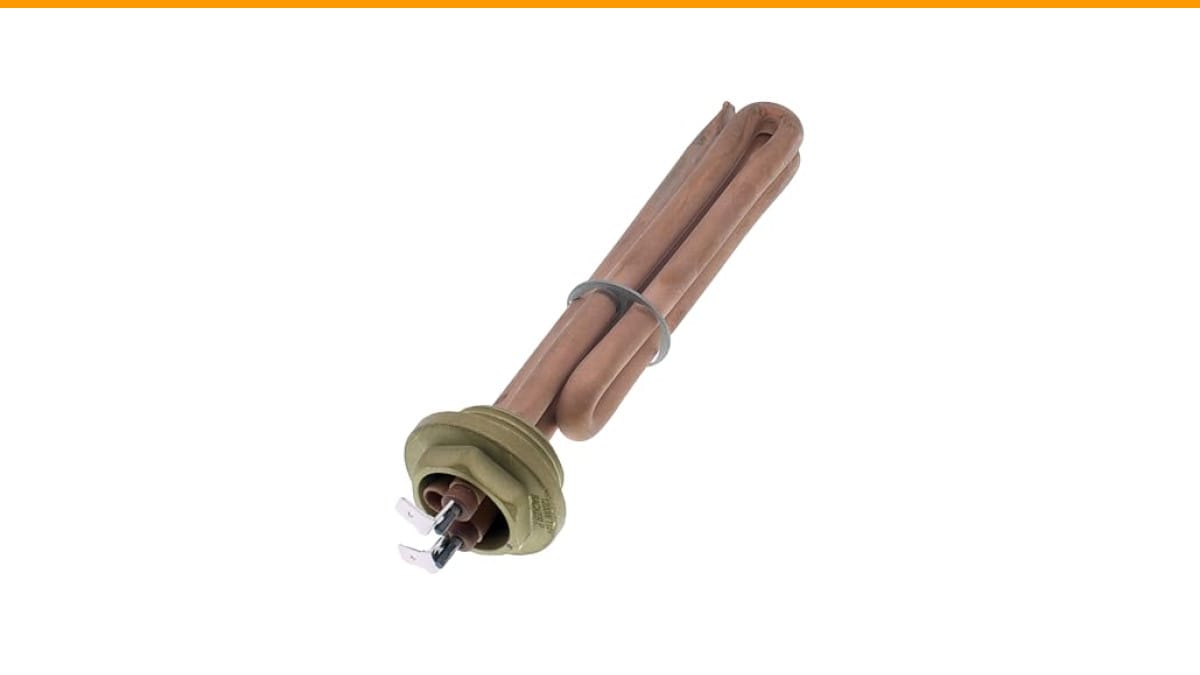
MacMaxe Heating Element for Oscar & Musica…
- Perfect Fit for Oscar & Musica Machines – Engineered for seamless compatibility.
- Reliable Heating Performance – Maintains consistent water temperature for optimal espresso extraction.
- Premium Quality Replacement – Durable and efficient for long-term use.
As an Amazon Associate I earn from qualifying purchases.
If your machine is older and you’ve already identified a failing heating element, a direct replacement like the MacMaxe Heating Element for Oscar & Musica is a solid, straightforward fix. It’s built for those specific models and keeps the water temperature steady for proper extraction.
First, Diagnose: Is It “Not Hot” or “Not Heating”?
Before you take anything apart, you need to answer one question: does the machine get any heat at all? This single answer splits the entire troubleshooting process in half.
The 5-minute visual and touch checklist
Run this quick check before you open anything. It takes five minutes and can save you from unnecessary work.
- Feel the machine’s shell. After 15 minutes powered on, is the top or side of the case warm? If it’s warm but the water is cold, you have a water flow problem, not a heating problem.
- Check the brew group or portafilter. Is the metal hot to the touch? On a semi-automatic, a hot group head with cold water means the thermojet or flow path is blocked.
- Listen for the pump. When you press the brew button, do you hear the pump running? If the pump runs but no water comes out, you’ve got a blockage or air lock.
- Look at the power light. Does it stay solid, or does it blink in a pattern? Many super-automatic machines blink a specific code for a thermal fault.
- Check the water tank. Sounds obvious, but a low tank can cause the machine to heat the boiler but not push water through. The heating element can still get hot even with no water in the lines.
If the machine case is completely cold after 15 minutes, you’re dealing with a power delivery or heating component failure. If the case is hot but the water is not, you’re dealing with a flow or pump issue. These are two completely different repair paths.
The #1 Culprit: Blown Thermal Fuse vs. Failed Thermostat
In my experience, nine out of ten “no heat” calls come down to one of these two components. They both live near the boiler and both act as safety cutoffs, but they fail in different ways.
The thermal fuse is a one-time use safety device. It’s a small, usually white or black cylinder with two wires attached. When the boiler overheats past a certain temperature, typically around 185°C (365°F), the fuse blows internally and permanently breaks the circuit. It cannot be reset. You must replace it.
The thermostat, on the other hand, is a resettable switch. It cycles on and off to maintain the brew temperature. When it fails, it usually fails in the open position, meaning it stops passing current even when the boiler is cold. Some thermostats have a small reset button on the side, but most in espresso machines are sealed units that need replacing.
How to test with a multimeter (and what readings to expect)
Testing both is easy. You need a basic multimeter set to the continuity or resistance (ohms) setting. Unplug the machine first. I mean it. Unplug it and wait ten minutes for the capacitors to discharge.
- Locate the thermal fuse and thermostat. They’re usually wired in series on the boiler. Follow the wires from the power cord to the boiler.
- Disconnect one wire from each component to isolate them from the circuit.
- Touch the multimeter probes to the two terminals of the thermal fuse. A good fuse will read near 0 ohms (continuity). A blown fuse will read infinite resistance (OL on the display).
- Do the same test on the thermostat. At room temperature, it should also read near 0 ohms. If it reads OL, it’s dead.
A reading of 0.2 to 0.5 ohms is normal for these parts. Anything above 10 ohms indicates a failing connection. If you get OL on either, that’s your problem. Replace the faulty part with the exact same rating, usually stamped on the side of the old component.
Heating Element Failure: The Rare but Fatal Issue
If both the fuse and thermostat test fine, the next suspect is the heating element itself. This is the metal rod that sits inside the boiler and actually gets hot. It’s a simple resistive coil, and when it burns out, the machine will show all the signs of power but produce zero heat.
Testing the element is the same process. Unplug the machine, disconnect the two wires from the element terminals, and measure resistance between them. A good 1200W element rated for 115V will read between 9 and 11 ohms. If you see OL, the coil is broken internally and the element is dead.
There’s also a second test you should run: the ground test. Touch one probe to the element terminal and the other to the boiler body or a metal ground point. You want to see infinite resistance. If you get any reading at all, the element has a short to ground. That’s a serious safety hazard and the machine must not be used until the element is replaced.
Replacing an element is a bigger job than swapping a fuse. It involves draining the boiler, removing the old element, cleaning the gasket surface, and installing the new one. It’s doable at home if you’re handy, but it’s also the point where many people decide to call a technician. If you have an Oscar or Musica machine, the MacMaxe replacement element is a direct fit and simplifies the process.
Thermojet vs. Boiler: Troubleshooting by Machine Type
Not all espresso machines heat water the same way. The two main systems are traditional boilers and thermojets. Your troubleshooting steps change depending on which one you have.
A boiler is a large metal tank that holds a reservoir of water and heats it all at once. These machines take longer to warm up but hold temperature steady. The components we’ve discussed — fuse, thermostat, element — all live directly on the boiler.
A thermojet is a small, block-style heater that heats water on demand as it flows through. These are common in super-automatic machines. They warm up faster but are more prone to scale buildup because the water passages are tiny. A thermojet machine that’s heating poorly often has a clogged flow path, not a dead heater.
Super-automatic (Philips/Saeco) specific fixes
If your Philips or Saeco machine is cold, check the brew group first. These units are removable. If the brew group is jammed or not seated correctly, the machine will refuse to heat as a safety measure. The display may show an error code or just flash a red light.
Next, look at the water hardness setting. Many super-automatics monitor scale buildup and will reduce heating power or trigger a descale cycle when they detect a blockage. If the machine is demanding a descale, run it. A full descale cycle can restore heating performance if limescale is insulating the thermojet.
If the machine is completely dead, the thermal fuse is still the first suspect, but you’ll need to access the internal board to find it. That’s a bit more involved than a semi-automatic, so budget more time.
Semi-automatic (Gaggia/Silvia) specific fixes
Gaggia Classic and Rancilio Silvia machines are simpler. They have a standard boiler, a visible thermostat, and a replaceable heating element. The troubleshooting is textbook: test the fuse, test the thermostat, test the element.
One thing to check on these machines is the vacuum breaker valve. It’s a small one-way valve on top of the boiler. If it’s stuck closed, the boiler can build pressure and trip the over-pressure safety, which sometimes cuts power to the heating circuit. If your machine heats for a minute then shuts off, check the vacuum breaker for scale buildup.
The air lock is another common issue. If the boiler has air trapped inside, the heating element can get hot but the water won’t circulate. The fix is simple: open the steam wand for a few seconds to purge the air. You’ll hear a sputter, then a steady stream of water, then steam. That clears the air lock.
The Limescale Problem: Why Your Machine Runs Lukewarm
Hard water is the silent killer of espresso machines. Calcium and magnesium deposits build up on the heating element and the inside of the boiler over time. This layer acts as an insulator. The element still gets hot, but the heat can’t transfer efficiently to the water. The result is a machine that runs lukewarm, takes forever to warm up, or cycles on and off constantly.
You can’t see limescale from the outside. The only way to know is to open the machine or run a descale cycle and observe the results. If your machine is a few years old and you’ve never descaled it, this is likely your problem.
The fix is a descaling solution made for espresso machines. Follow the manufacturer’s instructions. Don’t use vinegar; it can damage the seals and leave an aftertaste. A proper descale can take 30 to 60 minutes. Afterward, run several blank shots of fresh water to flush the system completely.
For severe scale buildup, the heating element might need to be removed and soaked in a descaling solution. This is where the MacMaxe element becomes useful — if you’re pulling the old one out, you might as well have a fresh one ready to install.
The E61 “Thermal Sink” Fallacy: Why Your Portafilter is Cold
Here’s a scenario that confuses a lot of home baristas: the water comes out hot enough to brew, but the portafilter and group head are cold to the touch. They assume the machine is broken. It’s not. It’s working exactly as designed.
E61 group heads are massive chunks of metal. They act as a thermal sink, absorbing heat from the boiler to stabilize the temperature of the water passing through. But they need time to soak. The boiler heats up in 10 minutes, but the group head needs a full 30-minute warm-up to reach thermal equilibrium. This is a feature, not a fault.
If your machine has an E61 group head and the water is hot but the metal is cold, you’re not waiting long enough. Turn the machine on, wait 30 minutes, then check again. This is called a thermal soak, and it’s essential for proper extraction with these machines.
If the water is also cold after 30 minutes, then you have a real problem. Go back to the fuse and thermostat checks.
When to Stop DIY: Safety Warnings and Calling a Pro
Opening an espresso machine exposes you to live electrical components. The boiler has a heating element that runs on 115V. The capacitors on the control board can hold a charge long after the machine is unplugged. If you’re not comfortable working with electricity, don’t do this yourself.
Here are the hard rules: unplug the machine, wait 15 minutes, and use a multimeter to verify zero voltage on the terminals you’re touching. Never work on a wet machine. Never bypass a thermal fuse or thermostat. They exist to stop a fire.
If you’ve tested the fuse, thermostat, and element and all read correctly, stop. There’s something else going on, likely on the control board. That’s a job for a professional. A technician will have a wiring diagram and the experience to trace the fault quickly. The cost of a service call is lower than the cost of a new machine, and it’s far lower than the cost of an electrical fire.
Also, if the machine is still under warranty, don’t open it. You’ll void it. Call the manufacturer first.
Quick Fix FAQs: Cold Water, Hot Machine, and First Cup Blues
Why is my espresso machine hot but the water is cold?
This points to a flow problem, not a heating problem. The machine is heating the boiler, but water isn’t passing through it correctly. Check for an air lock in the boiler. Open the steam wand to purge the air. If that doesn’t work, the pump may be weak or the flow sensor might be blocked. Also check the thermojet for scale buildup if you have a super-automatic.
How do I know if my espresso machine thermal fuse is blown?
Use a multimeter set to continuity. Unplug the machine, disconnect the fuse, and touch the probes to its terminals. If the meter shows no continuity (OL), the fuse is blown. A good fuse will show near 0 ohms. This is the definitive test.
Can I reset my espresso machine’s thermostat?
Some thermostats have a small red reset button. Press it and see if the machine heats up. However, most thermostats in modern espresso machines are sealed units without a reset. If yours doesn’t have a button, it’s not resettable. Test it with a multimeter. If it reads open (OL), replace it.
Why does my espresso machine take 30 minutes to heat up?
For E61 group head machines, this is normal. The group head needs a thermal soak to reach the right temperature. For other machines, a long warm-up time indicates scale buildup on the heating element. The limescale acts as an insulator, slowing heat transfer. Descaling the machine should fix it.
Is it worth repairing an old espresso machine?
It depends on the cost. A thermal fuse or thermostat costs a few dollars and takes 30 minutes to replace. That’s worth doing. A heating element is more expensive but still cheaper than a new machine. If the control board is dead, the repair cost might exceed the value of the machine. Compare the repair cost to the price of a new machine and make the call.
What To Do Next (The Practical Summary)
- Always unplug the machine and wait 15 minutes before opening it. Capacitors hold charge.
- Test the thermal fuse first. It’s the most common failure and the cheapest to fix.
- Test the thermostat second. Expect near 0 ohms at room temperature.
- Test the heating element for both continuity (9-11 ohms for a 1200W unit) and ground fault (infinite resistance).
- If the machine is hot but water is cold, purge the air lock with the steam wand.
- If you have an E61 machine, wait the full 30 minutes for the thermal soak before diagnosing a problem.
- Run a descale cycle if you suspect limescale. It’s a cheap fix that solves many lukewarm issues.
- If you’ve tested everything and found nothing, call a professional. Don’t risk a fire.
For more on choosing between machine types, see our automatic vs semi comparison. If your machine is also making strange sounds, check our guide on loud noise fixes. And if water is pooling underneath, read about leak troubleshooting. Most heating problems are simple, and now you have the tools to find them.
Products related to this article
Sponsored / affiliate links. As an Amazon Associate I earn from qualifying purchases. I may earn additional commission from eligible campaigns.
 Coffee Espresso Machine Handle Replacement Parts, Cafe Bracket Handle for Lidl Silvercrest CM4621 CM4218 KF5002 KF500S Barista (for 51mm Portafilter Basket - Not included)
 Quick Heating Cup Warmer, Three Temperature Settings, Splashproof and Portable, for Coffee, Milk, Lightweight ABS Material
 Linnkyfloa Coffee Espresso Maker Handle Replacement for Stovetop Moka Pot or Percolator, Black Plastic for Spare Part Compatible with Italian(9-12 Cup)