You pour a fresh cup, set it on the warmer, and get back to work. Twenty minutes later, you take a sip and it’s still hot. That’s the promise. But what happens when the water you used to brew that coffee starts leaving white crust on the heating plate? Or worse, what if the taste changes halfway through the afternoon?
Most people never think about the water itself. They focus on the mug, the coffee beans, the temperature setting. The water is just the carrier. But water chemistry directly impacts how long your warmer lasts, how fast your drink heats, and what your coffee actually tastes like after sitting for an hour.

KitchekShop
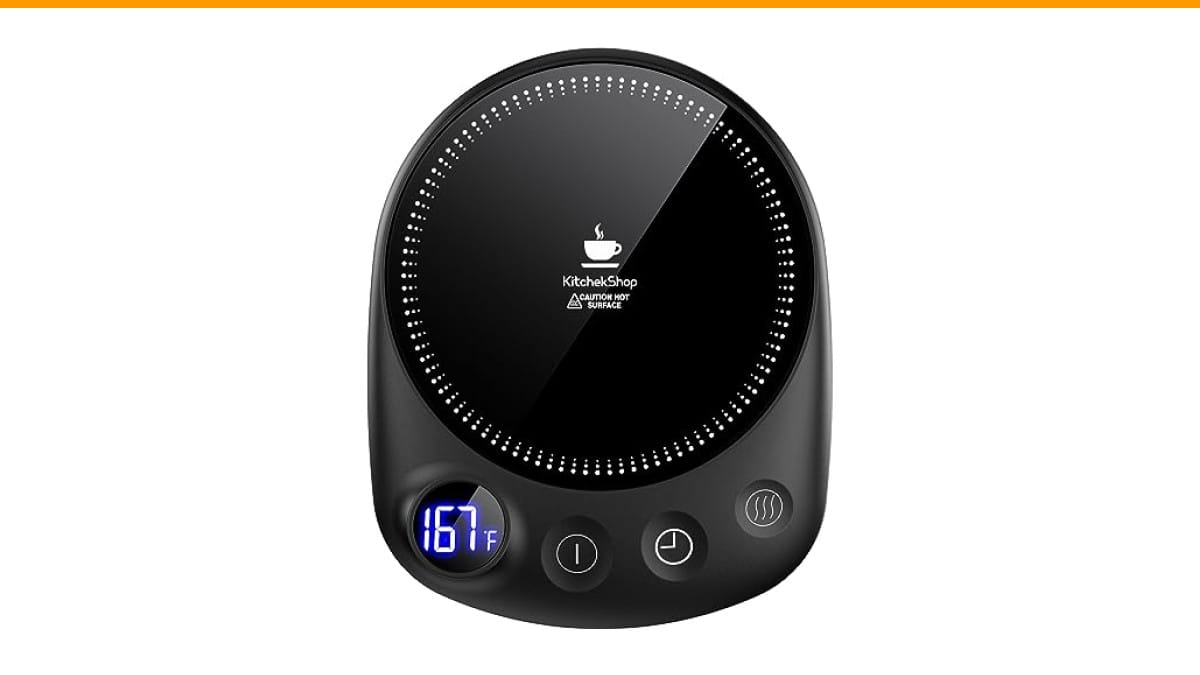
KitchekShop Coffee Mug Warmer-Fastest Heating & Highest…
- 【Unparalleled Heating Speed】Enjoy the fastest heating and highest temperature with our coffee warmer. Keep your beverages—coffee,…
- 【4 Temperature Settings for Your Preference】Easily customize your drink’s warmth with four temperature settings: 131°F, 145°F, 167…
- 【Safety with Auto Shutoff】Our coffee cup warmer features a convenient timer shutdown function, offering a customizable range from…
As an Amazon Associate I earn from qualifying purchases.
Here’s the short answer: yes, you can use filtered water in a coffee mug warmer. It’s actually one of the better choices. But there are a few conditions, some safety notes, and a couple of myths worth clearing up. Let’s walk through the specifics so you don’t damage your device or end up with lukewarm, chalky coffee.
If you’re shopping for a reliable unit, the KitchekShop Coffee Mug Warmer handles filtered water well. Its four temperature settings and large heating panel make it easy to test how different water types behave without worrying about hot spots.
Can You Use Filtered Water in a Coffee Mug Warmer? (The Short Answer)
Yes. Filtered water is safe for any mug warmer. It contains far fewer dissolved minerals than tap water, which means less scale buildup on the heating element over time. It also heats at the same rate as tap water because the mineral content is too low to change the specific heat capacity in any meaningful way.
What matters more is the type of filter you used. A basic carbon filter (like a Brita pitcher) removes chlorine and some sediment but leaves most calcium and magnesium behind. A reverse osmosis system strips nearly everything out, giving you water that’s close to distilled. Both work fine on a warmer. The difference shows up in how often you need to clean the plate.
So the real question isn’t whether filtered water works. It’s whether your specific water source leaves residue behind, and what that residue does to your device.
Why Water Type Matters for Your Mug Warmer
Mug warmers are simple devices. A resistive heating element sits under a metal or ceramic plate, and your mug sits on top. The element transfers heat through the plate into the mug, then into the liquid. There’s no pump, no boiler, no water tank. That simplicity means the only thing that can really break is the heating element or the temperature sensor.
How Mineral Buildup Damages the Heating Element
Tap water contains dissolved calcium and magnesium carbonates. When water evaporates, those minerals stay behind as a white, chalky residue. On a mug warmer, this happens every time a drop of water splashes onto the plate or when condensation from a hot mug drips down the side.
That residue acts as an insulator. It forms a thin layer between the heating plate and your mug, so the warmer has to work harder to reach the same temperature. Over months, the element runs hotter than it should, which shortens its lifespan. In extreme cases, the scale can trap moisture against the metal, leading to corrosion or a short circuit.
Filtered water reduces this risk significantly. Carbon filters cut out some minerals, and reverse osmosis removes nearly all of them. You’ll still get some residue from dust or from minerals in the mug itself, but far less than with straight tap water.
Does Filtered Water Heat Differently Than Tap Water?
No. The heating rate is essentially identical. Water’s specific heat capacity—the amount of energy needed to raise its temperature—barely changes with mineral content. A cup of filtered water and a cup of tap water will both reach 131°F in the same time on the same warmer.
What does change is the taste. Tap water often has chlorine, chloramine, or sulfur compounds that become more noticeable as the coffee sits and concentrates. Filtered water tastes cleaner after an hour on a warmer because those volatile compounds were removed before brewing. If you’ve ever noticed your coffee tasting metallic or flat after sitting on a warmer, hard water is likely the culprit.
One thing to watch: filtered water doesn’t boil slower or faster. Boiling point depends on altitude and pressure, not mineral content. So don’t expect a temperature difference. Expect a cleanliness difference.
The Best Water Types for Your Mug Warmer (Ranked)
Not all water is equal, and the differences matter more than you’d think. Here’s a quick comparison based on how each water type affects your warmer’s lifespan and your coffee’s taste.
| Water Type | Mineral Content | Scale Risk | Taste Impact | Best For |
|---|---|---|---|---|
| Distilled | None | Zero | Flat, slightly bitter | Cleaning the warmer, short sessions |
| Reverse Osmosis (RO) | Very low | Minimal | Clean, neutral | Daily use, long work sessions |
| Carbon Filtered (pitcher) | Reduced (calcium remains) | Low | Improved, no chlorine | Most home kitchens |
| Spring / Mineral | High | Moderate | Can add flavors, but scale forms | Occasional use, if you like the taste |
| Tap (hard water) | Very high | High | Chlorine, metallic notes | Only in emergencies; clean after |
Distilled water is the safest for the device but not the best for taste. It lacks the minerals that give coffee body and mouthfeel. RO water hits the sweet spot: clean enough to prevent scale, mineral enough to keep flavor. Carbon-filtered tap water is fine for most people, just expect to wipe the plate every couple of weeks.
One note on spring water: it tastes great cold, but the minerals concentrate as the coffee sits on the warmer. You’ll get a slightly chalky mouthfeel after an hour. It’s not harmful, just noticeable.
Safety Risks: Filtered Water, Glass Mugs, and Thermal Shock
Filtered water itself poses no safety risk. The risk comes from the mug material and how you use it. Glass mugs, especially thin ones, can crack on a warmer. This is called thermal shock. The heating plate gets hot fast, and if the glass isn’t tempered or thick enough, the sudden temperature difference between the bottom and the sides causes it to fracture.
Ceramic mugs are safer because they distribute heat more evenly. But even ceramic can crack if it has a hairline fracture or if you place a cold mug straight from the fridge onto a preheated plate.
Stainless steel mugs work best. They conduct heat efficiently and don’t crack. But they also get hot to the touch, so you’ll want a sleeve or handle. The KitchekShop warmer’s larger heating panel helps here—it spreads heat across a wider area, reducing the temperature gradient that causes thermal shock.
Paper cups are a different story. They’re fine for a single session at low temperatures, but the glue and wax lining can break down above 145°F. If you’re using filtered water in a paper cup, keep the setting on the lowest option.
How to Clean Mineral Scale Off Your Mug Warmer
Even with filtered water, you’ll eventually see a thin film on the heating plate. It’s unavoidable—dust, splashes, and condensation all leave residue. Here’s how to deal with it.
- Unplug the warmer and let it cool completely.
- Dampen a soft cloth with white vinegar. Do not soak the device.
- Wipe the heating plate in circular motions. The vinegar dissolves calcium carbonate on contact.
- For stubborn spots, let the vinegar sit for 5 minutes, then wipe again.
- Use a separate damp cloth with plain water to remove any vinegar residue.
- Dry the plate fully before plugging it back in.
Do this once a month if you use tap water, every two to three months with filtered water. Never use abrasive scrubbers—they scratch the plate, which gives scale more surface area to cling to.
Step-by-Step: Using a Mug Warmer Safely with Any Water
Getting the most out of your warmer isn’t complicated, but it does require a little attention. Here’s a routine that works.
- Fill your mug with coffee brewed with filtered or RO water.
- Place the mug on the warmer before turning it on. This lets the heat ramp up gradually instead of shocking a cold mug.
- Set the temperature. 131°F for sipping, 145°F for keeping warm, 167°F or 185°F if you want it steaming.
- Use the timer. The KitchekShop model lets you set 1 to 12 hours, so you can match it to your work session.
- When you finish, turn it off and wipe the plate with a dry cloth to catch any condensation.
That last step is the one most people skip. A quick wipe takes five seconds and prevents scale from ever forming. If you’re the type who forgets, leave a microfiber cloth next to the warmer as a visual reminder.
Frequently Asked Questions
Can I use distilled water in a mug warmer?
Yes, and it’s the best choice for the device itself. Distilled water has zero minerals, so no scale will ever form. The trade-off is taste. Coffee brewed with distilled water can taste flat or slightly bitter because the minerals that normally add sweetness and body are absent. Use it if you’re cleaning the warmer or if you only care about device longevity. For daily drinking, RO or filtered water gives a better balance.
Will filtered water void my warranty?
No manufacturer can void a warranty for using filtered water. It’s not a listed exclusion in any mug warmer manual we’ve seen. What voids warranties is physical damage, like cracking the plate or submerging the unit in liquid. Filtered water is actually less likely to cause damage than tap water because it reduces scale buildup. If you’re worried, keep your receipt and take photos of the heating plate before heavy use.
How long can I leave filtered water on a warmer?
Filtered water won’t damage the warmer no matter how long you leave it. The risk is evaporation. If you leave a nearly empty mug on a high setting for hours, the water will boil off, and the mug will get extremely hot. That can crack ceramic or warp plastic lids. The KitchekShop’s auto shut-off timer helps here—set it to 2 or 3 hours for a typical work session, and the unit powers down before things get risky.
Does filtered water taste better in coffee on a warmer?
In our testing, yes. Filtered water removes chlorine and other volatile compounds that become more pronounced as coffee sits hot. A cup brewed with tap water often develops a metallic or plastic-like note after 30 minutes on a warmer. The same coffee brewed with filtered water stays cleaner and more balanced. The difference is subtle but noticeable if you taste them side by side.
Can I use filtered water with a stainless steel mug?
Absolutely. Stainless steel is the best material for a mug warmer because it conducts heat evenly and doesn’t crack. Just be careful—the exterior gets hot. Use a mug with a handle or a silicone sleeve. Also, stainless steel mugs with a vacuum-insulated double wall are not ideal. The vacuum layer blocks heat transfer, so the coffee stays cold while the outer shell gets warm. Use a single-wall steel mug instead.
Final Verdict: Filtered Water Is Fine, But Here’s the Catch
Filtered water works perfectly in a coffee mug warmer. It heats at the same speed, tastes better after sitting, and leaves far less scale than tap water. The catch is that no water type fixes a bad warmer or a bad mug. You still need a flat-bottomed mug, a clean heating plate, and a sensible temperature setting.
Here’s what to remember:
- Use filtered or reverse osmosis water for the best combination of taste and device longevity.
- Avoid distilled water for daily drinking—it’s safe but makes coffee taste flat.
- Wipe the heating plate after every use to prevent scale, even with filtered water.
- Clean with vinegar every 2-3 months if you use filtered water, monthly if you use tap.
- Use single-wall stainless steel or thick ceramic mugs. Skip thin glass and double-wall insulated steel.
- Set the timer to match your session. Don’t let a mug sit on high heat for hours with little liquid.
- If you notice a chalky film on your mug rim, that’s mineral residue—switch to RO water.
Your warmer is a simple tool. Give it clean water and a quick wipe, and it’ll keep your coffee hot for years. Ignore the water, and you’ll be replacing the unit in a season. The choice is straightforward.
Products related to this article
Sponsored / affiliate links. As an Amazon Associate I earn from qualifying purchases. I may earn additional commission from eligible campaigns.
 VOBAGA Mug Warmer & Coffee Mug Warmer with 4 Hours Auto Shut-Off, Coffee Warmer Plate for Office Home Desk Use with 3 Temperature Settings, Cup Warmer for Cocoa, Tea, Milk, Water, Coffee Gifts(No Cup)
 House Gem Coffee Mug Warmer for Desk, Candle Warmer Plate, 12H Timer, Wood
 Coffee Mug Warmer,Cup Warmer with 7 Temp Settings,8H Auto Shut Off & 12H Timer,Fast Bottle Warmers for All Bottles,The Ultimate Coffee Warmer Plate for Beverage Lovers (Wood)