You pull a shot, steam the milk, and pour. The crema looks right, but the milk falls flat. No silky microfoam. Just bubbly, hot milk that separates before you finish pouring. You blame your technique, change beans, maybe even buy a new pitcher. But the real problem isn’t you. It’s the water you’re feeding the machine.
Hard water—water with high levels of dissolved calcium and magnesium—is the single most common killer of espresso machines with milk frothers. It doesn’t happen overnight. It happens quietly, over months, as scale builds up inside the boiler and along the steam wand. This guide walks through how to identify hard water damage, fix it, and set up a maintenance schedule that keeps your frother producing dense, creamy microfoam.

Tillbrook
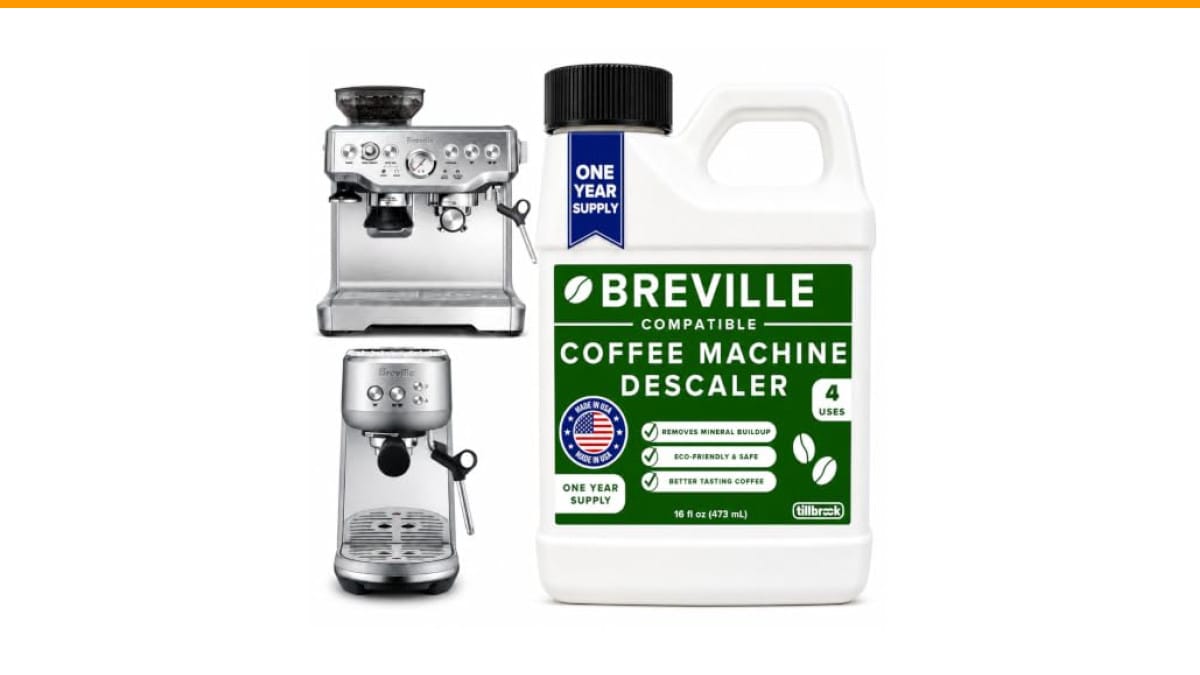
Breville Espresso Machine Compatible Descaler, 4 Uses,…
- EXCEPTIONAL RESULTS: Introducing Tillbrook Coffee Machine Descaler specifically formulated for Breville—the best choice for removi…
- 1 YEAR SUPPLY: Our concentrated formula is easy to use and provides remarkable value with 4 cleanings per bottle. Simply add 1/2 c…
- SCIENTIFICALLY ENGINEERED: Our advanced descaling solution is carefully crafted with powerful, all-natural ingredients that remove…
As an Amazon Associate I earn from qualifying purchases.
If you’re already dealing with a weak steam wand or a machine that’s stopped frothing entirely, frother not working is where most people land. This article goes deeper, focusing on the root cause and the full recovery plan.
For a quick fix while you’re cleaning, a dedicated descaling solution like the Tillbrook Breville Descaler handles the chemical work of dissolving mineral deposits without damaging internal seals. It’s formulated for Breville machines but tested on most major brands, and one bottle gives you four full cleaning cycles—about a year of maintenance for a typical home user.
How Hard Water Silently Kills Your Frother (and Your Coffee)
Every time you steam milk, the wand heats up to around 212°F. The water inside the boiler turns to steam, and the pressure pushes it through the narrow steam wand. That’s the basic physics. Hard water changes the math.
The Science of Scale: Why Your Steam Wand Chokes
When hard water heats up, the dissolved calcium carbonate and magnesium precipitate out of solution. They stick to the hottest surfaces first—the boiler wall, the heating element, and the inside of the steam wand. This is limescale, and it’s a terrible heat conductor.
Think of it like cholesterol in an artery. The scale narrows the passageway. The steam wand’s tiny hole—usually around 1mm—gets partially blocked. Less steam comes out. The steam that does escape has lower pressure because the boiler can’t maintain proper temperature. Low pressure means weak swirling, which means no microfoam.
Scale also insulates the heating element. The machine has to work harder and longer to reach brewing temperature, which wastes energy and stresses the thermostat. In severe cases, the element overheats and burns out completely. That’s a repair bill you don’t want.
How to Test Your Water Hardness at Home
Before you tear apart the machine, confirm hard water is the culprit. A simple test takes five minutes and costs a few dollars.
- Buy a water hardness test strip from any hardware store or online. Look for one that measures grains per gallon (gpg) or parts per million (ppm).
- Dip the strip in your tap water for the time specified on the package—usually 5–10 seconds.
- Compare the color to the chart. Under 1 gpg (17 ppm) is soft. 3–7 gpg (50–120 ppm) is moderately hard. Over 10 gpg (170+ ppm) is very hard and will damage your machine fast.
If you don’t have strips, check your local water utility’s annual water quality report. It lists hardness levels for your area. Many cities in the Midwest and Southwest run 10–20 gpg.
The test matters because the fix differs. If your water is under 3 gpg, you probably have a different issue—milk protein buildup or a clogged nozzle from old milk. If it’s over 7 gpg, hard water is almost certainly the driver.
5 Signs Hard Water is Ruining Your Milk Froth
Scale damage builds gradually. These are the warning signs, roughly in order of appearance.
- Froth volume drops. You used to get a full pitcher of foam. Now you get half. The steam wand can’t push enough air into the milk.
- Bubbles are large and popping. Good microfoam has bubbles so small you can’t see them. Large, soapy bubbles mean low steam pressure and poor texture.
- Steaming takes longer. A healthy wand heats 6 oz of milk in 20–30 seconds. If it’s taking 45 seconds or more, the boiler is struggling against scale.
- White flakes in the milk pitcher. These are pieces of scale breaking off the wand and falling into your milk. Not harmful, but not appetizing.
- Whistling or sputtering from the wand. Scale creates a rough inner surface that disrupts steam flow, causing an uneven, sputtering stream instead of a smooth jet.
If you see any two of these signs, skip the troubleshooting and go straight to the rescue plan below. Technique adjustments won’t fix a physically restricted steam path.
The 4-Step Rescue Plan: From Choked to Perfect Microfoam
This process takes about an hour on a Saturday. It’s the difference between a machine that lasts five years and one that dies at eighteen months. Follow these steps in order.
Step 1: Deep Clean the Milk Frother Circuit
Milk residue is a separate problem from scale, but they compound each other. Milk proteins bake onto the hot wand and create a sticky film that traps scale particles.
Remove the wand tip if it’s removable. Soak it in a small cup of warm water with a drop of dish soap for 15 minutes. Use a pin or a paperclip to gently poke through the nozzle hole. Don’t force it—if it won’t go through, soak longer.
For machines with an automatic milk frother (like a Breville Barista Touch), fill the milk jug with warm soapy water and run the cleaning cycle. This flushes the internal milk tube. Repeat with plain water to rinse.
Step 2: Descale the Entire Machine (The Right Way)
Now for the main event. Use a real descaling solution—not vinegar. Vinegar is slow, smells terrible, and can leave a residue that affects coffee taste. A commercial descaler like the Tillbrook Descaler is formulated to dissolve calcium and magnesium quickly without harming rubber seals.
Mix the concentrate with water according to the bottle instructions. Pour it into the reservoir. Run a brew cycle without coffee to push the solution through the group head. Then run the steam wand for 30 seconds to pull solution through the boiler and wand. Let the machine sit for 15 minutes—this is the chemical reaction time. Then run a full reservoir of fresh water through, twice, to rinse thoroughly.
If your machine has a dedicated milk frother cleaning cycle, run that with the descaling solution too. The solution is safe for the milk circuit, and it’s the only way to clean scale out of those narrow internal tubes.
Check the steam wand again. If steam flow is still weak, repeat the descale once more. Severe buildup can take two passes.
Step 3: Clear the Steam Wand Nozzle
After descaling, any remaining scale in the wand tip should be soft. Remove the tip and run it under hot water. Use a toothpick or a very fine needle to clear the hole completely.
Some wands have a four-hole tip for auto-frothing. Each hole needs clearing. Hold the tip up to the light—you should see daylight through every hole.
Step 4: Rinse and Purge for a Clean Finish
Run a full reservoir of clean water through the brew head. Then fill the milk jug with fresh water and run the frother for 30 seconds. This purges any remaining descaler from the milk circuit.
Wipe down the wand with a damp cloth. Steam a pitcher of plain water for 10 seconds to clear the wand interior. The machine is now clean and ready for real milk.
The Preventative Maintenance Schedule (Based on Your Water)
Descaling frequency depends entirely on your water hardness. Here’s a realistic schedule based on typical home usage (2–4 shots per day).
| Water Hardness | Descale Frequency | Milk Frother Cleaning |
|---|---|---|
| Soft (0–3 gpg) | Every 6 months | After every use |
| Moderate (3–7 gpg) | Every 3 months | After every use |
| Hard (7–10 gpg) | Every 6 weeks | After every use |
| Very Hard (10+ gpg) | Every 4 weeks | After every use |
The milk frother cleaning step is non-negotiable. Run the purge cycle with plain water for 5 seconds after each steaming session. This takes ten seconds and prevents milk protein from baking onto the wand.
If you’re noticing loud noise from your machine, that’s often a sign of scale on the heating element causing it to overheat and cycle rapidly. The schedule above prevents that.
Choosing the Right Water: Bottled, Filtered, or Softened?
Your water choice affects both machine health and coffee taste. Here’s the honest breakdown.
Bottled water is the easiest fix. Look for a brand with a low mineral content—something like 50–150 ppm total dissolved solids. Spring water with moderate minerals is fine. Avoid distilled or RO water; it’s too aggressive and can leach metals from the boiler over time.
Filtered water from a Brita or similar pitcher removes chlorine and some sediment, but it does not soften water. The carbon filter doesn’t remove calcium or magnesium. If your tap water is hard, filtered tap water is still hard.
Softened water (from a salt-based water softener) is the best option for machine longevity. It replaces calcium and magnesium with sodium, which doesn’t form scale. The trade-off is taste—some people notice a slight salty note in espresso. It’s subtle, and most can’t taste it in milk drinks.
My recommendation: if your tap water is over 7 gpg, use bottled water for your espresso machine. It costs a bit more, but it’s cheaper than a new boiler. If you have a whole-house softener, use that water and see if you like the taste. Most people do.
When to Call It Quits: Repair vs. Replace a Scaled Machine
Descaling reverses most scale damage, but not all. If you’ve run the rescue plan twice and the steam wand still sputters, the boiler might be too far gone.
Check the cost. A new boiler for a mid-range espresso machine runs $150–$300 including labor. A new machine costs $500–$1500. If your machine is more than five years old and the boiler is scaled, replacement is usually the smarter call. If it’s a high-end machine with a PID controller and you love it, the repair is worth it.
One more thing to check before you give up: the steam wand gasket. Scale can deform the o-ring that seals the wand. A $5 gasket replacement fixes a weak steam flow that looks like scale damage but isn’t. Always rule out the cheap fix first.
If you’re considering a new machine, read our guide on automatic vs semi-automatic machines to decide which type handles your water situation better.
Frequently Asked Questions About Hard Water and Frothers
Can I use vinegar to descale my espresso machine?
You can, but I wouldn’t. Vinegar is acetic acid, which dissolves scale slowly and leaves a residual smell that lingers for days. It can also degrade rubber seals over time. Commercial descalers use citric or lactic acid, which works faster, rinses cleaner, and is gentler on the machine. The cost difference is a few dollars per cleaning.
How do I know if my steam wand is clogged with scale vs. milk residue?
Milk residue is brownish, sticky, and smells sour. Scale is white or gray, gritty, and odorless. If you poke the nozzle with a pin and see white powder, that’s scale. If it’s slimy, that’s milk protein. Both need cleaning, but the descaling step only works on scale.
Does a water filter eliminate the need to descale?
No. A standard activated carbon filter (like a Brita) doesn’t remove hardness minerals. It only improves taste by removing chlorine. You still need to descale on schedule. If you want to eliminate scale, you need a water softener or an ion-exchange filter designed for espresso machines, like the ones built into some Breville models.
Why does my milk froth deflate quickly after I pour?
Quickly deflating foam usually means the milk was overheated or the steam pressure was too low. Overheating destroys the milk proteins that stabilize foam. If your machine’s steam pressure is weak due to scale, you’re likely steaming for too long to compensate. Fix the scale first, then focus on stopping the steam at around 140°F—when the pitcher feels warm but not hot to the touch.
Is it safe to drink espresso from a machine with scale buildup?
Yes, it’s safe. Scale is calcium carbonate, the same mineral in many antacids. It won’t make you sick. But it affects taste—the bitter, chalky notes come through in the shot. And the machine’s performance degrades as the boiler works harder. Clean it for the taste, not for safety.
Final Verdict: Protect Your Machine, Perfect Your Froth
Hard water is the silent variable in every espresso setup. It’s not glamorous, and no one wants to think about water chemistry when they’re craving a latte. But the difference between a machine that produces silky microfoam for years and one that chokes after eighteen months is almost always water management.
- Test your water hardness once. It takes five minutes and tells you exactly what maintenance schedule to follow.
- Descale on a schedule based on your hardness level—every 4 weeks for very hard water, every 6 months for soft.
- Purge the milk frother with plain water after every single use. This prevents milk protein from baking on.
- Use a commercial descaler, not vinegar, for faster and cleaner results.
- If your steam wand is already weak, run the 4-step rescue plan before buying any new parts.
- Consider bottled or softened water if your tap runs over 7 gpg. It’s the cheapest insurance you can buy.
- Replace a machine only after two failed descale attempts and a confirmed boiler issue—not before.
Your frother isn’t broken. It’s just parched. Give it the right water and a regular cleaning cycle, and it’ll give you back the dense, velvety microfoam you’ve been chasing. That’s a fair trade.
Products related to this article
Sponsored / affiliate links. As an Amazon Associate I earn from qualifying purchases. I may earn additional commission from eligible campaigns.
 Coffee Espresso Machine Handle Replacement Parts, Cafe Bracket Handle for Lidl Silvercrest CM4621 CM4218 KF5002 KF500S Barista (for 51mm Portafilter Basket - Not included)
 Bring It On Cleaner Hard Water Stain Remover for Shower Glass, 32 fl oz
 Thrift T-100 Odorless Drain Cleaner, Hot Water Activated, 1 lb