You’ve just pulled a shot that looks like a Jackson Pollock painting. Espresso is spraying everywhere, the basket is covered in wet sludge, and you’re wondering if your gear is the problem. It’s a common frustration. Most home baristas assume a bottomless portafilter is a buy-it-once tool. That’s true for the handle, but not for the basket.
This article is a lifespan audit. You’ll learn exactly how long the metal parts last versus the consumable basket, what wear actually looks like, and when you’re just throwing money away by not replacing things. You’ll also get a clear cost breakdown so you can decide with your wallet, not guesswork.
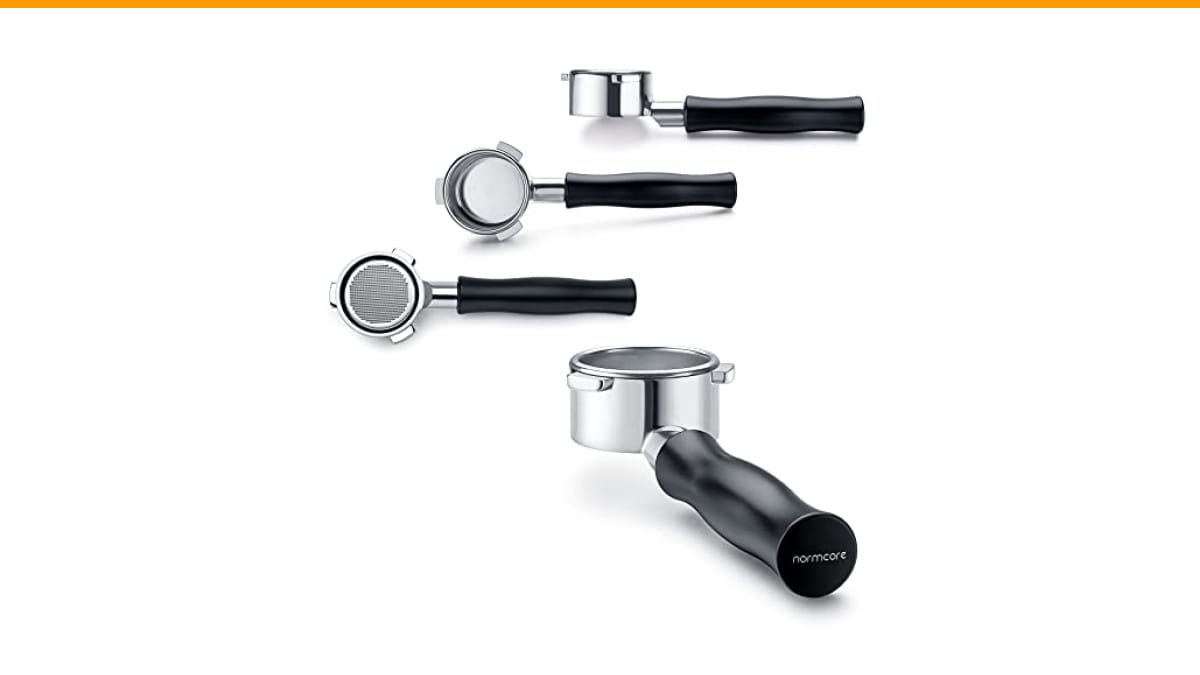
If you’re shopping for an upgrade, the Check Price on Amazon is a solid choice for Breville Barista Express and Pro machines. It includes an 18g filter basket, and the anodized aluminum handle is comfortable for long sessions. It’s a good starting point for anyone moving away from spouted portafilters.
The Short Answer: How Long It Actually Lasts
Here’s the honest breakdown. The portafilter body—the handle, the ears, the metal ring—will last 10 years or more. It’s solid metal. It doesn’t wear out from normal use. The basket is a different story. A basket that sees daily use will last 1 to 3 years before performance degrades noticeably.
If you pull one or two shots a day, you’re closer to the 3-year mark. If you’re pulling 4 or 5 shots daily, or you’re using a hard water source without filtration, expect to replace the basket closer to the 1-year mark. This isn’t a marketing gimmick to sell parts. It’s simple material science.
The holes in a basket are laser-drilled. They’re microscopic. Coffee oils, minerals, and physical pressure slowly change them. You won’t see it happen, but your shot time will tell you.
Portafilter Body vs. Basket: Two Different Lifespans
These two components live completely different lives. The body is a passive holder. The basket is an active tool that takes massive pressure and heat daily. Treating them as one unit is the mistake most people make.
The Metal Handle and Ears (10+ Years)
The handle and the ears (the parts that lock into the group head) are machined aluminum or stainless steel. They don’t flex, they don’t corrode under normal conditions, and they don’t wear out from twisting. The only way you break these is by dropping the portafilter onto tile or warping it by locking it in with excessive force.
I’ve seen 15-year-old Breville portafilters that look and function like new. The anodized coating might scratch, but that’s cosmetic. Unless the ears are stripped and the portafilter spins loosely in the group head, you don’t need a new body. You just need a new basket.
The Basket (1-3 Years of Daily Use)
The basket is a precision tool. A quality precision basket has hundreds of tiny holes, each one drilled to a specific diameter. Over time, those holes accumulate coffee oil that polymerizes into a hard residue. That residue narrows the holes. Narrower holes mean slower flow. Slower flow means you have to grind coarser to compensate, which changes the entire flavor profile of your shot.
There’s also physical wear. The constant pressure from tamping and the thermal cycling from hot water to cold rinse causes the metal to expand and contract. The holes stretch slightly or the edges become burred. A new 18g basket flows consistently. A worn one flows like a clogged drain.
I recommend replacing the basket every 18 months as a baseline. If you notice your shot times creeping up while your grind size stays the same, the basket is the first suspect.
5 Clear Signs Your Basket Is Worn Out
You don’t need a microscope to spot a dead basket. You just need to pay attention to your shots. Here are the signs.
- Shot time drifts. Your 1:2 ratio in 28 seconds suddenly takes 35 seconds. You haven’t changed your grind or dose. The basket is restricting flow.
- Channeling appears out of nowhere. You see sprays or uneven extraction through your bottomless portafilter, and your puck prep hasn’t changed. Worn holes create weak spots where water punches through.
- Visible residue won’t come off. After a thorough soak in Cafiza, the basket still looks stained or has a film. That’s baked-on oil that has become part of the metal.
- Dents or scratches on the bottom. Dropping the basket on the counter or knocking it hard against the knock box can deform the hole pattern. Even a tiny dent alters flow.
- You can’t dial in a good shot. Every coffee tastes sour and bitter at the same time. This is a classic sign of uneven flow, which is almost always a basket issue.
Why a Worn Basket Ruins Your Bottomless Shots
Bottomless portafilters are diagnostic tools. They show you exactly how your extraction is flowing. A worn basket shows you a mess. Here’s the science behind it.
When holes clog or stretch unevenly, water takes the path of least resistance. It flows faster through the larger or cleaner holes and slower through the clogged ones. This creates differential pressure across the coffee puck. The result is channeling—where water carves a tunnel through the puck, over-extracting some coffee and under-extracting the rest.
You’ll see this as a sputtering stream or multiple streams from your bottomless portafilter. The taste is harsh and unbalanced. A fresh basket distributes water evenly across the entire puck surface. That even distribution is the foundation of a good espresso shot. Without it, your grinder, your tamping, and your water temperature don’t matter.
How Water Hardness and Cleaning Habits Change the Clock
Water is the silent killer of espresso equipment. Hard water contains calcium and magnesium. When water evaporates inside the basket, these minerals deposit as scale. Scale is rough and porous. It traps coffee oils and creates the perfect environment for residue buildup.
If you’re using tap water with high hardness, your basket lifespan drops by half. You’ll see scale as white or chalky spots on the basket after it dries. This isn’t just a visual issue. Scale physically narrows the holes and creates rough surfaces that cause channeling.
Cleaning habits matter just as much. Rinsing the basket immediately after every shot prevents oils from baking on. A weekly soak in a coffee cleaner solution (like Cafiza) dissolves the oils that rinsing misses. If you never deep clean your basket, you’re effectively aging it faster. The oils polymerize and become nearly impossible to remove.
For more on keeping your whole machine healthy, check our coffee machine maintenance guide.
The Cost of Not Replacing: Wasted Coffee Math
Let’s talk money. A quality replacement basket costs between $20 and $40. A cheap bag of espresso beans costs around $15 to $20 per pound. A good shot uses about 18 grams of coffee.
One pound of coffee gives you roughly 25 shots. If your worn basket causes you to waste just 2 shots per week while you’re trying to dial in, that’s 104 wasted shots per year. That’s about 4 pounds of coffee, or roughly $60 to $80 in beans. That’s more than the cost of a new basket.
That math assumes you actually drink the bad shots. Most people pour them down the drain. Add in the frustration and the time spent fiddling with grind settings, and the replacement basket pays for itself in a few months. It’s not a luxury purchase. It’s a cost-saving measure.
How to Extend the Life of Your Bottomless Setup
You can’t stop wear, but you can slow it down significantly. Here’s what actually works.
Proper Cleaning (No Dishwasher)
Never put your portafilter or basket in the dishwasher. The detergent is abrasive and the heat is too high. It will strip the finish and accelerate corrosion. Hand wash with warm water and a soft sponge immediately after use.
Once a week, soak the basket in a solution of hot water and espresso cleaner for 10 minutes. Use a soft brush (a toothbrush works) to scrub the holes. Rinse thoroughly. You’ll be surprised at how much brown water comes out.
Storage and Handling Tips
Don’t knock the basket against the edge of your knock box. Use a rubber mat or knock the portafilter body instead. Dropping the basket on a hard counter can dent the rim, which breaks the seal in the group head.
Dry the basket completely before storing it. Leaving it wet encourages mineral buildup. If you have hard water, consider using filtered or bottled water for your espresso machine. It’s the single best investment for extending the life of all your gear.
If you’re dealing with bitter shots that won’t go away, check our article on burnt espresso causes before you buy new parts.
When You Should NOT Replace It
Replacement isn’t always the answer. The portafilter body almost never needs replacing. If your shots are bad, the body is not the problem. It’s just a metal holder.
Don’t replace the body because the handle is scratched. Don’t replace it because the ears are slightly tarnished. Those are cosmetic issues. The only reasons to replace the body are if the ears are stripped (it won’t lock in place) or if it’s physically bent or warped.
Also, don’t replace the basket just because you’re bored. A new basket won’t fix a bad grinder or stale beans. Make sure your puck prep is solid—consistent dose, level tamp, proper grind size—before you blame the equipment. A new basket will make good shots better, but it can’t make bad beans good.
Bottomless vs. Spouted: Does Lifespan Differ?
The basket lifespan is identical between bottomless and spouted portafilters. They use the same baskets. The difference is the body.
A spouted portafilter has a metal or plastic spout attached to the bottom. This spout can crack or clog over time. It’s an extra part that can fail. A bottomless portafilter has nothing attached. There’s no spout to break, no internal channel to clog.
For lifespan, the bottomless portafilter body will outlast a spouted one because it has fewer parts. The spout on a cheap portafilter can loosen or strip after a few years. The bottomless design eliminates that failure point entirely.
| Component | Lifespan | Failure Mode | Replacement Cost |
|---|---|---|---|
| Portafilter Body (Handle & Ears) | 10+ years | Stripped ears, warped metal | $30 – $80 |
| Filter Basket (Standard) | 1-2 years daily use | Clogged holes, oil residue | $10 – $20 |
| Filter Basket (Precision) | 1-3 years daily use | Stretched holes, scale buildup | $20 – $40 |
| Spout (Spouted Portafilter) | 3-5 years | Cracking, clogging | N/A (part of body) |
That table assumes average water hardness and regular cleaning. Hard water cuts those numbers in half. Meticulous cleaning can extend them by a year or more.
FAQ: Lifespan and Replacement
How do I know if my portafilter basket is worn out?
Watch your shot time. If it slows down by 5-7 seconds without any grind change, the holes are likely clogged or deformed. Also look for persistent channeling that you can’t fix with better tamping.
Can I clean a clogged basket to make it last longer?
Yes, but only if the clog is coffee oil. A soak in espresso cleaner will dissolve oil. It won’t fix stretched holes or physical damage. If cleaning doesn’t restore flow, the basket is done.
Does the brand of basket matter for lifespan?
Yes. Precision baskets from brands like IMS and VST use higher-grade stainless steel and tighter tolerances. They cost more but last longer and perform better than stock baskets. The included basket in the Normcore portafilter is decent, but upgrading to a precision basket later is a smart move.
Is a bottomless portafilter harder on the machine?
No. It puts the same pressure on the group head. The only difference is you see the extraction. It’s actually better for the machine because there’s no spout to trap old coffee residue.
Should I replace the basket when I buy a new grinder?
Not necessarily. A new grinder changes your particle size distribution. That might fix your extraction issues without a new basket. Try the new grinder first. If you still have flow problems, then consider a new basket.
Final Verdict: Replace the Basket, Keep the Handle
Here’s what you should remember from this audit.
- The portafilter body lasts 10+ years. Don’t replace it unless it’s physically broken.
- The basket is a consumable. Budget for a new one every 1-3 years depending on usage.
- Shot time drift and sudden channeling are the first signs of a worn basket.
- Hard water cuts basket lifespan in half. Use filtered water if you can.
- Clean the basket by hand and soak it weekly. Never use a dishwasher.
- A new basket costs less than the coffee you’ll waste dialing in with a worn one.
- If you’re buying a new setup, the Normcore 54mm bottomless portafilter is a solid entry point with a good handle and a usable basket included.
Your bottomless portafilter isn’t failing. The basket is just doing its job and wearing out. Swap the basket, keep the handle, and get back to pulling clean shots.
Products related to this article
Sponsored / affiliate links. As an Amazon Associate I earn from qualifying purchases. I may earn additional commission from eligible campaigns.
 Coffee Espresso Machine Handle Replacement Parts, Cafe Bracket Handle for Lidl Silvercrest CM4621 CM4218 KF5002 KF500S Barista (for 51mm Portafilter Basket - Not included)
 Long Handle Wooden Spoon For Mixing Coffee Tea Jam and Bath Salt In Kitchen, Environmentally Friendly Table Spoon, 8.6 Inches,4 Pieces…
 8 Pcs Wooden Coffee Spoon, Long Handle Wwood Spoons for Eating