You’re staring at the glass carafe, wondering if you’ve waited too long or not long enough. The timer hits 3:45, and you hesitate. Press now or wait? That hesitation is normal — French press brewing feels like a guessing game until you understand what’s happening inside that cylinder.
This guide walks you through the exact brew times for different results, why those minutes matter chemically, and what to do when life interrupts your timing. You’ll leave with a simple mental dial — not a rigid rule — so every cup comes out the way you like it, whether that’s bright and tea-like or deep and syrupy.

Veken
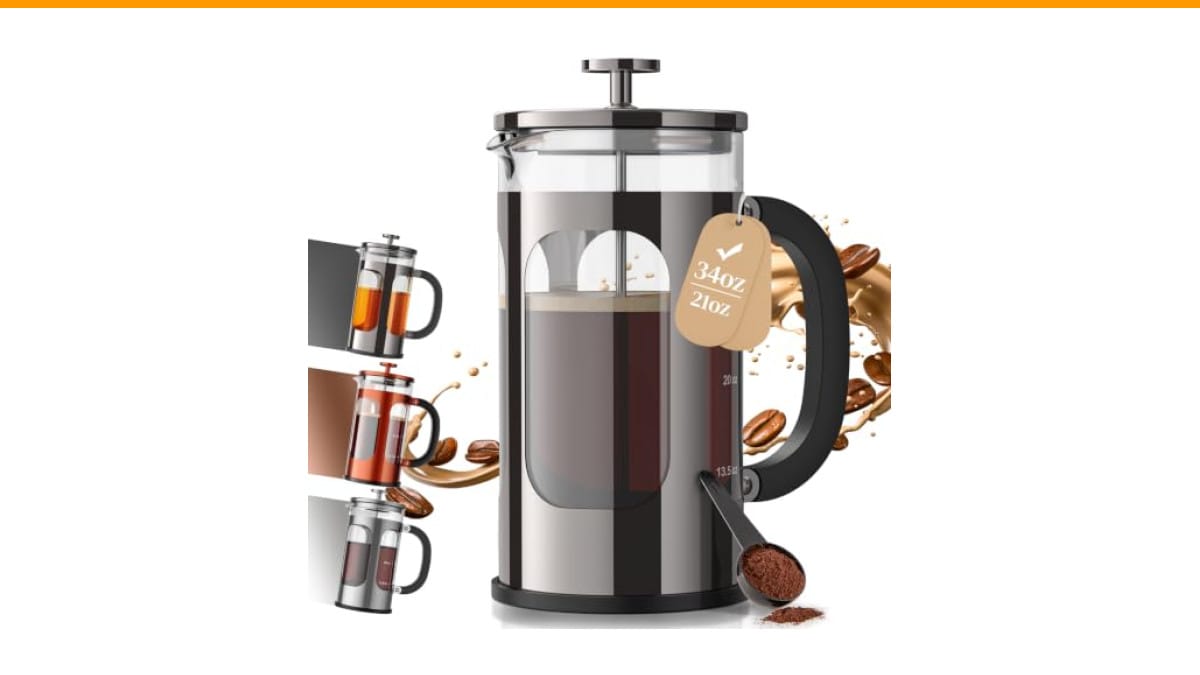
Veken 34oz French Press Coffee Maker, No…
- No Plastic Touching Food: Made with 304 stainless steel and food-grade silicone, our French press keeps all brewing surfaces plast…
- Thickened Glass and Versatile Brewing: Made of high borosilicate glass that resists thermal shock up to 302°F, this thick durable…
- 4-Level Filtration for Pure Coffee: This French press has a 4-layer stainless steel filter—spiral plate, cross plate, and two fine…
As an Amazon Associate I earn from qualifying purchases.
If you’re starting fresh, a reliable French press makes the learning curve shorter. The Check Price on Amazon gives you a clear borosilicate glass carafe and a 4-layer stainless steel filter, so you can actually see the extraction happening and taste the difference when you adjust your steep time. The plastic-free brewing path keeps flavors clean, which matters when you’re dialing in subtle timing changes.
The Short Answer: 4 Minutes Is Your Starting Point
Set your timer for 4 minutes. That’s the sweet spot for a standard 1:15 coffee-to-water ratio with a medium-coarse grind and water just off a boil (around 200°F).
But 4 minutes isn’t magic. It’s the center of a forgiving window that runs from 3:30 to 5:00. Brew anywhere in that range and you’ll get drinkable coffee — the difference is in the flavor profile, not whether it’s ruined.
Here’s the quick breakdown:
- 3:00–3:30 — brighter, more acidic, lighter body
- 4:00 — balanced, classic French press taste
- 4:30–5:00 — fuller body, more bitterness, deeper chocolate notes
Start at 4 minutes, taste, then adjust by 30-second increments on your next brew. That’s the whole game.
Why Steep Time Matters: The Science of Extraction
Brewing coffee is a race between dissolving flavors and pulling out unwanted compounds. It’s not just about strength — it’s about which compounds make it into your cup.
Hot water hits the grounds and immediately starts pulling out acids and fruity esters. Those give coffee its brightness and complexity. In the first two minutes, you’re mostly getting these lighter, more volatile compounds.
Between 2 and 4 minutes, sugars and caramelized compounds dissolve. This is where the sweetness and body develop. The coffee starts to taste like coffee, not just acidic tea.
After 4 minutes, you’re extracting the heavier, bitter compounds — the ones that give coffee a dark roast edge but also cause that astringent, dry feeling on your tongue when you go too long.
What Happens at 2 Minutes vs. 4 Minutes vs. 6 Minutes
At 2 minutes: The coffee is under-extracted. It tastes sour, sharp, and thin. You’ll notice a lot of acidity and almost no sweetness. Some people actually prefer this if they’re making a concentrate to dilute later, but for a regular cup, it’s too early.
At 4 minutes: The extraction curve flattens out. You’ve pulled most of the desirable flavors, and the bitterness is still in check. This is why 4 minutes works for most roasts and most palates.
At 6 minutes: Over-extraction sets in. The coffee tastes bitter, hollow, and slightly metallic. The body feels heavy but not in a good way — more like drinking ash. If you accidentally leave it this long, don’t press. Decant the liquid off the grounds immediately or you’ll get a punishing cup.
The takeaway? Time is a flavor dial. Shorten it for brightness, lengthen it for body, but don’t push past 5 minutes unless you’re doing a cold brew.
The Step-by-Step 4-Minute Brew (With Timing Cues)
Here’s the exact process I use when testing French presses side by side at home. It’s consistent and repeatable, which is what you want when you’re tuning time.
- Heat water to 200°F. If you don’t have a thermometer, boil and wait 30 seconds. That gets you close enough.
- Add coffee. Use a 1:15 ratio — that’s 30 grams of coffee for 450 ml of water (about 2 cups). Grind it coarse, like sea salt.
- Pour water, start the timer. Pour just enough to saturate the grounds, give it a gentle stir, wait 30 seconds. This is the bloom — it lets trapped CO2 escape.
- Pour the rest of the water. Fill to the top, put the lid on, but don’t press the plunger yet.
- Wait until 4:00. At 3:30, you can give the crust a gentle stir or just leave it. I prefer leaving it alone to avoid agitation, which extracts more bitterness.
- Press slowly. Push the plunger down over 20–30 seconds. Fast pressing disturbs the grounds and makes the coffee cloudy.
- Pour immediately. Don’t let the coffee sit on the grounds. Transfer it to a carafe or mug right away.
That last step is critical. Even after you press, the grounds are still in contact with the liquid. If you let it sit, extraction continues and your carefully timed brew turns bitter.
Adjusting Brew Time for Your Taste
Your palate is the final judge. The 4-minute baseline is a starting point, not a law. Here’s how to tune it.
Shorter Steep (3:00–3:30) for Brightness
If your coffee tastes too bitter or heavy, cut the steep time to 3:00–3:30. This works well for light roasts with fruity or floral notes. You’ll get more acidity and a cleaner, tea-like cup. It’s also a good choice if you’re using a finer grind than recommended — the shorter time compensates.
One thing to watch: under-extraction can taste sour. If you cut time and get a sharp, vinegar-like flavor, your grind is probably too fine. Go coarser instead of just adding time back.
Longer Steep (4:30–5:00) for Full Body
Dark roast lovers often prefer a longer steep. At 4:30–5:00, you pull out more of the oils and heavier compounds, giving you a syrupy mouthfeel and deeper chocolate or nutty notes. This is also a good range for cold brew concentrate (more on that later).
Be careful not to overshoot. Past 5:30, even dark roasts start tasting ashy. If you like that intensity, you’re better off increasing the coffee dose rather than extending the time.
How Grind Size, Ratio, and Water Temp Change the Clock
Brew time doesn’t exist in a vacuum. Three other variables change how long you should steep.
Grind size: This is the biggest factor. A coarse grind (like breadcrumbs) extracts slowly, so it needs the full 4 minutes. A medium grind (like sand) extracts faster, so you might back off to 3:30. A fine grind (like table salt) extracts very quickly — you’d be looking at 2:30–3:00, but it’s risky because fines clog the filter and make the coffee muddy. Stick with coarse for French press.
Coffee-to-water ratio: If you use more coffee (say, 1:12), the extraction is stronger and you can shorten the time slightly. If you use less coffee (1:17), you might need to extend it to get enough flavor. But changing the ratio to fix extraction problems is a band-aid. Adjust time first, then ratio.
Water temperature: Hotter water extracts faster. At 205°F, you’re extracting aggressively, so 3:30 might be enough. At 195°F, extraction slows down, so 4:30–5:00 works better. Most people brew with water just off a boil, which is around 200–205°F, so 4 minutes is the right default.
Here’s a simple comparison table to help you wrap your head around the trade-offs:
| Variable | Low End | Sweet Spot | High End | Effect on Time |
|---|---|---|---|---|
| Grind size | Fine (3:00 max) | Coarse (4:00) | Extra coarse (4:30+) | Finer grind = shorter time |
| Water temp | 195°F (4:30) | 200°F (4:00) | 205°F (3:30) | Hotter water = shorter time |
| Coffee ratio | 1:17 (4:30) | 1:15 (4:00) | 1:12 (3:30) | More coffee = shorter time |
| Batch size | 1 cup (3:30) | 2 cups (4:00) | 4 cups (4:30) | Larger batch = longer time |
Use the table as a starting point, not a strict rule. Your specific beans and grinder will shift things by 15–30 seconds in either direction.
The “I Forgot to Press” Fix: A Quick Rescue Guide
Everyone does it. You start the timer, walk away to answer an email, and come back at 6:30. Don’t panic.
If the coffee has been steeping for more than 5 minutes, do not press the plunger. Pressing forces the over-extracted liquid through the grounds, making it even more bitter. Instead, grab a spoon and gently skim the crust off the top, then pour the coffee through a fine mesh strainer into a carafe or mug. The grounds will stay behind, and you’ll get a cleaner cup than if you’d pressed.
If you’re at 5–6 minutes, you can still press, but expect a bitter, heavy cup. To salvage it, add a splash of hot water to dilute the bitterness, or serve it over ice with milk. The cold cuts the harsh edge.
For the future, set a timer on your phone. Seriously. Even a simple kitchen timer works. The 4-minute window is forgiving, but it’s not infinite.
Brew Time for Large Batches vs. Single Cups
Batch size changes extraction. A larger volume of water means more thermal mass, so the slurry stays hotter longer. That means you can extract a bit more in the same time, but you also risk over-extraction if you’re not careful.
Single cup (250–300 ml): Steep for 3:30–4:00. The smaller volume cools faster, so extraction slows down toward the end. You can get away with a slightly shorter time because the water is hotter at the start.
Two cups (450–600 ml): This is the standard French press size, and 4:00 is perfect. The thermal mass is balanced, and extraction is even.
Four cups (800–1000 ml): Steep for 4:30–5:00. The larger volume holds heat longer, but the grounds are also deeper, so the water has to diffuse through more coffee. Extending the time helps compensate. Just be cautious — with a big batch, the last cup you pour is always stronger than the first because the grounds settle and continue extracting.
If you’re making a large batch for a group, pour it all into a thermal carafe right after pressing. That stops the extraction and keeps everyone’s cup consistent.
Common Time-Related Mistakes (And How to Fix Them)
Most French press problems trace back to time, but not always in the way you’d expect. Here’s a troubleshooting list based on what I’ve seen in my own kitchen and in reader questions.
- Mistake: Bitter, astringent coffee. You steeped too long or your grind is too fine. Cut time by 30 seconds or go coarser. Also check your water temp — if it’s boiling, you’re extracting too fast.
- Mistake: Sour, weak coffee. You didn’t steep long enough, or your grind is too coarse. Add 30 seconds to your steep time. If it’s still sour, you might need a slightly finer grind (but not too fine).
- Mistake: Muddy coffee with sludge at the bottom. Your grind is too fine, so fines pass through the filter. Go coarser. Also, don’t press too hard — slow, gentle pressure keeps the bed intact.
- Mistake: Coffee tastes flat or lifeless. You’re using stale beans. No amount of time adjustment will fix that. Buy fresh beans and grind them right before brewing.
- Mistake: First cup is great, second cup is bitter. You left the coffee sitting on the grounds after pressing. Decant immediately into a separate carafe.
If you’re dealing with a clogged filter or a stuck plunger, that’s a maintenance issue, not a time issue. Check out our guide on cleaning coffee maker properly to keep your press in good shape.
Final Checklist: Your Perfect Brew in 60 Seconds
- Use a coarse grind — like breadcrumbs, not sand.
- Heat water to 200°F (or boil and wait 30 seconds).
- Add coffee at a 1:15 ratio (30g per 450ml water).
- Pour a little water, stir, wait 30 seconds for the bloom.
- Add the rest of the water, put the lid on, start a timer.
- Steep for 4 minutes at standard conditions.
- Press slowly over 20–30 seconds, then pour immediately.
That’s it. Once you’ve done it a few times, you’ll know exactly how your favorite beans behave. If you want to experiment, adjust time in 30-second increments and keep notes. You’ll land on your perfect cup faster than you think.
And if you’re cleaning up after your brew, don’t forget to rinse the plunger and filter right away. Coffee oils build up and go rancid, which will ruin your next batch. For more on that, see our piece on how often to clean a coffee maker. A clean press makes the timing dial easier to read.
One last tip: if you’re brewing cold brew in your French press, the time changes completely. Room-temperature water extracts much slower, so you’re looking at 12–18 hours in the fridge, not 4 minutes. That’s a whole different recipe, but the same principle applies — time is your dial.
Frequently Asked Questions
Can I brew French press coffee for less than 4 minutes?
Yes, you can steep for 3:00–3:30 if you want a brighter, more acidic cup. This works well for light roasts. Just be aware that under-extraction can taste sour, so if that happens, go coarser instead of adding time back.
What happens if I steep French press coffee for too long?
Steeping past 5 minutes extracts bitter, astringent compounds. The coffee tastes harsh and dry. If you accidentally go past 6 minutes, decant the liquid off the grounds immediately — don’t press. You’ll get a less bitter cup that way.
Does the brew time change for a larger French press?
Yes. A larger batch (800ml or more) needs 4:30–5:00 because the thermal mass keeps the water hot longer, but the coffee bed is deeper, so extraction takes a bit longer. For a single cup, 3:30–4:00 is usually enough.
Is 4 minutes too long for dark roast?
Not necessarily. Dark roasts are more soluble, so they extract faster. You might prefer 3:30–4:00 for a dark roast to avoid bitterness. But some people like the full-bodied, low-acidity result of a 4:30 steep with dark beans. It’s a matter of taste.
Can I use a French press for cold brew?
Absolutely. Use a coarse grind, add room-temperature water, and steep in the fridge for 12–18 hours. The extraction is much slower at cold temperatures, so you’re not dealing with the same 4-minute window. Press and store in the fridge for up to a week.
Products related to this article
Sponsored / affiliate links. As an Amazon Associate I earn from qualifying purchases. I may earn additional commission from eligible campaigns.
 HomeBeyond Espresso Coffee Maker 12 Cups, Classic Stovetop Espresso Maker, 600ml / 20oz Coffeemaker for Gas & Ceramic Stovetops (Silver)
 Stainless Steel Moka Pot Coffee Filter Disc for Espresso Brewing, Coffee Maker Replacement Filter Plate for Home Office Coffee Bar Cafe (FOR 4 Cups)
 Belly Moka Coffee Maker Stovetop Espresso Maker 9 Cup Aluminum Moka Pot Percolator 15oz 450ml Easy Brewing for Electric Ceramic Stoves Home Camping Italian Cuban Café Classic Black