You bought a cold brew pitcher, filled it with water, tossed in a handful of grounds, and waited a day. The result? A weak, watery brew that tastes like vaguely coffee-flavored water. Or worse, it came out so strong and bitter that you had to dump it.
This happens because cold brew is forgiving, but not magic. The ratio of coffee to water decides everything. Get it right once, and you will never go back to buying iced coffee. This article gives you the exact numbers for common maker sizes, a simple dilution formula, and the visual cues for grind size that most guides skip.

QHH
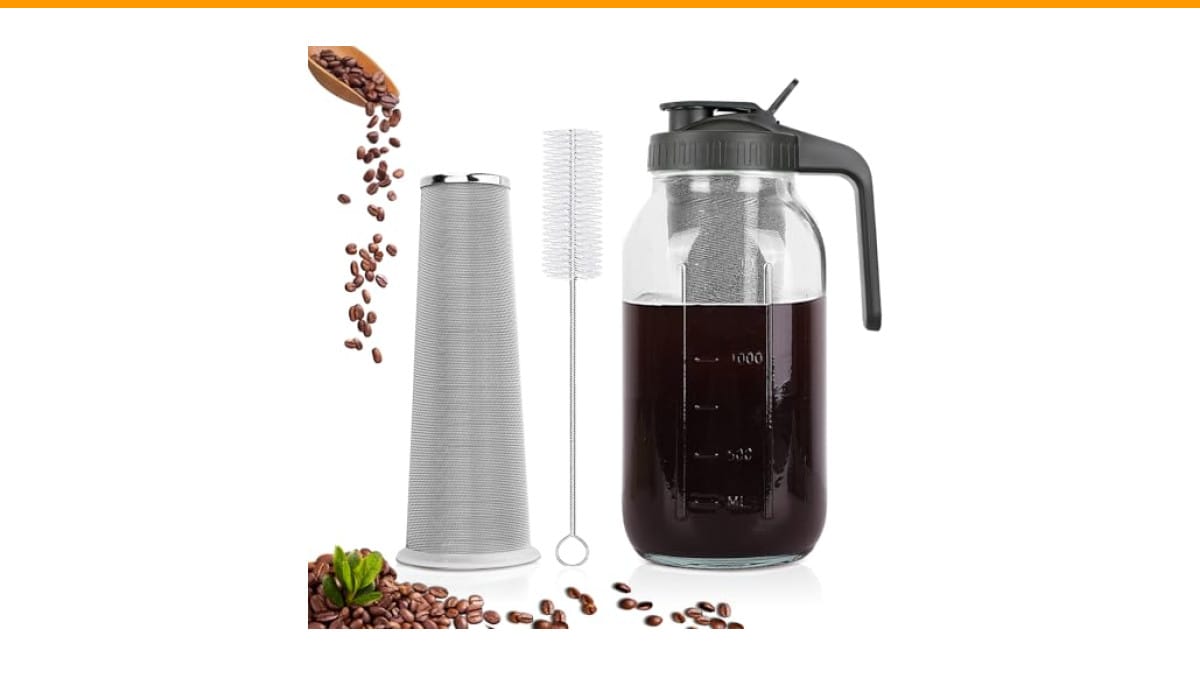
QHH Cold Brew Coffee Maker, 64 oz…
- 【⚠️ Important Usage Warning】: Do not pour boiling water directly into the container; the maximum safe operating temperature is 60°…
- 【What You Will Get】:1 Pcs / 64 oz mason jar pitcher with pour spout lid, 1 stainless stell filter, 1 cleaning brush. Large capacit…
- 【High Quality Material】: The glass pitcher with lid is crafted with heavy duty, food grade soda lime glass and premium plastic lid…
As an Amazon Associate I earn from qualifying purchases.
If you are using a dedicated pitcher like the QHH 64 oz cold brew maker, the math stays the same. That model holds 64 ounces, which is about 1.9 liters, and its stainless steel filter handles a coarse grind well. It is a solid option if you want a large batch without buying a separate filter system.
The Simple Cold Brew Ratio That Works Every Time
Use 1 part coffee to 8 parts water by weight. That is the sweet spot for most people. It produces a concentrate that is strong enough to mix with milk or water, but not so intense that it shocks your palate.
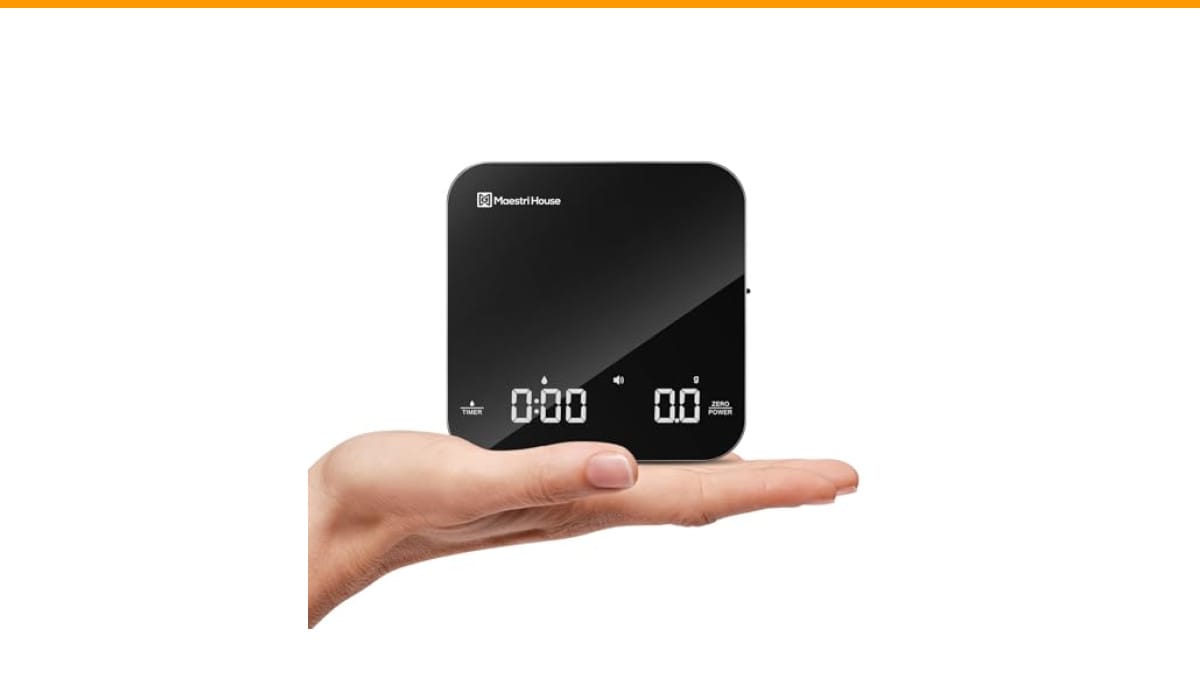
Why weight and not volume? A cup of whole beans weighs about 85 grams. Grind those beans and the same cup now weighs 85 grams but takes up more space. Volume measurements shift depending on grind size, but weight never changes. A digital scale costs $15 and removes all guesswork.
For a 1:8 ratio, you need 1 gram of coffee for every 8 grams of water. Since 1 milliliter of water weighs 1 gram, the math is easy. If your maker holds 1000 ml of water, use 125 grams of coffee. That is the entire formula.
Some people prefer a stronger 1:5 ratio for a true concentrate. Others like a milder 1:10 for direct drinking. Start at 1:8, taste it, and adjust from there. Your preference is the only metric that matters.
Cold Brew Ratio Chart by Maker Size (1L to 2L)
Here are the exact amounts for common pitcher sizes. These assume a 1:8 ratio, which is the most versatile starting point. Weigh your coffee after grinding, not before.
| Maker Capacity | Water Volume | Coffee Weight (1:8) | Coffee Volume (approx.) | Steep Time |
|---|---|---|---|---|
| 1 Liter (34 oz) | 1000 ml | 125 grams | 1.5 cups | 12-18 hours |
| 1.5 Liters (50 oz) | 1500 ml | 187 grams | 2.25 cups | 12-18 hours |
| 1.9 Liters (64 oz) | 1900 ml | 237 grams | 3 cups | 12-18 hours |
| 2 Liters (68 oz) | 2026 ml | 250 grams | 3.25 cups | 12-18 hours |
If you want a stronger 1:5 concentrate, multiply the water volume by 0.2. For 1000 ml, that is 200 grams of coffee. For 1900 ml, that is 380 grams. This gives you a brew you can dilute heavily with milk.
Most commercial pitchers, including the QHH 64 oz model, have a fill line. Use that as your water marker. Do not fill to the absolute brim because the grounds displace water and cause overflow.
How to Measure Coffee Without a Scale (Spoons & Cups)
Scales are ideal, but not everyone owns one. Here is the volume fallback. A standard US cup holds 240 ml. For a 1:8 ratio, one cup of water needs about 30 grams of coffee. That translates to roughly 1/3 cup of whole beans.
For a 64 oz pitcher (1900 ml), you need about 3 cups of coffee grounds. That is a lot. Most people underestimate this and end up with weak brew. If your grounds look like a thin layer at the bottom of the filter, you did it wrong.
Use a spoon if you must. One tablespoon of ground coffee weighs about 5 grams. For 125 grams, you need 25 tablespoons. That is tedious and error-prone. A scale is cheaper than wasting a full batch of beans on a bad brew.
Concentrate vs. Ready-to-Drink: The Dilution Formula
A 1:8 ratio gives you a concentrate. Drinking it straight is harsh. Most people dilute it by 30-50% with water, milk, or ice. The ice melts and adds more water, so account for that.
The formula is simple. If you have a 1:4 concentrate, add one part water to one part coffee to get a 1:8 drink. Add two parts water to get a 1:12. If you have a 1:8 concentrate, add half a part water to get a 1:12.
How to Dilute a 1:4 Concentrate to 1:8 or 1:10
Take 100 ml of concentrate. Add 100 ml of water. You now have 200 ml of ready-to-drink coffee at a 1:8 ratio. Add 150 ml of water instead, and you get a 1:10.
For milk drinkers, replace half the water with milk. A 1:4 concentrate with 50 ml water and 50 ml milk gives you a creamy, balanced cup. This is how cafes do it.
Write this on a sticky note: 1 part concentrate + 1 part water = 1:8. That is your baseline. Adjust from there based on how bold you like it.
Steep Time: Room Temp vs. Fridge
Steep time changes extraction. At room temperature (68-72°F), 12-18 hours is enough. The warmer water speeds up extraction. At fridge temperature (35-40°F), you need 18-24 hours. The cold slows everything down.
Short on time? Use a slightly higher ratio, like 1:7, and steep at room temp for 12 hours. It will be stronger but not bitter. Do not steep longer than 24 hours. Over-steeping pulls out bitter compounds that taste like burnt rubber.
One note: steeping at room temp for 18 hours is fine. The coffee is not sitting in the danger zone long enough to spoil, and the high caffeine content inhibits bacterial growth. Still, if your kitchen runs hot (above 80°F), use the fridge.
Grind Size: The Visual Guide to Coarse
Grind size matters more than most people think. Use a coarse grind, similar to sea salt or raw sugar. It should look chunky, not powdery. If it looks like breadcrumbs, it is too fine.
A fine grind in cold brew creates two problems. First, it extracts too quickly, leading to bitterness. Second, it slips through the filter and creates sludge at the bottom of your pitcher. That gritty texture ruins the mouthfeel.
Most burr grinders have a coarse setting. If you buy pre-ground coffee, look for the French press or cold brew setting. Blade grinders are hard to control, so consider a cheap burr grinder if you are serious about this.
The QHH filter uses a 160-micron stainless steel mesh. That is fine enough to catch most grounds, but only if they are coarse. Fine grounds will still pass through or clog the mesh. Respect the grind size.
Adjusting the Ratio for Your Bean Type (Light vs. Dark Roast)
Light roasts are denser and less soluble than dark roasts. They need a slightly higher coffee dose to achieve the same extraction. Use a 1:7 ratio for light roasts instead of 1:8. That means 143 grams of coffee per liter of water.
Dark roasts are more porous and extract easily. They can handle a 1:9 ratio without tasting weak. That means 111 grams per liter. The oils in dark roasts also add body, so you do not need as much coffee to feel satisfied.
Medium roasts sit in the middle. Use 1:8 and adjust based on your taste. If the brew tastes sour or salty, that is under-extraction. Add more coffee next time. If it tastes ashy or bitter, back off the amount or reduce steep time.
Blends and flavored beans behave differently. Flavored beans often have oils that can go rancid during a long steep. Stick to plain, freshly roasted beans for cold brew.
Common Ratio Mistakes That Ruin Cold Brew
The biggest mistake is using too little coffee. A 64 oz pitcher needs nearly 240 grams of coffee. That is most of a standard 12 oz bag. If you use half that, you get brown water.
The second mistake is using pre-ground drip coffee. That grind is too fine for cold brew. It creates a muddy, bitter mess. Buy whole beans and grind them coarse, or specifically look for cold brew grounds.
Third, people stir the mixture once and forget it. Give it a good stir at the start to ensure all grounds are saturated. Dry pockets of coffee extract poorly. Stir again at the halfway point if you can.
Fourth, pressing the grounds too hard when removing the filter. Squeezing pushes bitter compounds out of the grounds into your brew. Let the filter drain naturally. Patience pays off.
Finally, skipping the dilution math. Drinking a 1:4 concentrate straight will make you wince. It is not meant to be consumed that way. Always dilute.
Quick Troubleshooting: Too Weak, Too Strong, Too Bitter
Too weak? Increase the coffee amount by 15% next batch. Too strong? Dilute with more water or milk. Too bitter? Reduce steep time by 4 hours or use a coarser grind. Too sour? Increase steep time or use a slightly finer grind (but not too fine).
If your brew tastes flat, your beans are stale. Cold brew does not hide stale beans. Use beans roasted within the last 3 weeks. If you store them in the freezer, let them come to room temp before grinding to avoid condensation.
Clean your equipment between batches. Old coffee oils go rancid and ruin the next brew. A quick rinse with hot water and a brush, like the one included with the QHH pitcher, keeps the filter mesh clear. A clogged filter slows drainage and over-extracts the grounds. Regular cleaning of your coffee maker prevents these off-flavors from building up over time. Check out our guide on proper cleaning methods if you are unsure.
Can I use hot water to speed up cold brew?
No. Hot water extracts different compounds, including more acids and bitterness. The whole point of cold brew is the smooth, low-acid profile. Stick to cold or room temperature water.
How long does cold brew concentrate last in the fridge?
Up to 2 weeks in an airtight container. The high coffee concentration inhibits bacterial growth. After that, it starts to lose flavor and turn stale. Keep it sealed to avoid absorbing fridge odors.
Should I use filtered water?
Yes. Tap water with heavy chlorine or mineral content affects extraction. Use filtered water if your tap tastes off. Cold brew is mostly water, so the water quality directly impacts the final cup.
Can I use the same ratio for tea?
No. Tea leaves are less dense than coffee grounds. Use about 1 tablespoon of loose leaf tea per 8 oz of water. Steep for 8-12 hours. The QHH filter works fine for tea leaves, but the ratio is completely different.
Why is my cold brew cloudy?
Cloudiness comes from fine particles passing through the filter. Use a coarser grind next time. You can also filter the finished brew through a paper coffee filter to catch the sediment. This is a trick that takes 30 seconds and gives you a crystal-clear cup. If you are dealing with a clogged filter from fine grounds, this cleaning guide can help you fix it fast.
What to Do With Your First Perfect Batch
- Start with a 1:8 ratio by weight. Adjust by taste, not by guessing.
- Weigh your coffee after grinding. Volume measurements lie.
- Grind coarse. Sea salt texture, not breadcrumbs.
- Steep 12-18 hours at room temp, or 18-24 in the fridge.
- Dilute your concentrate. 1 part coffee + 1 part water = ready to drink.
- Use fresh, medium-to-dark roast beans for the smoothest result.
- Clean the filter immediately after use. Dried grounds are hard to remove.
Cold brew is a ratio game. Once you lock in your numbers, it becomes a 5-minute prep routine with a 24-hour payoff. Keep a notebook or a note on your phone with your exact measurements. Your future self will thank you when you are making a second batch without looking up the math again. For more maintenance tips, read about how often to clean your coffee maker to keep everything tasting fresh.
Products related to this article
Sponsored / affiliate links. As an Amazon Associate I earn from qualifying purchases. I may earn additional commission from eligible campaigns.
 HomeBeyond Espresso Coffee Maker 12 Cups, Classic Stovetop Espresso Maker, 600ml / 20oz Coffeemaker for Gas & Ceramic Stovetops (Silver)
 Stainless Steel Moka Pot Coffee Filter Disc for Espresso Brewing, Coffee Maker Replacement Filter Plate for Home Office Coffee Bar Cafe (FOR 4 Cups)
 Belly Moka Coffee Maker Stovetop Espresso Maker 9 Cup Aluminum Moka Pot Percolator 15oz 450ml Easy Brewing for Electric Ceramic Stoves Home Camping Italian Cuban Café Classic Black