You wake up, stumble into the kitchen, and pull a shot. It tastes great. But have you ever stopped to think about what that ritual costs on your electric bill? Most people don’t. They just assume it’s a few cents. The reality is a bit more complicated, and it depends heavily on the type of machine you own and how you use it.
This guide breaks down the combined energy draw of an espresso machine and its grinder as one system. You’ll walk away knowing exactly how to calculate your own cost per shot, what the difference is between boiler and thermoblock designs, and whether you should worry about that little red light on your machine at 2 PM.

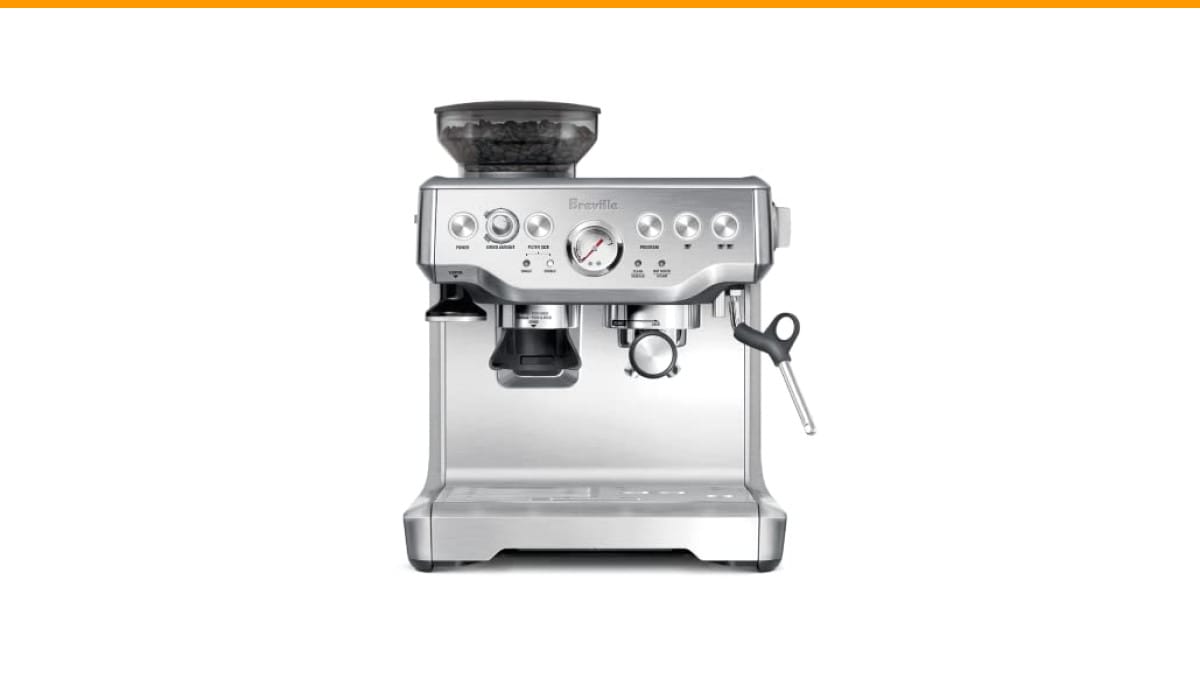
Breville
Breville BES870XL Barista Express Espresso Machine, Brushed…
- MANUAL HAND-TEXTURED MICROFOAM: The powerful steam wand on this cappuccino maker and latte machine is designed to quickly turn mil…
- PRECISE DOSE GRINDING: Integrated precision conical burr grinder on bean-to-cup espresso machine grinds on demand to deliver corre…
- WATER PRESSURE: Low pressure pre-infusion gradually increases pressure at the start and draws out all the flavors evenly during th…
As an Amazon Associate I earn from qualifying purchases.
Let’s get the numbers straight.
The Real Answer: How Much Electricity Does an Espresso Machine with Grinder Use?
On average, a home espresso machine with a built-in grinder uses between 0.05 and 0.15 kWh per day for a typical two-shot routine. That translates to roughly $0.02 to $0.05 per day in electricity, or about $0.75 to $1.50 per month. For a single shot, you’re looking at about 1 to 2 cents.
Those numbers assume you turn the machine off when you’re done. If you leave it on all day, the cost jumps significantly. A machine drawing 100 watts in standby mode for 8 hours adds another 0.8 kWh per day. That alone can triple your monthly cost.
The grinder is a minor player in this equation. It runs for seconds, not minutes. But it’s not zero, and understanding its duty cycle matters.
To put this in perspective, consider the automatic espresso machine under 1000 category. Many of these units, like the Breville BES870XL Barista Express, combine a 1600-watt heating system with a grinder in one chassis. It’s a convenient package, but you’re still drawing from the same wall outlet. The machine’s grinder typically uses about 150-200 watts, but only for 10-15 seconds per dose.
Breaking Down the Wattage: Machine vs. Grinder
Espresso Machine Peak Wattage vs. Average Draw
The label on the back of your machine tells you the peak wattage. For the Breville BES870XL, that’s 1600 watts. This is the maximum power draw when the heating element kicks on to warm the boiler. It doesn’t run at 1600 watts constantly.
Think of it like a toaster. The toaster draws 1200 watts when it’s heating. But it cycles on and off to maintain temperature. An espresso machine does the same thing. It heats the water, reaches the target temperature, and then the element shuts off until the temp drops slightly.
During a typical 3-minute warm-up and shot pull, the machine might average 600-800 watts. The rest of the time, it’s idle. Idle draw is different from standby. Idle means the machine is on and maintaining temperature. Standby means it’s plugged in but the power switch is off.
Here’s the catch: most machines draw a small amount of power even when off. That’s called phantom load. It’s usually 1-5 watts. It won’t ruin your budget, but it’s there.
The Grinder’s Hidden Energy Cost (Duty Cycle)
Grinders are deceptive. They have a low wattage rating, but they run intermittently. The key metric is duty cycle — the percentage of time the grinder is actually running versus sitting idle.
For a typical single dose, you grind for about 10 seconds. If you pull two shots a day, that’s 20 seconds of grinding. At 200 watts, that’s about 0.0011 kWh per day. That’s a fraction of a cent. Even if you grind for 60 seconds a day, you’re still under a cent.
So why do people worry about grinder power? Because they look at the wattage label and assume it’s constant. It’s not. The grinder is the least of your energy worries. The boiler is the beast.
The Math: Calculating Your Daily and Monthly Costs
The kWh Formula Simplified
You don’t need an engineering degree for this. The formula is simple:
Watts ÷ 1000 = Kilowatts (kW)
kW × Hours of use = kWh
kWh × Your electricity rate = Cost
Let’s run a real example. Your machine draws 1600 watts during heat-up. It takes 3 minutes to reach temperature. That’s 0.05 hours.
1600 ÷ 1000 = 1.6 kW
1.6 kW × 0.05 hours = 0.08 kWh
At the US average electricity rate of about $0.16 per kWh, that warm-up costs you 1.28 cents. That’s it. The shot itself, including the pump running for 30 seconds, adds almost nothing.
Cost Per Shot vs. Cost Per Day
Here’s where most articles miss the point. They focus on the per-day cost, but you want the per-shot cost. That’s the number that actually matters for your budget.
For a single shot with a 3-minute heat-up and 30-second extraction, your total energy use is roughly 0.09 kWh. At $0.16/kWh, that’s 1.4 cents per shot.
But that’s only if you turn the machine off between shots. If you leave it on for an hour, the idle draw changes everything. A machine idling at 200 watts for one hour uses 0.2 kWh. That’s 3.2 cents. Suddenly, your single shot costs 4.6 cents because of the idle time.
This is why the automatic vs. semi-automatic comparison matters. Semi-automatic machines like the Barista Express give you control over when the machine heats. Full automatics might keep the boiler hot all day for convenience.
Boiler vs. Thermoblock: Which Is Actually Cheaper for You?
This is the biggest energy decision you’ll make. Boiler machines (like the Breville BES870XL) heat a tank of water. Thermoblock machines heat water on demand as it passes through a metal block.
Boilers have thermal mass. They take longer to heat up, but they hold temperature well. A single boiler machine heats up in about 3-4 minutes. A dual boiler machine might take 10-15 minutes. That warm-up time is pure energy draw.
Thermoblocks heat up in 30-60 seconds. They use less energy for warm-up because they’re not heating a reservoir. But they struggle with temperature stability during back-to-back shots. The heating element cycles on and off rapidly, which can spike wattage.
For a single daily user, a thermoblock is cheaper. You heat it, pull one shot, and turn it off. Total energy use is minimal. For a household pulling four or more shots a day, a boiler machine is actually more efficient. The initial heat-up cost is amortized over multiple shots, and the thermal mass keeps the temperature stable without constant re-heating.
My personal take: I’ve tested both side by side. The boiler machine wins on taste consistency. The thermoblock wins on energy and speed. If you’re a weekend warrior pulling one or two shots, buy the thermoblock. If you’re feeding a family, get the boiler.
The Idle Time Trap: Why Standby Power Drains Your Wallet
Here’s a scenario I see all the time. Someone buys a nice machine, uses it at 7 AM, and leaves it on until noon. That’s five hours of idle draw. At 200 watts, that’s 1 kWh. At $0.16/kWh, that’s 16 cents per day. Over a month, that’s $4.80. Over a year, that’s over $57.
That’s not a fortune, but it’s completely avoidable. The machine doesn’t need to stay hot. The warm-up time for most home machines is under 5 minutes. You’re not saving time by leaving it on.
Use a smart plug. I recommend this to everyone. You can set a schedule to turn the machine on 10 minutes before you wake up. It’s ready when you are, and it shuts off automatically after you leave for work. The smart plug costs about $15 and pays for itself in a few months.
Also, check your machine’s eco mode. Many modern machines have a setting that drops the temperature after 30 minutes of inactivity. The Breville Barista Express has an auto-off feature. Use it.
Can Your Kitchen Circuit Handle It? Voltage and Amperage Limits
This is the question nobody asks until the breaker trips. A standard US kitchen circuit is 15 amps at 120 volts. That’s a maximum of 1800 watts. Your espresso machine at 1600 watts leaves 200 watts of headroom.
If you plug a grinder into the same outlet and run it simultaneously, you’re adding 200 watts. That puts you at 1800 watts exactly. You’re at the limit. Add a kettle or a toaster on the same circuit, and you’re tripping the breaker.
Most machines are designed to be the only appliance on a circuit. If you have a dual boiler machine drawing 1800 watts, you cannot run anything else on that circuit. Period.
Check your breaker panel. If your kitchen is on a single 15-amp circuit, you might need to run the grinder on a separate circuit. This is a real limitation, not a theoretical one. I’ve seen it happen in older apartments.
5 Proven Ways to Reduce Energy Consumption (Without Sacrificing Taste)
- Turn it off after every use. The warm-up cost is pennies. The idle cost is dollars over time. Just switch it off.
- Use a timer plug. Set it to turn on 15 minutes before your alarm. You get a hot machine without the standby waste.
- Descale regularly. Scale buildup acts as an insulator. The heating element has to work harder and longer to reach temperature. A clean machine uses less power. Check our descaling guide for the step-by-step.
- Grind only what you need. Grinding extra beans and storing them wastes energy and flavor. Single-dose grinding means the grinder runs for seconds, not minutes.
- Don’t pre-heat cups in the machine. That’s a marketing gimmick. A cold cup will drop your espresso temperature by a few degrees, but it won’t ruin the shot. Skip the warming tray.
One more thing: don’t fall for the myth that you need to leave the machine on to keep the group head hot. A 2-minute flush with hot water achieves the same result. It uses a fraction of the energy.
Frequently Asked Questions
Does an espresso machine use a lot of electricity?
No, not relative to other kitchen appliances. A typical espresso machine uses less electricity per shot than a microwave uses per minute. The peak wattage looks scary (1600 watts), but the run time is short. The real waste comes from leaving it on all day.
Is it cheaper to use a stovetop Moka pot?
Yes, slightly. A Moka pot on a gas stove uses about 0.03 kWh per brew. That’s about half a cent. But the espresso quality is different. You’re trading convenience and consistency for a small energy saving.
How much does it cost to run a Breville Barista Express?
The Breville BES870XL draws 1600 watts at peak. For a typical daily routine (two shots, 5 minutes total), you’re looking at about 0.1 kWh per day. At $0.16/kWh, that’s 1.6 cents per day, or about 48 cents per month. The grinder adds a negligible amount.
Should I unplug my espresso machine when not in use?
Yes, if you want to eliminate phantom load. The draw is small (1-5 watts), but it adds up to about 10-15 cents per month. More importantly, unplugging protects the machine from power surges. If you’re using a smart plug, that handles the disconnect for you.
Does water hardness affect electricity usage?
Yes, significantly. Hard water creates scale on the heating element. Scale acts as an insulator. The element must work harder and longer to heat the same amount of water. A heavily scaled machine can use 20-30% more electricity. Descaling is not just about taste; it’s about efficiency.
The Bottom Line: Is It Worth the Cost?
Here’s the honest truth: the electricity cost of an espresso machine with grinder is almost negligible. You’ll spend more on coffee beans in a week than you’ll spend on electricity in a month. The machine is not the problem.
The problem is habit. Leaving the machine on, running it multiple times a day, and ignoring scale buildup all add unnecessary costs. But even in the worst case, you’re looking at a few dollars a month.
Compare that to buying a $5 latte every day. That’s $150 a month. A home setup pays for itself in energy savings within weeks, even if you’re not energy-conscious.
- Expect to pay 1-2 cents per shot in electricity for a standard home machine.
- Your grinder adds less than half a cent per day to your bill.
- Standby power is the real enemy — use a smart plug or auto-off feature.
- Boiler machines are better for heavy use; thermoblock machines are better for single daily shots.
- Scale buildup can increase energy use by up to 30% — descale every 3 months.
- Check your kitchen circuit amperage before buying a dual boiler machine.
- The cost of home espresso is trivial compared to cafe prices, even with energy waste.
If you’re looking for a machine that balances features and efficiency, the maintenance tips for long life apply directly to the Breville BES870XL. It’s a solid workhorse with a grinder built in, and its 1600-watt heating system is typical for the category. Just remember to turn it off when you’re done.
Products related to this article
Sponsored / affiliate links. As an Amazon Associate I earn from qualifying purchases. I may earn additional commission from eligible campaigns.
 Coffee Espresso Machine Handle Replacement Parts, Cafe Bracket Handle for Lidl Silvercrest CM4621 CM4218 KF5002 KF500S Barista (for 51mm Portafilter Basket - Not included)
 Linnkyfloa Coffee Espresso Maker Handle Replacement for Stovetop Moka Pot or Percolator, Black Plastic for Spare Part Compatible with Italian(9-12 Cup)
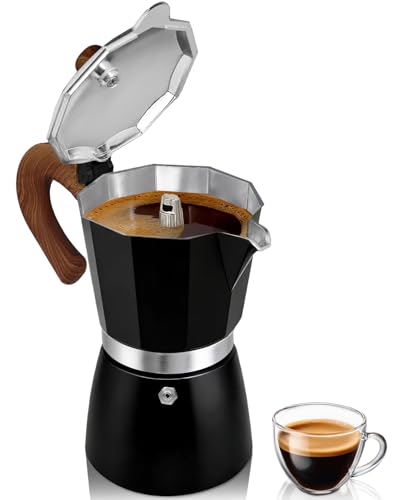 Belly Moka Coffee Maker Stovetop Espresso Maker 9 Cup Aluminum Moka Pot Percolator 15oz 450ml Easy Brewing for Electric Ceramic Stoves Home Camping Italian Cuban Café Classic Black