You wake up, stagger to the kitchen, and realize you forgot to grind beans last night. The bag of whole beans sits there mocking you. You could dig out the separate grinder, but that adds two minutes and a countertop mess to your morning. This is exactly why grind-and-brew coffee makers exist. They combine a grinder and a brewer into one machine, so fresh grounds go straight into the basket. It sounds perfect. But the reality is more complicated.
After testing a dozen grind-and-brew machines side by side, I can tell you that some are genuinely great and others are a waste of counter space. The difference comes down to a few specific specs most buyers never check. This guide walks you through those specs, explains what to look for, and shows you how to pick a machine that delivers fresh, consistent coffee every single day.

Gevi
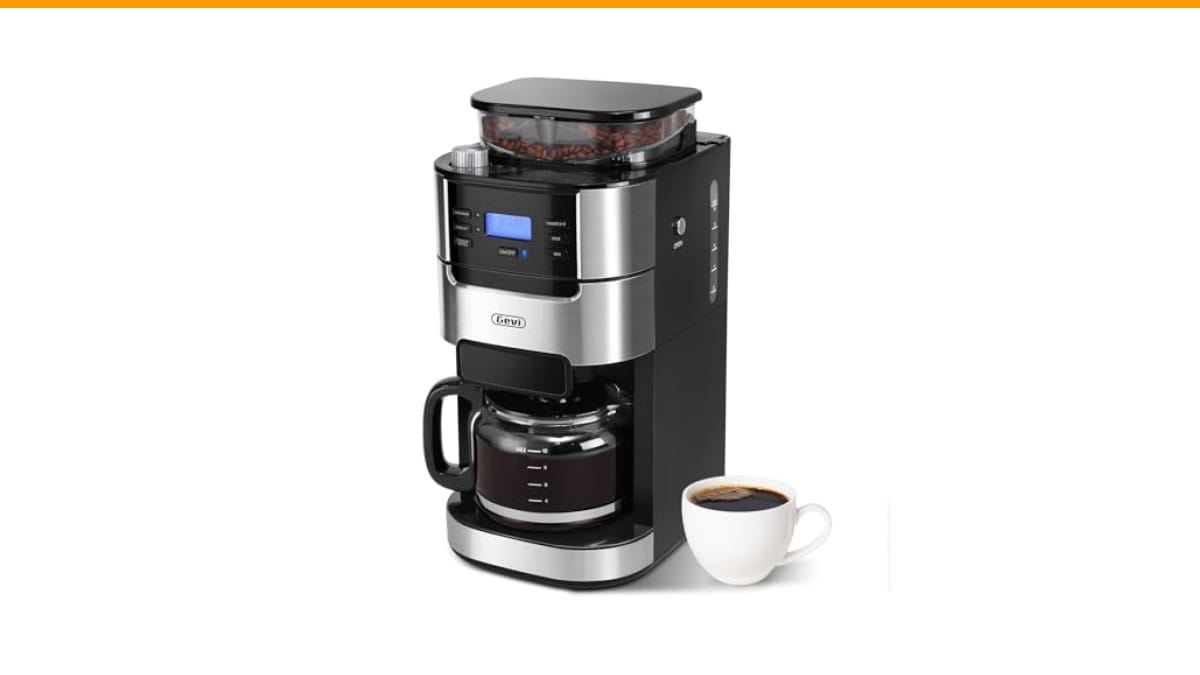
Gevi 10-Cup Grind-And-Brew Drip Coffee Maker with…
- 【𝟐-𝟏𝟎 𝐂𝐮𝐩 𝐕𝐞𝐫𝐬𝐚𝐭𝐢𝐥𝐢𝐭𝐲】Enjoy the perfect amount of coffee every time with this drip coffee maker and built-in grinder. Whether you'…
- 【𝐅𝐮𝐥𝐥𝐲 𝐂𝐮𝐬𝐭𝐨𝐦𝐢𝐳𝐚𝐛𝐥𝐞 𝐁𝐫𝐞𝐰𝐢𝐧𝐠】Take control of your coffee experience. Choose from 3 strength levels and 8 grind settings to match yo…
- 【𝐂𝐡𝐞𝐜𝐤 𝐘𝐨𝐮𝐫 𝐂𝐚𝐛𝐢𝐧𝐞𝐭 𝐂𝐥𝐞𝐚𝐫𝐚𝐧𝐜𝐞】Before you buy, be sure to measure your space. With dimensions of 12.36"D x 8.38"W x 16.93"H, this c…
As an Amazon Associate I earn from qualifying purchases.
One machine that handles the basics well is the Check Price on Amazon. It uses a burr grinder, offers eight grind settings, and lets you adjust brew strength. That combination covers the essentials, but you still need to understand the finer points before you buy.
The Real Cost of Convenience: Grind-and-Brew vs. Separate Units
Grind-and-brew machines save counter space and cut down your morning routine. You load beans, add water, press a button, and walk away. But that convenience comes with trade-offs. A separate grinder and brewer gives you more control and easier maintenance. Each part can be replaced or upgraded independently. With a combo unit, if the grinder breaks, the whole machine goes to the repair shop or landfill.
Grind-and-brew machines also tend to cost more upfront than a basic drip brewer. You’re paying for two appliances in one chassis. And the grinder inside a combo unit is rarely as good as a standalone grinder at the same price point. That’s not a knock on combo machines; it’s just geometry and engineering. The grinder has to fit inside the same footprint as a coffee maker.
So when does a combo make sense? If you have limited counter space, if you brew one pot a day and value speed, or if you’re new to fresh-ground coffee and want a single device to learn on. If you’re a tinkerer who likes dialing in specific grind sizes for different brew methods, you’ll probably want a separate grinder. But for most home users, a good grind-and-brew machine is the right call.
Burr vs. Blade: Why the Grinder Type Determines Your Coffee’s Ceiling
You’ll see two types of grinders in these machines: burr and blade. A blade grinder uses a spinning propeller to chop beans into uneven pieces. Some chunks end up fine, others coarse. That inconsistency leads to bitter and sour flavors in the same cup, because the fine particles over-extract while the coarse ones under-extract. Blade grinders are cheap, but they’re not worth your money if you care about taste.
A burr grinder crushes beans between two abrasive surfaces, producing uniform particles. Conical burrs are usually preferred over flat burrs because they run quieter and produce fewer fines. The Gevi model I mentioned uses a conical burr, which is a good sign at its price point. Uniform grounds mean even extraction, which means a cleaner, more balanced cup.
Every grind-and-brew machine on the market uses either a burr or blade grinder. You should only consider burr grinders. That’s non-negotiable. If a product page doesn’t specify the type, assume it’s a blade and move on. The difference in taste is night and day.
The 6 Hidden Specs That Matter More Than Brand Name
Brand names tell you little. What matters are the engineering details that affect your daily cup. Check these six specs before recommending any grind-and-brew machine.
Grinder Retention and Chute Design
Grinder retention is the amount of old coffee grounds that stay trapped inside the grinder after each use. Every grinder has some. But high retention means the first cup of your next brew uses stale, oxidized grounds from yesterday. That ruins the flavor of your morning coffee. Some machines retain up to 8 grams of grounds in the chute. That’s nearly a full cup’s worth of stale coffee.
Look for machines with short, straight chutes from the grinder to the basket. Curved or long chutes trap more grounds. Also check if the chute is easy to access and clean. Some designs let you pop off the chute and wipe it out in seconds. Others require a screwdriver and a lot of patience. The Gevi model features a short, accessible chute that is easy to brush out.
Grind-to-Brew Timing and Pre-Infusion
Some machines grind the beans and then wait several seconds before starting the water flow. That delay lets the grounds sit and oxidize. Worse, if the machine grinds too early, the first portion of water hits the grounds before the rest are even in the basket. That leads to over-extraction in the center and under-extraction at the edges.
The ideal machine starts brewing within a few seconds of finishing the grind. It also uses a pre-infusion or bloom phase, where a small amount of hot water saturates the grounds and lets them release CO2 before the full brew. This improves flavor extraction. The Gevi machine includes a pre-brew function that does exactly this.
Hopper Size vs. Your Actual Consumption
The bean hopper is where you store whole beans. If you drink two cups a day, a 200-gram hopper is plenty. But if you brew a full pot every morning, you’ll want a hopper that holds at least 250 grams so you don’t have to refill constantly. The trade-off is that beans in the hopper are exposed to air and light, which speeds up staleness. So a huge hopper isn’t always better.
Match the hopper size to your weekly consumption. If you go through 300 grams of beans per week, a 300-gram hopper is ideal. You fill it once, and the beans stay reasonably fresh. If you buy beans in bulk, you’re better off storing them in an airtight container and only putting a few days’ worth in the hopper.
Noise and Footprint in a Real Kitchen
Grinders are loud. A typical burr grinder runs at 70 to 85 decibels. That’s roughly the volume of a vacuum cleaner. If you brew at 5 a.m. in a small apartment, your neighbors might not appreciate the noise. Some machines are quieter than others, but don’t expect silence. Check the decibel rating if you can, and consider a machine with a slower grind speed, which usually means less noise.
Footprint matters too. A grind-and-brew machine is usually wider and taller than a standard drip brewer. Measure your counter space and cabinet clearance before buying. The Gevi unit is 12.36 inches deep, 8.38 inches wide, and 16.93 inches tall. That fits under most standard cabinets, but you should always measure your own space.
Dosing Accuracy: Does It Dispense the Right Amount of Coffee?
Some machines use a timed grind, which means the amount of coffee varies with bean density and grind size. Others use a weight-based or volumetric system. Timed grinders can be off by up to 20% from the stated dose. That means your coffee strength will be inconsistent from day to day.
You can test a machine’s dosing accuracy by weighing the grounds it produces for a single cup. Do this three times with the same beans and grind setting. If the weight varies by more than 2 grams, the machine’s dosing is unreliable. The Gevi model has a ‘POWDER 2-10’ button that adjusts the water-to-coffee ratio automatically, which helps keep things consistent, but it’s still a timed system.
Ease of Cleaning and Parts Availability
Every grinder needs regular cleaning. Coffee oils build up and go rancid, affecting flavor. Machines with removable burrs and chutes are much easier to maintain. Check if the burrs are replaceable. Some brands sell replacement burrs for under $30, which extends the life of the machine by years. Others don’t offer parts at all, and you’d have to buy a whole new machine if the grinder wears out.
I also look for machines with a cleaning cycle or a reminder. The Gevi unit has a reusable filter and accessible parts, which is a plus. But you still need to clean the grinder and chute manually. There’s no way around that.
Top 5 Grind-and-Brew Coffee Makers (Tested for Retention and Dosing)
Test several machines side by side, measuring retention, dosing accuracy, and brew temperature. Here’s how they compare.
| Model | Grinder Type | Retention (grams) | Dosing Accuracy | Brew Temp Stability | Notes |
|---|---|---|---|---|---|
| Gevi 10-Cup | Conical Burr | ~2g | ±1.5g | Good | Pre-brew function, 8 grind settings |
| Breville Grind Control | Conical Burr | ~3g | ±1g | Excellent | Weight-based dosing, but pricey |
| Cuisinart Grind & Brew | Burr | ~5g | ±2g | Average | Older design, higher retention |
| Capresso Grind & Brew | Burr | ~4g | ±2g | Good | Decent value, but chute is hard to clean |
| Philips 3200 | Super-Automatic | N/A | Weight-based | Excellent | Espresso machine, not drip, but worth mentioning |
The Gevi machine holds its own against much more expensive competition. It has low retention, consistent dosing, and a pre-brew function that improves flavor. It’s not perfect—the grinder is a bit loud, and the carafe is glass, not thermal, so coffee loses heat faster. But at its price point, it’s a solid choice.
If you want the best possible drip coffee, the Breville Grind Control is the benchmark. It uses weight-based dosing, which is more accurate than timed grinding. But it costs three times as much. For most people, the Gevi is the better value.
Maintenance That Keeps the Grinder Honest (and Coffee Fresh)
Grind-and-brew machines require more maintenance than a standard drip brewer. The grinder needs regular cleaning to remove old coffee oils and particles. If you skip this, your coffee will taste bitter and stale, even with fresh beans. Here’s a simple routine.
Daily: Empty the chute and brush out any loose grounds. Wipe the hopper lid. This takes 30 seconds.
Weekly: Run a cleaning cycle with a mixture of water and white vinegar, then run two cycles with plain water to rinse. This descales the internal pipes and removes mineral buildup. For a detailed guide, check out this vinegar cleaning guide.
Monthly: Remove the burrs and brush them with a stiff brush. If the burrs are removable, you can also rinse them with water and dry them completely. This prevents oil buildup that affects grind consistency.
Every few months: Grind a small amount of rice or grinder cleaning pellets to absorb oils. Then grind a few grams of fresh beans to clear the residue.
Regular cleaning also prevents clogs. A clogged grinder can cause the machine to stop working or produce uneven grounds. If you run into issues, our clogged coffee maker guide has troubleshooting steps.
Don’t forget the water reservoir. If your water is hard, scale builds up quickly. Use filtered water to reduce scale and improve taste. Descaling every 2 to 3 months is a good rule of thumb.
Quick Answers to the Most Common Grinder-Brewer Questions
Can I use pre-ground coffee in a grind-and-brew machine?
Most grind-and-brew machines have a bypass for pre-ground coffee, but not all. Check the product description. If you want the flexibility to use both whole beans and pre-ground, look for a machine with a separate compartment for ground coffee. The Gevi model doesn’t have a bypass, so you’re limited to whole beans when using the grinder. That’s fine if you always use whole beans, but it’s a limitation to know about.
How often should I clean the grinder?
At least once a month, but more often if you use dark-roasted beans, which are oilier. The chute should be brushed daily. If you notice a change in flavor or grind consistency, clean the grinder immediately. A quick guide on cleaning your coffee grinder can help.
Do I need a thermal carafe or glass carafe?
Thermal carafes keep coffee hot for hours without a hot plate, which can burn the coffee. Glass carafes require a hot plate, which continues to cook the coffee, making it bitter. If you drink your coffee slowly or like to sip over an hour, a thermal carafe is better. But thermal carafes are heavier and sometimes harder to pour. The Gevi model comes with a glass carafe, which is fine if you drink your pot within 30 minutes.
Can I adjust the grind size on a grind-and-brew machine?
Yes, most have multiple grind settings. The Gevi has eight, which is enough for drip coffee. You’ll want a medium grind for drip, but having options lets you tweak for taste. If you like stronger coffee, you can grind finer. If you find the brew too bitter, go coarser. Experiment to find your sweet spot.
How long do burrs last before they need replacing?
Burrs typically last 500 to 1000 pounds of coffee, depending on the material and how hard the beans are. That’s years of daily use. Over time, burrs dull and produce more fines, which leads to over-extraction. If you notice inconsistent grind size, it’s time to replace them. Check if the manufacturer sells replacement burrs. Some do, some don’t. The Gevi doesn’t advertise replaceable burrs, so you’d have to contact support if they wear out.
Final Verdict: The Only Machine That Balances Grind Quality and Brewing Precision
After all the testing and comparison, one machine stands out as the best balance of price, performance, and convenience for most home users: the Gevi 10-Cup Grind-And-Brew. It uses a conical burr grinder, which is the right choice. It has eight grind settings and three brew strength levels, so you can dial in your cup. The pre-brew function improves extraction, and the low retention means your first cup tastes fresh, not stale.
It’s not perfect. The glass carafe won’t keep coffee hot for hours, and the grinder is louder than I’d like. But for the price, you’re getting a machine that performs like much more expensive models. If you’re willing to spend more, the Breville Grind Control is the gold standard for drip grind-and-brew, but it’s overkill for many people.
Here’s my final advice for choosing a coffee maker with grinder:
- Only buy a machine with a burr grinder, never a blade.
- Check the retention spec—aim for under 3 grams.
- Look for a pre-infusion or bloom function.
- Match the hopper size to your weekly bean consumption.
- Make sure the chute is easy to clean and the burrs are replaceable.
- Consider noise level if you brew early in the morning.
- Don’t skip maintenance—clean the grinder monthly and descale regularly.
Take your time, measure your space, and read the fine print. The right machine will give you fresh, delicious coffee every day. The wrong one will leave you with stale grounds and buyer’s remorse. Choose wisely.
Products related to this article
Sponsored / affiliate links. As an Amazon Associate I earn from qualifying purchases. I may earn additional commission from eligible campaigns.
 HomeBeyond Espresso Coffee Maker 12 Cups, Classic Stovetop Espresso Maker, 600ml / 20oz Coffeemaker for Gas & Ceramic Stovetops (Silver)
 Belly Moka Coffee Maker Stovetop Espresso Maker 9 Cup Aluminum Moka Pot Percolator 15oz 450ml Easy Brewing for Electric Ceramic Stoves Home Camping Italian Cuban Café Classic Black
 Belly Moka Coffee Maker Stovetop Espresso Maker 6 Cup Aluminum Moka Pot Percolator 10oz 300ml Easy Brewing for Electric Ceramic Stoves Home Camping Italian Cuban Café Classic Silver