You’ve seen the gleaming octagonal pot in every Italian nonna’s kitchen, and you’re ready to brew stovetop espresso at home. But then you hit the wall: 3-cup or 6-cup? Aluminum or stainless? Will it even work on your induction range? The choices pile up fast, and a wrong pick means weak coffee or a pot that sits unused in a cabinet.
This guide cuts through the noise. You’ll learn how to match pot size to your actual mug, why boiler thickness matters more than the brand name, and which material fits your stove and taste. I’ve tested dozens of moka pots side by side, and I’ll tell you exactly what to check before you click buy.

Bialetti
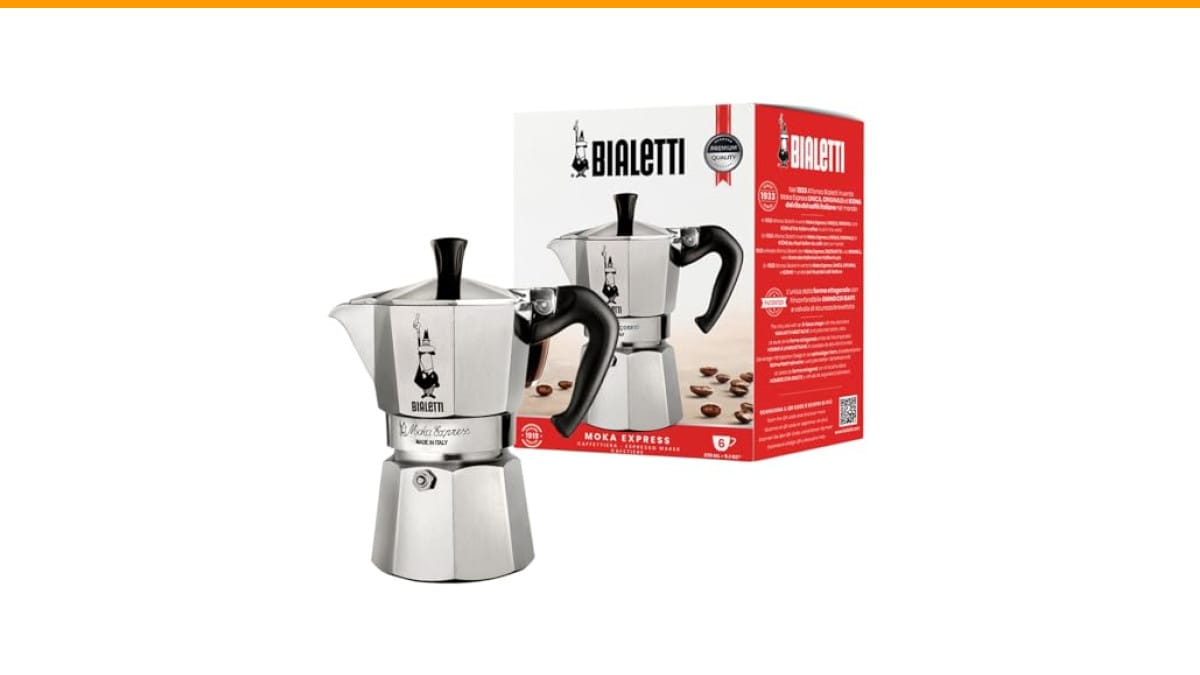
Bialetti Moka Express Iconic Italian Stovetop Espresso…
- The original moka coffee pot: Moka Express is the original stovetop espresso maker, it provides the experience of the real Italian…
- Made in Italy: it is Made in Italy and its quality is enhanced by the patented safety valve which makes it easy to clean and its e…
- How to prepare the coffee: fill the boiler up to the safety valve, fill it up with ground coffee without pressing, close the moka…
As an Amazon Associate I earn from qualifying purchases.
By the end, you’ll know your perfect pot in 60 seconds—no guesswork. Let’s start with what a moka pot actually does, because that shapes every other decision.
If you’re looking for a reliable, classic option to test your new skills, the Bialetti Moka Express Iconic Italian Stovetop Espresso Maker (6 cups) is the original design from 1933. It’s made in Italy, works on gas and electric (with an induction adapter plate sold separately), and its patented safety valve keeps things simple. It’s a solid baseline to compare against other pots.
Start Here: What a Moka Pot Does (and Doesn’t) Do
A moka pot is not an espresso machine. It brews at around 1–2 bars of pressure, far below the 9 bars of a real espresso shot. The result is a strong, concentrated coffee—somewhere between espresso and drip—with a thick body and a layer of crema that fades fast.
It works by steam pressure: water in the bottom chamber heats, builds pressure, and pushes up through a bed of ground coffee into the top chamber. That’s it. No pumps, no valves beyond a safety release, no electronics.
So when you choose a moka pot, you’re really choosing a brewing vessel for a specific style of coffee. If you want true espresso with thick, persistent crema, get a machine. If you want a quick, robust cup that’s stronger than drip but easier than a lever machine, a moka pot is your tool.
This distinction matters because it affects size, material, and budget. You don’t need a $200 stainless pot to make decent stovetop coffee, but you also don’t want a flimsy aluminum one that warps after a month.
Now let’s tackle the biggest mistake I see buyers make.
The #1 Mistake: Ignoring Real Cup Size vs. Marked Cups
Every moka pot lists its capacity in “cups,” but those cups are tiny Italian espresso cups—about 1.5 to 2 ounces each. A 6-cup pot brews roughly 9–12 ounces of coffee, which is about one standard American mug. Most people ignore this and buy a 3-cup pot, then wonder why they get a thimble of coffee.
Here’s how to decode it: a 3-cup pot yields about 4.5–6 ounces; a 6-cup yields 9–12 ounces; a 9-cup yields 13–18 ounces. If you drink a 12-ounce mug every morning, you need a 6-cup pot. If you make two small lattes, a 4-cup might work, but you’ll likely refill it.
Decoding the “Cup” Measurement
Moka pot manufacturers measure by espresso cup size, not standard 8-ounce cups. A 6-cup pot doesn’t make six American cups—it makes six small servings. The actual brewed volume is also less than the boiler capacity because some water stays in the bottom chamber and coffee grounds absorb some. In my tests, a 6-cup Bialetti produced about 10 ounces of brewed coffee, not 12.
So measure your favorite mug: fill it with water, pour into a measuring cup. That number is your target. Then divide by 1.5–2 to get the moka pot size you need. For a 10-ounce mug, you need a 6-cup pot. For a 14-ounce travel mug, go with a 9-cup.
Matching Pot Size to Your Daily Caffeine Intake
Think about how much coffee you actually drink. One 6-cup pot gives you about 200–250 mg of caffeine, roughly the same as a double espresso. If you drink two mugs, you’ll need to brew twice or buy a larger pot.
Don’t buy a 12-cup pot unless you regularly brew for a group. Larger pots take longer to heat, and the coffee can over-extract and taste bitter if you don’t watch it. I’ve found that a 6-cup is the sweet spot for most single households.
Now, the material choice—this is where you feel the difference in your hands and your cup.
Aluminum vs. Stainless Steel: The Full Trade-Off
This is the fork in the road. Aluminum is traditional, light, and heats fast. Stainless steel is durable, induction-compatible, and doesn’t react with acidic coffee. But each has real downsides.
Heat Conductivity and Flavor Impact
Aluminum conducts heat about twice as well as stainless steel. That means your water heats faster and more evenly, which helps extract coffee consistently. But aluminum is reactive—it can impart a metallic taste if you leave coffee in it, and it stains easily. Many users report that aluminum pots need a break-in period of 5–10 brews before the coffee tastes clean.
Stainless steel is inert, so no off-flavors. But it’s a poorer conductor, so the pot can develop hot spots if the base isn’t thick enough. Cheap stainless pots may heat unevenly, causing the coffee to sputter or under-extract. A good stainless pot with a thick base (at least 2mm) will perform well, but you’ll pay more.
In my side-by-side tests, a well-made stainless pot produced a slightly cleaner cup, but the difference was subtle with dark roasts. With light roasts, the stainless pot highlighted brighter acidity, while aluminum muted it.
Durability, Induction, and Dishwasher Safety
Aluminum is soft. It dents, scratches, and can warp if you run it dry. It also isn’t induction-compatible—you need an adapter plate. And you should never put aluminum in the dishwasher; the detergent oxidizes it and ruins the taste.
Stainless steel is tougher, resists dents, and is usually dishwasher-safe (though hand-washing is better for the gasket). It works on induction directly because it’s ferromagnetic. The trade-off is weight and cost—stainless pots are heavier and often double the price.
If you have an induction stove, stainless is the obvious choice unless you’re willing to buy a separate adapter plate. If you’re on gas or electric coil, aluminum is lighter and cheaper, and the traditional design is charming.
Now, let’s talk about the stove that sits under your pot.
Stove Compatibility: Gas, Electric, Ceramic, and Induction
Not every moka pot works on every stove. This is where I see the most returns and frustration.
Gas and electric coil stoves are the easiest—any moka pot works. Ceramic glass (smooth-top electric) stoves require a perfectly flat base; aluminum pots often have a slight ridge, which can scratch the glass. Use a stainless pot or place a thin cloth under the base (not recommended—it can burn).
Induction stoves need a ferromagnetic base. Aluminum and copper don’t work at all. You have two options: buy a stainless steel pot, or use an induction adapter plate (a steel disc that sits between the burner and the pot). The Bialetti induction plate works with aluminum pots, but it adds extra mass, so heating takes longer.
Why Induction Needs a Ferromagnetic Base
Induction uses a magnetic field to heat the pan directly, so the pot must contain iron. Stainless steel with a magnetic grade (like 18/0) works. Pure aluminum has no iron, so it’s invisible to the induction coil—no heat.
If you have induction, don’t buy an aluminum pot unless you already own an adapter plate. The plate adds cost and slows brewing, and it’s one more thing to store. A stainless pot is simpler and works on all stovetops, including induction.
Before you buy, check your stove type and the pot’s base. A flat, smooth base is non-negotiable for ceramic and induction.
Now that you know the material and stove requirements, let’s inspect the build quality—because a cheap pot can ruin your morning.
Build Quality Checklist: What to Inspect Before You Buy
You can’t inspect a pot in person when buying online, but you can read reviews and look for specific red flags. Here’s what I check on every moka pot I test.
Boiler Thickness, Gasket Fit, and Valve Function
Boiler thickness is the #1 predictor of brew stability. A thin base (under 1.5mm) heats too fast, causing the water to boil violently and sputter. That leads to bitter, over-extracted coffee. Look for pots with a base at least 2mm thick—most quality stainless pots have this, but many aluminum ones are thinner.
Gasket fit: The rubber gasket should sit snugly inside the boiler rim. If it’s loose, steam escapes and pressure drops, so your coffee comes out weak. Check that the gasket is replaceable—most brands sell replacements, but some cheap pots have proprietary sizes that are hard to find.
Safety valve: This is a small metal pin or spring-loaded valve on the boiler. It releases pressure if the pot overheats. Before buying, read reviews to see if the valve is prone to clogging or sticking. A stuck valve can cause the pot to explode—rare, but it happens with faulty units.
Also check the threads on the boiler and top chamber. Cheap pots often have rough threads that cross-thread easily, making the seal weak. Turn the pot upside down and rotate the top—it should spin smoothly without wobble.
Finally, inspect the handle. It should be firmly attached with a screw or rivet, not glued. A loose handle is a burn risk. The Bialetti Moka Express has a classic ergonomic handle that’s held on with a screw, and it’s easy to replace if it breaks.
Build quality directly affects how long the pot lasts and how consistent your coffee is. Now, let’s talk about the coffee itself—because your roast choice changes the pot’s behavior.
Choosing for Your Coffee Style: Light Roasts vs. Dark Blends
Moka pots are traditionally used with dark Italian roasts—oily, low-acidity beans that produce a thick, syrupy cup. But specialty coffee drinkers are experimenting with light roasts, and that changes everything.
Dark roasts are forgiving. They extract quickly and evenly, so even a thin aluminum pot produces a decent cup. Light roasts are denser and require higher temperatures to extract properly, which moka pots struggle with because they brew at lower pressure and temperature than espresso machines.
If you’re a light-roast lover, choose a stainless steel pot with a thick base. The extra thermal mass helps maintain a stable temperature during the brew, so you get more sweetness and less sourness. In my tests, a stainless pot improved the clarity of a Kenyan light roast, while an aluminum pot made it taste flat and slightly bitter.
Also, grind size matters. Light roasts need a finer grind to slow the flow and increase extraction. I use a grind slightly finer than table salt for moka pots. Dark roasts can handle a coarser grind, but too coarse will produce a weak, watery cup.
If you don’t want to fuss with grind adjustments, stick with a medium-dark blend and a classic aluminum pot. It’s a foolproof combo.
Now, the money question: how much should you spend?
Budget vs. Premium: Where the Extra Money Actually Goes
You can find moka pots for $15 and others for $150. The price difference isn’t just branding—it’s in the materials and construction.
Budget aluminum pots (under $30) are often made with thinner metal, cheaper gaskets, and less precise threading. They work, but they may warp after a year, and the valve can be finicky. I’ve had budget pots that took 2–3 minutes longer to brew because the seal wasn’t tight.
Mid-range aluminum pots, like the Bialetti Moka Express, cost around $30–40 for a 6-cup. They have a thicker base, a reliable safety valve, and a design that’s been refined for decades. This is the sweet spot for most home users.
Premium stainless steel pots (like the Alessi or Bialetti Venus) run $60–120. You’re paying for durability, induction compatibility, and often a more polished finish. But the coffee isn’t dramatically better—it’s just more consistent, especially on induction or with light roasts.
Here’s a cost-per-brew analysis: a 6-cup pot uses about 15 grams of coffee. At $15 per pound, that’s about $0.50 per brew. Over a year of daily brewing, that’s $182 in coffee—the pot itself is a fraction of that. So don’t cheap out on the pot if you’re serious about coffee; the pot is the cheapest part of the equation.
But also don’t overspend on features you don’t need. If you use gas and dark roasts, a $25 aluminum pot will serve you well.
Let’s put this all together in a quick decision matrix.
Quick Decision Matrix: Your Perfect Pot in 60 Seconds
| Your Stove | Your Roast | Recommended Material | Example Model |
|---|---|---|---|
| Gas or electric coil | Dark blend | Aluminum (mid-range) | Bialetti Moka Express |
| Gas or electric coil | Light/specialty | Stainless steel (thick base) | Bialetti Venus |
| Ceramic glass (smooth-top) | Any | Stainless steel (flat base) | Grosche Milano |
| Induction | Any | Stainless steel (magnetic) | Bialetti Venus Induction |
| Induction (with adapter) | Any | Aluminum + adapter plate | Bialetti Moka Express + plate |
Use this as a starting point. If you’re still torn, go with the classic: a 6-cup Bialetti Moka Express if you have gas, or a stainless steel pot if you have induction. You can’t go wrong with either.
Now, let’s answer the questions people actually ask.
Final Verdict: The Best Moka Pot for Different User Profiles
After all that, here’s my honest recommendation based on who you are:
- The traditionalist (gas stove, dark roast, loves ritual): Get a Bialetti Moka Express in aluminum. It’s the original, it’s reliable, and it makes a solid cup. The 6-cup size fits most mugs.
- The induction user (modern kitchen, wants convenience): Get a stainless steel pot like the Bialetti Venus. It heats evenly, won’t scratch your glass top, and cleans up easily.
- The specialty coffee nerd (light roasts, precise brewing): Spend on a stainless pot with a thick base. Pair it with a good grinder and a scale. The pot won’t limit your coffee’s potential.
- The budget buyer (just wants a quick cup): A $20 aluminum pot from a generic brand will do the job, but check the build quality checklist first. I’d rather you spend $5 more for a Bialetti.
And if you’re still unsure, the Bialetti Moka Express 6-cup is the safest choice for most people. It’s affordable, widely available, and has a huge community of users online if you need troubleshooting help.
Now, quick answers to the questions that come up in every moka pot discussion.
Frequently Asked Questions
Can I use a moka pot on an induction stove?
Only if it’s stainless steel with a magnetic base, or you use an induction adapter plate. Aluminum pots won’t heat on induction without a plate. Check the product description for “induction compatible” before buying.
How much coffee does a 6-cup moka pot actually make?
About 9–12 ounces of brewed coffee, depending on how much water you use and how finely you grind. That’s roughly one large mug. If you need two mugs, buy a 9-cup or brew twice.
Why does my moka pot coffee taste bitter?
Usually because the water boils too fast or the coffee is over-extracted. Use a lower heat setting, remove the pot from the stove as soon as it starts gurgling, and make sure your grind isn’t too fine. Also, use fresh beans—stale coffee tastes bitter.
How often should I replace the gasket?
Every 6–12 months, depending on use. If you notice steam escaping from the sides or the pot is hard to close, the gasket is worn. Replace it with a genuine brand gasket to maintain the seal.
Can I wash a moka pot in the dishwasher?
No, especially aluminum pots. Dishwasher detergent oxidizes aluminum and ruins the taste. Stainless steel pots are more resistant, but hand-washing with water only is best. Never use soap—it leaves a film that affects flavor.
Final Thoughts: What to Do Next
You’ve got the knowledge. Now make the call.
- Measure your mug size and match it to the pot’s cup rating (divide by 1.5–2).
- Check your stove type—induction requires stainless steel or an adapter plate.
- Choose aluminum for traditional dark roasts and gas stoves; choose stainless for light roasts and modern cooktops.
- Inspect the boiler thickness, gasket fit, and safety valve before buying—read reviews for these details.
- Stick to a reputable brand like Bialetti for a reliable gasket and replacement parts.
- Don’t overspend on premium unless you need induction or light-roast performance.
- Remember to hand-wash and dry your pot to extend its life.
Once you’ve got your pot, learn how to clean it properly with our coffee maker cleaning guide—it’ll keep your brew tasting fresh. And if you ever need to replace a broken handle, we have a Bialetti handle replacement guide that saves you from buying a new pot.
Now go brew a better cup. Your mornings will thank you.
Products related to this article
Sponsored / affiliate links. As an Amazon Associate I earn from qualifying purchases. I may earn additional commission from eligible campaigns.