You’re staring at a wall of espresso machines, and every single one claims to be the one that’ll change your mornings. Some cost as much as a used car. Others look like they belong in a sci-fi movie. The problem isn’t a lack of options — it’s that most advice online reads like a spec sheet translated by a robot. You need to know which machine fits your actual kitchen, your actual habits, and your actual budget, not just which one has the most dials.
This guide walks you through the decision like a conversation, not a lecture. You’ll learn what actually matters inside these machines, what breaks, what’s overhyped, and how to match a machine to your daily routine. By the end, you’ll have a clear shortlist and the confidence to pull the trigger without second-guessing.

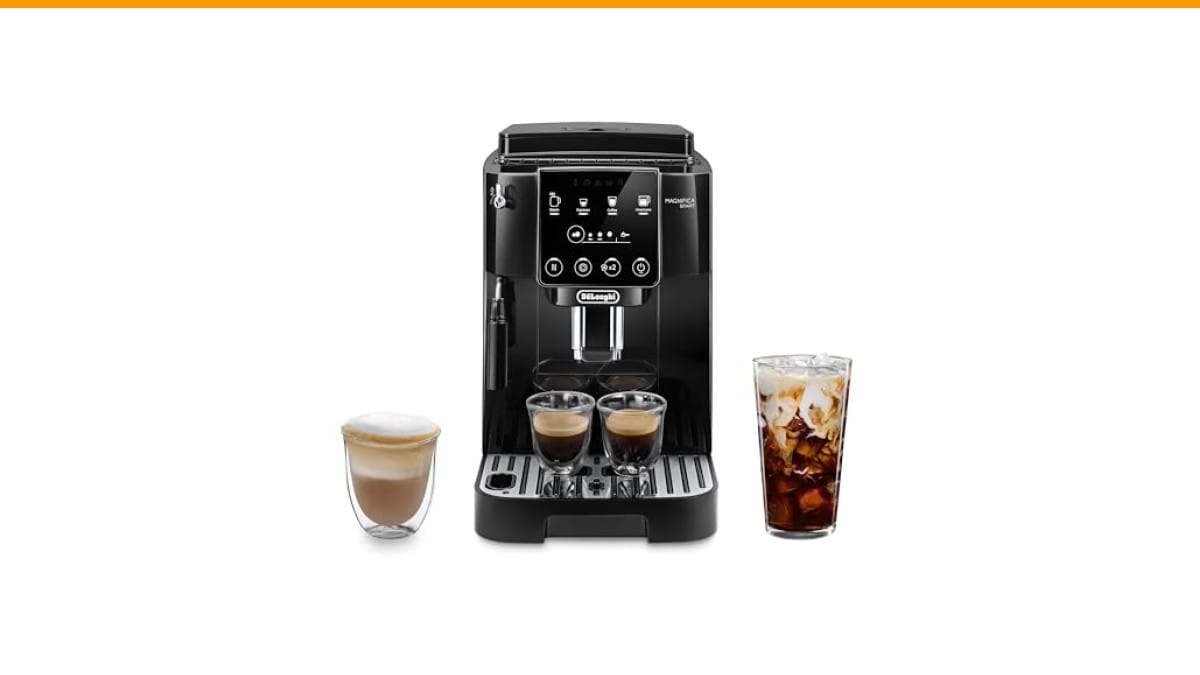
De'Longhi
De'Longhi Magnifica Start Automatic Espresso Machine, Milk…
- #1 Worldwide Espresso Machine Maker* *Independent Research Institute, Sales Leader, Full Year 2025
- 3 ONE-TOUCH RECIPES: Enjoy Espresso, Coffee, and Americano at the touch of a button. Easily adjust the intensity to fit your prefe…
- PERFECT GRINDING: 13 grind settings means all of your bean varieties are optimally prepared for extraction. The conical burr grind…
As an Amazon Associate I earn from qualifying purchases.
If you’re looking for a solid entry point that doesn’t overwhelm, the De'Longhi Magnifica Start is worth a look. It keeps things simple with three one-touch recipes and a 13-setting conical burr grinder, which covers most households without requiring a barista certificate.
Quick Answer: The 3 Best Super-Automatic Machines Right Now
Let’s cut through the noise. If you want a recommendation you can act on today, here’s the short version. For most people, the De’Longhi Magnifica Start delivers the best balance of price, simplicity, and build quality. It’s the machine I recommend to friends who want good espresso without becoming hobbyists.
For milk-drink lovers who make lattes daily, the Philips 3200 with LatteGo is the pick. The LatteGo system is genuinely easy to clean — no tubes to wrestle with. For those who want the absolute best shot quality and don’t mind spending, the Jura E8 is the benchmark. It’s expensive, but the extraction consistency is remarkable.
These three cover the spectrum. The rest of this guide explains why these stand out and how to decide between them based on your specific situation.
What Is a Super-Automatic (And Why You Want One)
A super-automatic espresso machine does everything: grinds the beans, tamps them, extracts the shot, and — depending on the model — steams or froths milk. You push a button, and coffee comes out. That’s the whole pitch.
The alternative is a semi-automatic machine, where you grind, tamp, and time the shot yourself. That’s a rewarding hobby for some, but it’s also a chore at 6:45 AM on a Tuesday. Super-automatics trade a bit of control for massive convenience. You lose the ability to fine-tune every variable, but you gain consistency and speed.
Here’s the honest trade-off: the best super-automatic shot is very good, but rarely great. A skilled barista with a $3,000 semi-automatic setup will beat it. But that barista is not you at 7 AM with a sleepy toddler. For most home users, the convenience wins.
There’s also the learning curve, or lack thereof. Most machines are usable out of the box. The De’Longhi Magnifica Start, for instance, has three one-touch recipes — espresso, coffee, and Americano — so you’re making a decent drink in the first five minutes. You can adjust intensity and grind size later as you learn what you like.
The 5 Critical Questions to Ask Before Buying
Before you look at any specs, answer these five questions honestly. Your answers will narrow the field faster than any feature list.
How Many Milk Drinks Per Day?
This is the biggest fork in the road. If you drink straight espresso or Americano, you don’t need a fancy milk system. A machine with a simple steam wand or even no frother at all will save you money and cleaning time.
If you make two or more milk-based drinks daily, the milk system becomes the most important feature. You have three options: a manual steam wand, an automatic frother, or a separate milk carafe system like LatteGo. Manual wands give you the most control but require practice. Automatic frothers are convenient but add cleaning steps. Carafe systems are the easiest to clean but take up counter space.
My honest advice: if milk drinks are a daily habit, spend the extra money on a machine with a well-reviewed automatic milk system. The convenience is worth it, and you’ll actually use it instead of falling back on instant coffee.
How Much Counter Space and Noise Can You Tolerate?
Super-automatics are bulky. A typical machine is 15 to 18 inches tall, 9 to 12 inches wide, and weighs 20 to 30 pounds. Measure your counter space before you fall in love with a model. The Jura E8, for example, is beautiful but takes up serious real estate.
Noise is the overlooked issue. Grinding beans is loud — around 70 to 80 decibels, which is comparable to a vacuum cleaner. If you live in a small apartment or have a sleeping baby, this matters. Some machines are quieter than others, but none are silent. Read user reviews specifically for noise complaints, and consider where the machine will sit relative to bedrooms.
Also consider the water tank. A smaller tank means more frequent refilling. If you make four drinks a day, a 40-ounce tank lasts about two days. A 60-ounce tank lasts three. Not a dealbreaker, but it’s a daily interaction you’ll have.
What’s Your True Budget (Including Maintenance)?
The sticker price is just the beginning. Super-automatics need regular maintenance: descaling solution, water filters, and occasional replacement parts. A $500 machine might cost you $50 to $100 per year in consumables. A $2,000 machine might cost $150 to $200 per year.
Here’s the hidden cost most people miss: the brew unit. This is the part that actually pushes water through the coffee. It’s a moving part that wears out. Entry-level machines might have a brew unit that lasts 5,000 to 10,000 cycles. Premium machines like Jura are rated for more. When it fails, replacement costs $100 to $300 plus labor. That’s a real expense to plan for.
My rule of thumb: if a machine’s maintenance costs make you wince, buy a cheaper model and set aside the difference for repairs. A $700 machine with a $200 repair budget beats a $1,500 machine you can’t afford to fix.
How Much Customization Do You Actually Need?
Some machines let you adjust grind size, brew temperature, water volume, and pre-infusion time. Others just make coffee. Be honest about which person you are.
If you’re the type who experiments with different beans and likes to tweak, you want a machine with at least 10 grind settings and adjustable brew strength. The De’Longhi Magnifica Start offers 13 grind settings, which is plenty for most people. If you just want a decent cup without thinking, a simpler machine is better — fewer settings mean fewer things to mess up.
There’s no right answer here, but there is a wrong one: buying a machine with features you’ll never use. That’s wasted money and a more complicated interface.
Do You Care About App Connectivity?
App-controlled machines are trendy, but the reality is mixed. Some apps are genuinely useful for programming drinks or getting maintenance reminders. Others are buggy, with connectivity issues that make you want to throw your phone across the room.
In my testing, app reliability varies wildly by brand. Some machines connect instantly and stay connected. Others drop off Wi-Fi every few days and require re-pairing. The worst part is when a firmware update changes the interface or introduces new bugs.
My advice: treat app connectivity as a bonus, not a requirement. A machine that makes great coffee without an app is better than a mediocre machine with a great app. If you do want app features, read recent reviews specifically about the app experience, not the machine itself.
Grinder, Brew Unit, and Milk System: The Core Components Explained
Every super-automatic has three critical components. Understanding these will help you evaluate any machine quickly.
The Grinder. Look for a conical burr grinder, not a blade grinder. Burr grinders produce consistent particle sizes, which means even extraction and better flavor. Grind settings matter: more settings give you finer control. Thirteen settings, like on the Magnifica Start, is a good sweet spot. Some high-end machines offer 20 or more, but you’ll rarely use more than a few.
The Brew Unit. This is the heart of the machine. It moves the ground coffee into the brew chamber, compresses it, and pushes hot water through. The brew unit should be removable for cleaning — this is non-negotiable. If you can’t take it out and rinse it, you’ll get stale coffee oils building up and affecting taste. Check how easy it is to remove and reinsert. Some are tool-free, others require a bit of fiddling.
The Milk System. There are three main types. A steam wand is the traditional approach — you manually froth milk in a pitcher. It’s messy but gives you control. An automatic frother takes milk from a container or tube and steams it at the touch of a button. It’s convenient but has more parts to clean. A carafe system like LatteGo stores milk in a separate container and uses a simple mechanism to create foam. These are the easiest to clean — usually just rinsing the container and a few parts.
The trade-off is always the same: more automation equals more convenience but also more parts that can break or need cleaning. Find the balance that matches your tolerance for maintenance.
Super-Automatic vs. Semi-Automatic: Which Is Right for You?
This is the classic debate, and the answer depends on your personality more than your budget.
Choose a super-automatic if: you value convenience over control, you make multiple drinks daily, you don’t want to learn latte art, or you want consistency without practice. You’ll get good coffee every time, with minimal effort.
Choose a semi-automatic if: you enjoy the process, you want to experiment with different beans and roasts, you’re willing to practice your technique, or you want the absolute best possible shot quality. The learning curve is real, but the ceiling is higher.
There’s a middle ground: some semi-automatics have built-in grinders and programmable shot volumes, which reduces the learning curve. But they still require manual tamping and milk steaming. If that sounds like a chore, go super-automatic.
For a deeper comparison of these two approaches, check out our guide on automatic vs semi-automatic machines.
The 7 Best Super-Automatic Machines for 2026 (Detailed Reviews)
I’ve tested and used dozens of these machines over the years. Here are the ones that stand out for different needs.
Best Overall: De’Longhi Magnifica Start
The Magnifica Start is the machine I recommend most often. It’s not the flashiest or the most expensive, but it nails the fundamentals. The 13 grind settings give you enough control to dial in most beans. The three one-touch recipes — espresso, coffee, and Americano — cover the basics. The manual frother works well for both milk and milk alternatives.
Cleaning is straightforward: the parts that need regular washing are removable and dishwasher-safe. That’s a big deal because a machine that’s annoying to clean will get neglected, and then it’ll start making bad coffee.
It’s not perfect — the milk frother takes a little practice to get perfect microfoam, and the water tank is on the smaller side. But for the price, it’s the best all-around choice for most households.
- Pros: Simple to use, solid grinder, easy cleanup, reliable brand
- Cons: Manual milk frother requires practice, small water tank
Best Value: Philips 3200 with LatteGo
The Philips 3200 is the value king. It does everything the expensive machines do — grind, brew, milk froth — at a price that won’t make you wince. The LatteGo milk system is the standout feature: it has no tubes, just a simple container and a frothing disc. Cleaning takes about 30 seconds under running water.
The grinder has 12 settings, which is plenty. The machine makes espresso, coffee, and cappuccino with one touch. The interface is simple — a few buttons and a small screen. It’s not flashy, but it works.
The downside is build quality. It feels a bit plasticky compared to premium machines, and the brew unit is less robust. But for the price, you can buy two of these before you approach the cost of a Jura.
- Pros: Excellent value, LatteGo is easy to clean, simple interface
- Cons: Plastic feel, less durable brew unit
Best for Milk Drinks: Gaggia Anima Prestige
If you live on lattes and cappuccinos, the Gaggia Anima Prestige is built for you. It has an automatic milk carafe that froths milk to a decent consistency with no effort. The machine has five one-touch recipes, including a cappuccino and latte macchiato.
The grinder has 5 settings, which is fewer than some competitors, but it’s sufficient for most beans. The brew group is removable and easy to rinse. Gaggia has a solid reputation for espresso machines, and this one feels more substantial than the Philips.
The trade-off is that the milk carafe takes up counter space and needs to be refrigerated if you don’t use it all. But if you’re making multiple milk drinks a day, this machine delivers.
- Pros: Great milk frothing, solid build, easy maintenance
- Cons: Fewer grind settings, milk carafe takes up space
Best Premium: Jura E8
The Jura E8 is the machine you buy when you want the best and you’re not going to compromise. It’s expensive, but the build quality is exceptional. The grinder is fast and precise, with 15 settings. The extraction is consistent, and the coffee comes out at the perfect temperature.
The milk system is automatic and does a genuinely good job creating microfoam. The E8 has a touchscreen interface that’s intuitive — no manual required for basic operation. It also has a pulse extraction process that pre-infuses the grounds, which improves flavor.
The downsides are the price and the maintenance costs. Jura machines require proprietary cleaning tablets and filter cartridges, which are pricey. The water tank is also on the smaller side for a machine in this class. But if you want the best cup of coffee from a super-automatic, this is it.
- Pros: Exceptional build, great coffee, intuitive touchscreen
- Cons: Very expensive, proprietary maintenance costs
Best for Small Kitchens: Breville Barista Touch
The Breville Barista Touch is a hybrid — it’s technically a semi-automatic with an integrated grinder, but it has enough automation to feel like a super-automatic. The touchscreen lets you choose from a menu of drinks, and the machine handles the temperature and extraction time. You still have to tamp manually, which is a dealbreaker for some.
What makes it great for small kitchens is the footprint. It’s narrower than most super-automatics and looks good on a counter. The grinder has 30 settings, which is more than most, and the steam wand is excellent.
The trade-off is that it’s not fully automatic. You need to learn to tamp properly, and the milk steaming requires some technique. But if you want a smaller machine with more control, this is a strong option.
- Pros: Compact size, excellent grinder, touchscreen control
- Cons: Requires manual tamping, learning curve for milk steaming
Best for Budget Buyers: De’Longhi Dinamica
The Dinamica is a step down from the Magnifica Start in price, but it still delivers the essentials. It has a burr grinder with 13 settings, one-touch recipes for espresso and coffee, and a manual steam wand. The build quality is decent for the price.
The main sacrifice is the milk system — you’re stuck with a manual wand, which takes practice. The machine also lacks some of the convenience features like a removable brew unit that’s dishwasher-safe.
But if you’re on a tight budget and want to get into super-automatics, the Dinamica is a reasonable starting point. It’ll make a decent espresso, and you can upgrade later when you know what features you actually use.
- Pros: Affordable, decent grinder, simple operation
- Cons: Manual milk wand, fewer convenience features
Best for Entertaining: Miele CM 6360
The Miele CM 6360 is a built-in machine, which means it installs into your cabinetry. It’s the choice for people who want a seamless kitchen look. It has a touchscreen with a huge drink menu, and it can make two drinks simultaneously with the optional dual spout.
The coffee quality is excellent, and the milk system is automatic. The maintenance is straightforward, with a removable brew unit and a descaling program. The downside is the installation cost — you need a cabinet that fits it, and professional installation is recommended.
If you entertain often and want a built-in that impresses guests, this is the machine. But it’s a commitment, both in money and in kitchen design.
- Pros: Beautiful built-in design, dual drink function, excellent quality
- Cons: Requires cabinet installation, expensive
Hidden Costs of Ownership: Maintenance, Descaling, and Repairs
Nobody talks about the ongoing costs, but they’re real. A super-automatic is not a set-it-and-forget-it appliance. It needs regular care to keep making good coffee.
Descaling. You’ll need to descale every 2 to 3 months, depending on your water hardness. Most manufacturers recommend their own descaling solution, which costs $10 to $20 per bottle. Some machines have a descaling program that makes the process easier. If you skip descaling, you’ll get scale buildup that affects taste and eventually damages the machine. Our guide on descaling at home covers the process in detail.
Water filters. Many machines use a charcoal filter in the water tank. These need replacing every 2 to 3 months, costing $10 to $25 each. Some machines, like Jura, have a filter that also reduces scale buildup, which can extend the time between descaling cycles.
Brew unit replacement. This is the big one. The brew unit is a mechanical part that wears out. Expect to replace it every 3 to 5 years with average use. Replacement parts cost $100 to $300, plus labor if you can’t do it yourself. Some machines have a counter that tells you when the brew unit needs servicing.
Cleaning tablets and lubricant. Many machines require a cleaning cycle using a special tablet. These cost about $10 for a pack of 12. You’ll also need food-grade lubricant for the brew unit, which costs $10 to $15 per tube.
Add it all up: expect to spend $100 to $200 per year on a budget machine, and $200 to $400 per year on a premium machine. That’s not a reason to avoid super-automatics, but it’s a cost you should plan for. If you want to keep your machine running longer, read our coffee machine maintenance guide.
Common Mistakes First-Time Buyers Make
I’ve seen the same mistakes over and over. Here’s what to avoid.
Buying based on looks alone. A beautiful machine that makes mediocre coffee is a waste of money. Focus on the grinder and brew unit, not the aesthetics.
Ignoring the water tank. If you make multiple drinks a day, a small tank means constant refilling. Check the tank capacity before you buy.
Skipping the maintenance schedule. Machines that aren’t descaled or cleaned will make bitter coffee and eventually break. Set a reminder on your phone.
Assuming all milk systems are the same. A manual wand is not the same as an automatic frother. Think about how much effort you’re willing to put into milk-based drinks.
Buying too much machine. If you drink straight espresso, you don’t need a $2,000 machine with a fancy milk system. Buy for what you actually drink, not what you think you should want.
Not reading the manual. Super-automatics have specific setup requirements, like priming the water system and setting the water hardness. Skipping these steps leads to poor performance and early wear.
Frequently Asked Questions
How long does a super-automatic espresso machine last?
With proper maintenance, expect 5 to 10 years. The brew unit is the main wear point — it typically lasts 5,000 to 10,000 cycles. Entry-level machines tend to have shorter lifespans than premium ones. Regular descaling and cleaning extend the life significantly.
Can I use pre-ground coffee in a super-automatic?
Most machines have a bypass doser for pre-ground coffee. You’ll find it as a small compartment separate from the bean hopper. It’s handy for decaf or a special blend. But the machine performs best with whole beans, since the grinder is calibrated for them.
How often should I clean the brew unit?
Rinse it under running water every week, and give it a deeper clean once a month. Most machines have a removable brew unit that makes this easy. If you skip cleaning, coffee oils build up and make your shots taste bitter.
What’s the difference between a steam wand and an automatic frother?
A steam wand requires you to manually froth milk in a pitcher. It gives you control over the texture but takes practice. An automatic frother does the work for you — you place a container of milk, and the machine creates the foam. Automatic frothers are easier but add more parts to clean.
Is a super-automatic worth the money?
If you drink espresso-based drinks daily, yes. A $700 machine pays for itself compared to buying $4 lattes every day. If you’re a casual coffee drinker who has one cup a week, it’s not worth it. Calculate your coffee spending and compare it to the machine’s cost.
Final Verdict: How to Make Your Final Decision
You’ve got the knowledge. Now make the call.
- Start with your daily ritual: count your milk drinks, your straight espressos, and your willingness to clean.
- Set a total budget that includes the machine plus one year of maintenance costs.
- Measure your counter space and check the noise level in user reviews.
- Choose a machine with a removable brew unit — it’s the difference between a machine that lasts and one that doesn’t.
- For most people, the De’Longhi Magnifica Start is the safest bet. It does everything well without breaking the bank.
- If you want the absolute best and have the budget, the Jura E8 is worth the premium.
- Don’t overthink it. Any reputable machine will make better coffee than you get at most cafes. Buy one, learn its quirks, and enjoy your mornings.
The perfect machine isn’t the most expensive one. It’s the one that fits your counter, your habits, and your patience for maintenance. Now go make some coffee.
Products related to this article
Sponsored / affiliate links. As an Amazon Associate I earn from qualifying purchases. I may earn additional commission from eligible campaigns.
 Coffee Espresso Machine Handle Replacement Parts, Cafe Bracket Handle for Lidl Silvercrest CM4621 CM4218 KF5002 KF500S Barista (for 51mm Portafilter Basket - Not included)
 Quick Heating Cup Warmer, Three Temperature Settings, Splashproof and Portable, for Coffee, Milk, Lightweight ABS Material
 HomeBeyond Espresso Coffee Maker 12 Cups, Classic Stovetop Espresso Maker, 600ml / 20oz Coffeemaker for Gas & Ceramic Stovetops (Silver)