You just brewed a perfect mug, but the drip tray is sticky, the water tank has a film, and the milk frother smells faintly of old dairy. Nobody talks about this part of owning a Vertuo. The machine gets all the glory, yet the accessories take most of the abuse.
This guide covers every removable piece on your Vertuo setup. You’ll learn what to wash by hand, what can go in the dishwasher, and how often to descale the machine itself so your coffee doesn’t taste like hard water. I’ll also point out the one step most owners skip, which leads to clogged needles and weak pours.

Nespresso
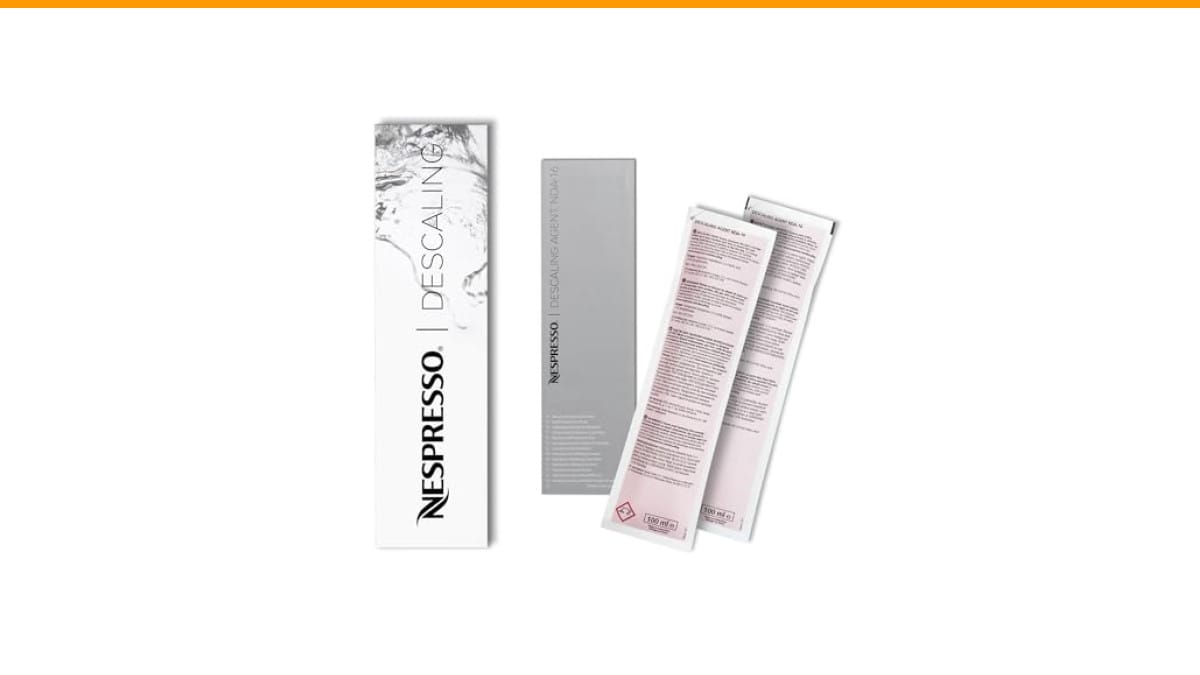
Nespresso Descaling Kit Solution, Compatible with all…
- Includes: 2 portioned pouches of descaling solution specially designed for your Nespresso machine
- Better taste: Removing mineral build-up keeps your machine brewing coffees as delicious as on day one
- Easy to use: Descale at the touch of a button - Requires nothing more than fresh drinking water, an empty container, and a few min…
As an Amazon Associate I earn from qualifying purchases.
If you’ve already noticed your cleaning cycle failing, read that guide first, then come back here to maintain the rest of the kit.
For the descaling part, I keep a pack of the Nespresso Descaling Kit Solution on hand. It comes with two portioned pouches, so you don’t have to measure anything. Just pour one into the tank, fill with water, and run the program. The QR code on the box links to a video tutorial, which is handy the first time you do it.
What You’re Actually Cleaning (And Why It Matters)
Every Vertuo model shares the same basic accessory set. The drip tray, water tank, capsule container, and sometimes an Aeroccino milk frother. Each one collects different gunk.
- Drip tray: Coffee spills, dust, and sticky residue. If ignored, it develops a brown sludge that attracts ants.
- Water tank: Mineral scale from tap water, plus a slimy biofilm if you leave water sitting for weeks.
- Capsule container: Old coffee grounds and moisture. Mold can grow here if you empty it rarely.
- Aeroccino: Milk protein bonds to the metal. Hot water alone won’t remove it.
The machine itself has internal parts you can’t reach, which is why descaling exists. But the external pieces matter too. A dirty drip tray doesn’t affect flavor, but it does affect your kitchen’s smell.
Step-by-Step: Cleaning Every Vertuo Accessory
Do this once a week if you brew daily. Twice a month is the absolute minimum. Here’s the order I use.
1. Water Tank
- Unplug the machine. Always.
- Lift the tank straight up and remove the lid.
- Empty any remaining water. Don’t pour it down the sink with coffee grounds; just dump it.
- Wash with warm soapy water and a soft sponge. Avoid abrasive pads; they scratch the plastic and create hiding spots for bacteria.
- Rinse thoroughly until no soap residue remains. Soap in the tank means soapy-tasting coffee.
- Dry with a clean cloth or let it air dry completely before refilling.
Pro tip: If you see white flakes inside the tank, that’s scale. Soak it in a 50/50 white vinegar and water solution for 30 minutes, then rinse well. Your vinegar cleaning routine works for the tank, but never run vinegar through the brewing unit.
2. Drip Tray and Grid
The grid pops off the tray. Slide it forward and lift. Wash both pieces in warm soapy water. The tray is usually dishwasher-safe on the top rack, but I hand wash mine because the plastic warps in some dishwashers. Check your model’s manual before relying on the dishwasher.
Dry these completely before snapping them back. Water trapped under the grid creates a breeding ground for mold.
3. Capsule Container
Empty it into the trash. Rinse the container with warm water to remove loose grounds. Wash with soap and water, then dry. This one is also dishwasher-safe on most models, but again, hand washing is gentler on the plastic.
The seal around the top edge collects fine coffee dust. Wipe it with a damp cloth every few uses.
4. Aeroccino Milk Frother
This is where most people mess up. The Aeroccino has a non-stick coating on the inside. Do not use metal utensils or abrasive sponges on it. You’ll scratch the coating, and then milk will burn onto the scratches permanently.
- Unplug the base and remove the whisk attachment.
- Rinse the jug with cold water immediately after use. Hot water cooks the milk protein onto the surface.
- Add a drop of dish soap and warm water. Use a soft sponge or your hand to wipe the inside.
- Rinse thoroughly.
- Wipe the whisk with a damp cloth. The whisk is not dishwasher safe.
- Dry everything before reassembling.
For stubborn milk residue, fill the jug with warm water and a drop of soap, let it sit for 15 minutes, then rinse. Never boil milk in it to clean it.
Descaling: The Internal Clean You Can’t Skip
Descaling removes mineral buildup inside the boiler and brew head. Hard water leaves calcium deposits that restrict flow and make your coffee taste bitter or flat. The machine’s manual says to descale every 3 months or after 300 capsules, whichever comes first.
If you use filtered water, you can stretch that to every 4-5 months. If you use hard tap water, stick to the 3-month schedule. I’ve seen Vertuo machines fail completely from never being descaled. The fix is not cheap.
Here’s the process for the Vertuo line:
- Empty the drip tray and capsule container.
- Pour one pouch of descaling solution into the empty water tank.
- Fill the tank with fresh water to the MAX line.
- Place a large container (at least 1 liter) under the brew head.
- Turn off the machine. Press and hold the button for 7 seconds until the light blinks orange.
- Release the button. The descaling cycle starts. It takes about 15-20 minutes.
- The machine will pause when the tank is empty. Rinse the tank, fill it with fresh water, and run a full cycle again to flush out the solution.
- Wipe down the machine exterior while you wait.
If your machine isn’t responding to the button sequence, check our guide on Vertuo troubleshooting before you panic.
One thing I’ll note: the Nespresso descaling solution has a slight chemical smell during the cycle. That’s normal. The rinse cycle should eliminate it. If your first coffee after descaling tastes odd, run one empty brew cycle with just water.
Cleaning Method Comparison
| Part | Cleaning Method | Frequency | Time Needed |
|---|---|---|---|
| Water tank | Hand wash with soapy water | Weekly | 2 minutes |
| Drip tray & grid | Hand wash or dishwasher (top rack) | Weekly | 3 minutes |
| Capsule container | Rinse, then hand wash | Every 3-4 days | 1 minute |
| Aeroccino jug | Hand wash, non-abrasive only | After each use | 2 minutes |
| Internal boiler | Descaling solution cycle | Every 3 months | 20 minutes |
This table is my honest schedule. You can skip a week on the drip tray and survive. Skipping descaling for a year will cost you a new machine.
Three Mistakes That Ruin Vertuo Accessories
I’ve cleaned a lot of coffee gear, and these are the errors I see repeatedly.
Mistake 1: Putting the Aeroccino in the dishwasher. The non-stick coating peels off after a few cycles. Then milk burns on, and the frother becomes useless. Hand wash it. Every time.
Mistake 2: Using vinegar in the brewing unit. Vinegar is fine for the water tank and drip tray, but it leaves a residue inside the boiler that’s hard to flush out. Your coffee will taste like pickles for weeks. Use the actual descaling solution.
Mistake 3: Scrubbing the drip tray with steel wool. The plastic gets micro-scratches that trap coffee oils. Those scratches turn brown and look permanently dirty. Use a soft sponge.
If your machine has already stopped pumping water due to scale buildup, you might need more than a descale. Check our guide on Vertuo water flow issues for fixes that go beyond the basics.
Frequently Asked Questions
Can I use regular dish soap on the water tank?
Yes, but rinse it very thoroughly. Soap residue in the tank gets pulled into the brew unit and affects the coffee’s surface tension. You’ll notice a thinner crema and a slightly soapy aftertaste. A quick rinse under running water for 30 seconds is usually enough.
How do I know when it’s time to descale?
The machine will flash an orange light after roughly 300 capsules or 3 months. That’s the built-in reminder. If your coffee pours slower than usual or tastes more bitter, descale even if the light hasn’t come on yet. Trust your taste buds over the timer.
Is the Aeroccino whisk dishwasher safe?
No. The whisk is metal with a small plastic base, and the dishwasher heat can warp the plastic connector. Hand wash it with warm soapy water and dry it immediately. Replacing a warped whisk is a hassle.
Can I clean the capsule container with bleach?
You can, but you shouldn’t. Bleach leaves a residue that’s hard to rinse out completely, and any trace will contaminate your next brew. Hot soapy water is enough to kill mold and remove coffee oils. If you see black spots, toss the container and buy a replacement.
What happens if I never clean the drip tray?
Nothing catastrophic to the machine, but the coffee oils go rancid and start smelling like old, bitter coffee. That smell fills your kitchen. The tray also gets sticky, which attracts fruit flies in warmer months. It takes three minutes to clean. Just do it.
What to Remember Next Time You Clean
- Hand wash the Aeroccino and whisk. Never let them touch the dishwasher.
- Descale every 3 months with the proper solution, not vinegar.
- Dry every part completely before reassembling to prevent mold.
- Use a soft sponge on all plastic parts; scratches trap grime.
- Empty the capsule container every few days to avoid mold growth.
- Rinse the water tank weekly, even if you just refill it.
- Keep a descaling kit stocked so you don’t skip the cycle when the light flashes.
A clean Vertuo doesn’t just look better. It brews hotter, pours faster, and produces crema that actually holds. The routine takes about 10 minutes a week and 20 minutes a quarter. That’s a small price for a machine that lasts years longer than the average.
Products related to this article
Sponsored / affiliate links. As an Amazon Associate I earn from qualifying purchases. I may earn additional commission from eligible campaigns.