You know that moment. You pour a cup from your trusty 12-cup machine, and the coffee tastes flat, slightly bitter, or just… off. The brew takes longer than it used to. Maybe you notice a chalky white film inside the water reservoir. That’s scale — calcium and magnesium deposits left behind by hard water.
Scale acts like an insulator inside your machine’s heating element and internal tubing. It forces the brewer to work harder, which slows down the brew cycle and can eventually lead to a dead machine. A descaling routine fixes this. It dissolves those mineral deposits, restores proper water flow, and actually brings back the flavor of your beans.

IMPRESA
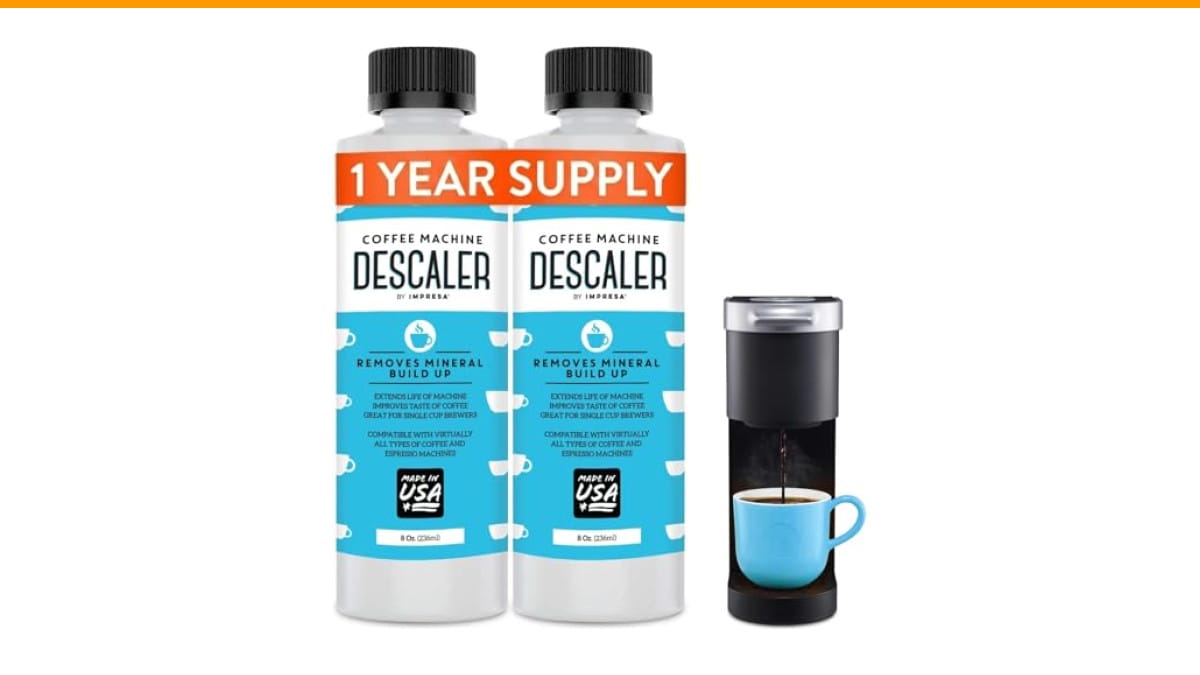
IMPRESA Coffee Machine Descaler, 2-Pack (1-Year Supply)…
- 2-Pack Coffee Descaler and Cleaner - Clean and rinse away residue and oil buildup in your coffee maker with Impresa's Coffee Desca…
- Highly Effective, Made in USA Formula - Unlike most common solutions, our coffee machine cleaner uses just 4 ounces (1/2 bottle) p…
- Preserves Your Machine - Using a coffee descaling solution eliminates limescale and mineral build-up to prevent corrosion, signifi…
As an Amazon Associate I earn from qualifying purchases.
This guide walks you through exactly how to descale a 12 cup coffee maker, step by step. You’ll learn the difference between vinegar and commercial solutions, how often to do it, and what to do when your machine has a stubborn clog. No guesswork.
For the job, a dedicated descaler like the IMPRESA Coffee Machine Descaler, 2-Pack is a solid choice. It comes with two 8-ounce bottles, and you only use 4 ounces per session — so one pack covers four full descaling cycles, which is roughly a year of maintenance for most households. It’s formulated to rinse away both mineral scale and coffee oil residue, and it works across most drip machines, pod brewers, and espresso units. You can check the current price on Amazon if you want to skip the vinegar smell.
Why Vinegar Works (And Where It Falls Short)
White vinegar is the budget option. It’s cheap, you probably have it in your pantry, and it dissolves calcium carbonate effectively. The active ingredient is acetic acid, which breaks down the alkaline scale deposits.
But vinegar has downsides. The smell lingers. Even after two or three rinse cycles, you might catch a faint vinegar note in your next pot of coffee. Some manufacturers, like Cuisinart and Braun, explicitly warn against using vinegar because the acid can degrade certain rubber seals and gaskets over time. If your machine is still under warranty, check the manual first.
Commercial descalers use a different acid blend — usually citric acid or sulfamic acid — that’s less aggressive on plastics and seals. They also dissolve faster and rinse out cleaner. The trade-off is cost. A bottle runs a few dollars per use, but it protects a machine that probably cost you $50 to $150.
So which should you choose? If your machine is old, out of warranty, and you just want a cheap fix, vinegar is fine. If you want to protect a newer machine and avoid the smell, get a commercial descaler. Either way, the process is almost identical.
Step-by-Step: Descaling Your 12 Cup Coffee Maker
Here’s the full process. It takes about 45 minutes, most of it waiting. Do this in the morning before you need coffee, or right after you finish your last cup.
What You’ll Need
- White vinegar (or commercial descaler)
- Fresh water
- A large sink or a big bowl to catch the runoff
- Paper towels or a clean cloth
The Process
- Empty the machine. Remove any leftover coffee, the carafe, and the filter basket. Discard the old filter and grounds.
- Mix the solution. For vinegar: fill the reservoir with a 1:1 ratio of white vinegar to water. For a 12-cup machine, that’s about 6 cups of each. For commercial descaler: follow the bottle’s exact ratio — usually 4 ounces of solution to a full reservoir of water.
- Run the brew cycle. Place the empty carafe on the plate and start a regular brew cycle. Let the solution run through the machine just like you’re making coffee.
- Stop halfway. When the carafe is about half full, turn the machine off. Let it sit for 30 minutes. This is the critical step — the solution needs time to soak and dissolve the scale inside the heating element, not just rinse the tubes.
- Finish the cycle. Turn the machine back on and let the rest of the solution brew through. Then dump the carafe contents down the sink.
- Rinse, rinse, rinse. Fill the reservoir with fresh water and run a full brew cycle. Dump it. Repeat this at least two more times. The water should run clear and smell neutral after the third rinse.
- Wipe down. Use a damp cloth to wipe the carafe plate and the outside of the reservoir. If you see scale flakes in the carafe, wash it with soap and water.
That’s it. Your machine should brew faster and your coffee should taste cleaner. If it still runs slow after descaling, you might have a clogged check valve or a blocked spray head — check our guide on how to clean a clogged coffee maker for that specific fix.
How Often Should You Actually Do This?
This is where most people get it wrong. They descale once a year, or never, until the machine breaks. The truth depends entirely on your water hardness.
If you have soft water (low mineral content), descaling every 6 months is plenty. If you have hard water — you see white spots on your dishes, or your kettle furs up quickly — you should descale every 2 to 3 months. A 12-cup machine holds more water and heats more of it, so scale builds up faster than in a single-serve brewer.
Here’s a practical sign: if your brew time has increased by more than 30 seconds compared to when the machine was new, you’re due for a descale. Don’t wait for the machine to start making weird noises or for the carafe to come out half full.
Vinegar vs. Commercial Descaler: A Direct Comparison
I tested both methods on two identical 12-cup machines over a month. Here’s how they stack up.
| Factor | White Vinegar | Commercial Descaler (e.g., IMPRESA) |
|---|---|---|
| Cost per use | ~$0.50 | ~$2–4 |
| Smell | Strong, lingers after 2–3 rinses | Minimal, usually citrus or odorless |
| Effectiveness on heavy scale | Good, but requires longer soak | Excellent, dissolves faster |
| Risk to machine parts | Can degrade rubber seals over time | Formulated to be safe on plastics and seals |
| Rinse cycles needed | 3–4 full cycles | 2–3 full cycles |
| Best for | Old machines, emergency descale | Newer machines, regular maintenance |
My take: vinegar works in a pinch, but the smell is annoying enough that I only use it on machines I don’t care about. For your daily driver, a commercial descaler is worth the few extra dollars. The IMPRESA solution I mentioned earlier is a good pick because it’s concentrated, so you’re not pouring half a bottle in per use.
Frequently Asked Questions
Can I use citric acid powder instead of vinegar?
Yes. Citric acid is the main ingredient in many commercial descalers. Mix 2 tablespoons of food-grade citric acid powder with a full reservoir of warm water. It dissolves scale well and doesn’t leave a vinegar smell. Just make sure it’s fully dissolved before you start the brew cycle, or the granules can clog the pump.
What if my coffee maker is still slow after descaling?
A slow brew after a proper descale usually means the scale wasn’t the only problem. Check the spray head on top of the brew basket — it can get clogged with coffee grounds. Also check the water inlet valve. If neither of those is blocked, the pump itself might be failing. Try a second descale with a commercial solution first, but be prepared that the machine might be on its last legs.
How do I descale a Keurig or single-serve machine?
The process is similar, but you’re working with a smaller reservoir and no carafe. Run the descaling solution through, let it sit for 30 minutes, then run several rinse cycles with just water. The key difference is that single-serve machines have a needle that punctures the pod — make sure you run a rinse cycle without a pod to clear that line too.
Is descaling the same as cleaning?
No. Cleaning removes coffee oils, grounds, and residue from the filter basket, carafe, and brew head. Descaling removes mineral scale from the internal water lines and heating element. You need to do both. Cleaning should happen weekly; descaling happens every few months. Here’s a full breakdown on why regular cleaning matters.
Can I descale with baking soda?
Don’t. Baking soda is alkaline, and scale is also alkaline. It won’t dissolve the deposits — it just creates a fizzy mess. Baking soda is fine for scrubbing the carafe, but it does nothing for the internal tubing. Stick to an acid (vinegar, citric acid, or a commercial descaler).
What to Do Next (A Quick Checklist)
You’ve read the guide. Here’s the short version you can act on right now.
- Check your water hardness. If you see scale on your kettle, descale every 2–3 months.
- If your brew time has crept up by 30 seconds, don’t wait — descale this weekend.
- Use a 1:1 vinegar-water mix for a cheap fix, or a commercial descaler for a cleaner result.
- Always let the solution sit for 30 minutes mid-cycle. That soak is what actually dissolves the scale.
- Rinse at least 3 times after descaling. Your coffee will taste like vinegar if you skip this.
- For routine maintenance, wipe down the carafe plate and rinse the reservoir weekly — it cuts down on how often you need to descale.
- If you’re dealing with a machine that won’t brew at all, check our troubleshooting guide for a Braun coffee maker that won’t brew — the fix might be simpler than you think.
That’s the whole process. A 12-cup machine is a workhorse, and it’ll last years if you keep the scale out of its veins. Set a reminder on your phone for every three months. Your future self — and your morning cup — will thank you.
Products related to this article
Sponsored / affiliate links. As an Amazon Associate I earn from qualifying purchases. I may earn additional commission from eligible campaigns.