You pull a shot and something tastes off. The crema looks thin. The flavor has a sour, rancid edge that wasn’t there last week. You check your water, your temperature, your dose. Everything looks fine. Then you remember: you haven’t cleaned the grinder in two months.
Most home baristas obsess over the machine but ignore the grinder. That’s a mistake. The grinder is where your coffee spends its final seconds before extraction. Old oils and micro-fines coat the burrs and turn rancid. That rancid layer flavors every single shot you pull after it forms. This article covers what actually needs to happen to keep your grinder producing clean, consistent grounds.
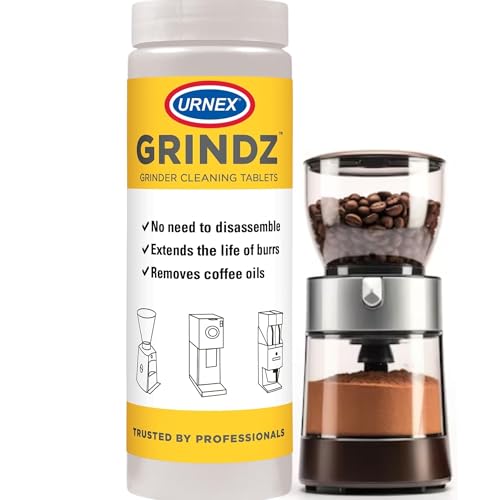
Urnex
Urnex Grindz Professional Coffee Grinder Cleaning Tablets…
- Removes coffee residue and oils in standalone coffee grinders (not for super automatic espresso machines)
- Patented, all-natural, food safe and gluten-free tablet absorbs and loosens coffee grounds
- Effectively cleans grinders without disassembling burrs or casings
As an Amazon Associate I earn from qualifying purchases.
You’ll learn why descaling an espresso grinder is usually the wrong move, what to use instead, and a step-by-step routine that takes under ten minutes.
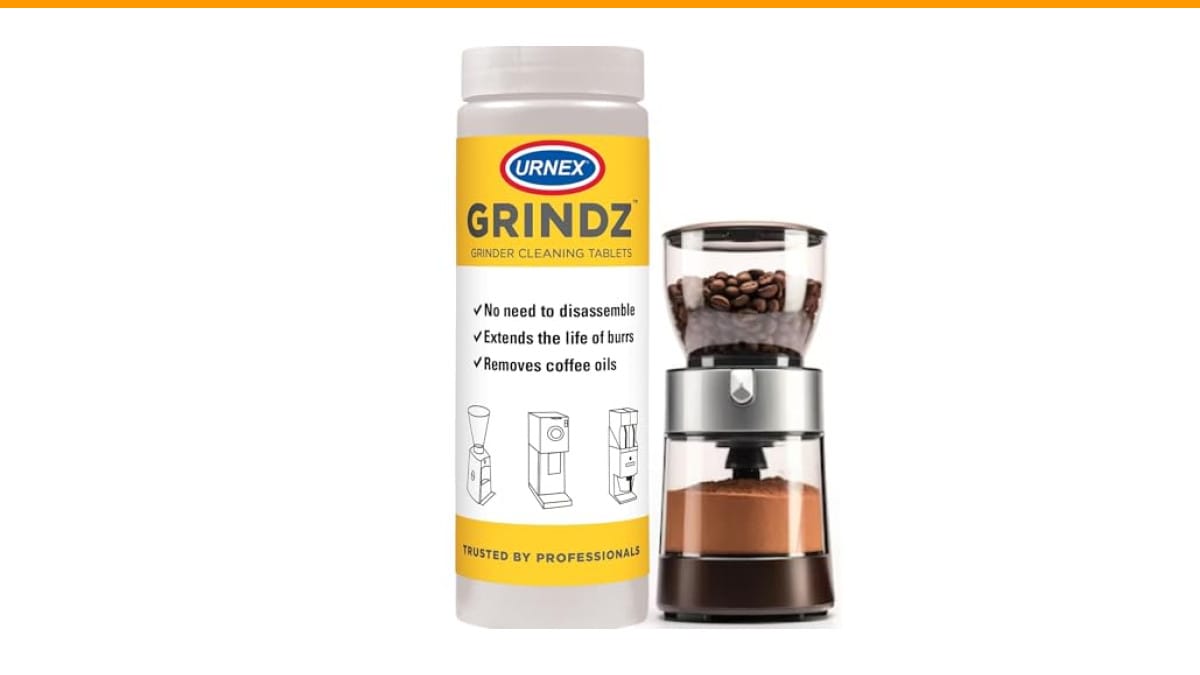
For a quick maintenance fix between deep cleans, Urnex Grindz tablets absorb and lift coffee oils from burrs without disassembling anything. They’re food-safe and gluten-free, and they work on standalone grinders, not super-automatic machines.
The Myth: Your Grinder Needs Descaling
Descaling removes mineral scale. Scale comes from water. Your grinder burrs never touch water. Coffee beans are dry. The only moisture in a grinder comes from ambient humidity or from running rice through it (which you shouldn’t do, but we’ll get to that).
If you run a descaling solution through your grinder, you’re introducing liquid into a component that has no drainage. The solution seeps into the motor housing, the bearings, and the chute. It pools in places that never dry out. That leads to rust, seized bearings, and a motor that eventually burns out.
The real problem in a grinder isn’t scale. It’s coffee oil. Roasted coffee contains about 15% oil by weight. That oil coats the burrs, the grinding chamber, and the exit chute. Over time, it oxidizes and turns sticky. The stickiness holds onto old grounds, which then go stale and contaminate fresh coffee.
So when someone asks how to descale an espresso grinder, the honest answer is: don’t. You want to degrease it instead.
What Actually Works: Cleaning Tablets vs. Rice
The internet loves the rice trick. You drop a handful of uncooked rice into the hopper, run it through, and watch white powder come out. It looks clean. It isn’t.
Rice is harder than coffee beans but softer than steel burrs. That sounds safe, but rice doesn’t absorb oil. It just pushes some loose grounds through. Worse, rice can shatter into sharp fragments that lodge between burr teeth. And it leaves a starchy residue that turns gummy when it meets coffee oil.
Cleaning tablets like Grindz are made from a food-grade grain base that absorbs oil. The tablet is harder than a coffee bean but designed to crumble as it passes through the burrs. It sweeps the oil and residue out without scratching the cutting edges.
Here’s the comparison you actually need:
| Method | Removes Oil | Safe for Burrs | Time Needed | Residue Left Behind |
|---|---|---|---|---|
| Urnex Grindz tablets | Yes | Yes | 2-3 minutes | None (grind coffee after) |
| Uncooked rice | No | Risky (fractures) | 2 minutes | Starch, gummy residue |
| Brushes and air | Partial | Yes | 10-15 minutes | None |
| Full disassembly + solvent | Yes | Yes (if careful) | 30-45 minutes | None |
For weekly maintenance, tablets win. For a deep clean every few months, you still need to take the burrs out and brush them. Tablets don’t replace that. They just extend the time between full teardowns.
Step-by-Step: How to Clean Your Grinder with Tablets
This takes about five minutes. Do it every two to four weeks if you brew daily.
- Empty the hopper completely. Remove all beans.
- Set the grind size to medium. Not too fine, not too coarse. A mid-range setting lets the tablet pass through evenly.
- Run the grinder and feed one dose of Grindz tablets through. Use about two tablespoons for a home grinder.
- Catch the output in a cup. You’ll see dark, oily powder mixed with lighter tablet material.
- Turn the grinder off. Discard the output. Do not put it in your compost bin unless you want oily, bitter waste.
- Grind about 10 grams of fresh coffee beans through the grinder. This clears any remaining tablet residue from the burrs and chute.
- Wipe the hopper and the exterior with a dry microfiber cloth. Do not use water.
That’s it. The whole process takes less time than pulling your morning shot.
One thing to note: don’t run the tablets through a super-automatic espresso machine. Those machines route beans through a built-in grinder into a brew group with water nearby. Tablets can clog the chute. Stick to standalone grinders only.
When You Should Disassemble Instead
Tablets handle the surface oil. They don’t remove grounds packed into the corners of the burr chamber or behind the chute. If you’ve never taken your grinder apart, you’ll be surprised by the dark, caked layer hiding there.
Every three to six months, do a full teardown. Most grinders let you remove the upper burr with a simple twist or a couple of screws. Check your manual. If you lost it, look up the manufacturer’s diagram online.
Once the burrs are out, use a stiff nylon brush to knock off loose grounds. Then wipe each burr with a dry cloth. For stubborn oil, use a small amount of isopropyl alcohol on a cotton swab. Let it evaporate completely before reassembling. Never soak burrs in water. They’re precision-ground steel, and water will rust the cutting edges.
Vacuum the grinding chamber while the burrs are out. Use the narrow nozzle attachment. You’ll be amazed at how much coffee hides in there.
Common Mistakes That Ruin Grinders
People ask how to descale an espresso grinder, but they usually mean one of these three things:
Running water or descaling solution through it. This is the fastest way to kill a grinder. Water gets into the motor and bearings. Rust follows. If you accidentally spill water into the hopper, unplug the grinder immediately and let it dry for 48 hours before using it again.
Using soap. Soap leaves a film. That film mixes with coffee oil and creates a waxy layer that’s harder to remove than the original oil. Dry cleaning methods only.
Grinding rice or bread. Rice fractures into sharp shards. Bread is worse — it’s soft, starchy, and will gum up the burrs instantly. Neither removes oil. Both create new problems.
The only liquid that belongs anywhere near a grinder is a tiny amount of alcohol on a swab for spot-cleaning the burrs during a full teardown. And even then, it must fully evaporate.
How Often Should You Clean?
It depends on how much coffee you grind and how oily your beans are. Dark roasts have more surface oil than light roasts. Flavored beans are the worst — they leave a sticky syrup-like residue that attracts everything.
Here’s a realistic schedule:
- Daily: Tap the grinder body or use a bellows to purge retained grounds. Wipe the exterior.
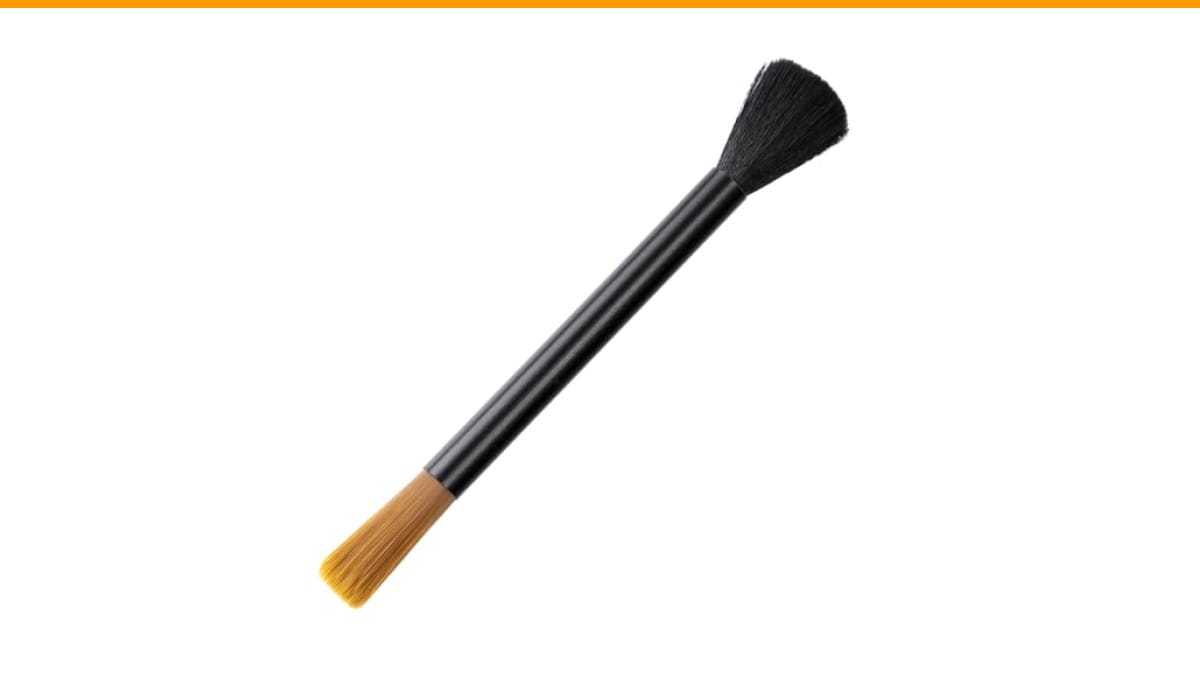
- Weekly: Brush the burr chamber with a nylon brush. Vacuum the chute.
- Every 2-4 weeks: Run Grindz tablets through, followed by a few grams of fresh beans.
- Every 3-6 months: Full disassembly, brush, vacuum, and alcohol swab on the burrs.
If you switch between decaf and regular beans, run tablets before the swap. The same goes for moving from a fruity Ethiopian to a dark Sumatran. The tablets prevent flavor transfer.
Frequently Asked Questions
Can I use vinegar to clean my grinder?
No. Vinegar is acidic and will corrode the burrs over time. It also leaves a strong smell that lingers in the plastic and rubber parts. If you need a solvent, use isopropyl alcohol on a swab during a full teardown, then let it evaporate.
Will cleaning tablets damage my burrs?
No, if you use a product designed for grinders. Grindz tablets are softer than the burr steel but harder than coffee beans. They’re made to crumble and pass through without dulling the cutting edges. That said, don’t run them through a grinder with plastic burrs — check your manufacturer’s guidance first.
How do I know my grinder needs cleaning?
Three signs: shots taste bitter or rancid, grind time increases noticeably, or you see oily clumps in the ground coffee. If your dose weighs the same but the shot runs faster than usual, old fines are likely clogging the burrs and changing the particle distribution.
Is it okay to use rice instead of tablets?
Short answer: no. Rice doesn’t absorb oil, it fractures into sharp pieces, and it leaves starch behind. You’ll spend more time cleaning up the rice mess than you would have spent using a tablet. Just buy the tablets.
Can I descale my espresso grinder with the same solution I use for my machine?
Never. Espresso machine descaler is a strong acid meant for water lines and boilers. It will destroy the burrs, the bearings, and the motor seals. Machine descaling and grinder cleaning are completely separate jobs. If you’re looking for instructions on the machine side, check our coffee machine descaling guide.
What to Remember When You’re Done
- Descaling solution is for water paths, not dry burrs. Don’t mix them up.
- Use cleaning tablets every 2-4 weeks for regular maintenance.
- Full disassembly and brushing every 3-6 months keeps the chute and chamber truly clean.
- Never introduce water, soap, or rice to your grinder.
- Always grind a few grams of fresh beans after using tablets to purge any residue.
- Dark roasts and flavored beans require more frequent cleaning than light roasts.
- If your shots taste off and your machine is clean, the grinder is the culprit.
Cleaning your grinder is a ten-minute habit that pays off in every shot. The first cup after a proper clean will taste noticeably brighter and cleaner. That’s the difference between a hobby and a ritual. For more on keeping your equipment in shape, read our step-by-step grinder cleaning guide or check out the burr vs. blade grinder comparison to understand why burr grinders need this care in the first place.
Products related to this article
Sponsored / affiliate links. As an Amazon Associate I earn from qualifying purchases. I may earn additional commission from eligible campaigns.
 Coffee Espresso Machine Handle Replacement Parts, Cafe Bracket Handle for Lidl Silvercrest CM4621 CM4218 KF5002 KF500S Barista (for 51mm Portafilter Basket - Not included)
 Linnkyfloa Coffee Espresso Maker Handle Replacement for Stovetop Moka Pot or Percolator, Black Plastic for Spare Part Compatible with Italian(9-12 Cup)
 Quick Heating Cup Warmer, Three Temperature Settings, Splashproof and Portable, for Coffee, Milk, Lightweight ABS Material