You pull a shot, admire the honey-colored extraction, then rinse the basket under hot water for five seconds and call it clean. Most home baristas do exactly that. And most of them are slowly building a film of oxidized coffee oils that will eventually turn every shot bitter and dull. I have been there, and a bottomless portafilter makes the problem worse because there’s no spout to hide the mess.
This guide covers the actual routine I use and recommend for sanitizing a bottomless portafilter. You’ll get the daily quick-clean method, the weekly deep sanitize, and the mistakes that quietly ruin baskets. No fluff, just the steps that work.

MiHeeHome
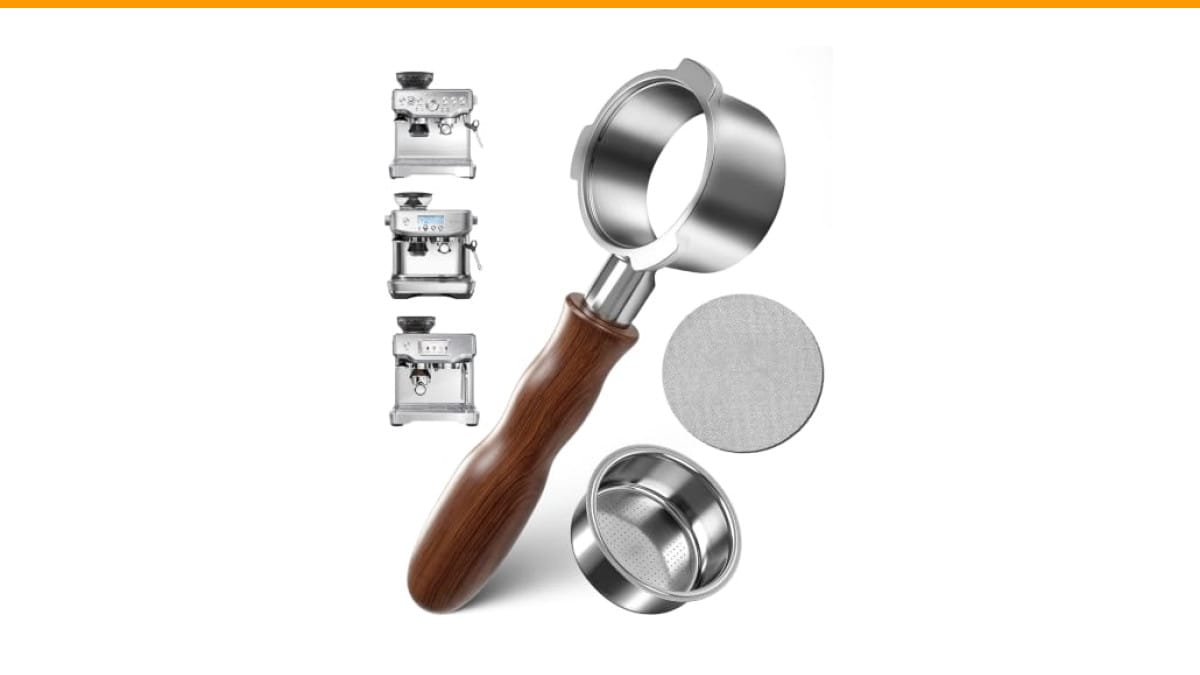
54mm Bottomless Portafilter for Breville Barista Express…
- 【PRECISION COMPATIBILITY FOR 54MM BREVILLE MACHINES】 - Specially engineered for Breville 8 series including Barista Express, Baris…
- 【ELIMINATE CHANNELING WITH INCLUDED PUCK SCREEN】 - Unlike standard naked portafilters, our kit includes a 53.3mm stainless steel p…
- 【UPGRADED 16-18G DOUBLE SHOT BASKET】 - Each 54mm portafilter comes with a high-capacity 16-18 gram filter basket. This allows you…
As an Amazon Associate I earn from qualifying purchases.
If you’re using a Breville machine, the 54mm bottomless portafilter from MiHeeHome makes this routine easier. The head is solid 304 stainless steel, so it handles aggressive cleaning without warping or corroding, and the handle detaches for separate care.
Myth #1: Hot Water Rinse Is Sanitizing
Hot water from your tap or kettle does not sanitize. It removes loose coffee particles, sure. But it leaves behind a thin layer of coffee oil called cafestol. That oil polymerizes over time into a sticky, dark residue that harbors bacteria and ruins flavor.
Sanitizing means reducing microbial load to safe levels. Water needs to hit at least 165°F (74°C) to kill most bacteria, and your tap water usually sits around 120°F. Your espresso machine’s group head water is hotter, around 200°F, but a quick rinse under it doesn’t sustain contact long enough to sanitize the metal.
The fix is a two-step process. First, you physically remove oils with a detergent. Second, you kill remaining microbes with heat or a food-safe sanitizer. Skip either step and you’re just moving dirt around.
Myth #2: Dishwasher Is Always Safe
Most stainless steel portafilter heads survive the dishwasher. The problem is the basket. A dishwasher’s aggressive spray and high heat can warp thin basket walls, which changes how water flows through your puck. A warped basket produces channeling, and channeling is the exact thing a bottomless portafilter exposes.
Check your basket’s edge. If it sits unevenly on a flat counter, it’s already warped. Hand washing is the safer default for baskets. The portafilter head itself can go in the dishwasher if the manufacturer says it’s dishwasher safe, but the wood handle should never go in. Heat and moisture crack wood finishes and loosen the glue over time.
For the MiHeeHome portafilter mentioned above, the head is rated dishwasher durable. But I still hand wash it most days because it takes thirty seconds and I avoid the risk of the basket rattling around and getting dented by other dishes.
The Daily Sanitize Routine (2 Minutes)
This is the minimum you should do after every shot. It prevents oil buildup from ever starting.
- Remove the basket from the portafilter. Do not leave it seated while cleaning, because coffee oils hide in the seam between basket and head.
- Rinse both parts under running hot water from your tap. Use your fingers to wipe away visible grounds.
- Apply a drop of unscented dish soap to a soft sponge or your fingers. Scrub the inside and outside of the basket, the inner walls of the portafilter head, and the rim. Pay attention to the ridge where the basket seats.
- Rinse thoroughly until no soap bubbles remain. Soap residue tastes worse than coffee oil.
- Dry with a clean microfiber cloth. Air drying leaves water spots and, in hard water areas, mineral scale.
That routine takes about two minutes. It keeps the metal clean enough that you only need a deeper sanitize weekly.
The Weekly Deep Sanitize (10 Minutes)
Once a week, do a proper sanitize that kills bacteria and dissolves stubborn oils. I do this every Sunday with my regular coffee maker cleaning routine.
- Soak the basket and portafilter head in a solution of hot water and a food-safe espresso cleaner. Use the dosage on the cleaner’s label, usually one scoop per liter. Cafiza or Puly Caff both work well.
- Let everything soak for 5 to 10 minutes. The solution will turn brown as oils release from the metal.
- Scrub with a nylon brush, not a metal one. Metal brushes scratch stainless steel, and scratches become hiding spots for future buildup.
- Rinse each piece under hot running water for at least 30 seconds. You want zero cleaner residue.
- Sanitize with heat. Pour boiling water over the basket and head, or place them in a pot of boiling water for 2 minutes. This step is what actually kills bacteria.
- Dry completely before reassembling. Store the basket separately if you won’t use the portafilter for a few days.
If you notice white scale spots, that’s hard water mineral buildup, not coffee oil. Soak in a 1:3 white vinegar to water solution for 15 minutes, then rinse and dry. Do not boil vinegar; it releases fumes that are unpleasant and corrosive to metal.
How to Sanitize the Handle and Gasket
The handle on most bottomless portafilters is wood or plastic. Wood handles need different care than the metal head.
- Wipe the handle with a damp cloth and mild soap. Do not submerge it.
- Dry it immediately. Prolonged moisture swells wood and cracks the finish.
- Treat the wood with a food-safe mineral oil every few months to keep it from drying out.
- If the handle is threaded, remove it before deep cleaning the head. This is where a detachable design like the MiHeeHome model earns its keep; you can soak the metal head while the wood stays dry.
The rubber gasket that seals the basket into the group head also collects grime. Wipe it with a damp cloth weekly. If it gets brittle or cracked, replace it. A worn gasket causes leaks and pressure loss, which defeats the purpose of a naked portafilter.
For a complete rundown on keeping your machine’s steam wand clean too, check our steam wand cleaning guide.
Comparing Sanitizing Methods
| Method | Kills Bacteria | Removes Oils | Time | Risk Level |
|---|---|---|---|---|
| Hot water rinse | No | Minimal | 30 sec | Low |
| Soap + hot water scrub | Partial | Yes | 2 min | Low |
| Espresso cleaner soak | No | Yes, excellent | 10 min | Low |
| Boiling water immersion | Yes | No | 3 min | Medium (burn risk) |
| Dishwasher | Yes (heat cycle) | Partial | 1-2 hrs | Medium (basket warp) |
| UV sanitizer box | Yes | No | 5 min | Low |
The sweet spot for most home users is the soap scrub daily plus the espresso cleaner soak and boiling water step weekly. That combination covers both oil removal and microbial kill without risking basket warping.
Five Questions People Ask About Sanitizing Bottomless Portafilters
Can I use bleach to sanitize my portafilter?
No. Bleach is corrosive to stainless steel at high concentrations and leaves a residue that is toxic if not rinsed perfectly. Food-safe espresso cleaners are formulated for coffee oils and rinse clean. Stick with those.
How often should I replace the basket?
With proper hand washing, a good stainless basket lasts years. Replace it when you see visible pitting, scoring, or if the edges no longer sit flat. A basket that falls out of the portafilter when you knock the puck is a sign the rim has worn down.
Does sanitizing affect the flavor of my espresso?
It improves it. Old coffee oils turn rancid and add a bitter, ashy note to your shots. A clean basket lets the actual coffee flavor come through. Most people notice the difference immediately after their first deep clean.
Is a bottomless portafilter harder to clean than a spouted one?
In some ways, yes. There’s no spout to hide residue, so you see every imperfection. But there are also no nooks and crannies inside the spout where coffee sludge collects. Flat surfaces are easier to wipe clean. It comes out even.
What should I do if my wood handle starts to crack?
Stop using it and sand the crack lightly with fine grit paper. Apply a coat of food-safe mineral oil and let it absorb for an hour. If the crack is deep or the handle wobbles, replace it. A loose handle is a safety hazard when you’re locking the portafilter into the group head.
If you’re looking for a replacement with a detachable handle, the MiHeeHome 54mm portafilter is a solid option. The threaded handle comes off easily, so you can clean the metal head thoroughly without worrying about the wood. Check the current price on Amazon to see if it fits your setup.
What to Remember for a Clean Portafilter
- Rinse with hot water is not sanitizing. You need soap for oils and heat or sanitizer for microbes.
- Hand wash your basket every day. Dishwasher heat can warp it and ruin your extraction.
- Soak in an espresso cleaner weekly to dissolve polymerized oils that soap won’t touch.
- Finish the weekly clean with a 2-minute boil to actually kill bacteria.
- Dry everything immediately to prevent water spots and mineral scale.
- Remove and clean the rubber gasket weekly to avoid leaks.
- Detach wood handles before any deep soak. Wood and water don’t mix.
A clean bottomless portafilter is the cheapest upgrade you can make to your espresso. It takes two minutes a day and ten minutes a week. The payoff is shots that taste cleaner and a clearer view of your extraction quality. If your current portafilter is showing wear, replacing it is a small investment that pays off in every cup.
Products related to this article
Sponsored / affiliate links. As an Amazon Associate I earn from qualifying purchases. I may earn additional commission from eligible campaigns.
 Coffee Espresso Machine Handle Replacement Parts, Cafe Bracket Handle for Lidl Silvercrest CM4621 CM4218 KF5002 KF500S Barista (for 51mm Portafilter Basket - Not included)
 Cascade Platinum Plus Dishwasher Detergent Pods Dish Soap Lemon 57 Count
 Supvision 4 Cup Thickened Moka Pot 304 Stainless Steel 200ml