You pulled a shot this morning and noticed the flow was sluggish. Or maybe your kettle took twice as long to boil. That’s limescale. It builds up inside every machine that heats water, and if you ignore it, it will eventually clog your boiler or ruin the flavor of your coffee.
But here’s the catch: the thought of pouring a chemical solution into a machine you paid hundreds of dollars for is a little nerve-wracking. You might be wondering if the cure is worse than the disease. Is coffee machine descaler safe for coffee machines, or are you slowly corroding your brewer from the inside?

IMPRESA
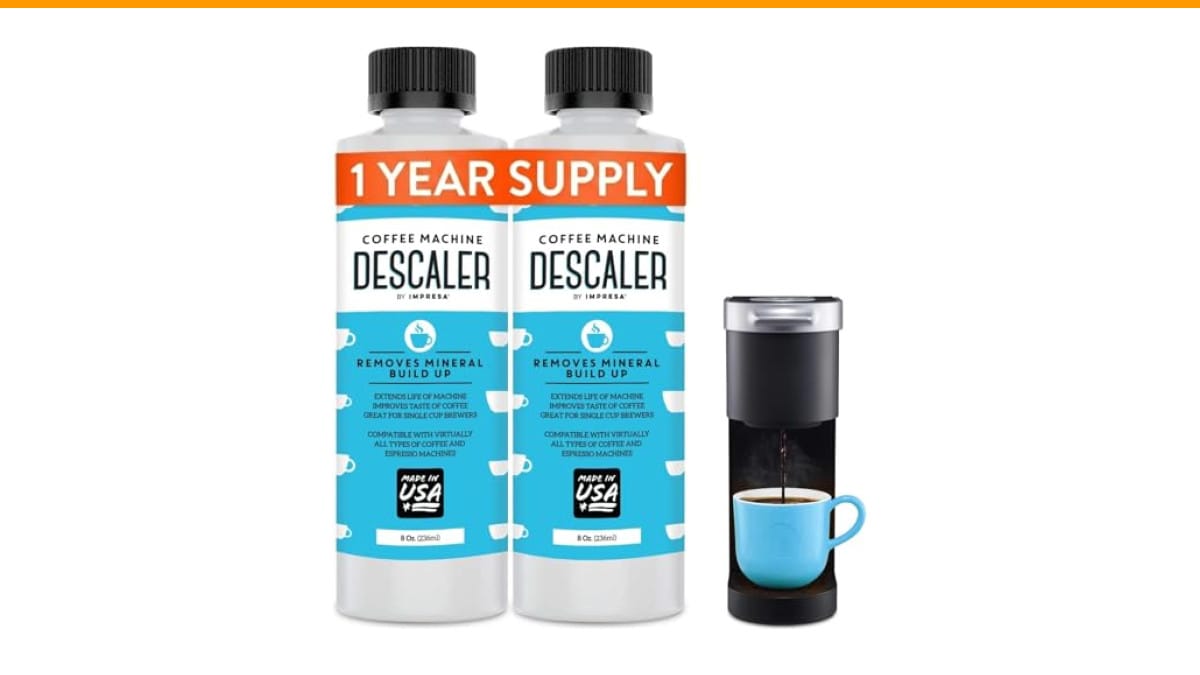
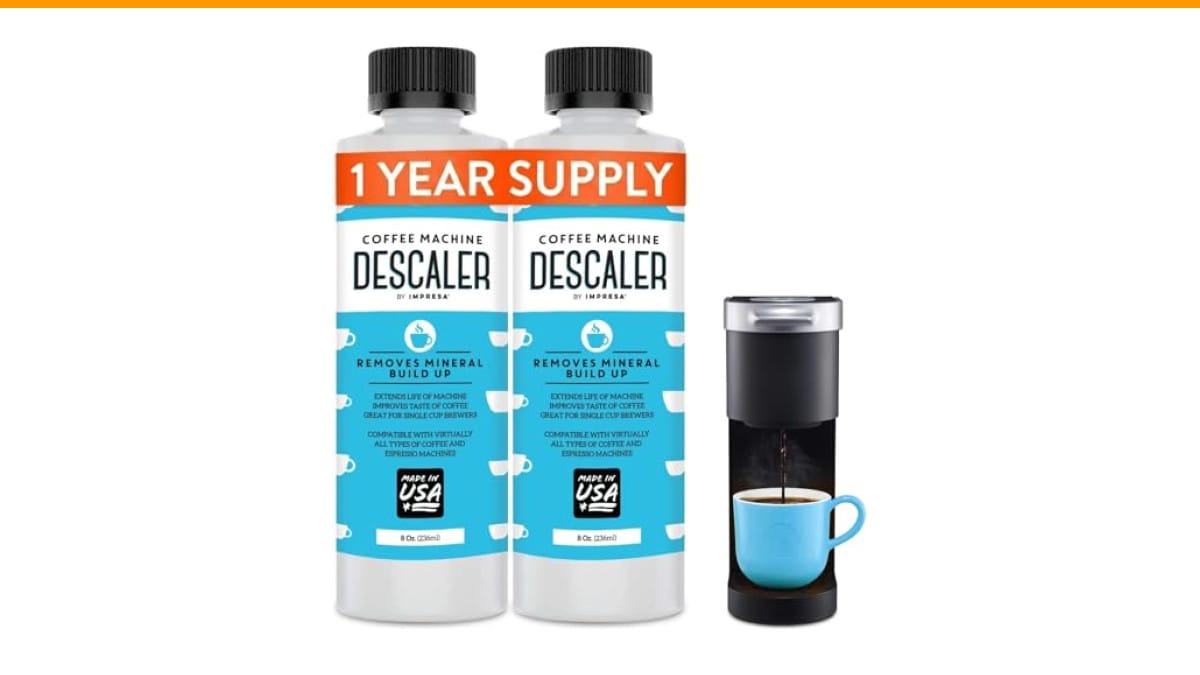
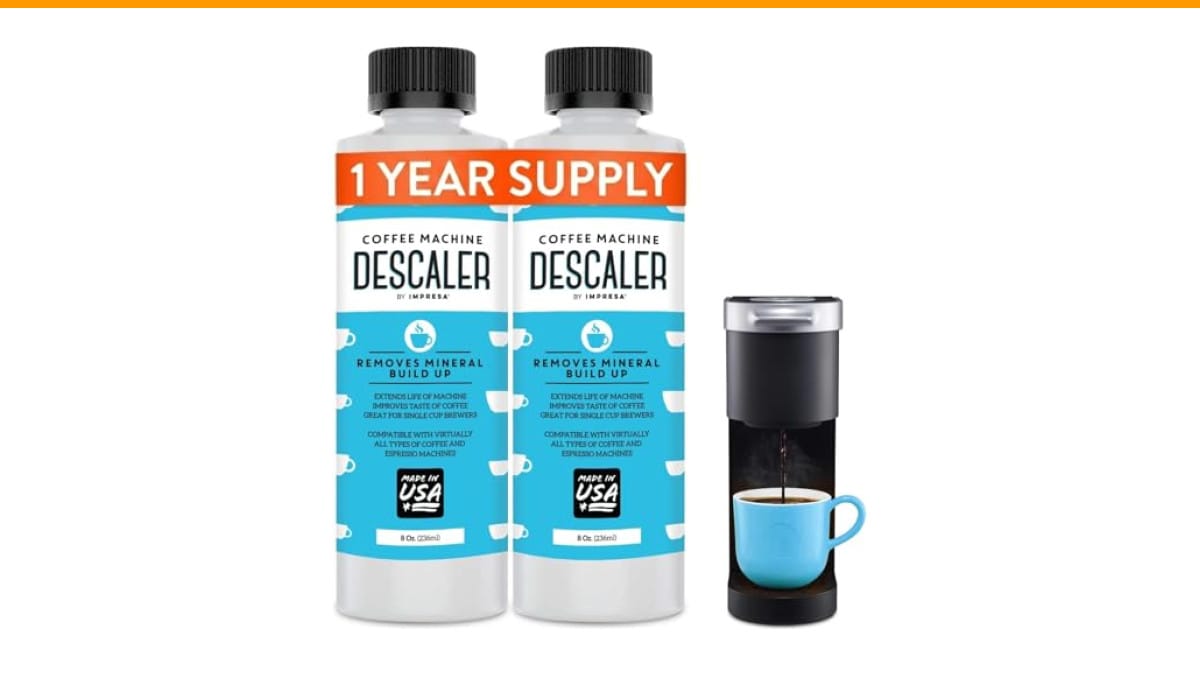
IMPRESA Coffee Machine Descaler, 2-Pack (1-Year Supply)…
- 2-Pack Coffee Descaler and Cleaner - Clean and rinse away residue and oil buildup in your coffee maker with Impresa's Coffee Desca…
- Highly Effective, Made in USA Formula - Unlike most common solutions, our coffee machine cleaner uses just 4 ounces (1/2 bottle) p…
- Preserves Your Machine - Using a coffee descaling solution eliminates limescale and mineral build-up to prevent corrosion, signifi…
As an Amazon Associate I earn from qualifying purchases.
This guide will walk you through what descaling actually does, which ingredients are safe, which ones to avoid, and how to descale without damaging your equipment. You’ll leave with a clear action plan, not just generic advice.
If you don’t have a descaler yet, a solid option is the IMPRESA Coffee Machine Descaler. It comes as a 2-pack with enough solution for four full descaling sessions, and it’s designed to work with most single-serve and espresso machines. It’s a practical, no-fuss choice if you want something that just works.
What Actually Happens When You Descale?
Descaling is a chemical reaction. The descaler contains an acid that dissolves the mineral deposits—mostly calcium carbonate—that accumulate on the heating element and internal pipes. Once the minerals are dissolved, the water flushes them out of the system.
Most commercial descalers use one of three active ingredients:
- Citric acid: A mild, food-safe acid derived from citrus fruits. It’s effective and cheap, but it can be slow on heavy buildup.
- Lactic acid: Another food-grade acid, often used in professional espresso machine cleaners. It’s gentle on metals and works quickly.
- Sulfamic acid: A stronger acid that’s common in commercial descaling powders. It’s powerful but requires careful rinsing.
These acids are diluted to a specific concentration. At that strength, they break down limescale without eating away at the metal or plastic components of your machine. That’s the short answer to is coffee machine descaler safe for coffee machines: yes, when you use the right product and follow the instructions.
The problem isn’t the descaler itself. The problem is misuse. Leaving the solution in too long, using a higher concentration than directed, or skipping the rinse cycle can cause issues.
Which Descalers Should You Avoid?
Not all descalers are created equal. Some cheap, generic bottles contain harsh chemicals like hydrochloric acid or undiluted phosphoric acid. These can corrode the aluminum components found in many budget espresso machines.
You should also steer clear of homemade vinegar solutions. Vinegar is acetic acid. It works on limescale, but it’s not a great choice for modern coffee machines. The smell lingers, and the acid can degrade rubber seals and gaskets over time. If you use vinegar, you risk needing to replace seals sooner than you should.
Stick with a descaler that specifically states it’s safe for your type of machine. The IMPRESA solution we mentioned earlier is formulated for most automatic, manual, pod, and filter machines. That kind of broad compatibility is useful when you have more than one brewer at home.
How Often Should You Descale?
Frequency depends on your water hardness and how much coffee you brew. If you live in an area with hard water, you’ll need to descale more often. If you use filtered water, you can stretch the interval.
As a general rule:
- Light use (1-2 cups a day): Every 3 to 4 months.
- Heavy use (4+ cups a day): Every 1 to 2 months.
- Hard water: Cut the above intervals in half.
Most manufacturers, including Keurig and Breville, recommend descaling every 3 months. The IMPRESA bottles are designed around that schedule—each 8-ounce bottle is meant for two sessions, so the 2-pack covers a full year of maintenance.
You’ll know it’s time to descale when your machine starts making louder noises, takes longer to brew, or your coffee tastes slightly bitter or flat. That bitterness after cleaning is a common sign of mineral buildup, and you can read more about why coffee tastes bitter in our guide.
Step-by-Step: How to Descale Without Damaging Anything
Here’s the process I use on every machine I test. It works for drip brewers, single-serve pod machines, and espresso machines.
- Empty the water reservoir. Fill it with the descaling solution mixed with water according to the label. Most solutions, including IMPRESA, use a specific ratio—usually half a bottle per full reservoir.
- Run a brew cycle with the solution, but stop halfway through. Let the machine sit for 15-20 minutes. This gives the acid time to break down stubborn scale inside the boiler.
- Finish the cycle. Let the rest of the solution run through, then discard it.
- Rinse, rinse, rinse. Fill the reservoir with fresh water and run at least two full cycles. Some machines need three. If you taste anything sour, run another cycle.
- Wipe down the exterior and the drip tray to remove any residue that splashed out.
One thing I’ve learned from testing: don’t rush the rinse step. The acid won’t hurt you in small amounts, but it will ruin the taste of your next cup if it lingers. A thorough rinse is the difference between a clean machine and a machine that makes coffee tasting like a lemon.
If you’re dealing with stubborn scale that won’t budge, check out our guide on removing limescale for more aggressive methods.
Descaler vs. Cleaner: What’s the Difference?
People often confuse these two products, but they do different jobs. A descaler removes mineral scale. A cleaner removes coffee oil residue and stale grounds. You need both for a healthy machine.
Here’s a quick comparison to clear things up:
| Feature | Descaler | Cleaner (Detergent) |
|---|---|---|
| Targets | Limescale, calcium, mineral deposits | Coffee oils, residue, odors |
| Active ingredient | Acid (citric, lactic, sulfamic) | Alkaline detergent |
| Frequency | Every 1-3 months | Weekly or monthly |
| Result | Restores water flow and heating | Improves coffee flavor and aroma |
| Impact if skipped | Boiler failure, slow brewing | Bitter, rancid-tasting coffee |
For a complete routine, you’ll want to use both. A descaler keeps the internals working; a cleaner keeps the brew path tasting fresh. If you’re unsure about the full process, our deep cleaning guide breaks it down step by step.
Frequently Asked Questions
Can descaler damage the plastic parts of my coffee machine?
Food-grade descaling acids at the correct dilution won’t harm the plastic or rubber parts of your machine. The risk comes from leaving the solution sitting for hours or using a concentrated product not meant for coffee machines. Always follow the time limits on the label.
Is it safe to descale with vinegar instead of a commercial product?
Vinegar works chemically, but it’s not the best choice. It’s harsher on rubber seals, and the smell is hard to fully rinse out. Commercial descalers are formulated to be effective and safe for the specific materials in coffee machines. You’ll get better results with less risk using a dedicated product.
What happens if I don’t rinse after descaling?
You’ll likely taste the acid in your next cup. It’s not toxic in the small amounts left behind, but it’s unpleasant. More importantly, leaving acidic residue in the boiler can slowly degrade the internal components over time. Rinse thoroughly.
Can I descale my espresso machine too often?
Yes. Over-descaling can strip away protective coatings on heating elements and dry out seals. Stick to a schedule based on your water hardness. If your water is soft, you might only need to descale twice a year. If it’s hard, every month is fine.
Does descaling fix a machine that stopped brewing?
Often, yes. If the machine won’t pump water, it’s usually a clogged line from scale buildup. Descaling clears that blockage. If the machine still won’t brew after a descale, the pump itself may be dead. Check our guide on machines not pumping water for troubleshooting steps.
My Honest Take on Using Descaler
I’ve tested machines that were never descaled and machines that were meticulously maintained. The difference is night and day. The neglected ones have cloudy reservoirs, slow flow, and coffee that tastes dull. The maintained ones run like new for years.
Is coffee machine descaler safe for coffee machines? In my experience, yes—provided you use a reputable product and don’t take shortcuts. The IMPRESA solution is a good baseline because it’s simple to measure and works across multiple machine types. It’s not the most aggressive formula on the market, but for regular maintenance, it’s more than enough.
The one downside is the 4-ounce dose per session. If you have a massive commercial-style machine, you might need to use the whole bottle. But for a standard home brewer, it’s perfectly sized.
Here’s what you should remember:
- Descale every 1-3 months, depending on your water hardness.
- Use a commercial descaler, not vinegar or harsh acids.
- Always rinse with fresh water twice (or more) after descaling.
- Don’t let the solution sit longer than the label says.
- If your coffee tastes bitter after cleaning, it’s often a sign you need to descale, not a problem with the descaler.
- A 2-pack like IMPRESA covers a full year of maintenance, so you don’t have to think about it again.
- Pair descaling with regular cleaning for the best-tasting coffee.
Products related to this article
Sponsored / affiliate links. As an Amazon Associate I earn from qualifying purchases. I may earn additional commission from eligible campaigns.
 Coffee Espresso Machine Handle Replacement Parts, Cafe Bracket Handle for Lidl Silvercrest CM4621 CM4218 KF5002 KF500S Barista (for 51mm Portafilter Basket - Not included)
 KARHDIR 15" Walk Behind Floor Scrubber Machine, 23" Squeegee
 Citric Acid 6 Pounds, Food Grade, Fine Granular Powder | 100% Pure, Concentrated Anhydrous Form | Natural Preservative + Great for Cooking, Cleaning, & DIY Bath Bombs | Non-GMO