You notice it one morning. Your espresso shot pulls slower than it did a month ago, or the steam wand sputters instead of hissing. The coffee tastes a little flat, maybe a little bitter. You run a cleaning cycle, but nothing changes. That’s when you realize the problem isn’t the beans. It’s scale.
Hard water leaves behind calcium and magnesium deposits that coat the heating element and the internal tubing. Over time, that buildup acts like an insulator. Your machine works harder, heats slower, and your coffee suffers. The fix is descaling, but most people don’t know what is in coffee machine descaler or why it works. This article explains the active ingredients, how they compare, and what you should actually pour into your reservoir.

IMPRESA
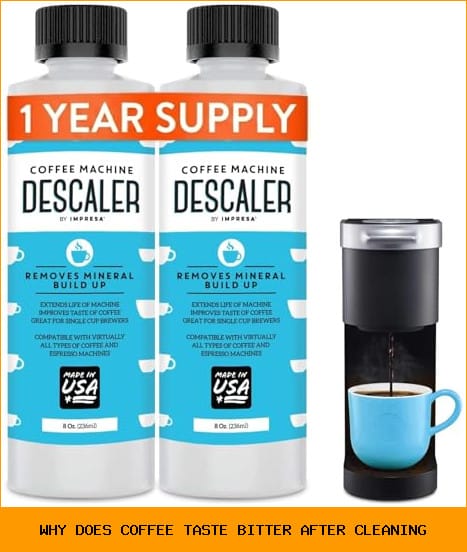
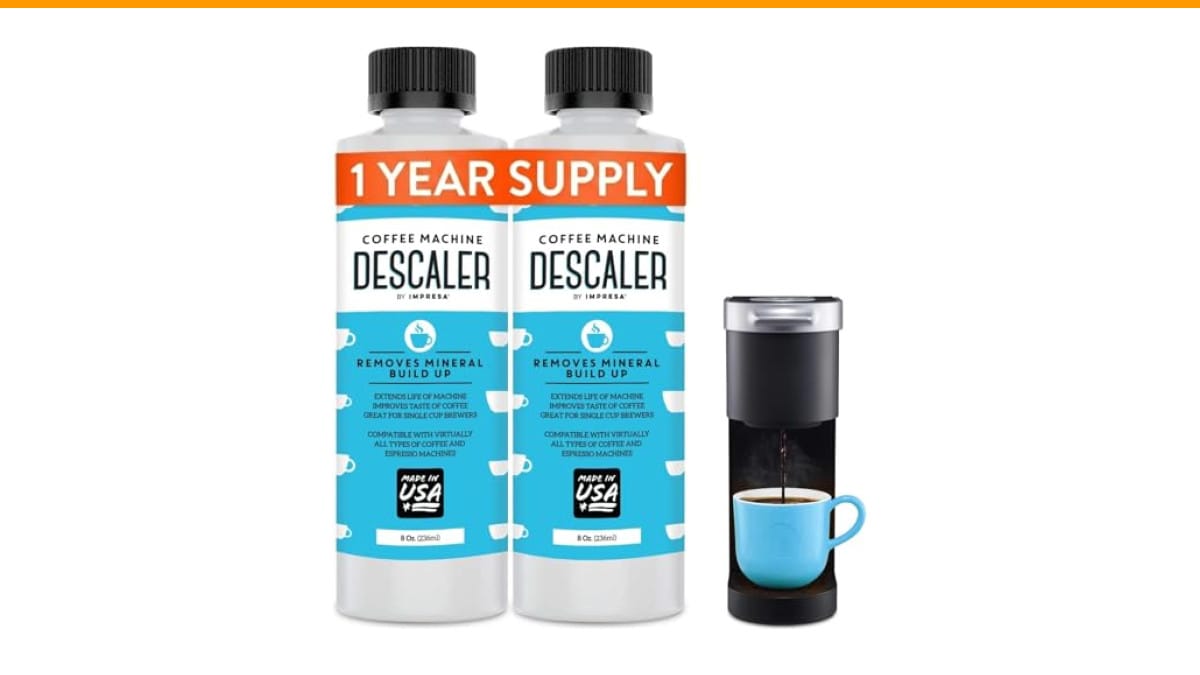
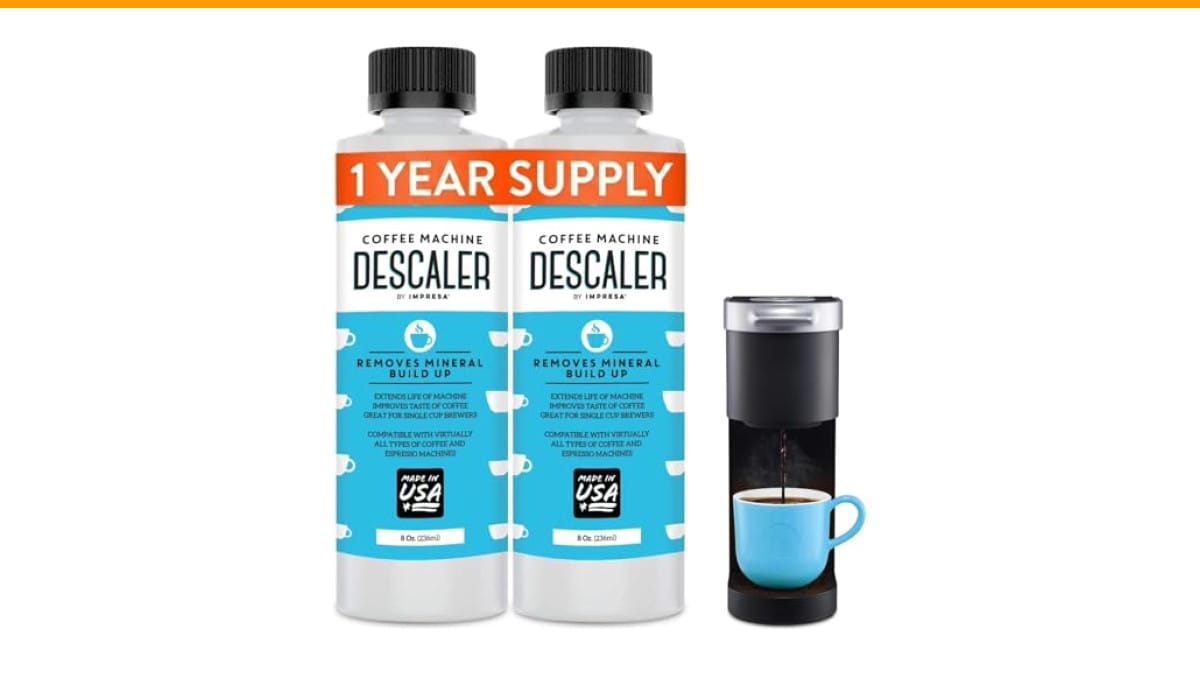
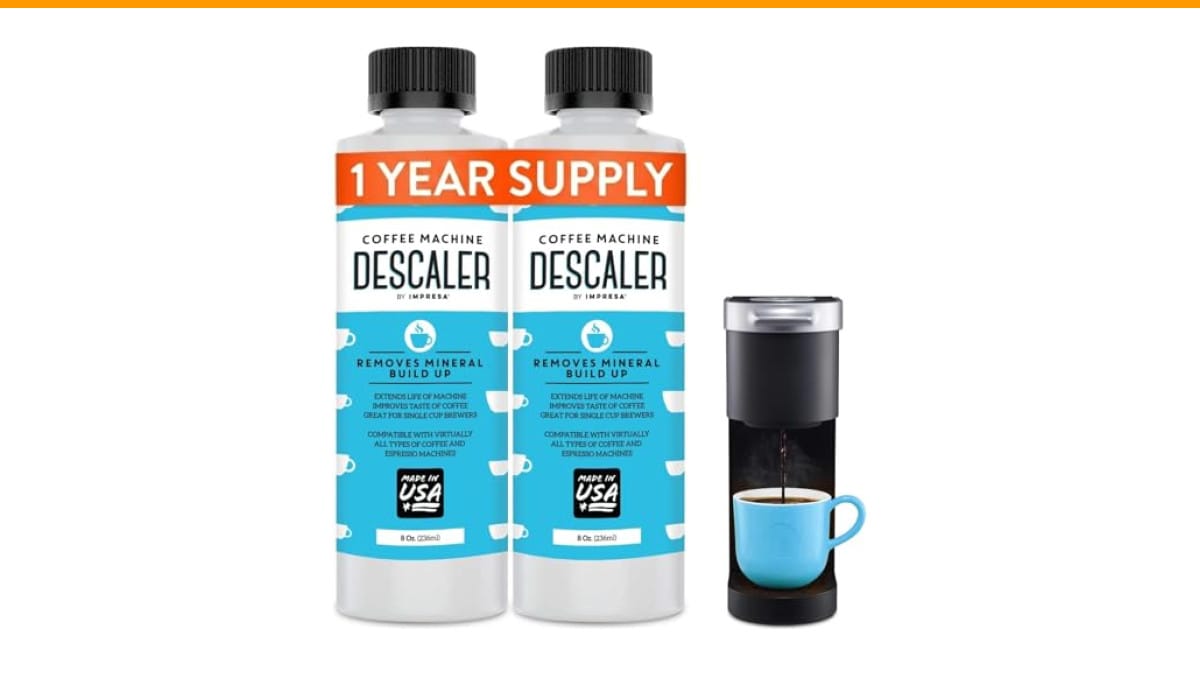
IMPRESA Coffee Machine Descaler, 2-Pack (1-Year Supply)…
- 2-Pack Coffee Descaler and Cleaner - Clean and rinse away residue and oil buildup in your coffee maker with Impresa's Coffee Desca…
- Highly Effective, Made in USA Formula - Unlike most common solutions, our coffee machine cleaner uses just 4 ounces (1/2 bottle) p…
- Preserves Your Machine - Using a coffee descaling solution eliminates limescale and mineral build-up to prevent corrosion, signifi…
As an Amazon Associate I earn from qualifying purchases.
You’ll walk away knowing exactly what you’re buying, what the label means, and how to keep your machine running without guessing.
If you’re looking for a solid universal option, the IMPRESA Coffee Machine Descaler 2-Pack uses a made-in-USA formula that only needs 4 ounces per session. It’s compatible with most single-serve and espresso machines, and the two-bottle pack covers a year of regular cleaning.
The Active Ingredients: Acids That Dissolve Minerals
Every descaler on the shelf works on the same principle. It contains a weak acid that reacts with the alkaline scale (calcium carbonate) and turns it into a soluble salt that rinses away. The difference between products comes down to which acid they use and how concentrated it is.
Here are the three most common acids you’ll find:
- Citric acid – The most common in household descalers. It’s a natural compound from citrus fruits, cheap to produce, and effective at dissolving limescale. It works best at warm temperatures, so you’ll often see instructions to run a hot cycle.
- Sulfamic acid – A stronger, crystalline acid used in many commercial descalers. It’s more aggressive on thick scale and works faster, but it can be harder on rubber seals and plastic components if left too long.
- Lactic acid – A milder option, often used in food-grade descalers. It’s slower acting but gentler on machine parts. Some people prefer it for machines with plastic boilers or delicate gaskets.
Most liquid descalers are a mix of one of these acids, water, and a small amount of surfactant (a wetting agent) to help the solution spread evenly across surfaces. Some brands add a fragrance or a color indicator so you can see when the solution is spent, but those are cosmetic.
One thing to watch: the concentration matters more than the name. A 5% citric acid solution will work, but slowly. A 15% solution will strip scale in minutes. The label should tell you the percentage, though some brands bury it in the fine print. If you don’t see it, assume it’s on the weaker side.
What About Vinegar and Other DIY Options?
White vinegar is the standard DIY answer, and it works. It’s a 4-6% acetic acid solution, which is enough to dissolve light scale. The problem is the taste and the smell. Vinegar leaves a lingering odor that can persist through several brew cycles. If you don’t rinse thoroughly, your next few cups will taste like salad dressing.
There’s also a practical issue. Vinegar’s acidity is fixed at around 5%, which means it’s fine for light maintenance but useless against heavy, crusty scale. You’ll run multiple cycles and still see white flakes in the drip tray.
Another DIY option is pure citric acid powder. You can buy it in bulk for cheap and mix it with water. This is closer to commercial products, but you have to measure carefully. Too little won’t work. Too much can damage the machine’s seals and O-rings. The descaling solution you buy off the shelf is already buffered and tested for safe use, which removes the guesswork.
If you’re the type who likes to control every variable, DIY is fine. But for most people, the convenience and safety of a purpose-made product is worth the few extra dollars. The limescale removal guide on this site covers both approaches in detail.
How Often Should You Descale, and Does It Matter?
The standard advice is every three months, but that assumes average water hardness. If you live in a place with hard water (over 180 ppm calcium carbonate), you might need to descale every six weeks. If you use filtered or softened water, you can stretch it to six months.
Here’s a simple test: fill a clear glass with tap water and add a few drops of dish soap. If it turns cloudy quickly, your water is hard. If it stays clear, you’re fine on the standard schedule.
You should also watch for these signs:
- Brew time increases noticeably
- The machine makes more noise during heating
- Steam output is weak or sputters
- White flakes appear in your cup or the drip tray
- The machine shuts off prematurely during a cycle
Ignoring scale doesn’t just ruin the taste. It shortens the life of the heating element. The scale acts as a thermal barrier, so the element runs hotter to compensate, which eventually burns it out. A $15 bottle of descaler is cheaper than a $200 repair or a new machine. The coffee machine maintenance article explains the full care routine.
Comparing Descaler Types and Methods
Not all descaling routines are equal. Here’s a side-by-side look at the main options, based on my testing and the experiences of people I’ve talked to.
| Method | Active Ingredient | Strength | Best For | Drawbacks |
|---|---|---|---|---|
| Commercial Liquid (e.g., IMPRESA) | Sulfamic or citric acid blend | High, consistent | Regular maintenance on any machine | Costs more than DIY |
| Commercial Powder | Sulfamic acid | High, concentrated | Heavy scale buildup | Needs precise mixing, can be harsh |
| White Vinegar | Acetic acid (4-6%) | Low to medium | Light scale, budget cleaning | Lingering smell, weak on thick scale |
| Citric Acid Powder (DIY) | Citric acid | Variable, you control it | Cost-effective, effective | Risk of over-concentration, can damage seals |
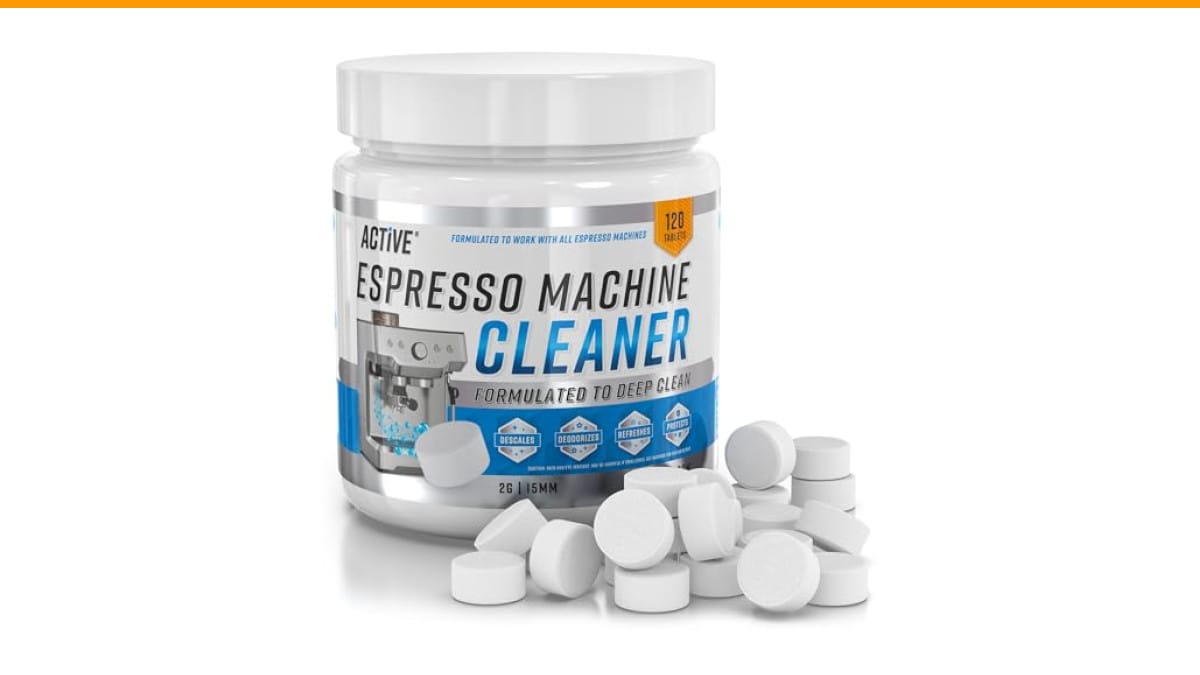
| Descaling Tablets | Usually citric or sulfamic | Medium | Drip machines with small reservoirs | May not dissolve fully in all machines |
My preference is a commercial liquid for most people. It’s foolproof. You measure once, pour it in, and run the cycle. The IMPRESA product I mentioned earlier is a good example of this, and it’s what I keep on hand for my own Breville. It’s not the cheapest per liter, but it works without me having to think about it.
Does the Descaler Brand Matter for Your Machine?
Most manufacturers will tell you to use their own brand of descaler. That’s partly a revenue stream and partly a way to avoid warranty disputes. The truth is that the chemistry is the same across brands. A descaler is a descaler. What matters is that it’s compatible with your machine’s materials.
If you have a machine with an aluminum boiler, avoid highly acidic descalers (like pure sulfamic). They can pit the metal over time. Stainless steel boilers are more forgiving. If you’re unsure, check your manual or look up the boiler material online. Most home espresso machines use stainless steel or brass, which handle standard descalers fine.
One more thing: always run a full rinse cycle (or two) after descaling. The leftover acid will make your coffee taste sour and can irritate your stomach. The descaling solution is food-safe in small amounts, but you don’t want it in your cup.
For a complete walkthrough of the process, see the step-by-step descaling guide.
Frequently Asked Questions
Is it safe to drink coffee right after descaling?
No, not without rinsing. Run at least two full cycles of plain water after descaling to flush out the acid. The first cycle will still have a slightly acidic taste. The second should be clean. If you taste anything off, run a third cycle.
Can I use descaler in a Keurig or a drip coffee maker?
Yes. The same acid chemistry works on any machine that heats water. The process differs slightly, but the solution is the same. For pod machines, you’ll need to run the solution through the brew head. For drip machines, you pour it into the reservoir and run a brew cycle without coffee grounds.
What happens if I use too much descaler?
You risk damaging rubber seals and plastic parts. The acid can cause them to swell or degrade over time. If you accidentally over-pour, dilute it with extra water before running the cycle. The concentration matters more than the total volume.
Why does my machine still have scale after descaling?
Either the scale was too thick, or the solution wasn’t strong enough. For heavy buildup, run a second cycle with a fresh batch. You can also soak the removable parts (like the portafilter and shower screen) in a separate container of descaler for 30 minutes.
Is it cheaper to make my own descaler?
Yes, if you already have citric acid powder at home. A pound of citric acid costs about $10 and makes several gallons of solution. But you have to be careful with measuring. Too weak won’t work, and too strong can damage the machine. Commercial products take the guesswork out.
What to Remember When Buying Descaler
- Check the active ingredient. Citric acid is gentle, sulfamic is strong. Match it to your machine’s boiler type.
- Look for a concentration percentage. If you can’t find it, assume the product is weak and plan for a longer soak.
- Buy a 2-pack. You’ll descale more often than you think, and having a backup bottle means you won’t skip a session.
- Run a rinse cycle right after. Two is better. Your coffee will taste better for it.
- Don’t mix descalers. If you’re switching brands, run a plain water cycle first to clear the old solution.
- Store descaler away from heat and direct sunlight. The acid degrades over time and loses effectiveness.
- Follow the manufacturer’s frequency guide, but adjust based on your water hardness. Hard water means more frequent descaling.
Products related to this article
Sponsored / affiliate links. As an Amazon Associate I earn from qualifying purchases. I may earn additional commission from eligible campaigns.
 Coffee Espresso Machine Handle Replacement Parts, Cafe Bracket Handle for Lidl Silvercrest CM4621 CM4218 KF5002 KF500S Barista (for 51mm Portafilter Basket - Not included)
 Stainless Steel Moka Pot Pressed Powder Tool for 2 4 6 9 Cup Espresso Coffee Brewer(6 Cups)
 6 lb Citric Acid Powder Food Grade, Citric Acid Crystals, 100% Pure