You pour the descaler into the reservoir, hit start, and walk away. Ten minutes later, the kitchen smells like a swimming pool, and the machine is spitting steam. That’s the moment most people realize descaling isn’t just a cleaning chore — it’s handling a chemical solution that can burn skin, irritate lungs, and corrode metal if you treat it carelessly.
This guide covers the hazards first, not the machine’s performance. You’ll learn what’s actually in those bottles, how to protect yourself and your countertops, what to do if you or a pet gets exposed, and how to safely get rid of the used liquid. By the end, you’ll know exactly how to run a descaling cycle without turning your kitchen into a hazard zone.

IMPRESA
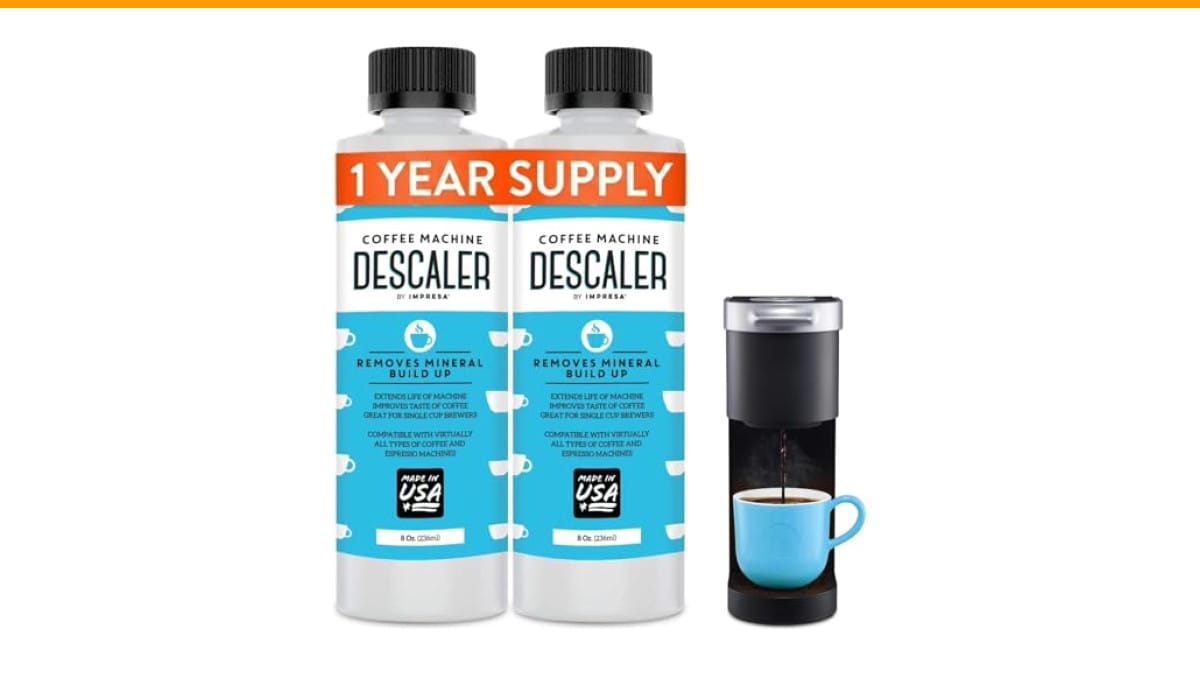
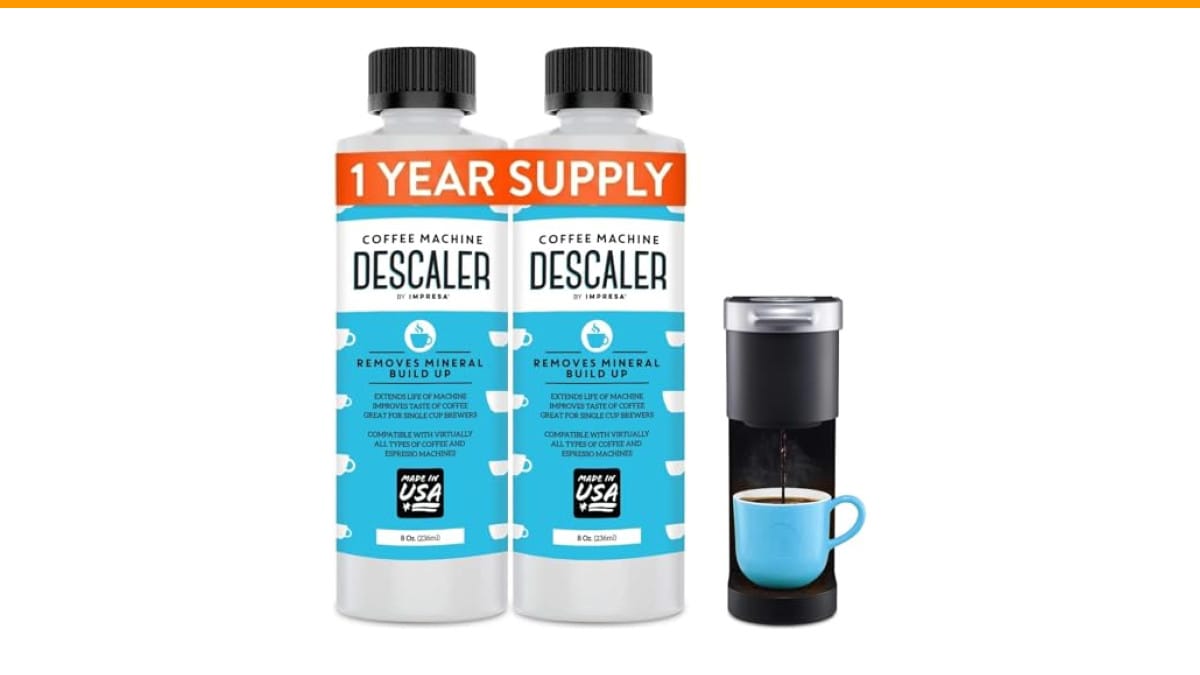
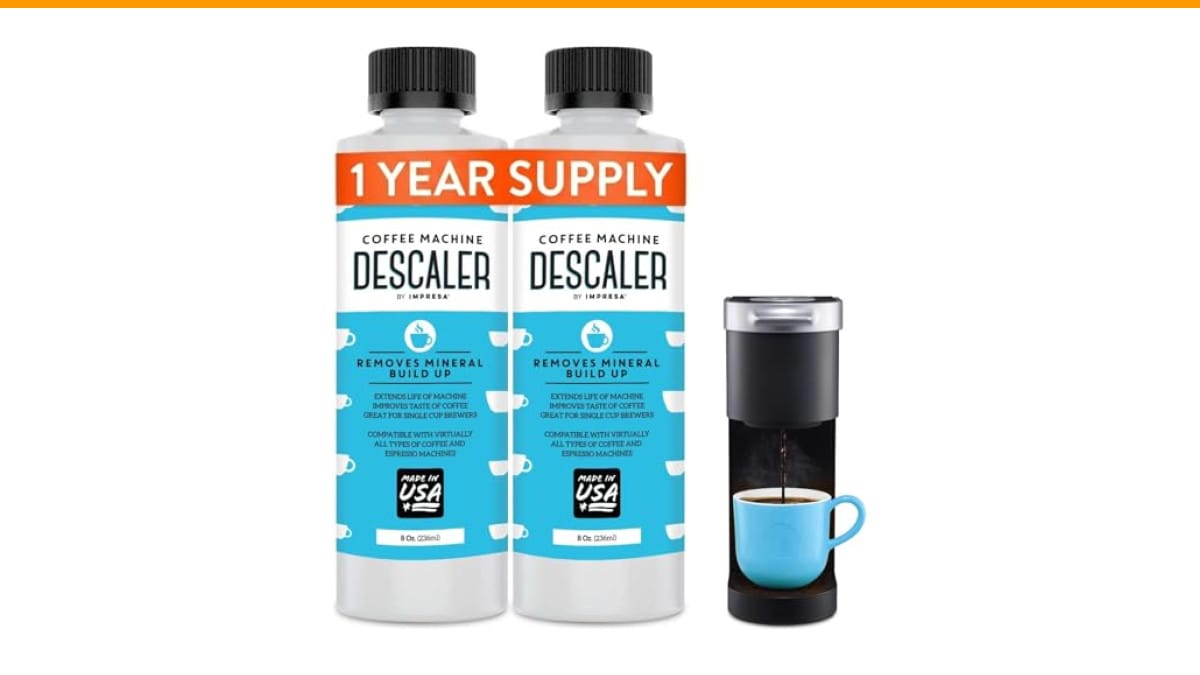
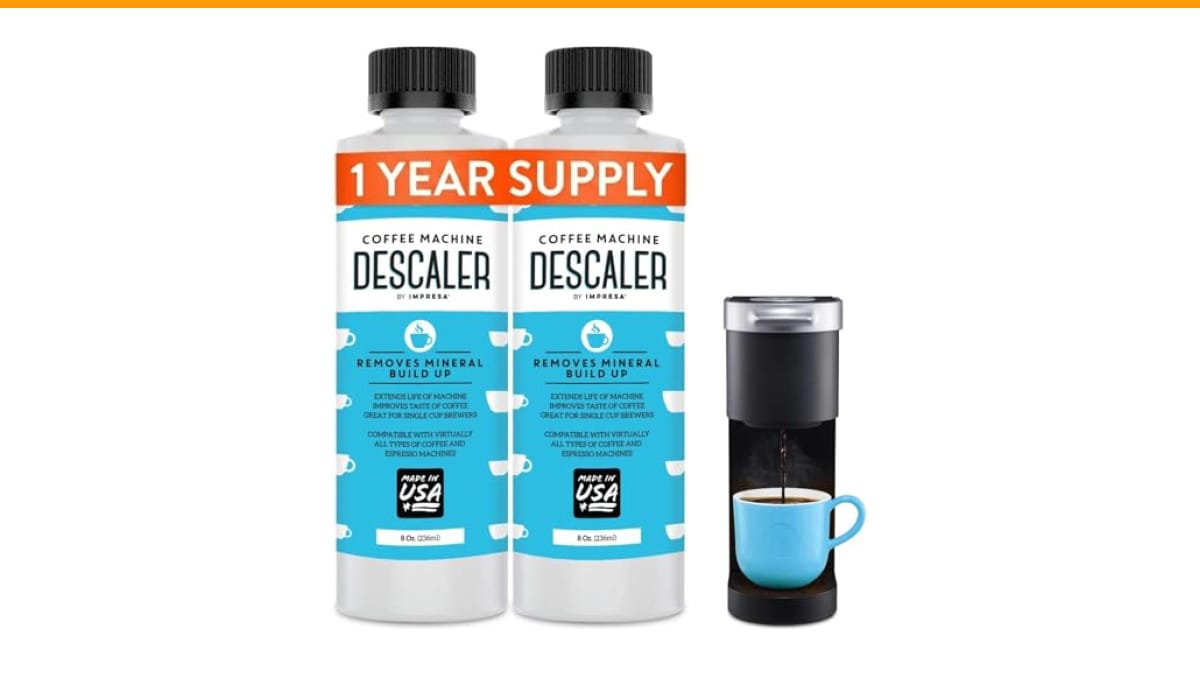
IMPRESA Coffee Machine Descaler, 2-Pack (1-Year Supply)…
- 2-Pack Coffee Descaler and Cleaner - Clean and rinse away residue and oil buildup in your coffee maker with Impresa's Coffee Desca…
- Highly Effective, Made in USA Formula - Unlike most common solutions, our coffee machine cleaner uses just 4 ounces (1/2 bottle) p…
- Preserves Your Machine - Using a coffee descaling solution eliminates limescale and mineral build-up to prevent corrosion, signifi…
As an Amazon Associate I earn from qualifying purchases.
For most home machines, a solid descaling routine every three to four months keeps the heating element free of limescale buildup. The descaling process itself is straightforward, but the safety steps around it matter just as much as the chemical reaction.
If you’re stocking up, the IMPRESA Coffee Machine Descaler comes as a two-pack with enough solution for four sessions. It uses a four-ounce dose per cleaning, which means one bottle handles two descaling cycles. It’s compatible with most single-serve and espresso machines, so you won’t need a separate product for each appliance in the house.
Why Descaling Safety Matters More Than You Think
Descaling solutions are acids. That’s the whole point — they dissolve calcium carbonate and other mineral deposits that water leaves behind. But the same chemical reaction that breaks down limescale will also break down your skin, your eyes, and the finish on your countertops.
Most commercial descalers use sulfamic acid, citric acid, or a blend of organic acids. The pH of these solutions typically lands between 1.5 and 3.0. For reference, battery acid sits around 1.0, and lemon juice is about 2.0. So you’re handling something significantly more acidic than vinegar in most cases.
The risk isn’t just during the pour. When the solution heats up inside the machine, it can release fumes. Those fumes irritate the respiratory tract, especially in small, unventilated kitchens. People with asthma or sensitivity to strong smells often feel it within a minute or two.
There’s also the residue problem. If you don’t rinse thoroughly, the acid stays in the water lines and mixes into your next brew. That’s how you end up with coffee that tastes metallic or leaves a burning sensation in your throat.
Understanding the Chemistry of Descalers
Citric Acid vs. Acetic Acid vs. Commercial Formulas
Citric acid is the most common active ingredient in commercial descalers. It’s a weak organic acid that chelates minerals — meaning it grabs onto calcium and magnesium ions and pulls them into solution. It works fast, leaves minimal residue, and has a relatively mild odor. The downside is that it can be aggressive on certain metals if left in contact for too long.
Acetic acid is plain vinegar. It’s cheap and readily available, but it’s also slower-acting and leaves a distinct smell that lingers in plastic reservoirs for days. Vinegar is fine for light buildup, but it won’t cut through heavy scale as effectively as a dedicated product.
Commercial formulas like the IMPRESA solution often blend multiple acids with surfactants. The surfactants help break up coffee oils and residue that acids alone won’t touch. That’s why you’ll sometimes see a descaler described as a cleaner and descaler — it’s doing two jobs at once.
One thing to watch: never mix a descaler with bleach or any chlorine-based cleaner. The acid reacts with chlorine to release chlorine gas, which is toxic even in small amounts. If you’ve been cleaning your drip tray with bleach, rinse it thoroughly before you start a descaling cycle.
Critical Safety Precautions Before You Start
Ventilation and Personal Protective Equipment
Open a window or turn on the exhaust fan before you pour anything. The fumes from heated acid are no joke, and you don’t want to be breathing them while you wait for the cycle to finish. If your kitchen has no windows, run the cycle with the door closed and leave the room for the duration.
Wear gloves. Nitrile gloves are the standard choice because they resist acid penetration better than latex. Disposable ones from the hardware store work fine. You don’t need heavy-duty chemical gloves for a single descaling session, but you do need something between your skin and the solution.
Safety glasses are worth the thirty seconds it takes to put them on. Splashes happen when you’re pouring from a bottle into a narrow reservoir, especially if the bottle is full and you’re in a hurry. A splash in the eye is painful and can cause corneal damage.
The Cool-Down Protocol and Unplugging the Machine
Never pour descaler into a hot machine. The heat accelerates the acid’s reaction rate, which means it can damage internal seals and plastic components faster than intended. Wait at least thirty minutes after the last brew before you start.
Unplug the machine before you open the reservoir or access any internal parts. This isn’t just about electrical safety — it prevents the machine from accidentally starting a heating cycle while you’re working on it. Some machines have a descaling mode that runs automatically, but you want to be the one controlling when that happens.
Step-by-Step Safe Descaling Procedure
- Empty the water reservoir and remove any remaining water from the drip tray.
- Mix the descaler according to the manufacturer instructions. For the IMPRESA solution, that’s four ounces of descaler per session, with the rest of the reservoir filled with fresh water.
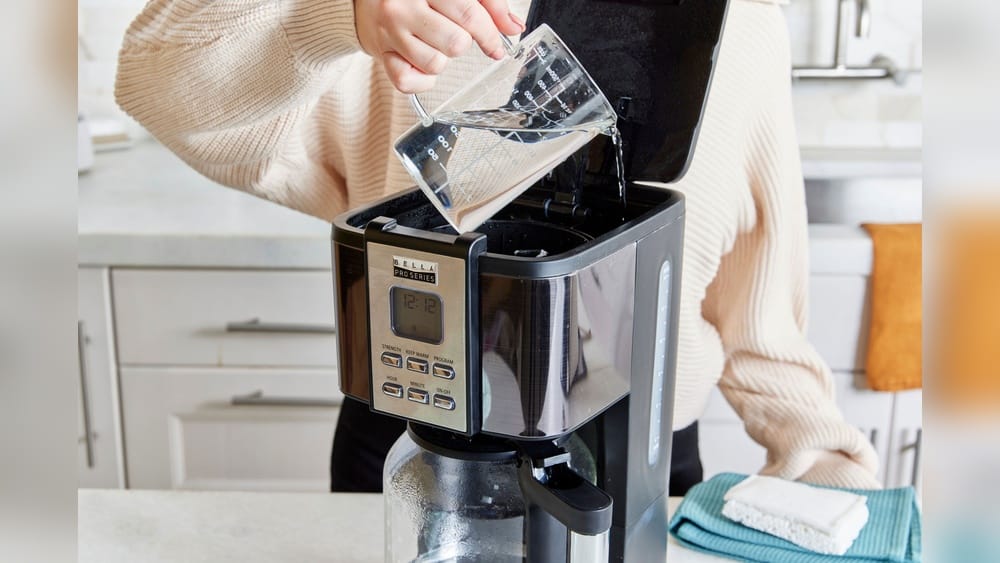
- Pour the mixture into the reservoir and place a large container under the brew head to catch the output.
- Run the descaling cycle as directed by your machine’s manual. This usually takes 20 to 30 minutes.
- When the cycle finishes, empty the container. The liquid will be cloudy and may contain visible scale flakes. That’s normal.
- Fill the reservoir with fresh water and run a full brewing cycle without any coffee. This is the first rinse.
- Repeat the rinse cycle at least two more times. Most manufacturers recommend three full rinses to clear all residue from the lines.
The Critical Rinsing and Flushing Phase
The rinse phase is where most people cut corners. One quick flush might remove the bulk of the solution, but it won’t clear the acid trapped in the solenoid valves or the small tubes that carry water to the brew head. Those areas hold onto liquid, and they’ll release it into your next cup.
Run the rinse cycles with the machine fully assembled, including the filter basket and any removable parts. The water needs to travel the same path as your coffee to flush every surface. If your machine has a steam wand, run a separate flush through that as well — descaler can sit in the wand’s internal tube and come out with your next milk steaming session.
The Sacrificial Brew Taste Test
After the third rinse, brew a full cup of plain water into a mug. Let it sit for two minutes, then taste it. It should taste like nothing — just neutral water. If you detect any sourness, bitterness, or metallic notes, the acid hasn’t fully cleared. Run another full rinse cycle and test again.
Some people skip the taste test and just brew coffee immediately. That’s a mistake. The first cup of coffee after descaling will absorb any remaining acid, and you’ll drink it. The taste test costs you one minute and one cup of water. It’s the cheapest insurance you’ll ever buy.
If you’re using a new descaler for the first time, run this test even if the label says it’s food-safe. All descalers are technically food-safe at the concentration used, but that doesn’t mean you want to drink the residue.
Emergency Response: What to Do If Exposure Happens
Skin and Eye Contact
Skin contact: remove any contaminated clothing and rinse the area under lukewarm running water for at least fifteen minutes. Don’t scrub — just let the water flow over it. If you feel burning after the initial rinse, wash with mild soap and water. Seek medical attention if the skin is red, blistered, or the pain persists.
Eye contact: hold your eyelid open and rinse the eye with lukewarm water for at least fifteen minutes. A dedicated eyewash bottle is ideal, but a gentle stream from a faucet works in a pinch. Do not rub the eye. Contact a doctor immediately after rinsing — eye exposure to acid is always worth a professional check.
Inhalation and Ingestion
Inhalation: move to fresh air immediately. If you’re coughing, wheezing, or feeling dizzy, call your local poison control center. For most people, a few minutes of fresh air resolves the symptoms. If you have asthma or a pre-existing lung condition, don’t wait — get medical help.
Ingestion: do not induce vomiting. Vomiting an acid causes a second burn on the way up, which is worse than the initial exposure. Rinse your mouth with water and drink a small glass of water or milk to dilute the acid. Call poison control immediately. Have the product bottle on hand so you can read the active ingredients over the phone.
Poison control in the US: 1-800-222-1222. Save this number in your phone before you start the descaling process. You don’t want to be searching for it while someone is in distress.
Common Mistakes That Lead to Accidents
The biggest mistake is leaving the descaler mixed and unattended. A curious child or pet can knock over the reservoir or drink from it. Always mix the solution right before you use it, and never leave it sitting out after the cycle finishes.
Another frequent error is using a descaler on a machine with aluminum components. Acid eats aluminum rapidly, and it can pit the metal or cause it to flake into your water lines. Check your machine’s manual for material compatibility before you start. If the manual says the boiler is aluminum, use a descaler specifically formulated for that metal, or switch to a gentler citric acid solution at half strength.
Plastic components are generally safe, but cheap plastics can discolor or become brittle after repeated exposure. If you notice clouding or cracking on the reservoir after descaling, replace that part before you use the machine again.
Brass fittings, which are common in older espresso machines, react with acid by releasing copper into the solution. That copper can deposit on internal parts and affect the taste of your coffee. If you have a brass boiler, limit descaling to once every six months and always run the full three-rinse cycle.
Safe Disposal of Used Descaling Solution
You can’t just pour used descaler down the drain and call it done. The acid will corrode metal pipes over time, and the dissolved minerals can create buildup in your plumbing. The good news is that neutralizing it is simple.
Before disposal, add a small amount of baking soda to the used solution until it stops fizzing. That fizzing is the acid reacting with the base, and when it stops, the solution is near-neutral pH. Test with a pH strip if you have one — you’re aiming for a pH between 6 and 8.
Once neutralized, the solution can go down the drain with running water. Flush the sink with cold water for thirty seconds afterward to clear any residue. Do not pour used descaler into a septic system without neutralizing it first — acid can disrupt the bacterial balance in the tank.
If you used a citric acid descaler, the neutralized solution is actually safe for compost in small amounts. The citric acid breaks down into water and carbon dioxide, and the minerals are the same ones plants need. Just don’t dump a full liter at once — spread it out over a few days.
For the empty bottle, rinse it with water and recycle it if your local program accepts plastic bottles. The bottle from the IMPRESA descaler is recyclable in most curbside programs.
Frequently Asked Questions (Safety-Focused)
Can I use vinegar instead of a commercial descaler?
Yes, but it’s slower and smellier. White vinegar at a 1:1 ratio with water works for light limescale buildup. The trade-off is that you’ll need to run longer cycles and more rinses to clear the acetic acid smell. For heavy scale or a machine that hasn’t been cleaned in over a year, a commercial descaler like the IMPRESA formula is more effective.
How often should I descale my coffee machine?
Every three to four months for normal home use. If you have hard water, move to every two months. If you use filtered or softened water, you can stretch it to five months. The best indicator is the taste of your coffee — if it starts tasting flat or slightly bitter, scale is building up on the heating element. That’s a sign to descale soon.
Is it safe to drink coffee brewed right after descaling?
No. You need to run at least three full rinse cycles with fresh water before the machine is safe to use. The sacrificial brew taste test described above is the definitive check. If the water tastes off, run more rinses. The acid residue won’t make you seriously ill in small amounts, but it will irritate your stomach and ruin the coffee’s flavor.
What happens if I accidentally mix descaler with bleach?
Stop what you’re doing and leave the area. The acid and chlorine react to form chlorine gas, which is toxic and can cause severe respiratory irritation. Open windows, turn on fans, and evacuate the room for at least fifteen minutes. If anyone is coughing or struggling to breathe, call emergency services. Do not try to clean up the mixture yourself.
Can I descale a machine with a plastic water reservoir?
Yes, plastic reservoirs are standard and safe for descaling. The acid won’t damage high-density polyethylene, which is what most reservoirs are made of. What you want to avoid is leaving the descaler in the reservoir for extended periods after the cycle finishes. Empty it immediately and rinse the reservoir with fresh water.
What to Remember Before Your Next Descaling Session
- Always read the manufacturer instructions on the descaler bottle first — different formulas have different concentrations and contact times.
- Open a window and wear nitrile gloves before handling any descaling solution.
- Never mix descaler with bleach or chlorine-based cleaners — the gas it produces is toxic.
- Run at least three full rinse cycles after descaling, then do the sacrificial brew taste test to confirm all residue is gone.
- Neutralize used descaler with baking soda before pouring it down the drain.
- Check your machine’s manual for material compatibility — aluminum and brass components need special handling.
- Keep the poison control number (1-800-222-1222) accessible before you start, and never induce vomiting if someone swallows descaler.
Descaling is a thirty-minute job that protects a machine you use every day. The safety steps add maybe five minutes to the process, and they’re the difference between a clean machine and an emergency room visit. Take the time to do it right, and your coffee maker will thank you with years of reliable service. For more on keeping your equipment in top shape, check out our maintenance guide or learn how to fix bitter coffee after cleaning.
Products related to this article
Sponsored / affiliate links. As an Amazon Associate I earn from qualifying purchases. I may earn additional commission from eligible campaigns.
 KARHDIR 15" Walk Behind Floor Scrubber Machine, 23" Squeegee
 HouseGem Large Candle Warmer Plate - Coffee Cup Mug Warmer for Desk, Candle Melter, Electric Mug Heater for Beverages, Milk & Tea, Coffee Accessories Ideal Gifts Keep Cup Warm (Black)
 Coffee Espresso Machine Handle Replacement Parts, Cafe Bracket Handle for Lidl Silvercrest CM4621 CM4218 KF5002 KF500S Barista (for 51mm Portafilter Basket - Not included)