You know that moment. You go to froth milk for your morning cortado, and the wand sputters, or the external frother takes twice as long as it used to. The milk isn’t steaming; it’s just getting warm. More often than not, the culprit isn’t the heating element. It’s scale.
Minerals from your water—calcium and magnesium, mostly—build up on the heating surfaces and sensors. That crust insulates the heat, so the frother works harder and slower. And if you’re using an external electric frother with a whisk, scale can even make the whisk seize up. This guide walks you through the entire process, from choosing a descaling solution to rinsing properly so you don’t taste citric acid in your next latte.

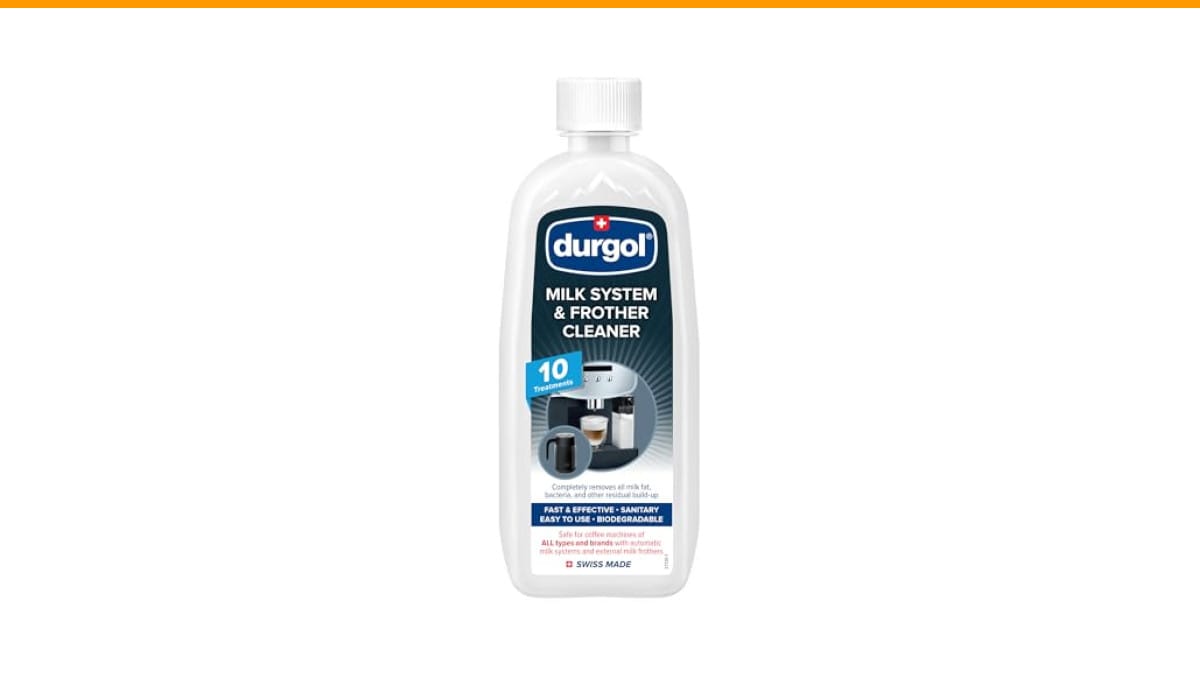
Durgol
Durgol Milk System and Frother Cleaner for…
- Completely remove residual build-up from any brand of Coffee machine and frothier
- Quick and easy to use odor and fragrance free leaving no residue
- Consistent use extends the lifespan of the coffee machine due to the proprietary ingredients
As an Amazon Associate I earn from qualifying purchases.
You’ll walk away knowing exactly how to descale a milk frother, how often to do it, and what mistakes to avoid.
If you use an external electric frother, a dedicated cleaner makes the job noticeably easier. The Durgol Milk System and Frother Cleaner is a liquid solution designed for milk residue and mineral scale. It’s fragrance-free, which matters because you don’t want a lemon-scented aftertaste in your coffee. One bottle handles roughly ten cleanings, so it lasts a while even with weekly use.
Why Regular Descaling Actually Matters
Scale isn’t just ugly. It’s a functional problem. A thin layer of mineral deposit acts like a blanket on the heating element. Your frother has to run longer to hit the same temperature, which strains the motor and the thermostat. Over time, that extra work shortens the lifespan of the device.
There’s also the milk factor. Milk proteins and fats leave their own residue, which can harbor bacteria. When you combine that with hard water scale, you get a film that’s tough to remove with soap alone. That film is why your frother might smell a little sour even after a rinse.
Most manufacturers recommend descaling every 30 to 60 days, depending on water hardness. If you live in an area with hard water, lean toward the 30-day mark. If you use filtered water, you can stretch it to every couple of months.
What to Use: Descaler vs. Vinegar vs. Citric Acid
You have three main options. Each works, but they are not equal in convenience or residue.
| Method | Effectiveness | Residue & Taste | Best For |
|---|---|---|---|
| Commercial descaler (like Durgol) | Strong, fast | None, fragrance-free | Regular maintenance, all frother types |
| White vinegar (1 part vinegar to 2 parts water) | Good, but slower | Strong smell, may linger | Emergency cleaning, budget option |
| Citric acid powder (1-2 tbsp per cup of water) | Good | Minimal smell, but can be tart if not rinsed | Those who prefer a natural option |
My honest take? Vinegar works in a pinch, but it requires multiple rinse cycles to fully eliminate the smell. I’ve seen people ruin the taste of a week’s worth of coffee because they didn’t rinse enough. A dedicated descaler is formulated to dissolve both scale and milk stone without the odor. It’s not that expensive, and the consistency is better.
You can also check our guide on descaling a coffee machine for more details on how hard water affects your gear.
Step-by-Step: Descaling an External Electric Frother
External frothers are the easiest to clean because you can remove the jug and the whisk. Here’s the process I use.
- Disassemble. Remove the whisk attachment and any rubber seals. Wash these by hand with warm soapy water. Set them aside.
- Mix the solution. Add the recommended amount of descaler to the jug, then fill with water to the max line. If you’re using Durgol, it’s usually about a capful. Check the bottle for the exact ratio.
- Run the frother. Turn it on for a full cycle. Let it heat and spin. You might see some foam; that’s normal.
- Let it soak. After the cycle, leave the solution in the jug for 15-20 minutes. This gives the acid time to break down stubborn scale that the spinning missed.
- Empty and rinse. Pour the solution down the drain. Rinse the jug thoroughly with fresh water. Fill it again with clean water and run another full cycle. Do this twice. You want zero descaler left behind.
- Wipe and dry. Wipe the interior with a soft cloth and let it air dry upside down.
That’s the whole process. It takes about ten minutes of active time. The soak is what actually does the heavy lifting.
What About Wand Frothers (Steam Wands)?
Steam wands on espresso machines are a different beast. You can’t submerge the machine. Instead, you descale the wand by purging steam through a solution.
Fill a tall cup with your descaling solution. Place the wand tip just below the surface. Turn the steam on for 30 seconds, then off. Let it sit for five minutes. Then turn the steam on again and purge until the cup is empty. Finish by running the wand through plain water for a minute. This flushes the internal pipework.
This is essentially the same as cleaning a steam wand, but with a descaler instead of just water. If you want a deeper look at wand hygiene, check our guide on cleaning a steam wand.
Signs You’ve Waited Too Long
How do you know if you’ve put this off? Here are the telltale signs.
- The frother makes a grinding or rattling noise.
- Milk takes noticeably longer to froth.
- The whisk spins but doesn’t create foam.
- There’s a white or gray crust around the heating plate.
- The milk smells sour even when it’s fresh.
If you see any of these, don’t panic. A good soak usually reverses the damage. If the whisk is truly seized, you might need to replace that part, but that’s rare.
How Often Should You Really Do This?
I mentioned 30-60 days earlier, but let’s get specific. If you froth milk daily, descale monthly. If you use it a few times a week, every six weeks is fine. If you only use it on weekends, every two months works.
Hard water makes a difference. I have hard water at home, and I can see scale on my kettle after a week. If that sounds like you, stick to the monthly schedule. Soft water users can relax a bit.
For context, this is the same logic as how often to clean a coffee maker—frequency depends on usage and water quality, not a fixed calendar date.
Common Mistakes People Make
I’ve seen a few recurring errors that cause more harm than the scale itself.
Using bleach or dish soap in the descaling step. Soap doesn’t dissolve minerals. Bleach is dangerous and will leave a chemical residue. Stick to acid-based solutions.
Not rinsing enough. This is the biggest one. If you taste vinegar or citrus in your next latte, you didn’t rinse. Run that second water cycle. It’s worth the extra minute.
Descaling a non-removable wand without purging. If you just wipe the outside of a steam wand, you’re not fixing the internal blockage. You have to purge solution through the tip.
Frequently Asked Questions
Can I use vinegar to descale my milk frother?
Yes, but dilute it. Use one part white vinegar to two parts water. Run the cycle, then soak for 20 minutes. You’ll need to run at least two plain water cycles afterward to kill the smell. It works, but commercial descaler is less hassle and leaves no odor.
How often should I descale a milk frother?
For daily use with hard water, every month. For occasional use with soft water, every two months. If you notice slower frothing or a grinding noise, don’t wait—do it immediately.
Is it safe to put descaler in a plastic frother jug?
Most descalers are safe for food-grade plastic. Check the label on your specific product. Durgol is safe for all common materials. Avoid using boiling hot water with descaler in plastic; warm water is sufficient and safer.
Why does my frother smell like sour milk even after cleaning?
That smell is usually trapped milk protein, not scale. Soap won’t remove it. A descaling cycle with an acid-based cleaner will break down the protein film. If the smell persists after descaling, check the rubber gasket—it might need a separate scrub or replacement.
Can I descale a milk frother with lemon juice?
Lemon juice works in a pinch, but it contains sugars and pulp that can leave a sticky residue. Citric acid powder is a better natural option. If you only have lemon juice, strain it first and rinse thoroughly.
What to Remember for Next Time
Descaling isn’t glamorous, but it’s the difference between a frother that lasts three years and one that dies at fourteen months. Here’s the short version.
- Descale every 30-60 days, depending on water hardness and usage.
- Use a dedicated descaler or citric acid over vinegar to avoid lingering smells.
- Always soak for 15-20 minutes after the initial cycle—that’s where the magic happens.
- Rinse with two full plain water cycles. No shortcuts.
- For steam wands, purge the solution through the tip, don’t just wipe it.
- If the frother grinds or sputters, descale immediately before permanent damage sets in.
- Wash the whisk and seals by hand after descaling, not in the dishwasher.
That’s it. Ten minutes of work now saves you from buying a new frother later. And if you’re dealing with a stubborn machine that has a descale light stuck on, our guide on the Breville descale light issue might save you a service call.
Products related to this article
Sponsored / affiliate links. As an Amazon Associate I earn from qualifying purchases. I may earn additional commission from eligible campaigns.
 6 lb Citric Acid Powder Food Grade, Citric Acid Crystals, 100% Pure
 Food to Live Citric Acid Powder, 5 Pounds - Anhydrous, Fine Granules, Food Grade Lemon Salt, Great for Cheese Making, Household Cleaner and Preservative, Good for Bath Bombs, Kosher, Sour Salt in Bulk
 SOLUSTRE Electric USB Coffee Cup Warmer with Temperature Settings Portable Milk and Beverage Heating Coaster for Office Desk Small Lightweight Design Easy to Clean Surface Multi Functional