You bought a manual grinder because you wanted better coffee. Then you ground your first batch, brewed it, and something tasted off. Sour, bitter, or just flat. The grinder wasn’t broken. You just hadn’t learned how to use it properly.
Most people blame the beans or the brewer when the real problem sits in the grind. A manual grinder gives you total control, but that control cuts both ways. Get the settings wrong and you’ll ruin beans that cost $20 a bag. Get them right and you’ll taste things you never knew existed in your regular cup.

CEVING
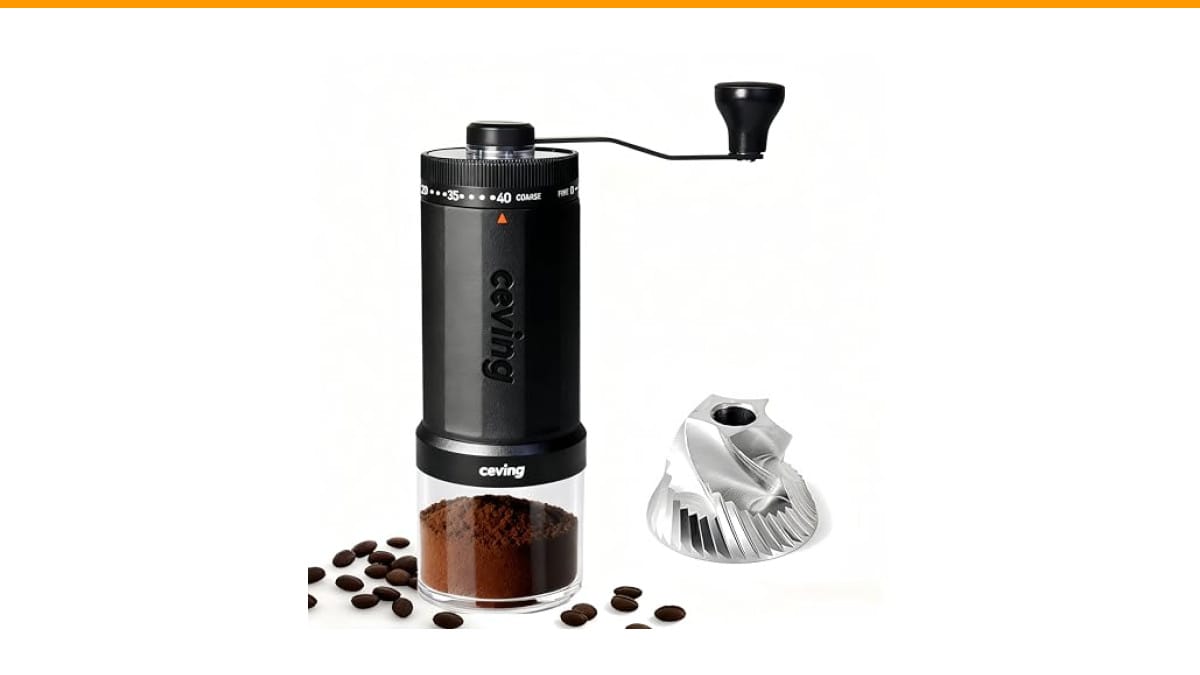
CEVING World's First 60g Large Capacity Manual…
- Tired of small batches? Meet the world's first manual grinder with a massive 60g capacity—Hold twice the beans of the standard gri…
- 40 EXTERNAL SETTINGS - DIAL IN PERFECT BREWS INSTANTLY. Our external click-ring delivers 40 precise settings—effortlessly switch f…
- MASTER-LEVEL PRECISION - LAB-ACCURATE GRINDS, BARISTA-APPROVED FLAVOR. Each click adjusts by just 0.05mm—the finest difference det…
As an Amazon Associate I earn from qualifying purchases.
This guide walks through the exact adjustments that matter: dialing in grind size, fixing inconsistent particle distribution, managing heat and static, and keeping your burrs sharp. You’ll leave with a repeatable process, not vague advice.
If you’re grinding more than a single cup at a time, the CEVING 60g manual grinder solves a real bottleneck — it holds twice the beans of standard models, so you can grind a full French press or cold brew batch in one session instead of two. That matters more than you’d think when you’re dialing in a new recipe and need consistency across an entire brew.
Grind Size Is 80% of the Battle
Here’s the uncomfortable truth: your grinder’s job is not to crush beans. It’s to create uniform particles that extract at the same rate. When your grind is uneven, the fine particles over-extract (bitter) while the coarse ones under-extract (sour). You end up with a cup that tastes both ways at once.
Start with the right range for your brew method:
- Espresso: 200–400 microns, like fine sand. Grinds should feel powdery but not dusty.
- Pour-over (V60, Kalita): 500–800 microns, like granulated sugar. You want a slight grittiness between your fingers.
- French press: 1000–1400 microns, like coarse sea salt. Chunks should be visible and uniform.
- Cold brew: 1200–1600 microns, even coarser than French press. Think breadcrumbs.
If your first cup tastes sour (sharp, tangy, like lemon), your grind is too coarse. The water rushed through and didn’t pull enough flavor. Grind finer and try again. If it tastes bitter (drying, ashy, lingers on the tongue), you went too fine. Back it off a few clicks.
Change one variable at a time. Do not adjust grind size and water temperature in the same brew. You’ll never know which one fixed it.
Dialing In: A Repeatable Process
Most manual grinders have 30 to 40 clicks. That sounds precise, but you only need about five of them for any given brew method. The trick is finding your grinder’s sweet spot for each method and then remembering it.
Here’s the process I use every time I get a new bag of beans:
- Set the grinder to a middle setting for your brew method. For pour-over, that’s around 22–25 clicks on most grinders.
- Grind 20 grams and brew a test cup. Time the drawdown.
- Taste it. Sour means go finer by 2–3 clicks. Bitter means go coarser by 2–3 clicks.
- Brew another cup. Repeat until the cup tastes balanced — neither sharp nor harsh.
- Write down the click number. Keep a small notebook or a note on your phone.
- Remove the burr assembly per your grinder’s instructions.
- Brush off loose grounds with a stiff brush (a clean paintbrush works fine).
- Use a wooden pick or toothpick to dislodge grounds stuck in the burr teeth.
- Wipe the chamber with a dry microfiber cloth. No water, no soap — moisture rusts steel burrs.
- Grinding too fast. Slow down. Your arm isn’t in a race.
- Using the wrong grind size for the brewer. Espresso grind in a French press gives you sludge. Coarse grind in an espresso machine gives you watery acid.
- Ignoring the click settings. Most grinders have numbered settings. Use them. Guessing wastes beans.
- Never cleaning the burrs. Oily residue goes rancid. Clean every two weeks.
- Grinding more than you need. Ground coffee loses flavor fast. Grind per batch.
- Not adjusting for bean roast. Light roasts need finer, dark roasts need coarser. One setting doesn’t fit all.
- Dial in your grind size for each brew method. Write down the click numbers.
- Slow your crank speed to 2 revolutions per second. Uniform particles follow.
- Grind only what you need, right before brewing.
- Clean the burrs every two weeks. Deep clean every few months.
- Adjust for bean roast — lighter needs finer, darker needs coarser.
- Wait 30 seconds after grinding before opening the chamber to avoid static mess.
- If your grinder can’t hold enough beans for your batch, consider a larger-capacity model like the CEVING 60g grinder.
This takes about 15 minutes and three cups of coffee. That’s a small price for knowing your grinder inside out.
One thing worth noting: different beans need different settings. Light roasts are denser and need a finer grind to extract properly. Dark roasts are more fragile and extract faster, so they need a coarser setting. The click number from your last bag might not work for the next one.
Particle Consistency: Why It Matters More Than You Think
You can have the perfect grind size and still get a bad cup if your burrs are producing fines — tiny dust-like particles that clog the filter and over-extract. Every grinder produces some fines. The difference between a $30 grinder and a $200 one is how many.
Manual grinders with steel burrs (like the CEVING model) produce fewer fines than cheaper ceramic burrs because the cutting geometry stays sharp longer. But even good burrs need clean conditions to perform.
Check your grind for visible dust. Spread a small amount on a white plate. If you see a distinct layer of powder mixed with larger chunks, your burrs are dull, dirty, or you’re grinding too fast.
Slow down your crank speed. Most people grind at 3–4 revolutions per second. Drop that to 2. Slower grinding gives the burrs more time to cut each bean cleanly instead of smashing it. The difference shows up immediately in the particle size distribution.
Also, don’t grind more than you need. Stale grounds lose flavor within 15 minutes. Grind only what you’re about to brew.
Heat, Static, and Retention: The Hidden Variables
Grinding generates friction, and friction generates heat. Heat accelerates oxidation, which dulls flavor. A manual grinder won’t heat beans as much as an electric one, but you can still feel warmth after grinding 30 grams. That warmth is flavor leaving the beans.
Grind in short bursts. Crank for 10 seconds, pause for 5, then continue. This lets the burrs cool between sessions. It adds maybe 20 seconds to your grind time, but the flavor payoff is real.
Static is another quiet killer. Dry beans and plastic grind chambers create static electricity that makes grounds stick to the sides and fly everywhere. You lose a gram or two of fines, which changes your brew ratio. Wait 30 seconds after grinding before opening the chamber. The static dissipates, and the grounds settle.
Retention — the grounds that stay stuck inside the grinder — is a bigger issue than most people realize. A grinder that retains 0.5 grams out of every 20 means you’re getting 2.5% less coffee than you think. Tap the grinder firmly a few times after grinding to dislodge trapped grounds. Better yet, grind 2–3 grams of fresh beans before your actual brew to purge the previous grind.
Cleaning and Maintenance: Dull Burrs Ruin Everything
Oily beans leave residue on burrs. That residue goes rancid and imparts a bitter, cardboard-like flavor to fresh coffee. You can’t taste it in the first cup after cleaning, but you’ll notice it by day five.
Clean your grinder every two weeks if you use it daily. Here’s the quick method:
For a deeper clean every few months, grind a small amount of rice or grinder cleaning tablets through the burrs. This pulls out oil buildup that brushing can’t reach. Follow with a few grams of fresh beans to clear the residue. A thorough coffee grinder cleaning routine extends burr life and keeps flavor clean.
If you notice your grind becoming less consistent despite cleaning, the burrs may be dull. Most manual grinder burrs last 3–5 years with regular use. Replacement burrs cost less than a new grinder and restore performance completely.
Comparing Grind Approaches: Manual vs. Electric vs. Pre-Ground
You’re reading this because you own a manual grinder, but it helps to see where it fits. Here’s an honest comparison based on my testing:
| Factor | Manual Grinder | Electric Burr Grinder | Pre-Ground Coffee |
|---|---|---|---|
| Particle consistency | Good to excellent, depends on technique | Excellent, consistent every time | Poor, varies by batch |
| Grind speed | 30–90 seconds per 20g | 5–15 seconds | Zero (already ground) |
| Freshness | Best — grind right before brewing | Best — grind right before brewing | Stale within days of opening |
| Portability | Excellent — no power needed | Poor — needs outlet | Good — but stale |
| Control | High — you feel the grind | High — set and forget | None |
| Price range | $30–$300 | $100–$800 | $8–$20 per bag |
Manual grinders win on freshness and portability. They lose on speed and convenience. If you’re brewing for a crowd every morning, an electric grinder makes more sense. If you want the best possible cup for one or two people, manual is the way.
Common Mistakes That Ruin Manual Grinder Coffee
These are the errors I see most often in reader questions and in my own early attempts:
If your coffee tastes bitter after cleaning, the issue might not be your grinder at all. Check your water temperature and brew time first. A bitter coffee after cleaning usually points to over-extraction, not dirty equipment.
Frequently Asked Questions
Why does my manual grinder produce so many fines?
Fines come from dull burrs, grinding too fast, or beans that are too oily. Slow your crank speed to 2 revolutions per second and see if the distribution improves. If it doesn’t, clean the burrs. If it still doesn’t, the burrs may need replacement.
How fine should I grind for pour-over?
Medium-fine, around the texture of granulated sugar. You want particles that feel gritty but not powdery. If your pour-over takes under 2 minutes to drain, grind finer. If it takes over 4 minutes, grind coarser.
Can I use a manual grinder for espresso?
Yes, if your grinder has fine enough settings. Many manual grinders go down to 200 microns, which is espresso range. The catch is consistency — you need to crank slowly and steadily. It takes practice, but the results rival electric grinders at twice the price.
How often should I clean my manual grinder?
Daily if you use it once, after every 2–3 uses if you grind multiple times a day. A quick brush-out takes 30 seconds. A deep clean with rice or cleaning tablets every 2–3 months keeps burrs sharp.
Why does my coffee taste sour even with a fine grind?
Sourness means under-extraction. Your grind might be fine enough, but your water temperature might be too low (below 195°F) or your brew time too short. Try hotter water first. If that doesn’t help, go one click finer and check your brew ratio — 1:15 to 1:17 is the sweet spot for most methods.
What to Do Next
You now have a complete system for better coffee from your manual grinder. Here’s the short version you can act on right now:
Good coffee is a system, not a single trick. Get the grind right, keep the burrs clean, and control your variables one at a time. Your next cup will taste noticeably better than this morning’s.
Products related to this article
Sponsored / affiliate links. As an Amazon Associate I earn from qualifying purchases. I may earn additional commission from eligible campaigns.
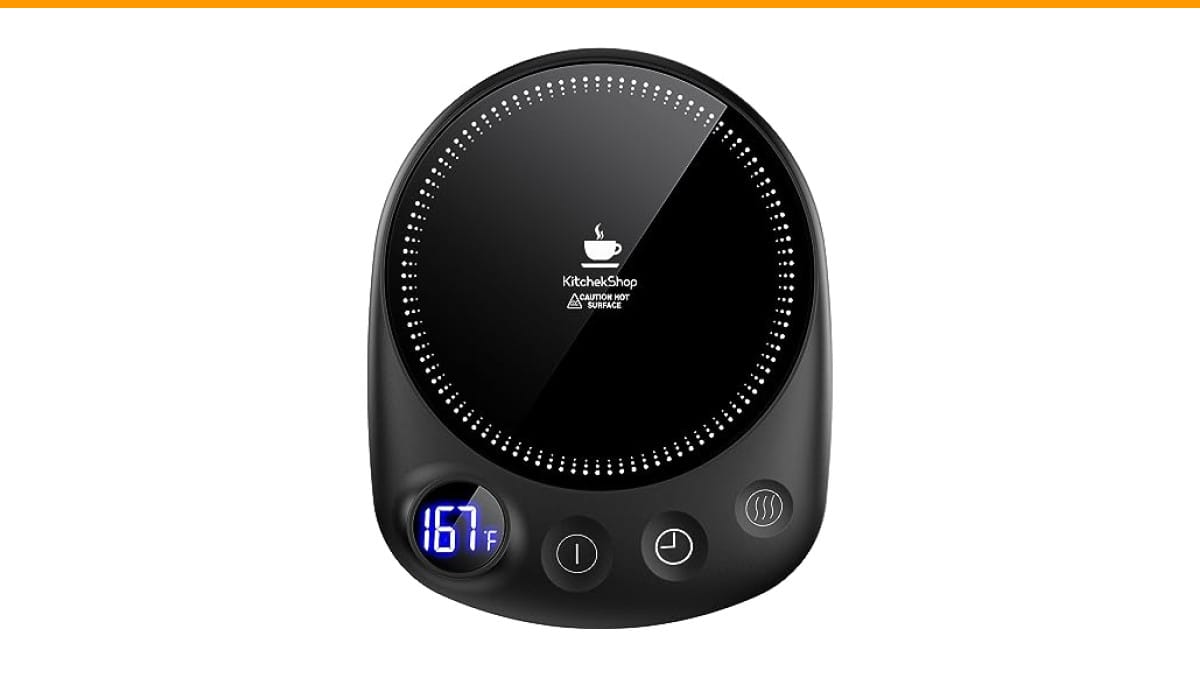
 Quick Heating Cup Warmer, Three Temperature Settings, Splashproof and Portable, for Coffee, Milk, Lightweight ABS Material
 Coffee Mug Warmer & You are Awesome Mug Set, Electric Cup Warmer for Desk
 SOLUSTRE Electric USB Coffee Cup Warmer with Temperature Settings Portable Milk and Beverage Heating Coaster for Office Desk Small Lightweight Design Easy to Clean Surface Multi Functional