You’re half awake, you’ve tamped the basket, locked in the portafilter, and hit the brew button. Nothing comes out. Or worse, a thin, sour drip that looks more like tea than espresso. If you own a compact espresso machine, this scene is painfully familiar. The good news: most problems are fixable in under ten minutes with zero tools.
This guide walks through the most common failures on small home espresso machines—no flow, weak shots, steam wand trouble, and weird noises—and gives you a clear path to fix each one. You’ll also learn when a deeper clean or a part swap is the real answer, and when it’s time to call it quits. I’ve tested dozens of these machines, and the fixes below solve about 90% of the issues I see.

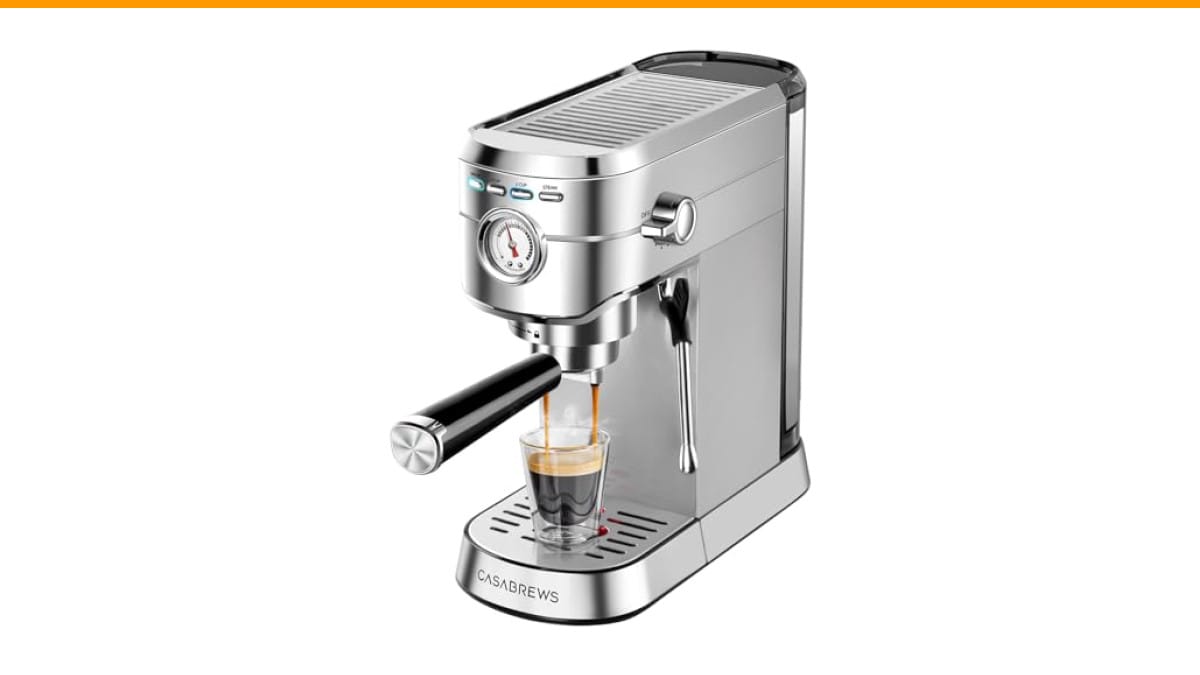
CASABREWS
CASABREWS CM5418 Compact Espresso Machine with Milk…
- Make Your Favorite Espresso Coffee At Home: The CASABREWS coffee machine with milk frother allows you to prepare all your favorite…
- Professional 20 Bar Pressure System: Semi-Automatic 2-in-1 Espresso Maker, with 20 bar professional Italian pump and 1350 W powerf…
- Milk Frothing System: Our espresso machine with milk frother has a powerful steam wand, so you can texture creamy, rich microfoam…
As an Amazon Associate I earn from qualifying purchases.
If you’re shopping for a machine that’s less likely to break in the first place, the CASABREWS CM5418 Compact Espresso Machine has a 20-bar Italian pump and a removable 34 oz tank—two features that make troubleshooting easier because you can isolate the pump from the boiler. But even the best budget machine will act up eventually. Here’s what to do when it does.
1. No Water Flowing Through the Portafilter
You press the button, the pump hums, but nothing comes out. This is the most common complaint, and it’s rarely a dead pump. Work through these in order.
Check the water tank first
Sounds obvious, but compact machines hide the tank. Pull it out and look. Is the water level above the minimum line? If it’s low, the pump sucks air and makes a loud, straining noise.
Also check the tank’s bottom valve. Many tanks have a spring-loaded valve that opens when you seat the tank. If that valve sticks, water can’t reach the pump. Tap it gently with a spoon handle.
Clean the portafilter and basket
Old coffee oils clog the tiny holes in the basket. Rinse the basket under hot water and scrub it with a stiff brush. Don’t use soap—it leaves a residue that kills crema.
If you use a pressurized basket (the one with a single tiny hole), check that the hole isn’t blocked by a stray coffee particle. A toothpick clears it in seconds.
Prime the pump
Some machines need a manual prime after the tank runs dry. Run water through the group head without the portafilter for 10 seconds. If nothing comes out, turn the machine off, wait 30 seconds, and try again. This resets the pump’s pressure sensor on many models.
If you still get nothing, the pump might be air-locked. Disconnect the water line from the pump (check your manual) and let a few drops of water flow through, then reconnect. That clears the air bubble.
2. Weak or Sour Shots
A shot that runs too fast (under 20 seconds) and tastes sour means under-extraction. The fix is usually grind size or dose, not machine failure.
Grind finer
Most compact machines come with a pressurized basket that tolerates pre-ground coffee. But if you’re using a non-pressurized basket, you need a fine, consistent grind—like table salt. If your shots gush out in 10 seconds, grind finer and re-tamp.
Increase the dose
Use 14–18 grams for a double basket. Under-dosing leaves too much headspace, so water rushes through. Weigh your coffee if you can; a scale costs less than a bag of beans and fixes more shots than any other upgrade.
Check the pressure gauge
If your machine has a gauge (like the CASABREWS CM5418), the needle should sit in the espresso zone during extraction. If it’s low, the pump is struggling—often because the water tank valve is partially blocked. If it’s too high, the grind is too fine or the basket is overfilled.
3. Steam Wand Issues
Steam wands on compact machines are finicky. They either produce weak foam or nothing at all.
No steam coming out
First, make sure the machine is fully heated. Most compact machines need 3–5 minutes after turning on. If you switch from brewing to steaming too fast, the boiler hasn’t reached steam temperature. Wait another minute.
Second, check the wand tip for dried milk. Milk proteins bake onto the tip and block the tiny hole. Soak the tip in hot water for 10 minutes, then poke the hole with a pin.
Weak foam
Weak foam almost always means the wand isn’t positioned correctly. You want the tip just below the milk surface, angled so it creates a whirlpool. If you hear a loud hiss, the tip is too deep—raise it slightly.
Also, use cold milk. Whole milk foams better than skim or plant-based. Non-dairy milks need a higher fat content (barista blends) to foam at all.
Machine goes into overheat protection
The CASABREWS manual warns about this: don’t brew right after steaming. The boiler needs to cool down, or the temperature sensor trips and the lights flash. Wait 5–10 minutes until the lights stop flashing. This is a safety feature, not a defect.
4. Leaks and Drips
A few drops after brewing is normal. A puddle under the machine is not. Here’s where to look.
Check the portafilter seal
If water leaks around the portafilter during brewing, the group head gasket is worn or the portafilter isn’t locked in tight. Replace the gasket (a $5 part) every 6–12 months depending on use. You can also try locking the portafilter in harder—it should feel snug, not loose.
Inspect the water tank connection
Leaks from the back or bottom often mean the tank isn’t seated properly. Remove it, dry the bottom, and re-seat it with a firm push. If it still leaks, the tank’s rubber gasket may be cracked. Replacement tanks are usually cheap and available.
Drip tray overflowing
This one’s easy to miss. The drip tray fills up faster than you think, and when it’s full, water backs up under the machine. Empty it after every few shots, especially if you steam milk. A full drip tray can also make the machine think there’s a leak.
Quick Comparison: Fixing Common Issues
Here’s a cheat sheet for the most frequent problems. Keep this table near your machine.
| Problem | Likely Cause | Quick Fix | Time Needed |
|---|---|---|---|
| No water flow | Air lock in pump | Prime the pump manually | 2 minutes |
| Weak, sour shot | Grind too coarse | Grind finer, re-tamp | 1 minute |
| Steam wand no steam | Blocked tip | Soak in hot water, poke hole | 10 minutes |
| Water around portafilter | Worn gasket | Replace group head gasket | 15 minutes |
| Flashing lights after steaming | Overheat protection | Wait 5–10 minutes to cool | 10 minutes |
| Leak under machine | Water tank not seated | Re-seat tank, check gasket | 1 minute |
5. Weird Noises and Vibrations
Compact machines vibrate—that’s normal. But a loud, grinding, or rattling noise means something’s off.
Loud pump noise
The pump should hum, not scream. If it’s suddenly loud, check the water tank level first. A pump running dry makes a high-pitched whine. Fill the tank and run water through the group head to re-prime.
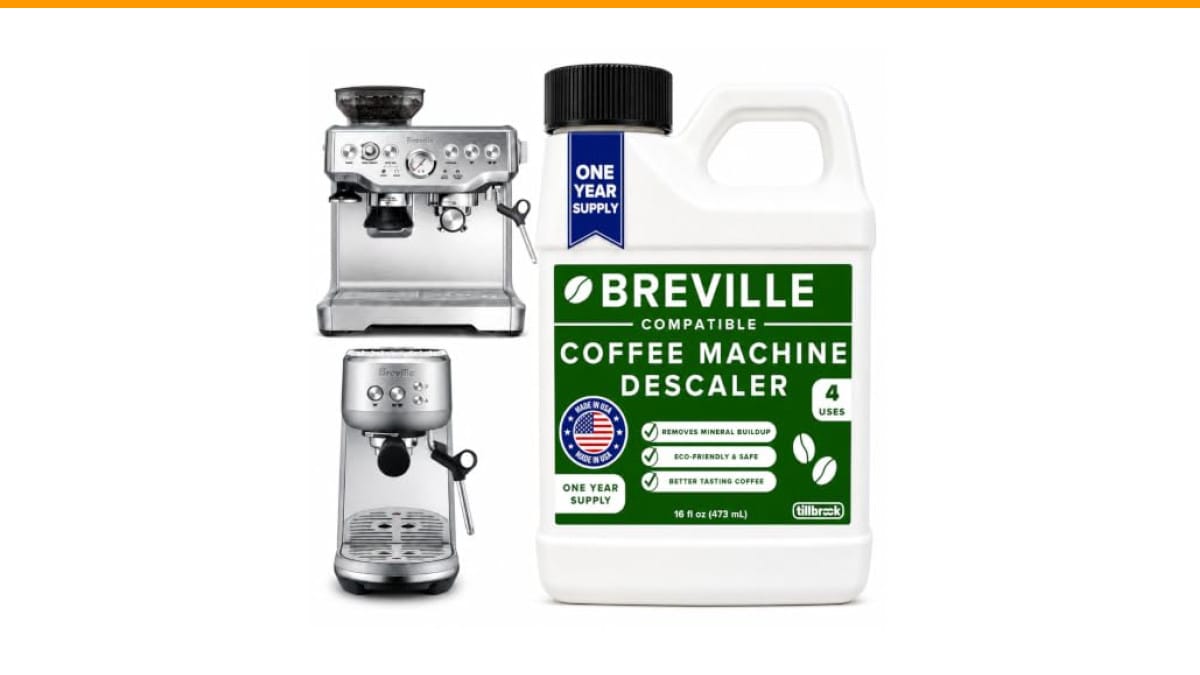
If the noise persists, the pump may have debris in it. Descale the machine to flush out mineral scale. Scale buildup is the #1 cause of pump failure in compact machines. Use a descaling solution every 2–3 months if you have hard water.
Rattling from the group head
This usually means the dispersion screen (the metal mesh above the basket) is loose or clogged. Remove it with a screwdriver, soak it in descaling solution, and scrub it with a brush. Re-tighten it when you put it back.
6. When to Descale vs. Deep Clean
Scale and coffee oil cause most recurring problems. Here’s how to tell which one you need.
If your shots run slow or the machine is louder than usual, scale is the likely culprit. Descaling dissolves mineral deposits inside the boiler and pipes. If your shots taste bitter or the steam wand spurts, you have coffee oil buildup—that needs a deep clean of the group head, basket, and wand.
For a full step-by-step, see our descaling guide or the deep clean guide. Both apply to compact machines, not just full-size ones.
7. When to Call It Quits
Not every problem is fixable. If you’ve replaced the gasket, descaled, and the machine still won’t build pressure, the pump may be dead. Replacement pumps for compact machines run $20–$40 and take about an hour to install. If the machine is over 5 years old, a new machine often makes more sense.
Also, if the heating element fails (water never gets hot), that’s usually a $50+ repair. On a budget machine, that’s half the cost of new. Consider upgrading instead.
8. Five Real Questions People Ask
Why does my espresso machine make a loud noise but no coffee?
That’s almost always an air lock or a clogged water line. Prime the pump by running water through the group head without the portafilter. If that doesn’t work, check the water tank valve. A stuck valve is common on machines with removable tanks.
How often should I descale my compact espresso machine?
Every 2–3 months if you have hard water, every 6 months if you use filtered or soft water. If you notice slower extraction or a louder pump, descale sooner. Scale buildup is the #1 killer of small espresso machines.
Can I use regular coffee beans in a compact espresso machine?
You can, but they’ll produce weak, sour shots because they’re roasted for drip coffee. Espresso beans are roasted darker and ground finer. If you must use regular beans, grind them as fine as possible and use a pressurized basket to build enough pressure.
Why is my milk not frothing even though the steam wand works?
Three reasons: the milk is too warm, the wand tip is too deep, or you’re using low-fat milk. Start with cold whole milk, place the tip just below the surface, and angle it to create a whirlpool. If it still doesn’t foam, the wand tip may be blocked—soak it in hot water.
Is it normal for the machine to vibrate during brewing?
Yes, vibration pumps are standard on compact machines. A low hum is normal. A loud rattle or grinding sound isn’t. If it gets worse, check the water tank and descale. If the noise continues, the pump bearings may be wearing out.
9. What to Do Next
You’ve got the tools to fix most issues. Start with the simplest fix—clean the basket, check the tank, re-prime the pump. Move to descaling if problems persist. And if you’re still stuck, the noise troubleshooting guide covers pump replacements in more detail.
- Always keep the water tank filled above the minimum line.
- Clean the portafilter and basket after every shot.
- Descale every 2–3 months with hard water.
- Don’t brew immediately after steaming—wait for the boiler to cool.
- Replace the group head gasket yearly to prevent leaks.
- Use fresh, fine-ground coffee for better extraction.
- If the pump dies and the machine is over 5 years old, consider replacing it.
Products related to this article
Sponsored / affiliate links. As an Amazon Associate I earn from qualifying purchases. I may earn additional commission from eligible campaigns.
 Coffee Espresso Machine Handle Replacement Parts, Cafe Bracket Handle for Lidl Silvercrest CM4621 CM4218 KF5002 KF500S Barista (for 51mm Portafilter Basket - Not included)
 Linnkyfloa Coffee Espresso Maker Handle Replacement for Stovetop Moka Pot or Percolator, Black Plastic for Spare Part Compatible with Italian(9-12 Cup)
 Wrenmor Replacement Handle For Coffee Espresso Moka Stove Pot, Black Plastic Accessory Compatible With 1/3/6/9/12 Cup Sizes For Easy Installation And Long-Lasting Use(1 Cup)