You pull a shot that tastes like yesterday’s burnt coffee. The crema looks thin, almost gray. Your first thought is the beans. It’s not the beans. It’s the oil and coffee residue baked into your group head and brew lines, and plain water won’t touch it.
Espresso machine cleaning tablets exist to dissolve that buildup, but most people don’t know what’s actually inside them. Some think they’re just compressed detergent. Others worry they’ll corrode the machine. This article breaks down the actual ingredients, the common myths, and how to choose a tablet that won’t damage your equipment.

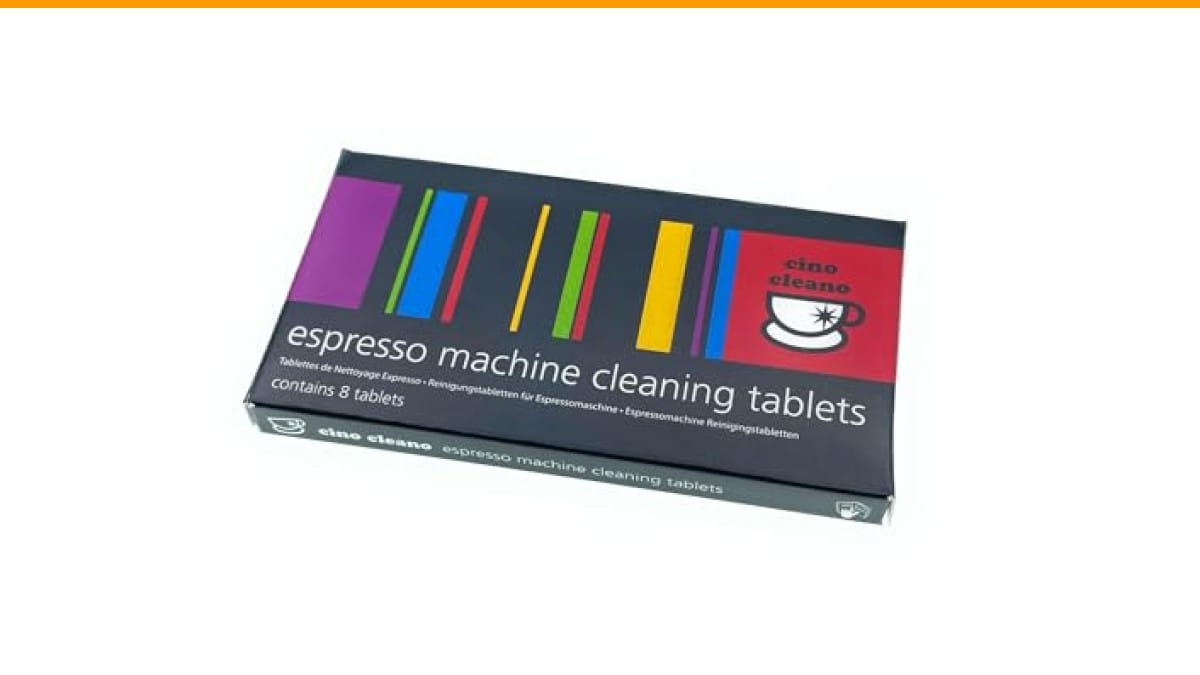
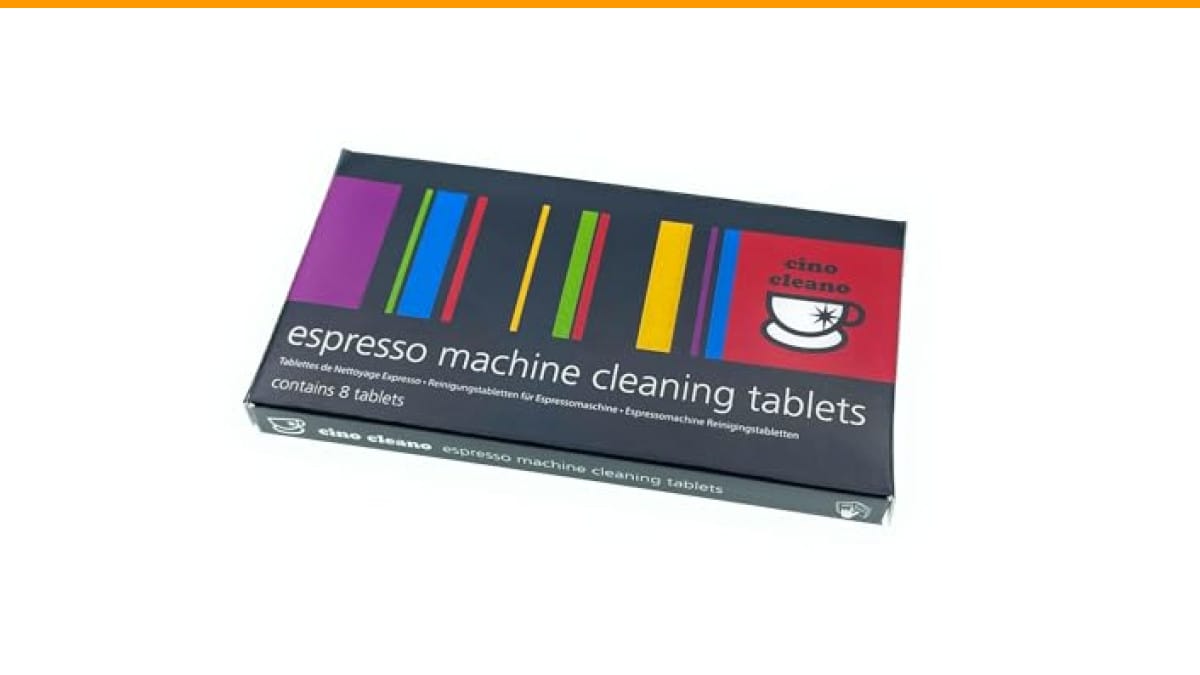
Cino Cleano
Cino Cleano Espresso Machine Cleaning Tablets (8…
- Listing is for 1 Packet which contains 8 tablets Suitable for use with all Breville Espresso machines
- Precision dissolution time to provide optimal cleaning performance
- All pharmaceutical and food grade ingredients
As an Amazon Associate I earn from qualifying purchases.
You’ll walk away knowing what to look for on a label, what to avoid, and why a cheap tablet can cost you more in repairs than a good one saves you.
If you want a solid option that works across most home machines, the Cino Cleano Espresso Machine Cleaning Tablets use pharmaceutical and food grade ingredients with a non-corrosive formula. It’s designed for Breville, DeLonghi, Sage, Saeco, and Miele super-automatic machines, and it also works in the group head of a manual espresso machine. It dissolves at a controlled rate, so you don’t have to guess whether it’s fully cleared from the system.
The Core Ingredients: What’s Actually in the Tablet
Most espresso cleaning tablets share the same basic chemistry. You’re looking at a blend of alkaline salts, surfactants, and a few binding agents that hold everything together. The active ingredients do the heavy lifting.
- Sodium carbonate (washing soda) — raises pH to break down coffee oils. Coffee oil is acidic, so an alkaline cleaner neutralizes it and lifts it off metal surfaces.
- Sodium percarbonate — releases hydrogen peroxide when wet. That’s the fizzing action you see. The oxygen bubbles physically push residue out of tiny crevices in the group head and shower screen.
- Surfactants (often sodium lauryl sulfate or similar) — reduce surface tension so water can reach into thin gaps and carry dissolved oils away.
- Citric acid or malic acid — in some formulas, this targets scale (calcium deposits). Not all tablets include it; some rely on separate descaling products.
- Binders and fillers — usually lactose or starch. These give the tablet its shape and control how fast it dissolves.
That’s the short version. The longer version matters if you care about what touches your machine’s internal seals.
Food grade ingredients matter because trace amounts of residue can remain after rinsing. Pharmaceutical grade means the raw materials meet a higher purity standard, which reduces the risk of impurities that could react with brass or aluminum components. It’s a real difference, not just marketing.
Myth #1: More Foam Means Better Cleaning
The fizzing reaction looks impressive, but it’s not the main cleaning mechanism. The bubbles help dislodge loose particles. The alkalinity does the actual dissolving. A tablet that foams aggressively for two minutes can still leave oil behind if the pH is too low to break the bond between the oil and the metal.
In testing, I’ve seen cheap tablets foam like crazy and leave a visible film on the shower screen. The good ones dissolve slowly and steadily, giving the alkaline solution time to work. Look for a tablet that dissolves in roughly three to five minutes. Faster than that usually means too much filler and not enough active cleaner.
The other side of this myth is the assumption that you need a tablet every single day. You don’t. Daily rinsing with water and a quick wipe of the group head handles most buildup. A tablet once a week is plenty for a home machine that pulls two to four shots a day. If you’re pulling ten or more shots daily, bump that to twice a week.
Myth #2: All Cleaning Tablets Are Safe for Every Machine
This one gets people into trouble. Some tablets contain harsh acids or aggressive chelating agents that work fine on stainless steel but eat away at aluminum boilers or brass fittings. Super-automatic machines have plastic and rubber components in the brew unit that can degrade with certain chemicals.
The non-corrosive claim on a label isn’t just a buzzword. It means the formula is balanced to avoid attacking metals and seals. If a tablet lists strong mineral acids like sulfamic acid or phosphoric acid as primary ingredients, it’s designed for descaling, not daily cleaning. Using it too often can shorten the life of your machine’s gaskets.
Check the manufacturer’s recommendation for your specific machine. Breville machines, for example, have specific cleaning cycles that expect a certain dissolution rate. Using a tablet that dissolves too fast can leave residue in the brew path. The Breville cleaning cycle can be finicky if the tablet isn’t right.
How to Read a Cleaning Tablet Label Like a Pro
You don’t need a chemistry degree. You need to know three things.
- Active ingredients are listed first. If the first ingredient is a filler like lactose or starch, walk away. The active cleaner should be near the top of the list.
- Check for acid content. A little citric acid is fine for scale. Sulfamic acid or phosphoric acid in high amounts means it’s a descaler, not a daily cleaner.
- Look for a dissolution time. If the package doesn’t state one, assume it’s a fast-dissolving tablet that may not clean thoroughly.
I’ve also started paying attention to whether a brand discloses its ingredient percentages. Most don’t. The ones that do tend to be more confident in their formula. That’s not a guarantee of quality, but it’s a good sign.
One more thing: the shape of the tablet matters less than you’d think. Round, square, or hexagonal — it all dissolves the same. What matters is whether it’s designed for your type of machine. Super-automatic machines need tablets that break down completely without leaving particles that could clog the brew group.
Tablet vs. Powder vs. Liquid: Which One Actually Works?
| Form | Best For | Pros | Cons |
|---|---|---|---|
| Tablets | Home espresso machines, super-automatics | Pre-measured, consistent dose, dissolves predictably | Can be pricey per use |
| Powder | Commercial machines, high-volume use | Cheaper per dose, easy to adjust strength | Messy, easy to over- or under-dose |
| Liquid | Backflushing, deep cleaning | Dissolves instantly, good for soaking parts | Hard to measure, can be too aggressive for daily use |
For most home users, tablets win. The pre-measured dose removes the guesswork, and the controlled dissolution rate means you’re less likely to leave residue behind. Powder is fine if you’re comfortable measuring, but I’ve seen too many people dump in a heaping scoop and then complain about a bitter aftertaste. That’s not the powder’s fault — it’s a dosing problem. If you’re dealing with a bitter taste after cleaning, it might not be the cleaner at all. Check this guide on why coffee tastes bitter after cleaning.
Liquid cleaners are overkill for a home machine. They’re designed for soaking dirty group heads in a commercial setting. Using them in a daily cleaning cycle risks over-stripping the lubricants on moving parts.
What Happens If You Skip Cleaning (or Use the Wrong Tablet)
Skipping cleaning doesn’t just make bad coffee. It makes expensive repairs. Coffee oil polymerizes over time, meaning it hardens into a varnish-like layer that no amount of water will remove. Once that layer forms, it insulates the group head, causing temperature fluctuations. Your shots will run either too hot or too cold, and you’ll blame the grinder when it’s actually the machine.
Using the wrong tablet is almost worse. A descaler used too frequently can eat away at the chrome plating on a group head. I’ve seen a machine where the plating peeled off after six months of aggressive descaling with a cheap powder. The owner thought they were being diligent. They were actually destroying the finish.
If you’re unsure whether your machine needs a deep clean or just a regular cycle, start with the regular cleaning tablet. If the water still tastes off after that, then consider a descaling product. Most machines need descaling far less often than the marketing suggests — every three to six months for home use, depending on water hardness. If you’re dealing with a machine that’s making loud noises or leaking water, cleaning might not solve it. Those issues often point to a different problem, like a failing pump or a loose seal. Check the loud noise troubleshooting guide or the leaking water guide for those cases.
Real Questions People Ask About Cleaning Tablets
Can I use a dishwasher tablet instead?
No. Dishwasher tablets contain chlorine bleach, rinse aids, and enzymes designed for food residue on dishes. Those chemicals can corrode aluminum and brass, and they leave a residue that will ruin the taste of your coffee. The cost difference isn’t worth the risk. Use a proper espresso cleaner.
How often should I actually clean with a tablet?
Once a week for a home machine pulling a few shots a day. If you’re pulling more than five shots daily, move to twice a week. If you only use the machine on weekends, once every two weeks is acceptable, but don’t push it further. The oil buildup doesn’t care about your schedule.
Do I need to run a cleaning cycle after using a tablet?
Yes. The tablet is meant to be used with the machine’s cleaning cycle, which flushes water through the system at the right temperature and pressure. Just dropping a tablet in the water tank and letting it sit will not clean the group head properly. Follow the machine’s instructions for the cleaning cycle.
Is it safe to use tablets in a super-automatic machine?
Yes, if the tablet is designed for that type of machine. Super-automatics have plastic brew groups that can be damaged by aggressive acids. Look for a tablet that specifically mentions super-automatic compatibility. The Cino Cleano tablets list that compatibility, which is one reason I recommend them for those machines.
Can I reuse a tablet if it doesn’t fully dissolve?
No. Once a tablet has started dissolving, it’s contaminated with coffee oils and minerals from the water. Reusing it just spreads that contamination around. If your tablet isn’t dissolving fully, it’s either too old or the water temperature is too low. Check the water temperature first, then buy fresh tablets.
What I’d Actually Buy and Why
For a home user, I’d stick with a tablet that has food grade ingredients, a non-corrosive formula, and a dissolution time in the three-to-five-minute range. The Cino Cleano tablets fit that description, and they’re priced reasonably for an eight-count pack. They also work across multiple brands, which is convenient if you have more than one machine.
If you’re on a tight budget, a generic powder will work, but measure carefully. A level teaspoon per cleaning cycle is usually right. More than that doesn’t clean better — it just wastes product and risks residue.
If you have a high-end machine with a brass group head, spend the extra dollar per tablet for a non-corrosive formula. The cost of a new group head will make that dollar look like a bargain.
Quick Rules to Remember
- Look for food grade and pharmaceutical grade ingredients on the label.
- Check that the tablet is non-corrosive before using it on a brass or aluminum machine.
- Once a week is the sweet spot for most home users.
- Never substitute dishwasher detergent or baking soda.
- Run the machine’s cleaning cycle, not just a manual flush.
- If the tablet dissolves in under two minutes, it’s probably too weak.
- When in doubt, buy a tablet that lists super-automatic compatibility.
Cleaning your espresso machine isn’t complicated. It just requires the right chemistry. Now you know what’s in the tablet, what to avoid, and how to keep your machine running for years instead of months.
Products related to this article
Sponsored / affiliate links. As an Amazon Associate I earn from qualifying purchases. I may earn additional commission from eligible campaigns.
 Coffee Espresso Machine Handle Replacement Parts, Cafe Bracket Handle for Lidl Silvercrest CM4621 CM4218 KF5002 KF500S Barista (for 51mm Portafilter Basket - Not included)
 Citric Acid 6 Pounds, Food Grade, Fine Granular Powder | 100% Pure, Concentrated Anhydrous Form | Natural Preservative + Great for Cooking, Cleaning, & DIY Bath Bombs | Non-GMO
 KARHDIR 15" Walk Behind Floor Scrubber Machine, 23" Squeegee