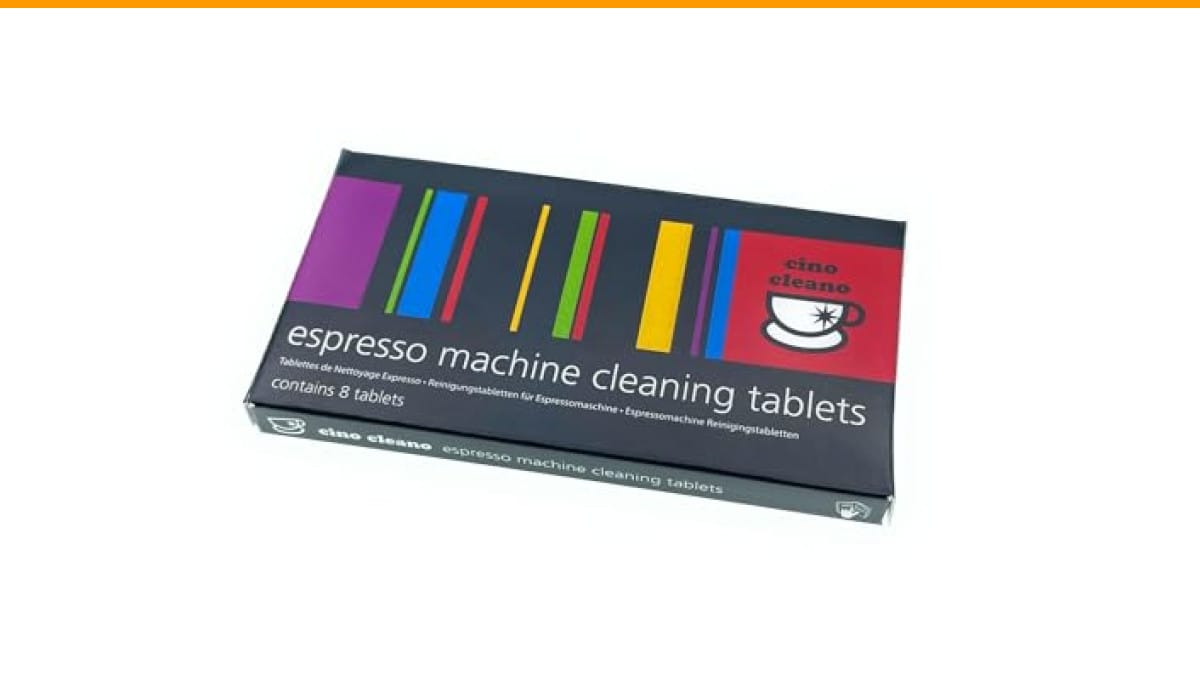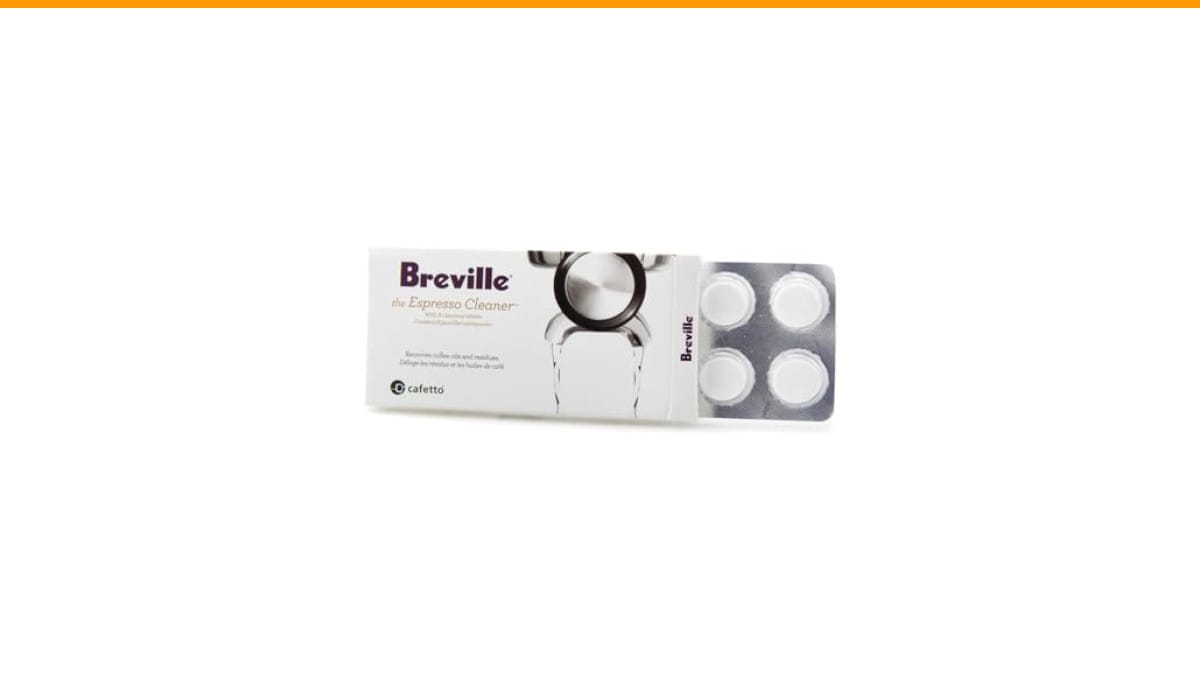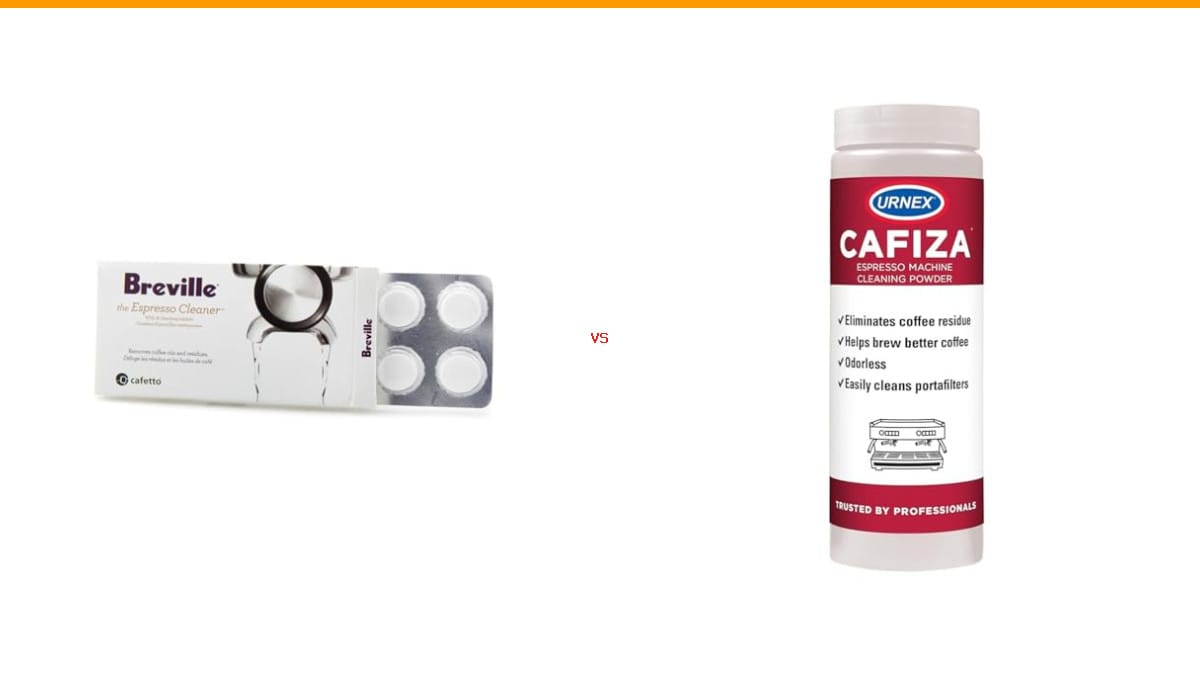
You’re staring at two very different ways to clean your espresso machine. One comes in neat little tablets. The other is a big tub of powder. Both promise to strip away coffee oil and residue. Both are respected names in the coffee world. But they are not the same product, and the right choice depends on your machine, your habits, and how much fuss you want to deal with.
| Our Pick | Runner Up |

|

|
| Breville Breville BEC250 Espresso Machine Cleaning Tablets, 8… | Urnex Urnex Espresso Machine Cleaning Powder - 566… |
| See on Amazon | See on Amazon |
As an Amazon Associate I earn from qualifying purchases.
The short answer: most home users will be happier with the Breville tablets. They’re pre-measured, mess-free, and hard to get wrong. The Urnex Cafiza powder is the better value if you own a commercial machine or you’re willing to measure doses yourself. It’s also the standard in cafes for a reason. But the powder requires a scale or a careful eye, and it’s easy to overdo it on a small home machine.
This comparison digs into the real differences: cost per cleaning cycle, how each format handles moisture, dosing accuracy, and whether you might actually want both in your cleaning kit. I’ve used both products extensively, and I’ll tell you where each one shines and where it falls short.
The Core Difference: Formulation and Dissolution Rate
The biggest technical gap between these two is how they dissolve. A tablet is compressed powder. That compression changes the dissolution rate. The Breville tablet is engineered to dissolve at a specific pace, so it releases its cleaning agents gradually during a backflush cycle. The powder, by contrast, dissolves almost instantly when it hits hot water.
That sounds minor, but it matters. A slower dissolution rate means the cleaning solution stays at a consistent concentration throughout the cycle. The powder hits full strength immediately, which is fine for a heavily soiled commercial group head but can be unnecessarily aggressive for a home machine that gets cleaned weekly.
Both use food-grade ingredients. The Breville tablets are pharmaceutical and food grade with a non-corrosive formulation. The Urnex powder is NSF certified and OMRI listed, meaning it meets standards for organic operations. Both are safe when used as directed. Neither will damage your machine if you follow the instructions.
Cost-Per-Cycle: Which Is Actually Cheaper?
Let’s talk money. The Urnex powder comes in a 566-gram container. The Breville tablets come in an 8-pack. The powder is dramatically cheaper per cleaning cycle, and it’s not even close.
A typical backflush dose of Cafiza is about 2 to 3 grams. That means a single 566-gram tub gives you roughly 190 to 280 cleaning cycles. The Breville 8-pack gives you exactly eight. Even without quoting specific prices, the math is obvious: the powder costs a fraction per use. That’s why cafes buy the powder in bulk.
But here’s the catch. The powder’s low cost per use only matters if you actually use it. If you buy the tub and let it sit in a cabinet because measuring doses feels like a chore, you’re not saving anything. The tablets cost more per cycle, but they remove the friction. You pop one in, run the cycle, done.
Storage, Shelf Life, and Handling: Powder vs. Tablets
Powder has a moisture problem. The moment you open the Urnex tub, the contents are exposed to air. Humidity makes the powder clump. Clumped powder is hard to dose accurately, and it loses effectiveness. You need to keep the lid sealed tight and store it in a dry place. I’ve had a tub of Cafiza turn into a solid brick after a humid summer. It still worked, but breaking chunks off with a spoon was annoying.
Tablets don’t have this issue. Each Breville tablet is individually wrapped in foil. That keeps moisture out until you’re ready to use it. The tablets stay stable for years if you keep them in the box. This is a genuine advantage for home users who clean their machine every few weeks rather than every day.
Handling is another point. Powder can spill. It can puff into the air when you scoop it. It gets on your counter. Tablets are discrete and clean. You drop one in the basket and move on. If you’re the type of person who hates mess, the tablets win this category hands down.
Dosing Accuracy: Why Tablets Win for Home Users
This is where the powder gets tricky. The Urnex instructions say to use a certain amount per group head, but they don’t give you a scoop. You’re left guessing or buying a separate measuring spoon. For a commercial machine with a large group head, a slightly over-filled dose is fine. For a home machine like a Breville Barista Express or a Gaggia Classic, too much powder creates excessive foam and can leave a soapy residue if you don’t rinse thoroughly.
I’ve seen people dump a heaping spoonful of Cafiza into a home portafilter. It foams up violently and makes a mess. The tablets eliminate this risk entirely. Each one is a precise dose. You can’t overdo it. You can’t underdo it. That consistency matters, especially for beginners who are still learning their machine’s cleaning routine.
If you do go the powder route, get a small digital scale. Weigh out 2 grams per backflush. It’s the only reliable way to dose for a home machine. But that’s an extra tool and an extra step. The tablet is just simpler.
Environmental Impact: Packaging and Ingredients
Both products have environmental trade-offs. The Breville tablets come individually wrapped in foil, which is not recyclable in most curbside programs. The outer box is cardboard, but the individual wrappers add waste. Eight tablets, eight foil packets.
The Urnex powder comes in a single plastic tub. It’s more material per package, but one tub replaces hundreds of foil wrappers. If you’re cleaning frequently, the powder generates less overall waste. The tub is also reusable once empty, though most people just recycle it.
On ingredients, both are biodegradable and safe for wastewater. The Urnex powder has the OMRI listing, which is a nice bonus if you care about organic certification standards. The Breville tablets don’t carry that certification but use similar food-grade components. Neither product is harmful to the environment when used properly.
The Hybrid Routine: Using Both for Maximum Performance
Here’s a strategy most people don’t consider: you can use both. The powder and the tablets aren’t mutually exclusive. They serve slightly different purposes.
Use the Urnex powder for your daily or weekly backflush. It’s cheap, effective, and designed for that exact job. Use the Breville tablets for a deeper clean, like soaking the portafilter and shower screen, or for a monthly maintenance cycle. The tablet’s controlled dissolution rate makes it gentler for a longer soak.
This hybrid approach gives you the cost savings of the powder for regular maintenance and the precision of the tablets for occasional deep cleaning. It’s the best of both worlds, and it’s what I recommend for anyone who’s serious about espresso machine maintenance. You’ll also want to keep a separate cleaning schedule in mind to stay consistent.
Step-by-Step: How to Backflush with Powder
If you choose the Urnex powder, here’s the routine. Remove the portafilter basket and replace it with a blind basket. Add 2 to 3 grams of powder to the basket. Insert the portafilter into the group head. Run a 10-second water cycle, then stop. Let it sit for 30 seconds. Repeat the cycle three or four times. Remove the portafilter and rinse thoroughly with clean water. Run a final water cycle through the group head to flush any remaining residue.
That’s the whole process. It takes about five minutes. The key is to not let the solution sit too long, especially on a home machine. Over-soaking can be harsh on seals and gaskets.
Step-by-Step: How to Clean the Group Head with Tablets
The Breville tablet process is nearly identical. Drop one tablet into the blind basket. Insert the portafilter. Run a 10-second cycle and stop. Let it sit for 30 to 60 seconds. Repeat a few times. Rinse thoroughly.
The difference is you don’t have to think about the dose. One tablet is the right amount. The tablet dissolves slightly slower, so you might need one extra cycle to get full dissolution. That’s fine. The result is the same clean group head and a fresh-tasting shot afterward.
If your machine’s cleaning cycle isn’t working properly, check out this guide on Breville cleaning cycle troubleshooting before you assume the cleaner is at fault.
Common Mistakes to Avoid with Both Formats
People mess up cleaning in predictable ways. Here are the big ones.
Using too much powder. This is the number one mistake. More cleaner doesn’t mean a cleaner machine. It means more foam, more residue, and a longer rinse time. Stick to the measured dose.
Skipping the rinse cycle. Both products require a thorough rinse after cleaning. If you leave soapy water in the lines, your next espresso will taste bitter and soapy. Run extra water through the group head until it runs clear. This is a common reason why coffee tastes bitter after cleaning.
Forgetting to clean the portafilter and basket. The group head gets most of the attention, but the portafilter and basket hold coffee oils too. Soak them in a solution of either product and hot water for 10 minutes. Rinse well. Your shots will taste noticeably cleaner.
Ignoring water hardness. Both products remove coffee oil, but neither removes scale. If you have hard water, you still need a separate descaling product. Cleaning and descaling are two different jobs. Don’t confuse them.
Final Verdict: Which Should You Buy?
For the typical home user with a Breville machine, buy the tablets. They’re foolproof. The cost per cycle is higher, but you’ll actually use them, and you won’t risk damaging your machine with a bad dose. The individually wrapped tablets also mean they’ll last as long as you need them to, even if you only clean monthly.
For the budget-conscious home barista who owns a scale and doesn’t mind a little measuring, the Urnex powder is the smarter buy. The cost savings over a year are substantial. Just store it properly and be disciplined about your dose.
For anyone running a small cafe or a busy home setup with multiple machines, the powder is the obvious choice. It’s the industry standard for a reason. It handles heavy soil, and the bulk pricing makes it the only economical option.
My honest recommendation: start with the Breville tablets. Get comfortable with your cleaning routine. If you find yourself cleaning more than twice a week, switch to the powder and save the money. Most people won’t need to, and that’s okay. The tablets are the better product for the average person. The powder is the better product for the dedicated enthusiast.
Can I use Urnex powder in a Breville espresso machine?
Yes. Urnex Cafiza is compatible with all espresso machines, including Breville models. The key is dosing. Use 2 to 3 grams per backflush cycle. Breville machines have smaller group heads than commercial units, so a smaller dose is appropriate. Rinse thoroughly afterward to avoid any soapy aftertaste.
Are cleaning tablets just compressed powder?
Technically, yes. But the compression changes how the cleaner dissolves. Tablets dissolve more slowly, providing a steadier concentration of cleaning agents. Powder hits full strength immediately. For a standard backflush, both work. For a longer soak or a gentle clean, the tablet’s slower dissolution is preferable.
How often should I use espresso machine cleaner?
For a home machine used daily, backflush with cleaner once a week. If you pull multiple shots a day, consider cleaning every few days. The powder is cheap enough for frequent use. The tablets are better for a monthly deep clean. Always check your machine’s manual for the manufacturer’s recommendation.
What’s the difference between cleaning and descaling?
Cleaning removes coffee oil and residue. Descaling removes mineral buildup from hard water. They are different chemicals and different processes. Neither product in this comparison descales. You need a separate descaling solution. Using a cleaner when you need a descaler will not fix scale problems, and vice versa.
Products related to this article
Sponsored / affiliate links. As an Amazon Associate I earn from qualifying purchases. I may earn additional commission from eligible campaigns.
 Dawn Ultra Gentle Clean 2x Grease Cleaning Power Dish washing Liquid, Pomegranate Rosewater Scent 16.2 oz
 Coffee Espresso Machine Handle Replacement Parts, Cafe Bracket Handle for Lidl Silvercrest CM4621 CM4218 KF5002 KF500S Barista (for 51mm Portafilter Basket - Not included)
 Air Duct Cleaner Spray, Deep HVAC Vent Cleaning Action, 120ml, AC Vent Cleaning Spray, Air Freshener HVAC System Cleaner, Powerful Odor Neutralizing Formula, For Car Vents, And Indoor Spaces