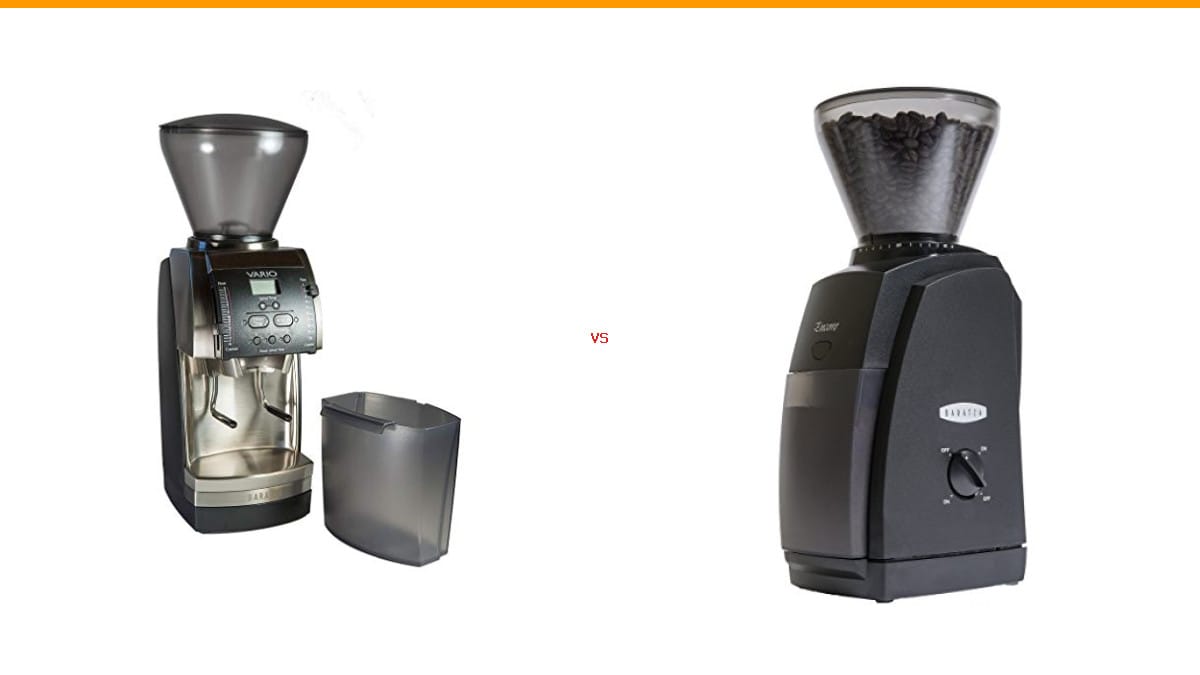
People ask me all the time whether they should buy a commercial coffee grinder for their home setup. The Baratza Vario-W and the Baratza Encore sit on opposite sides of that line, but they’re both made by the same Seattle company. That makes them a perfect pair for this comparison.
| Our Pick | Runner Up |

|

|
| Baratza Baratza Vario-W Grind by Weight Flat Burr… | Baratza Baratza Encore Conical Burr Coffee Grinder with… |
| See on Amazon | See on Amazon |
As an Amazon Associate I earn from qualifying purchases.
The Vario-W is the grinder that won a Specialty Coffee Association award. It has 54mm ceramic flat burrs made by Mahlkonig in Germany, a built-in scale, and 230 grind settings. The Encore is the entry-level workhorse that coffee experts recommend to beginners. It has 40 settings, conical burrs, and a simple pulse button. One costs roughly three times more than the other, and both are currently out of stock on Amazon, which tells you something about demand.
Here’s the short version: if you brew one or two cups a day and you’re still figuring out your pour-over game, the Encore is the smarter buy. If you’re pulling multiple espressos back to back, or you’re running a small café, the Vario-W’s grind-by-weight system and ceramic flat burrs will save you hours and coffee. But the decision isn’t just about price — it’s about workload, workflow, and how much you hate wasting beans.
The Real Difference Isn’t the Label—It’s the Workload
Calling something a “commercial” grinder doesn’t magically make better coffee. It means the machine is built to handle a certain volume without overheating, stalling, or losing grind consistency. The Vario-W is marketed for “home, office or light commercial use,” which is honest. It’s not a full café monster like a Mahlkonig K30. But it’s a big step up from the Encore in terms of duty cycle and precision.
The Encore is strictly a home grinder. Its 40 settings cover everything from fine espresso to coarse French press, but the motor and burr set are designed for short bursts. Grind for two minutes straight and you’ll feel the body heat up. The Vario-W’s DC motor and ceramic burrs handle longer sessions without complaint.
Your daily gram output is the deciding factor. A home user grinding 30 grams a day has totally different needs than a café pulling 2 kilos. The Vario-W is overkill for the first person and the Encore is inadequate for the second.
What Actually Defines a Commercial Grinder?
Duty Cycle and Motor Design
Duty cycle means how long a grinder can run before it needs to cool down. The Encore runs at 450 RPM with a combination of electric and gear speed reducers. That slow speed reduces noise and static, but it also means grinding 20 grams takes about 20 seconds. The Vario-W’s DC motor is more powerful and spins the ceramic burrs faster, so throughput is noticeably higher.
For a single dose at home, that difference is minor. For a busy morning where you’re pulling four shots and brewing a Chemex, the Vario-W’s speed becomes meaningful. You’re not waiting around, and the motor isn’t straining.
Burr Size and Geometry
The Encore uses conical burrs. The Vario-W uses 54mm ceramic flat burrs by Mahlkonig. Flat burrs generally produce a more uniform particle size distribution, which matters for espresso. Conical burrs are more forgiving and tend to produce a slightly rounder flavor profile for filter coffee.
Ceramic stays sharp longer than steel, and Mahlkonig is a legendary German burr manufacturer. That’s a real quality difference, not marketing fluff. But it only matters if you’re chasing the last 5% of extraction clarity. For most drip and pour-over drinkers, the Encore’s conical burrs taste great.
The 5 Critical Differences That Affect Your Coffee
Grind Speed vs. Grind Quality
The Vario-W grinds faster, but speed isn’t the whole story. The Encore’s slow 450 RPM burr speed actually helps reduce heat buildup and static cling. Heat degrades volatile aromatic compounds in coffee. So the Encore’s slow grind can produce a cleaner-tasting cup for filter methods, even though it takes longer.
The Vario-W’s flat burrs create a more uniform particle size, which gives you a higher extraction yield and a more balanced espresso shot. That’s the trade-off: speed and precision versus gentle handling.
Retention and Single-Dosing
Retention is the coffee that stays inside the grinder after you finish grinding. The Encore retains a few grams in the chute and under the burrs. The Vario-W, with its grind-by-weight system, is designed to hit your target weight on the dot, but it still retains some grounds internally.
For home users, retention matters because stale coffee mixes with fresh beans. If you grind 20 grams and 2 grams stay behind, you’re polluting the next dose. The Vario-W’s built-in scale compensates for this by grinding until the output weight matches your preset. The Encore doesn’t have that luxury — you’re guessing based on time or volume.
Thermal Stability Under Pressure
Grind 100 grams on the Encore and the burrs get warm. Warm burrs transfer heat to the coffee, which accelerates staling. The Vario-W’s ceramic burrs and more robust motor dissipate heat better. For back-to-back shots, the Vario-W stays cooler and more consistent.
That’s a genuine advantage for espresso, where temperature swings of even a few degrees can change extraction. For a single pour-over, you’ll never notice.
The Hidden Costs of Going Commercial at Home
People buy a commercial grinder thinking it’s the last grinder they’ll ever need. Then they realize it needs a 220V outlet, a dedicated circuit, and a countertop that can handle 30 pounds of steel. The Vario-W is not that extreme — it runs on standard 110V and weighs around 10 pounds. But it’s still bigger and heavier than the Encore.
The Encore weighs 7 pounds and measures 12x35x16 cm. It fits under most kitchen cabinets and doesn’t dominate your counter. The Vario-W is wider and taller, and the built-in scale adds complexity. If something breaks, the Encore is easier to fix yourself. Baratza is known for selling parts and providing excellent support, but the Vario-W’s scale mechanism is more delicate.
Power Requirements and Installation
Both grinders run on standard 110V in North America. The Encore draws 1 amp; the Vario-W draws more but still plugs into a regular outlet. No electrician needed. That’s not true for many full commercial grinders, which require 220V and can’t be installed in a typical home kitchen.
So the Vario-W is a “light commercial” grinder that respects its home audience. That’s a big reason it’s so popular. You get flat burrs and grind-by-weight without rewiring your house.
Noise, Footprint, and Serviceability
The Encore is quieter. The slow burr speed and gear reducers keep noise levels down, which matters if you grind coffee at 6 AM in a small apartment. The Vario-W is louder and more aggressive. It also has a larger footprint, so measure your counter space before buying.
Serviceability is a win for both. Baratza designs grinders that users can repair with basic tools. The Encore is simpler, so repairs are cheaper. The Vario-W’s scale and ceramic burrs are more expensive to replace, but they last longer.
The Prosumer Middle Ground: When to Cross Over
The “prosumer” category sits between home and commercial. The Vario-W is the perfect example. It has commercial-grade burrs and dosing precision, but it’s sized and priced for serious home users. If you pull multiple espresso shots daily, dial in different beans weekly, or host coffee tastings, the Vario-W is worth the jump.
If you’re mostly brewing drip coffee, French press, or the occasional pour-over, the Encore is all you need. The Vario-W’s grind-by-weight system is nice, but it’s not essential for filter coffee where a 0.5 gram variance won’t ruin your cup.
How to Calculate Your Daily Grind Volume (The 5-Minute Test)
Here’s a quick calculation to settle the debate. Track how many grams of coffee you grind each day for one week. Add up the total and divide by 7. That’s your average daily gram output.
- Under 30 grams/day: The Encore is plenty. You’re making 2-3 cups.
- 30-60 grams/day: The Vario-W’s speed and precision start to pay off, especially for espresso.
- 60-100 grams/day: You’re in light commercial territory. The Vario-W is the right choice.
- Over 100 grams/day: You need a full commercial grinder, not either of these.
Also consider your cost per kilogram. The Encore costs less upfront, but the Vario-W’s ceramic burrs last longer and grind more consistently. Over five years, the total cost of ownership might be closer than the sticker price suggests. Check the current price on Amazon for both models to do the math.
Decision Matrix: Which Grinder Should You Buy?
| Factor | Baratza Encore | Baratza Vario-W |
|---|---|---|
| Burr Type | Conical steel | 54mm ceramic flat (Mahlkonig) |
| Grind Settings | 40 | 230 |
| Dosing | Manual (pulse button) | Built-in scale, 3 presets |
| Motor Speed | 450 RPM | Higher RPM, more powerful DC motor |
| Best For | Drip, pour-over, French press, occasional espresso | Espresso, light commercial, high-volume home use |
| Retention | Moderate | Lower, compensated by scale |
| Noise | Quieter | Louder |
| Weight | 7 lbs | Heavier |
If you’re still deciding between burr types, read our guide on burr grinder vs blade to understand why burrs matter at all.
Final Verdict: Buy for the Workload, Not the Status
The Encore is the right choice for 80% of home coffee drinkers. It’s cheap, reliable, easy to use, and produces excellent filter coffee. The Vario-W is for the other 20% — the espresso enthusiasts, the small office managers, the home baristas who want café-level precision.
I’ve used both grinders side by side. The Vario-W’s grind-by-weight feature is genuinely addictive. Press a button, walk away, come back to exactly 18 grams. No fussing with a scale. But that convenience costs three times as much, and the Encore’s manual pulse button works fine once you learn your timing.
Don’t buy the Vario-W because it sounds more professional. Buy it because you actually grind enough coffee to justify it. If you’re not sure, start with the Encore. It holds its value, and you can always upgrade later. And when you do upgrade, keep the Encore as a backup or for cold brew — it’s that useful.
Before you buy, clean your current grinder so you’re starting fresh. Here’s our step-by-step guide on how to clean coffee grinder. And if you’re troubleshooting an old machine, check out this piece on Bodum grinder issues for general maintenance tips.
Frequently Asked Questions
Can the Baratza Encore grind for espresso?
Yes, but it’s not ideal. The Encore’s 40 settings include fine enough grind for espresso, and many beginners use it successfully with a pressurized basket. But the steps between settings are large, so dialing in a precise shot is frustrating. The Vario-W’s 230 settings give you the fine control espresso demands.
Is the Vario-W worth the extra money for drip coffee?
Probably not. For drip and pour-over, the Encore produces great results. The Vario-W’s flat burrs and grind-by-weight scale are overkill for filter methods. You’d be paying for precision you don’t need. Save the money for better beans.
How long do ceramic burrs last compared to steel?
Ceramic burrs, like the Mahlkonig ones in the Vario-W, typically last two to three times longer than steel conical burrs before needing replacement. They also stay sharper and don’t rust. However, they’re more expensive to replace and can shatter if you drop them or grind something hard like a stone.
Which grinder is easier to clean and maintain?
The Encore is easier. It has fewer parts and a simpler design. You can remove the upper burr and brush out the chamber in minutes. The Vario-W has the built-in scale and a more complex burr carrier, so cleaning takes longer and requires more care. Both need regular cleaning to prevent stale coffee buildup.
Products related to this article
Sponsored / affiliate links. As an Amazon Associate I earn from qualifying purchases. I may earn additional commission from eligible campaigns.
 Coffee Espresso Machine Handle Replacement Parts, Cafe Bracket Handle for Lidl Silvercrest CM4621 CM4218 KF5002 KF500S Barista (for 51mm Portafilter Basket - Not included)
 Quick Heating Cup Warmer, Three Temperature Settings, Splashproof and Portable, for Coffee, Milk, Lightweight ABS Material
 Coffee Mug Warmer & You are Awesome Mug Set, Electric Cup Warmer for Desk