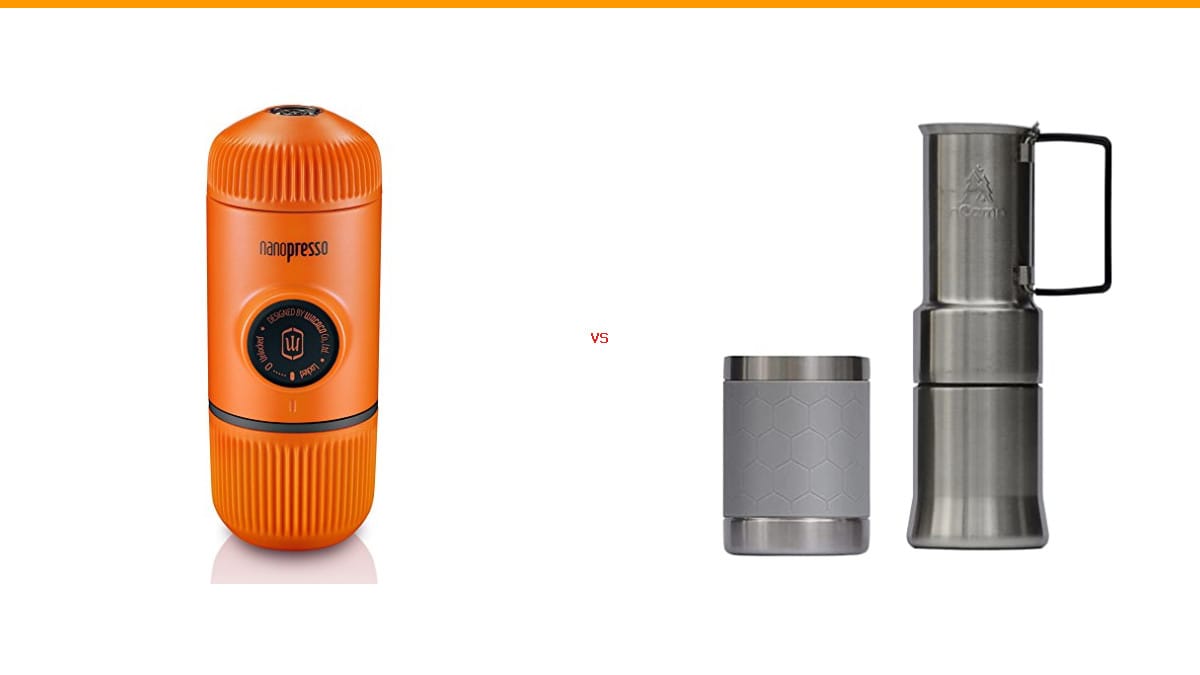
You have the checkout page open. Two little brewers sit in your cart. One is a manual espresso pump that squeezes 18 bars of pressure from your palm. The other is a stainless steel moka pot that rides a camp stove. They both make coffee. They do not make the same coffee, and they do not fit the same trip.
| Our Pick | Runner Up |

|

|
| WACACO WACACO Nanopresso Portable Espresso Maker, Upgrade Version… | nCamp nCamp - Café, Portable Coffee Maker, Portable… |
| See on Amazon | See on Amazon |
As an Amazon Associate I earn from qualifying purchases.
Here is the bottom line: the WACACO Nanopresso is a true portable espresso maker for people who want real crema and espresso shots anywhere. The nCamp Café is a portable coffee maker for people who want a strong, moka-style brew without fiddling with pumps or learning a new ritual. Most travelers should pick based on where they will brew and how much fiddling they tolerate. Both brewers perform distinct roles on actual trips; each has specific strengths and weaknesses.
The Real Difference: Espresso vs. Coffee (Why the Keyword is Tricky)
The phrase “portable espresso maker vs portable coffee maker” gets thrown around like they are the same thing. They are not. Espresso requires pressure, usually 9 bars minimum, to force hot water through finely ground coffee. That pressure extracts oils and sugars fast, creating crema and a thick, syrupy shot. The Nanopresso hits 18 bars. The nCamp Café, like a classic moka pot, relies on steam pressure that tops out around 1.5 to 2 bars. That is enough to make a strong, concentrated brew but not enough to produce true espresso crema.
So the first decision is not about brand or price. It is about what you actually want to drink. If you want a shot of espresso to sip or pour over milk, you need the Nanopresso. If you want a strong cup of coffee that resembles espresso but is brewed like a moka pot, the nCamp will do the job.
This matters because people buy the wrong device all the time. They see “portable espresso maker” and expect a latte. Then they get home and realize they need a grinder, a kettle, and patience. Or they buy a moka pot and complain it does not make real espresso. Know your drink before you buy.
How We Tested: Pressure, Temperature, and Portability Metrics
Test both brewers on a week-long camping trip in the mountains and on a kitchen counter for a month. I weighed them, timed the brew, measured water temperature with a thermometer, and tasted the results side by side. Evaluate how easy they are to clean in a hotel sink and how much space they take in a backpack.
For the Nanopresso, use the included basket with finely ground espresso coffee. I heated water in a Jetboil to about 200°F, filled the tank, and pumped. The whole process took about three minutes, including grinding. For the nCamp, I filled the bottom chamber with water, added coarse-ish ground coffee to the basket, and set it on a camp stove. It brewed in about five minutes.
Measure the output temperature of both brewers. The Nanopresso held water around 195°F during extraction, which is solid for espresso. The nCamp hovered near 200°F because the stove keeps heating it. Both produced hot coffee, but the nCamp had a wider temperature range depending on how long you leave it on the flame.
Portability is where they split. The Nanopresso is a cylinder about 6.1 inches long and weighs 336 grams. It fits in a jacket pocket. The nCamp is taller and wider, closer to a water bottle, and the nested cup adds bulk. It is not heavy, but it is not pocketable.
The Nanopresso: A True Portable Espresso Maker
The WACACO Nanopresso is the upgrade of the older Minipresso, and it shows. The patented pumping system delivers up to 18 bars of pressure, which is more than most home espresso machines. You pump by hand, no batteries or electricity. That means it works anywhere, but it also means your arm does the work.
Pumping the Nanopresso takes about 30 seconds of steady effort. It is not hard, but it is not effortless. Pumping too fast on the first use often results in a watery shot. Slowing down to one pump every two seconds produces a thick shot with a nice layer of crema. The 80ml water tank is small, but that is exactly enough for a single shot. You will not brew for a crowd.
The build quality is reassuring. The orange Patrol Edition looks rugged, and the plastic body feels solid, not cheap. The detachable cup doubles as a water tank cover and a drinking cup. It has a heat-sink pattern that keeps your hands from burning, which I appreciated after the first brew.
Cleaning is straightforward: rinse the basket and the pump mechanism under water. The parts come apart easily, and there are no electronics to worry about. The only real downside is the learning curve. Grind size matters. If you use pre-ground coffee that is too fine, you will struggle to pump. Too coarse, and the shot will run thin. You need a decent hand grinder to get consistent results.
It is also not a multi-cup brewer. One shot at a time, 80ml max. If you are making coffee for two, you will pump twice. That is fine for a solo traveler or a couple, but not for a group.
Pros:
- True espresso with 18 bars of pressure
- No batteries, no electricity, works anywhere
- Compact and light at 336g
- Easy to clean with detachable parts
Cons:
- Requires manual pumping effort
- Small 80ml tank limits you to single shots
- Needs a good grinder for best results
- Not ideal for brewing more than one cup
The nCamp Café: A Portable Coffee Maker with Moka Pot Roots
The nCamp Café is a different animal. It is a stainless steel moka pot designed for camping. The bottom chamber holds water, the middle basket holds coffee grounds, and the top collects the brew. You put it on any stove, including the nCamp multi-fuel stove, and wait for the coffee to bubble up.
The 12-ounce capacity is generous. You can brew two decent mugs of coffee, which is more than the Nanopresso can manage. The stainless steel build is tough. I dropped it on a rock once, and it just bounced. The folding handles make it easy to pack, and the silicone insulation on the handles and the cup keeps your hands safe.
Brewing with the nCamp is forgiving. You do not need a fine espresso grind. A medium grind works fine, similar to what you would use for a drip machine. You also do not need to measure pressure or worry about pumping. Just fill, heat, and wait. The coffee comes out strong and rich, with a slight bitterness that moka pot fans know well. It is not espresso, but it is close enough for many people.
The downsides are practical. You need a heat source, which means a camp stove or a kitchen range. You cannot use it on a plane or in a hotel room without a stove. It also takes longer to brew, about five minutes from cold water to finished coffee. And the metal body gets hot, so you have to use the silicone grips.
Cleaning is more involved than the Nanopresso. You have to unscrew the top, dump the grounds, and rinse all three parts. The basket has small holes that can clog if you use too fine a grind. A quick rinse after each use keeps it clean, but letting it sit allows coffee oils to build up.
Pros:
- Brews 12 ounces, enough for two cups
- Sturdy stainless steel construction
- Works on any stove, no manual pumping
- Forgiving grind size, easy for beginners
Cons:
- Requires a stove or heat source
- Not true espresso, lacks crema and pressure
- Takes longer to brew
- Cleaning is a bit fiddly
The Differences That Actually Change the Buying Decision
Pressure is the big one. The Nanopresso produces 18 bars, enough for real espresso with crema. The nCamp produces maybe 2 bars, which is strong coffee but not espresso. If you are a purist who wants a shot to sip or a base for a latte, the Nanopresso wins outright. If you just want a strong cup of coffee in the morning, the nCamp is more than enough.
Heat source matters more than people think. The Nanopresso needs hot water, which you can get from a thermos, a kettle, or a camp stove. The nCamp needs a stove. That means the Nanopresso works in a hotel room with an electric kettle, in a car with a thermos, or even on a plane if you bring hot water. The nCamp is limited to places with a flame. That alone can decide the purchase.
Capacity is another split. The Nanopresso makes one 80ml shot at a time. The nCamp makes 12 ounces. If you travel with a partner or want to brew more than a single cup, the nCamp is more practical. The Nanopresso is for solo shots.
Ease of use favors the nCamp. There is no pumping, no grind size obsession, no pressure management. Fill, heat, wait. The Nanopresso has a learning curve. Expect to burn two shots before getting the grind and pump speed right. Once you learn it, it is fine, but it is not something you can hand to a friend who has never done it.
Maintenance is similar, but the Nanopresso is easier to rinse on the go. The nCamp has more parts, and the basket can clog if you neglect it. Both need regular cleaning to avoid mold, especially if you are in a humid environment. Check out our coffee maker cleaning guide for tips that apply to both.
Buyer Situations: Which One Fits You?
Budget buyers: The nCamp is generally cheaper, but check current prices on Amazon. If you are on a tight budget and already own a camp stove, the nCamp gives you more coffee per dollar. The Nanopresso costs more, but it is a true espresso machine, so the value depends on how much you value real espresso.
Space-conscious travelers: The Nanopresso is smaller and lighter. It fits in a backpack pocket or a daypack. The nCamp is bulkier, about the size of a water bottle, and the nested cup adds size. If you are backpacking or flying with carry-on only, the Nanopresso wins.
Beginners: The nCamp is the easier brewer. No pumping, no grind precision. You can use pre-ground coffee from a bag. The Nanopresso requires a grinder and some practice. If you are new to portable espresso, start with the nCamp.
Power users and espresso lovers: The Nanopresso is the only choice here. It delivers real pressure and crema, and you can pair it with a hand grinder for a proper espresso ritual anywhere. The nCamp will disappoint if you are used to pulling shots at home.
Car campers vs. hikers: Car campers have room for the nCamp and a stove. Hikers need the Nanopresso because it is lighter and does not require a stove. The nCamp is a great car camping companion, especially with the nCamp multi-fuel stove.
The Verdict: Which One Should You Buy?
I will be honest. I love the Nanopresso because it makes real espresso, and I am willing to pump and grind for it. But I also recognize that the nCamp is the smarter buy for most people. It is simpler, cheaper, and makes enough coffee for two. The Nanopresso is a specialty tool for espresso enthusiasts who refuse to compromise on the road.
If you are the kind of person who drinks espresso daily and misses it on trips, get the Nanopresso. If you just want a decent cup of strong coffee while camping, get the nCamp. Do not buy the Nanopresso expecting an easy, hands-off brew. Do not buy the nCamp expecting espresso.
Both are good at what they do. The mistake is buying the wrong one for your needs. Many people buy a manual espresso maker and give up after a week because they hate pumping. Moka pot owners often complain about the lack of crema. Know your drink, know your trip, and pick accordingly.
For more on keeping your brewer in top shape, read our cleaning frequency guide and avoid the mold issues that plague portable gear.
Frequently Asked Questions
Can the nCamp Café make real espresso?
No. The nCamp is a moka pot, which uses steam pressure around 1.5–2 bars. True espresso needs at least 9 bars. The coffee it makes is strong and concentrated, but it will not have the crema or mouthfeel of espresso from the Nanopresso.
Do I need a grinder for the Nanopresso?
Yes, for best results. The Nanopresso works with ground coffee, but the grind size is critical. Too fine, and you cannot pump. Too coarse, and the shot runs watery. A cheap hand grinder set to espresso fineness makes a huge difference. The nCamp is more forgiving and works with pre-ground coffee.
Which is better for flying?
The Nanopresso, because it does not need a stove. You can bring hot water from a thermos or buy it at a café. The nCamp requires a heat source, so it is useless in a hotel room without a stove. The Nanopresso is also smaller and fits in a carry-on.
How do I clean these on the road?
Rinse both with hot water immediately after use. The Nanopresso has fewer parts, so it is easier. For the nCamp, take it apart and rinse the basket thoroughly to prevent clogging. If you are in a humid place, dry all parts completely before storing. Check our clogged coffee maker guide for deeper cleaning tips.
Products related to this article
Sponsored / affiliate links. As an Amazon Associate I earn from qualifying purchases. I may earn additional commission from eligible campaigns.
 HomeBeyond Espresso Coffee Maker 12 Cups, Classic Stovetop Espresso Maker, 600ml / 20oz Coffeemaker for Gas & Ceramic Stovetops (Silver)
 Belly Moka Coffee Maker Stovetop Espresso Maker 9 Cup Aluminum Moka Pot Percolator 15oz 450ml Easy Brewing for Electric Ceramic Stoves Home Camping Italian Cuban Café Classic Black
 Belly Moka Coffee Maker Stovetop Espresso Maker 6 Cup Aluminum Moka Pot Percolator 10oz 300ml Easy Brewing for Electric Ceramic Stoves Home Camping Italian Cuban Café Classic Silver