You just ground 18 grams of beans directly into your portafilter. You pull the portafilter out from under the grinder chute, and a fine dusting of coffee grounds sprays across your counter. You sweep it into the sink, tap the portafilter, and realize the grounds are lopsided. This is the daily reality for many home baristas who skip the espresso dosing cup vs espresso dosing funnel decision entirely.

Normcore
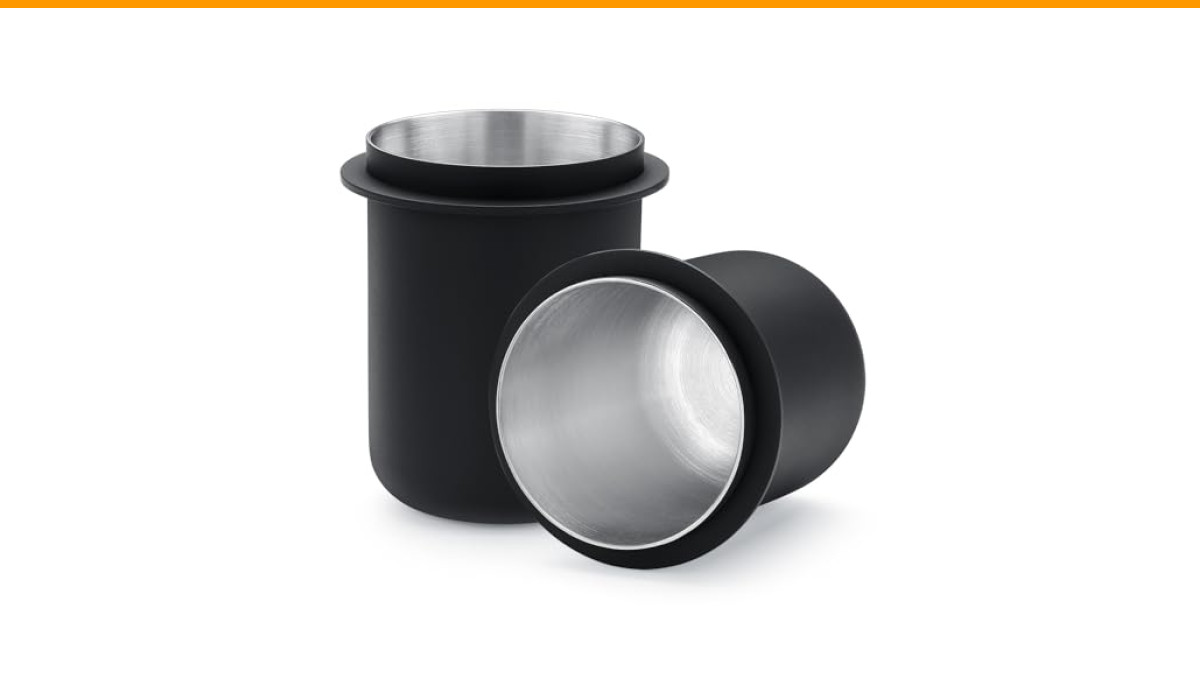
Normcore 58mm Dosing Cup - Espresso Coffee…
- WIDE MOUTH - The mouth is a perfect match for most portafilters and grinders. and makes for easy transfer of grounds.
- SINGLE DOSING PRECISION – Much faster for weighing individual doses, and helps distribute grounds in the portafilter more evenly,…
- PREMIUM MATERIALS – Made of food-grade 304 stainless steel, to be used daily, for every shot, and last a lifetime.
As an Amazon Associate I earn from qualifying purchases.
The truth is, both tools solve the same core problem: keeping coffee grounds where they belong. But they do it in completely different ways. A dosing cup catches grounds as they leave the grinder. A dosing funnel sits on top of your portafilter and keeps grounds contained while you grind directly into the basket. Each approach has strengths and weaknesses that depend heavily on your grinder type and your tamping style.
This guide breaks down the real-world differences, so you can decide which tool (or which combination) makes sense for your setup. We tested the Normcore 58mm Dosing Cup alongside several popular funnels to see where each one earns its place.
The Core Difference: Containment vs. Transfer
A dosing funnel is a containment tool. It locks onto your portafilter basket and creates a wall around the rim. You grind directly into the basket through the funnel, and the walls keep the grounds from spilling over the edge. You then remove the funnel and tamp.
A dosing cup is a transfer tool. You grind your beans into the cup first, weigh the grounds, then pour them into the portafilter basket. The cup acts as a go-between, letting you verify your dose weight before anything touches the basket.
This distinction matters more than you might think. With a funnel, you are committed to grinding directly into the portafilter. With a cup, you can grind, weigh, adjust, and then transfer. The cup gives you a pause point in the workflow. The funnel gives you a faster, more direct path from grinder to tamp.
The Normcore 58mm Dosing Cup we tested is the tall version, which means it holds a generous volume of grounds without needing to be filled to the brim. The wide mouth matches most 58mm portafilters and grinder chutes, making the transfer step less fiddly than it sounds.
When a Dosing Cup is the Better Choice
If you own a single-dose grinder, a dosing cup is almost mandatory. Here is why.
Grind Retention and Single Dosing
Single-dose grinders like the Niche Zero or DF64 retain a few tenths of a gram of old grounds inside the chute. When you grind your next dose, those stale grounds mix with the fresh ones. A dosing cup placed under the chute catches everything, including the retained grounds that fall out after the main grind finishes.
This is a significant advantage. With a funnel, you would need to hold the portafilter under the chute for the entire grind, including the tail end where retained grounds pop out. That is awkward, especially if your grinder has a tall chute or a deep portafilter fork.
The Normcore cup is made of food-grade 304 stainless steel with a non-stick coating. The coating matters because static cling is a real problem with single-dose grinding. A quick spray of water on the beans before grinding reduces static, and the non-stick surface means most of the grounds slide right into the portafilter when you pour.
Weighing Accuracy on a Scale
Weighing your dose before it hits the portafilter is the most accurate way to dial in. With a dosing cup, you place the empty cup on your scale, tare it, grind into the cup, and read the weight. If you are over or under, you can add or remove beans before anything touches the basket.
With a funnel, you are weighing the entire portafilter on the scale, which is heavier and more cumbersome. Many home scales have a maximum capacity around 2 kilograms. A heavy portafilter plus funnel plus grounds can approach that limit, reducing accuracy.
The Normcore cup is lightweight, so it does not eat into your scale’s capacity. You get a precise reading every time, which is the foundation of consistent espresso puck prep.
When a Dosing Funnel is the Better Choice
Funnels shine in a different part of the workflow. If you prefer grinding directly into the portafilter and tamping in place, a funnel is your tool.
Tamping Stability and Mess-Free Tamping
With a funnel, the grounds stay in the basket from start to finish. You grind, remove the funnel, and tamp. There is no transfer step, which means fewer opportunities for grounds to scatter.
Funnels also help with distribution. If you use a WDT tool to break up clumps, a funnel gives you a wider opening to work with. You can stir the grounds without worrying about them spilling over the rim of the portafilter. This is a big deal if you have ever tried to WDT a shallow basket without a funnel and ended up with coffee on your counter.
The trade-off is that you need to remove the funnel before tamping. Tamping through a funnel is possible, but it compresses the grounds unevenly because the funnel walls interfere with the tamper’s path. A standard 58mm tamper will not fit through most funnels, so you are stuck doing a two-step process anyway.
Compatibility with Portafilter Spouts
Some portafilters have spouts that angle outward. A funnel with a magnetic base or a snug fit can sit securely on top of these spouts without wobbling. This is less of an issue with a dosing cup, which you hold in your hand rather than attach to the portafilter.
Funnels also work well with hopper grinders. If you grind on demand and your grinder has a timed dose, you can place the portafilter with funnel under the chute, hit the button, and walk away. The funnel catches any stray grounds that bounce off the basket.
The Hybrid Workflow: Using Both Together
You do not have to choose. Many experienced home baristas use both tools in sequence.
Here is the workflow that works best: grind into the dosing cup, weigh the grounds, then pour them into the portafilter with a funnel attached. The funnel catches any grounds that miss the basket during the pour. You then remove the funnel, WDT the grounds, and tamp.
This hybrid approach gives you the weighing accuracy of a cup and the spill prevention of a funnel. The downside is extra steps. You are handling two tools instead of one, which adds time to your routine. But for those who value precision over speed, the hybrid method is the gold standard.
We tested this workflow with the Normcore cup paired with a standard magnetic funnel. The wide mouth of the Normcore cup poured cleanly into the funnel without bridging or clogging. The non-stick coating helped the grounds slide out in one smooth motion.
Material and Build Quality: What to Look For
Not all dosing cups and funnels are created equal. The cheap plastic cups warp over time. The thin aluminum funnels dent when you drop them. You want tools that can handle daily use.
The Normcore 58mm Dosing Cup is built from food-grade 304 stainless steel. That is the same material used in high-end cookware. It will not rust, corrode, or absorb odors. The non-stick coating is the key feature here. Coffee grounds contain oils that can stick to bare metal, leaving a residue that builds up over time. The coating minimizes that residue, so a quick rinse or a trip through the dishwasher keeps it clean.
One thing to note: the non-stick coating means you should avoid using metal utensils or abrasive scrubbers on the inside. A soft sponge and warm water are all you need.
Sizing Guide: 54mm vs. 58mm vs. 51mm
Size compatibility is the most common mistake people make when buying dosing tools. You need to match the tool to your portafilter basket diameter.
Most commercial and prosumer machines use 58mm baskets. This includes brands like Bezzera, Rocket, Sage, Breville, ECM, La Marzocco, and E61 machines. The Normcore cup we tested is designed for 58mm portafilters, so it fits this category.
Breville’s home machines, like the Barista Express and Bambino, use a 54mm basket. A 58mm cup or funnel will not fit these. You need to look for 54mm-specific tools.
Some older Italian machines, like certain La Pavoni models, use 51mm baskets. These are less common but still out there. Always measure your basket’s inner diameter before ordering.
The Normcore cup’s wide mouth is designed to match 58mm portafilters and most grinder chutes. If you have a grinder with a narrow chute, the wide mouth still works because you are pouring from the cup, not grinding through it.
Frequently Asked Questions
Can I tamp directly through a dosing funnel?
You can, but you should not. A standard 58mm tamper will not fit through most funnels because the funnel walls reduce the opening. You would need a smaller tamper, which would leave a gap between the tamper edge and the basket wall. That leads to uneven compaction and channeling. Remove the funnel before tamping.
Does a dosing cup replace a WDT tool?
No. A dosing cup gets the grounds into the basket, but it does not break up clumps or distribute the grounds evenly. You still need a WDT tool to stir the grounds and eliminate clumps before tamping. The cup solves the transfer problem, not the distribution problem.
Verdict: Which One Should You Buy First?
Start with a dosing cup if you use a single-dose grinder or if you weigh your doses on a scale. The Normcore 58mm Dosing Cup is a solid choice because it is built from durable stainless steel, has a non-stick coating that makes cleanup easy, and its wide mouth fits most 58mm setups. The tall version gives you extra capacity, which is useful if you grind into the cup directly from a grinder with a tall chute.
Start with a dosing funnel if you grind directly into the portafilter and want to keep your counter clean during WDT and tamping. Funnels are generally cheaper than cups, so they are a low-risk first purchase.
The honest answer is that most home baristas eventually end up with both. The cup handles weighing and transfer. The funnel handles containment and distribution. Together, they cover the entire workflow from bean to tamp.
If you are still figuring out your overall setup, check our guide on automatic vs semi-automatic machines to see which platform fits your style. And if you are troubleshooting bitter shots, our article on why espresso tastes burnt might save you from buying new gear altogether.
For most people, the dosing cup is the better first purchase because it solves the messiest part of the workflow: getting grounds from the grinder to the basket without losing a single gram. The Normcore 58mm Dosing Cup does that job well, and it is built to last.
Ready to buy? Check the latest price on Amazon