You just finished pulling three shots for a morning latte, and the knock box is full. It sits there on your counter, stained with coffee oils, crumbs stuck to the rubber base. The dishwasher is right there. You think, it’s basically a bowl, right? So you toss it in, run the cycle, and pull it out an hour later. The steel looks dull. The rubber base has a white film. The plastic lid has warped just enough that it doesn’t snap on anymore.
That scene plays out in thousands of kitchens every year. The truth is that most espresso knock boxes should never see a dishwasher cycle, but a few are fine. The difference comes down to materials, construction quality, and how the manufacturer finished the surfaces. This guide gives you a 10-second verdict for your specific knock box, explains the science behind the damage, and shows you a hand-washing method that actually takes less time than loading the machine.
You’ll walk away knowing exactly what to do with your current box, how to shop for a new one if you need to, and what to do if you already ruined one.
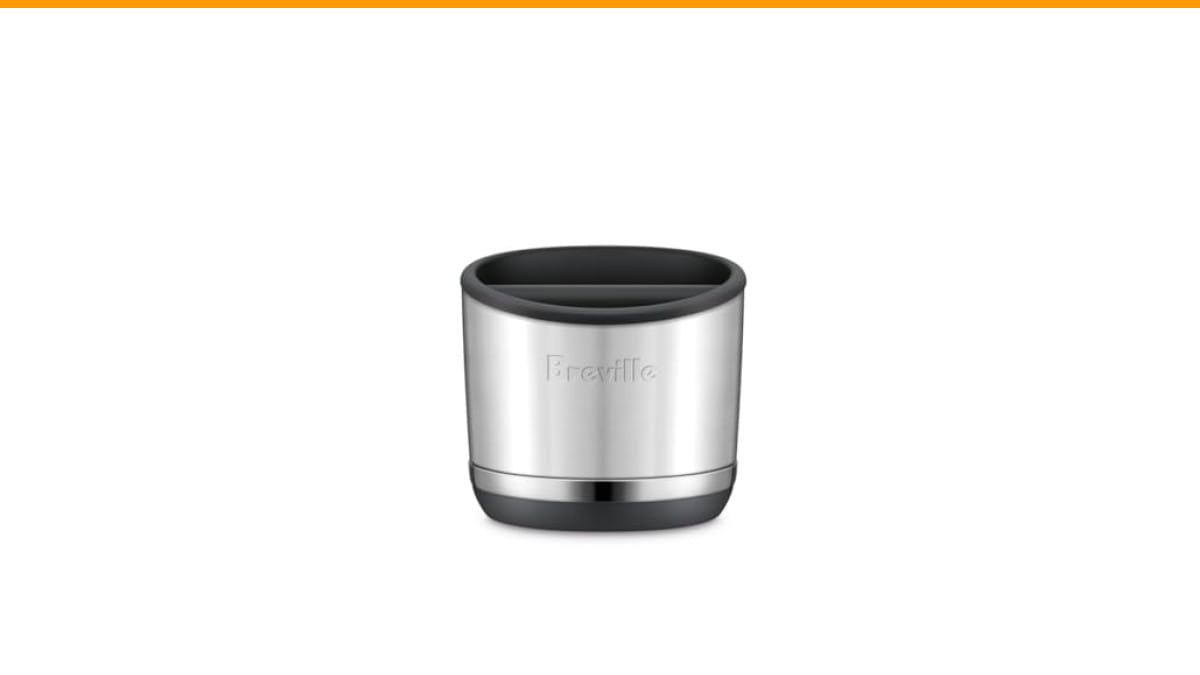
The Breville Knock Box 10 is a good example of a mid-range box that sits in the gray zone. Its brushed stainless steel body looks tough, but the plastic inner vessel and rubber base need care. Breville includes a removable knock bar specifically so you can clean the inside without forcing the whole thing into a machine cycle. That design choice tells you a lot about what the manufacturer expects.
The Short Answer: It Depends on the Material
Here’s the quick breakdown before we dig into details. You can use this as a rule of thumb for any knock box you own or are considering.
- All-metal (single-piece stainless steel): Risky but sometimes survivable. The steel itself handles heat fine, but the finish can dull and the rubber base will degrade.
- Plastic or ABS body: Usually safe on the top rack, but check for a dishwasher-safe symbol. Thin plastic warps.
- Wood or bamboo: Never safe. Ever. The heat and moisture will crack the wood and ruin the finish.
- Rubber base or gaskets: Never safe. High heat breaks down rubber compounds and leaves a sticky film.
If your box has mixed materials, the weakest component wins. A stainless steel body with a rubber base is not dishwasher safe, because the base will fail even if the steel looks fine.
Why Dishwashers Destroy Most Knock Boxes (The Science of Heat and Detergent)
Two things work against your knock box in a dishwasher: heat and alkaline detergent. Both are far more aggressive than people realize.
Dishwasher cycles run between 120°F and 160°F (49°C to 71°C) during the wash and rinse phases. The drying cycle can push higher. That temperature range is fine for ceramic and glass, but it’s brutal for plastics and rubber. ABS plastic starts to soften around 220°F (104°C), so it won’t melt in a normal cycle, but it will warp and lose its shape over repeated washes. The heat also accelerates the breakdown of rubber compounds, which is why your base gets sticky and gummy after a few cycles.
The detergent is the bigger problem. Dishwasher detergents are highly alkaline, with a pH around 10 to 12. They’re designed to break down proteins and fats, which is great for food residue but terrible for metal finishes. The alkalinity attacks the protective oxide layer on stainless steel, causing pitting and dulling. On cheaper steel, it can even cause rust spots. That’s why your brushed finish looks cloudy after a cycle.
There’s also the mechanical factor. The knock bar inside your box holds coffee grounds with a rough, textured surface. In the dishwasher, that bar bounces against the body and the racks. The motion can scratch the interior finish, especially on painted or coated boxes.
So it’s not one big catastrophic failure. It’s cumulative damage. Each cycle takes a little bit off the finish, a little bit off the rubber, a little bit off the plastic. You might not notice after one wash, but after twenty, the box looks tired and feels cheap.
Material-by-Material Dishwasher Safety Guide
Stainless Steel (The Gray Area)
Stainless steel is the most common knock box material, and it’s the one people most often assume is dishwasher safe. The steel itself can handle the heat without structural damage, but the finish is the issue.
Brushed stainless steel has a directional grain that gives it that matte look. Dishwasher detergent and the abrasive action of water jets can wear down that grain over time, leaving dull patches. You’ll notice it most on the sides and the lid, where water pools and detergent concentrates.
There’s also the question of steel quality. A cheap knock box might use 201-grade stainless steel, which contains less nickel and chromium than the 304-grade used in better kitchen gear. Lower-grade steel is more prone to pitting and rust when exposed to alkaline detergent. You can test this yourself by looking for rust spots after a few cycles. If you see them, the steel is low-grade and the box is done.
My recommendation: if your stainless steel knock box has a separate rubber base or plastic insert, don’t risk it. If it’s a single-piece welded steel box with no other materials, you can run it on the top rack occasionally, but hand washing is still better.
Plastic and ABS (Usually Safe, But Check)
Plastic knock boxes are the budget option, and they’re also the most likely to be dishwasher safe. But that label only applies to certain plastics.
Look for the dishwasher-safe symbol on the bottom, which is a square with a plate and cups inside. If you see that, the plastic is rated for high heat. Polypropylene (PP) and high-density polyethylene (HDPE) are common in food storage and handle dishwasher cycles fine. ABS is less predictable, and thin ABS walls will warp.
Here’s the catch: the knock bar is usually metal, even on plastic boxes. That metal bar will survive the cycle, but the plastic rivets or screws holding it in place may not. They can loosen or crack with thermal expansion and contraction.
If you have a plastic box with a removable bar, take the bar out before washing. Wash the plastic body on the top rack, away from the heating element, and hand wash the bar separately.
Wood and Rubber (Never Safe)
This one is not a gray area. Wood and rubber do not belong in a dishwasher, and I’ll tell you why directly.
Wood is porous. The hot water and detergent get inside the grain, and the heat causes the wood to expand and contract unevenly. That leads to cracking, splitting, and warping. The finish will peel or bubble, and the wood will absorb coffee oils and odors permanently. Once that happens, there’s no fixing it.
Rubber is just as bad. The high heat breaks down the polymer bonds, making the rubber soft, sticky, and eventually brittle. A rubber base that used to grip your countertop will slide around. A rubber gasket will lose its seal. The white film you see on rubber after a dishwasher cycle is the plasticizers leaching out, and that process is irreversible.
If your knock box has a wooden handle or a rubber base, keep it out of the machine. Period.
The “If You Must” Dishwasher Protocol (Minimizing Damage)
Maybe you’re reading this and thinking, I don’t care, I’m still going to do it. Fine. Here’s how to minimize the damage if you absolutely have to run a knock box through the dishwasher.
- Disassemble everything. Remove the knock bar, the lid, and any rubber base or gasket. Wash those parts by hand, even if you machine-wash the rest.
- Use the top rack only. The bottom rack is closer to the heating element and gets more intense heat. The top rack is safer for plastics and lighter materials.
- Skip the heated dry cycle. Turn off the drying cycle or open the door as soon as the wash and rinse finish. The residual heat from drying is what causes most warping and rubber damage. Let the box air dry instead.
- Use a gentle detergent. Powdered detergents are more abrasive than liquid or gel. If you have a choice, use a phosphate-free, less alkaline formula. It won’t be as harsh on the finish.
- Run a short cycle. Many dishwashers have a quick or eco cycle that uses lower temperatures and less time. That’s the best option if you have to use the machine.
- Inspect after every wash. Look for warping, rust, dull spots, or a sticky rubber feel. If you see any of those, stop machine-washing immediately. The damage is cumulative, and you’re just making it worse.
This protocol won’t make the dishwasher safe for your knock box. It just reduces the speed at which the machine destroys it.
The Better Way: A 30-Second Hand-Washing Routine That Beats the Machine
Here’s the thing people don’t realize: hand washing a knock box is genuinely faster than loading and unloading the dishwasher. You don’t need to scrub anything. You need hot water and a few seconds of attention.
Here’s the routine I use in my own kitchen:
- Rinse immediately after emptying. The moment the box is empty, run hot water over the inside. This washes away the loose grounds before they dry and cake on.
- Soak if needed. If coffee oils have dried on the walls, fill the box with hot water and a drop of dish soap. Let it sit for two minutes while you do something else.
- Wipe, don’t scrub. Use a soft sponge or a bottle brush. Coffee residue comes off easily after a soak. Scouring pads will scratch the finish, so skip them.
- Dry with a towel. Air drying leaves water spots, especially on stainless steel. A quick wipe with a dish towel prevents spots and keeps the finish looking new.
- Wash the knock bar separately. The bar holds grounds in its texture. Rinse it under hot water and use a stiff brush to dislodge any stuck particles.
That whole process takes about 30 seconds if you do it right after emptying the box. If you let it sit all day, it takes two minutes because of the soak. Either way, it’s less time than the dishwasher cycle.
If you’re dealing with a stubborn coffee stain that won’t come off with soap, a paste of baking soda and water works well. Apply it with a soft cloth, let it sit for a few minutes, then rinse. That’s about the only time you need anything beyond dish soap.
How to Tell If Your Knock Box Is Dishwasher-Safe (Without a Manual)
Most people don’t keep the manual for a knock box. I don’t blame you. Here’s how to figure out if yours can handle the machine, using a few simple tests.
Check for a dishwasher symbol. Flip the box over and look at the bottom. The dishwasher-safe symbol is a square with a plate and a glass inside. If you see it, the manufacturer has tested the material and deemed it safe. If you don’t see it, assume it’s not safe.
Do the magnet test. This works for stainless steel. A magnet that sticks strongly indicates a lower-grade steel, often 430 or 201 grade, which is more prone to rust and pitting. A magnet that barely sticks or doesn’t stick at all suggests 304-grade steel, which is more corrosion-resistant. This isn’t a perfect test, but it’s a good indicator of quality.
Look for seams and joints. A knock box made from a single piece of metal is more likely to survive a dishwasher than one with welded seams, rivets, or glued joints. Heat and moisture attack the weakest points, and seams are where failure starts.
Check the finish. Mirror-polished steel is more vulnerable to water spots and detergent etching than brushed steel. If the finish is already showing dull spots or fingerprints, the dishwasher will make it worse.
Consider the age. Older knock boxes used more metal and less plastic. A vintage box from the 1980s might be heavy and solid, but its rubber parts have already aged and are more fragile. Age makes the dishwasher riskier, not less.
What to Do If You Already Ruined It (Rust, Cracks, or Warping)
So you ignored the warnings and ran it through the machine. Now what? It depends on the damage.
Rust spots on stainless steel: You can often remove light rust with a paste of baking soda and water. Rub it gently with a soft cloth, rinse, and dry. If the rust has pitted the steel, that’s permanent. The pits will collect coffee oils and rust again. At that point, the box is done.
Dull or cloudy finish: This is cosmetic, not structural. You can restore some shine with a stainless steel cleaner, but the protective layer is already compromised. The box will be more prone to future staining. It’s still usable, just not pretty.
Warped plastic: A warped lid or body won’t seal correctly. If the box is a two-piece design, you can sometimes replace just the warped part. If it’s a one-piece plastic box, there’s no fix. Replace it.
Sticky rubber base: Once rubber has gone gummy from heat, it stays that way. You can try wiping it with isopropyl alcohol to remove the surface film, but the base will continue to degrade. It will eventually crack and fall apart.
Cracked wood: No repair. Wood that has split from heat exposure is structurally compromised. Replace it.
If you’re replacing a ruined box, the Breville Knock Box 10 is a solid option to consider. Its removable knock bar and plastic inner vessel mean you can clean the inside without risking the whole unit in the machine. Check the current price on Amazon if you’re in the market.
Frequently Asked Questions
Can I put my espresso knock box in the dishwasher if it’s labeled stainless steel?
Only if it’s a single-piece steel box with no rubber or plastic parts. Even then, the alkaline detergent will dull the finish over time. The label “stainless steel” refers to the material, not the dishwasher safety. Check for the actual dishwasher-safe symbol.
Will the dishwasher ruin the knock bar?
It can. The knock bar is usually metal, but it’s often attached with plastic rivets or held in place by a rubber gasket. The heat can loosen those connections. The bar itself might survive, but the mounting points may not. Remove the bar before machine washing.
Why did my knock box get a white film after the dishwasher?
That’s the rubber plasticizers leaching out. The high heat breaks down the rubber compounds, and the white film is the chemical residue. It’s a sign of permanent damage. The rubber will continue to degrade and eventually become sticky or brittle.
How many times can I run a knock box through the dishwasher before it breaks?
There’s no fixed number. It depends on the material quality and the dishwasher cycle. A cheap plastic box might warp after two cycles. A good stainless box might look dull after ten. The damage is cumulative, and you won’t notice it until it’s too late. That’s why hand washing is the safer choice.
Can I use a dishwasher pod instead of liquid detergent for my knock box?
Pods are more concentrated than liquid detergent, which means they’re more alkaline and more corrosive. If you’re going to risk the dishwasher, use a mild liquid detergent in a smaller amount. Pods will accelerate the damage to metal finishes and rubber parts.
What You Actually Need to Remember
- Most knock boxes are not dishwasher safe. The heat and alkaline detergent cause cumulative damage to steel finishes, plastic parts, and rubber bases.
- Check for the dishwasher-safe symbol on the bottom. If it’s not there, assume the box is hand-wash only.
- Single-piece stainless steel boxes are the only type that might survive a dishwasher cycle, and even they will dull over time.
- Wood and rubber are never safe in the dishwasher. No exceptions.
- Hand washing takes 30 seconds if you do it right after emptying. Rinse, soak, wipe, dry. That’s it.
- If you already ruined a box, light rust can be removed with baking soda paste, but warped plastic and sticky rubber are permanent.
- When shopping for a new knock box, look for a removable knock bar and a design that allows easy hand cleaning. The Breville Knock Box 10 fits that criteria with its detachable bar and plastic inner vessel.
If you’re dealing with other coffee cleanup questions, check out our guide on coffee grounds disposal to avoid plumbing issues. And if you’re comparing machines, our automatic vs. semi-automatic espresso machine breakdown covers the practical differences.
Products related to this article
Sponsored / affiliate links. As an Amazon Associate I earn from qualifying purchases. I may earn additional commission from eligible campaigns.
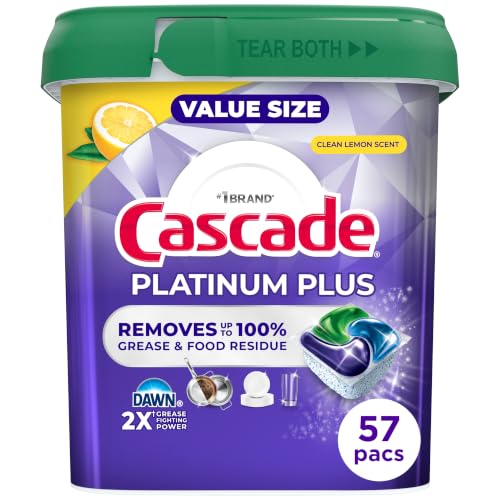 Cascade Platinum Plus Dishwasher Detergent Pods Dish Soap Lemon 57 Count
 Coffee Espresso Machine Handle Replacement Parts, Cafe Bracket Handle for Lidl Silvercrest CM4621 CM4218 KF5002 KF500S Barista (for 51mm Portafilter Basket - Not included)
 7-Piece Wood Fiber Cooking Utensil Set, Dishwasher Safe & Maintenance Free