You finish your coffee, rinse the mug, and stare at the dishwasher. The label on the bottom says “top rack only,” but you’ve run worse things through the machine. So you toss it in, run the cycle, and pull out a mug that looks fine. A week later, the powder coating starts peeling and the lid smells like last Tuesday’s detergent.
That’s the real story with insulated mugs and dishwashers. The vacuum insulation inside almost never fails. The exterior finish, the lid, and the plastic parts are where damage shows up. This article walks through what actually breaks, how to test a mug after washing, and when the machine is worth the risk. You’ll also get a hand-wash routine that takes less time than loading the dishwasher.

SUNWILL
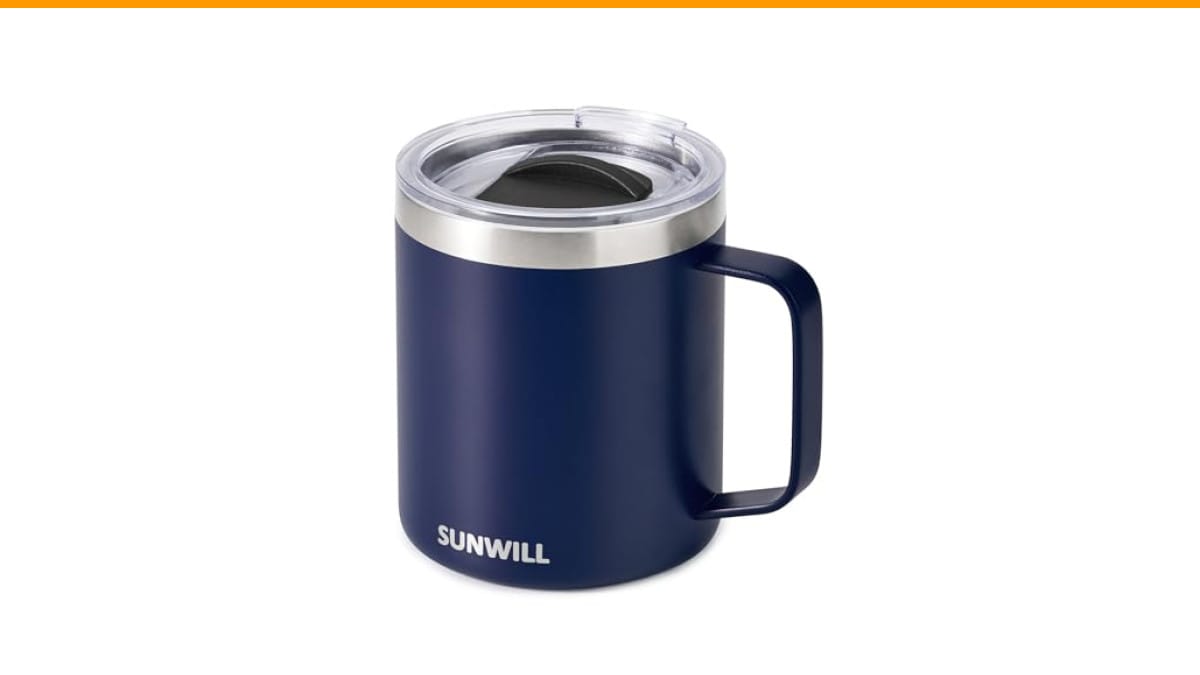
SUNWILL Insulated Coffee Mug, Stainless Steel 14…
- NO-SWEAT, MESS-FREE DESIGN: Ideal for Hot & Iced Beverages. Keep your coffee, tea, or hot chocolate hot for 3h+, and iced coffee o…
- Ultra-Durable Powder Coating & Dishwasher Safe: Premium powder coated exterior provides a textured, comfortable grip that won't sl…
- Splash Resistant Sliding Lid: Designed to reduce splashes and keep your drinks cleaner during everyday use. The BPA-free lid featu…
As an Amazon Associate I earn from qualifying purchases.
If you’re shopping for a mug that handles machine washing without turning ugly, the Check Price on Amazon is one of the few that explicitly lists dishwasher safe on the exterior coating. It’s a 14 oz stainless steel tumbler with a splash-resistant sliding lid, and the powder coat is engineered to resist peeling. That matters, because the coating is usually the first thing to go.
The Short Answer: Yes, But Probably Not the Way You Think
Most insulated coffee mugs are dishwasher safe. The manufacturer says so on the bottom. But “safe” means the mug won’t shatter or lose its vacuum seal in a single cycle. It doesn’t mean the mug will look new after a year of machine washing.
The distinction comes down to two words: functional and cosmetic damage. Dishwasher heat rarely ruins insulation. It routinely ruins the look. Powder coating chips, paint fades, and plastic lids warp or crack. If you care about how your mug looks on your desk, hand washing is the better choice.
There’s also a difference between “dishwasher safe” and “dishwasher recommended.” Safe means it survives. Recommended means the manufacturer believes the machine won’t degrade performance over time. Many brands mark mugs as safe just to avoid warranty claims, then quietly suggest hand washing in the manual. Read the fine print.
Here’s a quick decision guide. If your mug says “top rack only,” it’s safe for occasional washes but the lid and coating will age faster. If it says “hand wash only,” the dishwasher voids the warranty. If it says “dishwasher safe” without qualifiers, you’re fine on function but still risking cosmetic wear.
What Actually Breaks in a Dishwasher? (It’s Not the Vacuum)
People assume the dishwasher’s heat damages the vacuum seal. That’s rarely true. Double-wall stainless steel mugs handle temperatures far above what a dishwasher produces. The seal is metal-to-metal or glass-to-metal, and it doesn’t soften at 150°F. The vacuum itself is a physical void, not a component that degrades.
The Vacuum Seal vs. The Exterior Finish
What actually fails is the exterior. Powder coating, paint, and printed logos all suffer in the dishwasher. Hot water, aggressive detergents, and water jets gradually wear down the protective layer. You’ll notice small chips first, then peeling around the rim and base. It’s cosmetic, but it looks terrible on a mug you paid $25 for.
The stainless steel underneath is fine. It won’t rust in a dishwasher cycle, though it may develop water spots. The problem is that once the coating chips, the bare metal is exposed to everything. That’s when you see corrosion, not from the dishwasher itself but from the loss of protection.
The Lid: The Real Weak Point
Lids are the first thing to fail. Most are made from BPA-free plastic or silicone, and they sit in the top rack where heat and detergent concentrate. Plastic lids warp, crack, or lose their seal after repeated washes. Silicone gaskets stretch and let liquid leak.
The sliding mechanism on many mugs is especially vulnerable. Detergent residue gets into the track, making the slider sticky. Over time, the plastic degrades and the lid stops sealing. That’s a functional failure, not just cosmetic. A mug with a broken lid is useless.
If you’re going to machine wash, remove the lid and wash it separately by hand. That one step extends the lid’s life by months. The mug body can take the machine; the lid cannot.
Material by Material: The Dishwasher Verdict
Not all insulated mugs are the same. The material changes how the dishwasher treats it.
Stainless Steel (Mostly Safe, But Ugly)
Stainless steel mugs are the most common. The body survives the wash, but the exterior finish doesn’t. Powder-coated mugs lose color and chip. Bare steel mugs develop water spots and a dull film. The insulation stays intact, so the mug still works, but it looks rough.
One thing to watch: dishwasher salt and rinse aid. These products are corrosive to metal over time. If your machine uses a water softener, the salt can attack the mug’s exterior finish faster than normal detergent. That’s a hidden risk most people don’t consider.
Glass (Safe, But Fragile)
Glass-insulated mugs, like those from Bodum or KeepCup, are dishwasher safe on the glass part. The problem is the lid and the risk of thermal shock. If the glass is cold and the dishwasher water is hot, sudden temperature change can crack it. It’s rare, but it happens.
Glass mugs also don’t have the protective coating issue. They look the same after a wash. The trade-off is fragility. One knock against a dish or another mug and you’re sweeping up shards.
Plastic (Check the Bottom)
Plastic mugs, including travel tumblers, are the most variable. Some are dishwasher safe; most are not. The plastic can warp, melt, or leach chemicals at high temperatures. Check the recycling symbol on the bottom. If it says #7 or “other,” hand wash it. If it says #5 (polypropylene), it’s usually safe on the top rack.
Plastic lids are almost always the weak point, regardless of the mug body. Even if the mug is dishwasher safe, the lid likely isn’t.
The Hidden Damage: Detergents, Salt, and Rinse Aids
You might think the water is what damages the mug. It’s not. The chemicals in your dishwasher are the real problem.
Modern dishwasher detergents are aggressive. They contain enzymes and bleaching agents designed to break down food residue. Those same chemicals break down the binders in powder coating and the polymers in plastic lids. A mug washed with a cheap detergent tablet will degrade faster than one washed with a gentle liquid.
Dishwasher salt is worse. If your machine has a built-in water softener, the salt is regenerated during the cycle. That salt is corrosive to metal. It’s fine for stainless steel cutlery, but it attacks the thin protective layer on a mug’s exterior. Over months, you’ll see pitting and discoloration.
Rinse aids are the sneaky one. They leave a thin film to help water sheet off dishes. That film builds up inside the mug, especially in the lid mechanism. You’ll taste it on your next coffee. It’s not harmful, but it ruins the flavor.
The combination of heat, detergent, salt, and rinse aid is what turns a shiny mug into a dull, chipped one. The vacuum seal never knows.
How to Tell If Your Mug Survived the Wash
After a wash, you can test whether the mug still insulates properly. The vacuum seal is the core function, and it’s easy to check.
Fill the mug with hot water, wait five minutes, and feel the outside. If the exterior gets warm, the vacuum is compromised. A good double-wall mug stays cool to the touch on the outside. If it’s warm, the seal has failed and the mug is just a fancy cup.
Another test: fill it with ice water and check for condensation. A working vacuum seal prevents condensation on the exterior. If you see water droplets forming, the insulation is gone. This test works for any double-wall mug, stainless steel or glass.
For the lid, check the sliding mechanism. Does it move smoothly? Does it seal when closed? If it’s sticky or leaks, the dishwasher degraded the plastic. Replace the lid if possible, or hand wash from now on.
One more check: smell the inside. If it smells like detergent, the mug absorbed it. This is more common with plastic lids than steel bodies. A vinegar rinse usually fixes it.
The 30-Second Hand-Wash Method That Beats the Machine
Hand washing an insulated mug takes less time than you think. The key is doing it immediately after you finish your coffee, before residue dries.
- Rinse the mug with warm water right after use. This removes 90% of the coffee residue.
- Add a drop of dish soap and a splash of water. Swirl it around.
- Use a bottle brush or sponge to scrub the inside and the rim. Pay attention to the lid track.
- Rinse thoroughly. Soap residue ruins the taste of the next cup.
- Dry the outside with a towel. The lid can air dry, but the steel body should be wiped down to prevent water spots.
That’s it. Thirty seconds of actual effort. The dishwasher takes 90 minutes and damages the mug. Hand washing is faster and keeps the mug looking new.
If you’re cleaning iced coffee or cold brew, the same method works. The sugar and milk residue comes off easier with warm water. For stubborn stains, a teaspoon of baking soda in the mug with water works better than any detergent tablet.
The Bottom Line: When to Risk It, When to Hand Wash
Here’s the honest breakdown. If your mug has a powder-coated exterior, hand wash it. The coating will peel in the dishwasher, and there’s no fixing that. If your mug is bare stainless steel, the dishwasher is fine for the body, but wash the lid by hand.
If your mug is glass, the dishwasher is safe but risky. The glass can crack from thermal shock, and the lid will degrade. Hand washing removes both risks.
If your mug is plastic, check the bottom. #5 plastic is usually safe on the top rack. Anything else, hand wash.
And if your mug says “dishwasher safe” without qualifiers, like the SUNWILL mug, you can use the machine. Just know that the lid will age faster. The exterior coating is designed to resist peeling, so the body will hold up. The lid is still plastic.
For daily use, hand washing is the better habit. It takes 30 seconds, keeps the mug looking new, and protects the lid. The dishwasher is for convenience, not for preservation.
If you’re dealing with other kitchen cleaning questions, check out our guide on putting pots in the fridge or the one about hot coffee in a mason jar. Both cover similar thermal-shock territory.
Frequently Asked Questions
Will the dishwasher ruin the vacuum insulation in my mug?
Almost never. The vacuum seal is metal-to-metal or glass-to-metal and doesn’t degrade at dishwasher temperatures. The exterior finish and the lid are the parts that fail. If you’re worried, test the mug after washing by filling it with hot water and feeling the outside. If it stays cool, the vacuum is intact.
Can I put a Yeti or Stanley mug in the dishwasher?
Both brands say their mugs are dishwasher safe, but they recommend hand washing for the lid. In testing, the powder coating on Yeti mugs holds up better than most, but it still fades over time. Stanley mugs have a similar story. The body survives, the lid doesn’t. If you want them to look new, hand wash.
Why does my coffee taste like soap after washing the mug in the dishwasher?
Detergent residue gets trapped in the lid mechanism and the porous surface of plastic parts. The steel body doesn’t absorb it, but the lid does. Rinse the lid thoroughly by hand, or run a vinegar rinse through the mug. If the taste persists, the lid needs a deeper clean or replacement.
Is it safe to put a stainless steel mug in the dishwasher every day?
Functionally, yes. The insulation won’t fail. But daily washing will accelerate cosmetic damage. Powder coating chips, bare steel develops water spots, and the lid will wear out faster. If you don’t care about appearance, daily washing is fine. If the mug is part of your desk setup, hand wash it.
What’s the best way to clean the lid of an insulated mug?
Remove the gasket or sliding mechanism if possible. Wash it with warm soapy water and a small brush. Rinse thoroughly and let it air dry. Never put the lid in the dishwasher, even if the mug body is dishwasher safe. The plastic and silicone degrade faster in the machine.
What to Remember Before Your Next Wash
- The vacuum seal is nearly indestructible. The dishwasher won’t break it.
- The exterior finish and the lid are the real victims. Powder coating peels, plastic warps.
- Dishwasher salt and rinse aid corrode metal over time. That’s the hidden damage.
- Test your mug after washing: fill with hot water, feel the outside. Warm means the seal failed.
- Condensation on the outside of a cold drink means the insulation is gone.
- Hand washing takes 30 seconds and keeps the mug looking new. The dishwasher takes 90 minutes and ruins the look.
- Read the label. “Top rack only” means the manufacturer knows the machine damages it. “Dishwasher safe” means the body survives, but the lid still won’t.
One final thought. If you’re buying a new mug, look for one that explicitly handles the dishwasher, like the SUNWILL model. It’s not perfect, but the powder coating resists peeling better than most. And if you’re dealing with other coffee gear issues, our piece on bitter coffee after cleaning might save your next brew.
Products related to this article
Sponsored / affiliate links. As an Amazon Associate I earn from qualifying purchases. I may earn additional commission from eligible campaigns.