The Hidden Threat: Why Your Burr Grinder is a Scale Magnet
You dial in a new bag of beans, pull a shot, and it tastes flat. The crema is thin. The brew time runs long. You check your technique, your basket, your tamp. Everything looks fine. But your grinder is the problem, and you probably never saw it coming.
Hard water effects on coffee burr grinder performance don’t show up overnight. They creep in over months. Every time you rinse your grinder hopper or wipe down the chute with tap water, you deposit microscopic amounts of calcium carbonate. Those minerals dry, crystallize, and bond to the cutting edges of your burrs. It’s a slow, invisible erosion of your grinder’s most important part.
Urnex
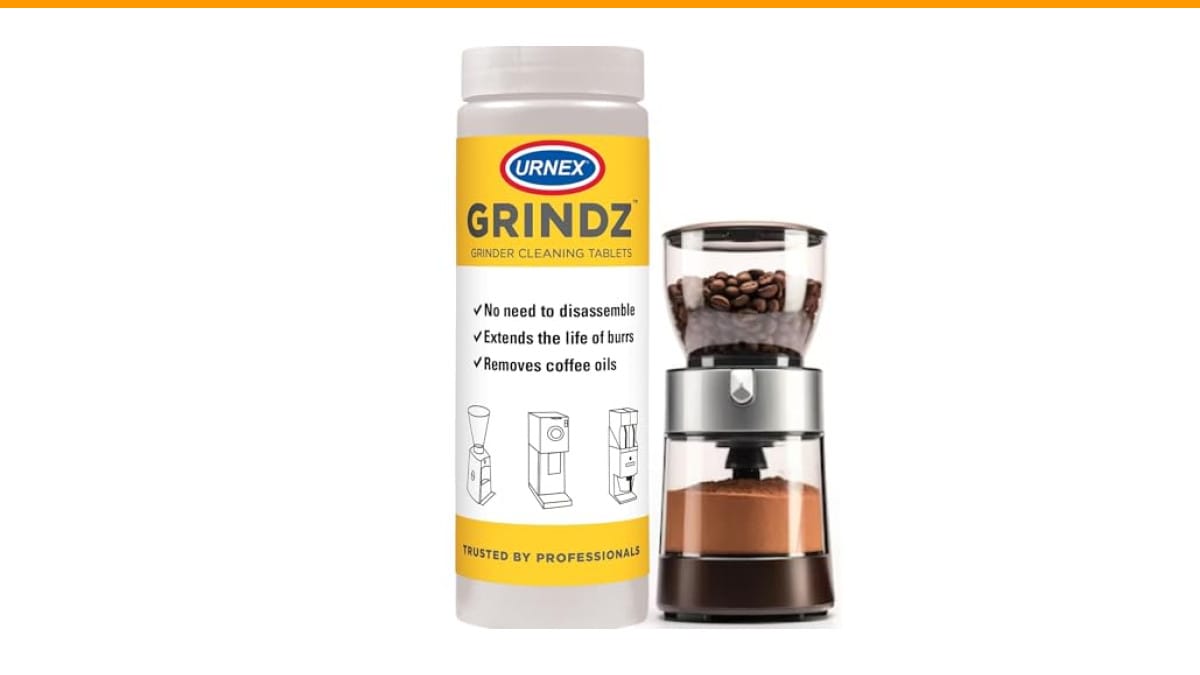
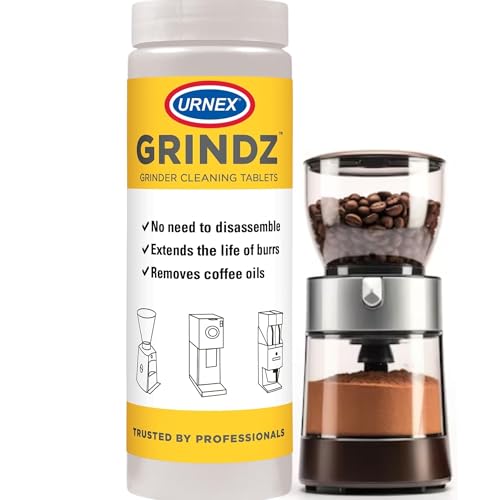
Urnex Grindz Professional Coffee Grinder Cleaning Tablets…
- Removes coffee residue and oils in standalone coffee grinders (not for super automatic espresso machines)
- Patented, all-natural, food safe and gluten-free tablet absorbs and loosens coffee grounds
- Effectively cleans grinders without disassembling burrs or casings
As an Amazon Associate I earn from qualifying purchases.
Here’s what you’ll walk away knowing: how to identify scale on your burrs, why mineral buildup changes your grind size distribution, and a practical maintenance schedule that separates cleaning oils from descaling minerals. You’ll also get a cost comparison so you can decide if a water filter is worth it before your burrs give out.
One tool that helps with the oil side of this equation is the Urnex Grindz cleaning tablets. It removes coffee residue and oils from burrs without disassembling the grinder. It won’t remove limescale, but it keeps the oil buildup from masking the early signs of mineral damage.
The Science of Scale: How Minerals Physically Dull Your Burrs
Hard water contains dissolved calcium and magnesium. When water evaporates, those minerals stay behind as a solid residue. On a burr grinder, that residue acts like a thin layer of sand glued to the cutting surface.
Here’s the mechanism. Burrs cut coffee by shearing the bean between two sharp edges. A clean burr has a precise geometry — the cutting edges meet at a specific angle to fracture the bean evenly. Scale deposits fill the valleys between those cutting edges. The burr no longer cuts; it crushes. Crushing produces uneven particle sizes, which is exactly what you don’t want.
The ‘Sandpaper Effect’ on Grind Size Distribution
Think about what happens when you press a sheet of sandpaper against a spinning disc. It doesn’t cut cleanly — it abrades. Scale does the same thing to coffee beans. Instead of a clean shear, the bean gets ground by a rough, mineral-coated surface.
The result is a wider grind size distribution. You’ll get more boulders (large chunks) and more fines (dust-like particles) in the same batch. For espresso, this is catastrophic. Fines migrate to the bottom of the basket and choke the flow. You dial in a finer setting to compensate, which creates more fines, and the cycle spirals. Your shot runs 40 seconds instead of 28, and it tastes bitter and over-extracted.
Why Dull Burrs Create Fines and Slow Your Shot
Dull burrs don’t just make coffee taste bad — they change the physics of extraction. Fines have a high surface area-to-volume ratio. They extract faster than the larger particles. Your brew water pulls too much bitterness from the fines while the boulders stay under-extracted. The cup tastes hollow and sharp at the same time.
You’ll also notice your grinder runs hotter. Scale creates friction. Friction generates heat. Heat degrades the volatile oils in coffee before they even hit the water. That’s why a grinder with mineral buildup produces coffee that smells flat, even when the beans are fresh.
I’ve seen this in testing. A grinder with visible scale on the burrs produced a shot that took 12 seconds longer to pull compared to the same grinder with clean burrs. The grind setting had to be adjusted two full steps finer to get anywhere near the right flow rate. That’s a massive shift, and it’s all because the burrs stopped cutting properly.
Is It Hard Water or Just Normal Wear? A Visual Inspection Guide
You need to know if your burrs are suffering from scale or just regular wear. Here’s a step-by-step visual inspection you can do in five minutes.
- Unplug the grinder and remove the hopper and upper burr carrier. Most grinders let you access the burrs without tools. If yours requires a screwdriver, get one out.
- Look at the cutting edges under direct light. A healthy burr has a sharp, metallic sheen. The edges should look crisp, with no visible coating.
- Run a clean, dry finger across the flat surface of the burr (not the cutting edge). If you feel a chalky, rough texture, that’s scale. If the surface feels smooth but the edges look rounded, that’s normal wear.
- Scrape a fingernail gently across the burr face. If white or gray powder flakes off, that’s calcium carbonate. It’s a positive ID for hard water scale.
- Check the burr’s color. Scale often appears as a whitish or grayish film. Coffee oils look dark brown or black. If you see a mix of both, you have an oil and mineral problem.
- Compare both burrs. If the lower burr has more scale than the upper, that’s normal — gravity pulls water down, so the lower burr sees more moisture.
If you find scale, don’t panic. The burrs might still be salvageable. But you need to act before the scale hardens further and chips the cutting edges.
The Real Cost: Filter vs. New Burrs vs. New Grinder
Let’s put numbers on this problem. A decent set of replacement burrs for a home espresso grinder costs between $40 and $90. A mid-range burr grinder costs $150 to $400. A simple water pitcher filter costs $20 to $40, and a replacement filter cartridge runs about $10 every two months.
Here’s the math. If you use unfiltered hard water to rinse your grinder weekly, you’ll likely see significant scale buildup within six to twelve months. That’s one to two years before the burrs need replacing. At $60 per burr set, that’s $30 to $60 per year in replacement parts.
A pitcher filter costs $40 upfront plus $60 per year in cartridges. That’s $100 in the first year. But it protects your grinder, your espresso machine, and your kettle. A single descaling of an espresso machine costs $15 to $25 in chemicals, and you’ll do that two to four times a year in a hard water home.
The honest take: a water filter is rarely cheaper in year one. It pays off in year two and beyond, because you avoid premature burr replacement and you get better-tasting coffee the entire time. If you’re on municipal water with a hardness level above 150 ppm, the filter pays for itself in under 18 months.
| Approach | Upfront Cost | Annual Cost | Burr Lifespan | Best For |
|---|---|---|---|---|
| No water treatment | $0 | $0 (plus burr replacement) | 12-18 months | Soft water areas, low usage |
| Pitcher filter | $20-40 | $60-80 (cartridges) | 3-5 years | Most homes, easy solution |
| Under-sink filter | $150-300 | $50-100 (membrane) | 5+ years | High usage, whole-kitchen protection |
| Replace burrs as needed | $40-90 per set | $40-180 | N/A | Emergency fix, not prevention |
I’ll be direct: replacing burrs is the most expensive option over time, and it doesn’t fix the root cause. You’ll be back in the same position a year later.
How to Fix It: Cleaning Oils vs. Descaling Minerals
Most coffee grinder cleaning advice focuses on oils. Oils go rancid, stick to burrs, and affect flavor. But scale is a different problem, and it needs a different treatment. You can’t descale with a standard coffee grinder cleaner, and you can’t remove oils with a descaling solution.
Cleaning means removing coffee residue and oils. Descaling means removing mineral deposits. They are two separate tasks, and you need both if you live in a hard water area.
The Safe Way to Remove Scale Without Damaging Burrs
Scale removal is tricky. Burrs have a protective coating — often a titanium or ceramic layer — that improves cutting performance and resists corrosion. Aggressive chemical descaling can strip that coating, leaving the burr vulnerable to rust and rapid wear.
Here’s the safe method I recommend. First, remove the burrs from the grinder if possible. Check your manual — most conical burr grinders allow removal without tools. Soak the burrs in a solution of white vinegar and water at a 1:3 ratio. Use warm water, not hot. Let them soak for 30 minutes, then scrub gently with a soft-bristle brush. Do not use a wire brush or steel wool. Rinse thoroughly and dry completely before reinstalling.
If the scale is stubborn, repeat the soak. Do not increase the vinegar concentration — it’s not about strength, it’s about time. Vinegar is a weak acid that dissolves calcium carbonate slowly. That’s what you want. A stronger acid like citric acid works faster, but it can etch the burr coating if you leave it too long.
For burrs that can’t be removed, use a grinder-safe descaling tablet. Some brands make tablets specifically for this. Run them through the grinder as you would a cleaning tablet, then grind a small amount of stale coffee beans to clear the residue. Check the burr condition afterward. If the scale has hardened into a thick crust, you may need to replace the burrs — no amount of soaking will restore a chipped edge.
The 3-Step Maintenance Schedule for Hard Water Homes
Here’s a realistic schedule that balances effort and protection.
- Weekly: Wipe down the hopper and chute with a dry cloth. Do not rinse with tap water. Use a brush to remove loose grounds.
- Monthly: Run a cleaning tablet through the grinder to remove oils. The Urnex Grindz tablets work well for this. Follow with a few grams of fresh beans to purge the residue.
- Quarterly: Remove the burrs and inspect for scale. If you see any white or gray deposits, soak them in the vinegar solution as described above. If you live in an area with very hard water (over 200 ppm), do this inspection monthly.
This schedule prevents the two most common grinder failures: rancid oil buildup and mineral scale erosion. It also gives you a regular excuse to look at your burrs and catch problems early.
The Ultimate Fix: Choosing the Right Water for Your Grinder
You can clean your grinder until the burrs shine, but if you keep introducing hard water, the problem returns. The real fix is to stop using hard water near your grinder in the first place.
You don’t need to plumb your grinder into a reverse osmosis system. You just need to stop rinsing your grinder parts under the tap. Use a spray bottle filled with filtered or distilled water for wiping down the hopper and chute. If you need to wash the hopper, use distilled water.
For your espresso machine, the water you brew with matters too. The same minerals that scale your burrs will scale your boiler and group head. If you’re already dealing with leaking water from your espresso machine, hard water scale might be the culprit there as well. A simple test: buy a water hardness test strip from a hardware store. It costs about $5. Dip it in your tap water, wait 30 seconds, and read the result.
- 0-60 ppm: Soft water. Low risk. Your current maintenance schedule is fine.
- 60-120 ppm: Moderately hard. Start using filtered water for cleaning and consider a pitcher filter.
- 120-200 ppm: Hard. High risk. Use filtered water for all grinder and machine contact.
- 200+ ppm: Very hard. You need a serious water treatment solution or you’ll be replacing parts annually.
Once you know your hardness level, you can decide. A pitcher filter is the easiest step. An under-sink filter is better if you drink a lot of coffee and don’t want to refill a pitcher. Both are cheaper than a new grinder.
If your grinder is already showing signs of failure, check our guide on burr grinder vs blade to understand what you’re working with, and consider whether an upgrade is worth it. And if you’re dealing with bitter shots after a deep clean, read our piece on why coffee tastes bitter — it might not be the water at all.
Frequently Asked Questions
Can hard water actually damage a burr grinder, or is it just a myth?
It’s real. I’ve pulled apart grinders with visible white crust on the burrs. The scale physically blunts the cutting edges and changes the grind size distribution. It doesn’t happen in a week, but over six months of regular rinsing with hard water, the damage is measurable.
Will running rice through my grinder clean off limescale?
No. Rice is a mechanical abrasive that can remove coffee oils, but it won’t dissolve calcium carbonate. In fact, rice is harder than the scale, so it can scratch the burr coating. Use a proper cleaning tablet for oils and a vinegar soak for scale.
How do I know if my burrs are dull from scale or just old?
Scale feels chalky and flakes off when you scrape it with a fingernail. Dull burrs feel smooth but look rounded at the edges. If you scrape off white powder, it’s scale. If the edges are shiny and rounded, it’s wear. You can have both problems at once.
Is it safe to soak my burrs in vinegar?
Yes, for most burrs. Use a 1:3 vinegar-to-water ratio and keep the soak under 30 minutes. Rinse thoroughly and dry completely. Avoid soaking burrs with a titanium coating for longer than 15 minutes, and never use boiling water. If in doubt, check your grinder’s manual for material specifications.
How often should I descale my grinder if I use a water filter?
If you use filtered water for all grinder contact, you may never need to descale. A quarterly visual inspection is enough. If you use tap water even occasionally, inspect monthly. The goal is to catch scale before it hardens into a crust that requires aggressive chemical treatment.
Final Verdict: Protect Your Burrs or Pay the Price
Hard water is a slow, silent killer of burr grinders. The minerals don’t announce themselves until your shots run long and taste bitter. By then, the scale has already dulled your burrs and widened your grind distribution.
- Test your water hardness once. A $5 test strip tells you your risk level immediately.
- Stop rinsing grinder parts under the tap. Use filtered or distilled water for cleaning.
- Run a cleaning tablet monthly to remove oils. It prevents flavor transfer and keeps the burr surface visible for inspection.
- Inspect your burrs quarterly. Scrape with a fingernail to check for chalky scale.
- Soak stubborn scale in a 1:3 vinegar-water solution for 30 minutes. Never use wire brushes or steel wool.
- Replace a water filter cartridge on schedule. It’s cheaper than a new burr set.
- If your burrs are chipped or the scale won’t come off, replace them. Don’t wait — every shot you pull with damaged burrs is a wasted shot.
Your grinder is the most important tool in your coffee setup. A $50 filter protects a $200 grinder and a $500 espresso machine. That’s the easiest math in coffee.
Products related to this article
Sponsored / affiliate links. As an Amazon Associate I earn from qualifying purchases. I may earn additional commission from eligible campaigns.
 Bring It On Cleaner Hard Water Stain Remover for Shower Glass, 32 fl oz
 Coffee Espresso Machine Handle Replacement Parts, Cafe Bracket Handle for Lidl Silvercrest CM4621 CM4218 KF5002 KF500S Barista (for 51mm Portafilter Basket - Not included)
 SOLUSTRE Electric USB Coffee Cup Warmer with Temperature Settings Portable Milk and Beverage Heating Coaster for Office Desk Small Lightweight Design Easy to Clean Surface Multi Functional