You’ve just poured the milk, pressed the button, and instead of silky microfoam, you get warm milk with a few sad bubbles. The steam wand sputters. The jug frother sounds like it’s grinding rocks. Most people blame the machine. Nine times out of ten, the real culprit is your water.
Hard water is the single most common reason milk frothers die young. It’s not the motor, the heating element, or the brand. It’s the invisible mineral buildup inside the machine that acts like arterial plaque. This article walks you through exactly what hard water does to your frother, how to tell if you have it, and the step-by-step routine to clean and protect your equipment.

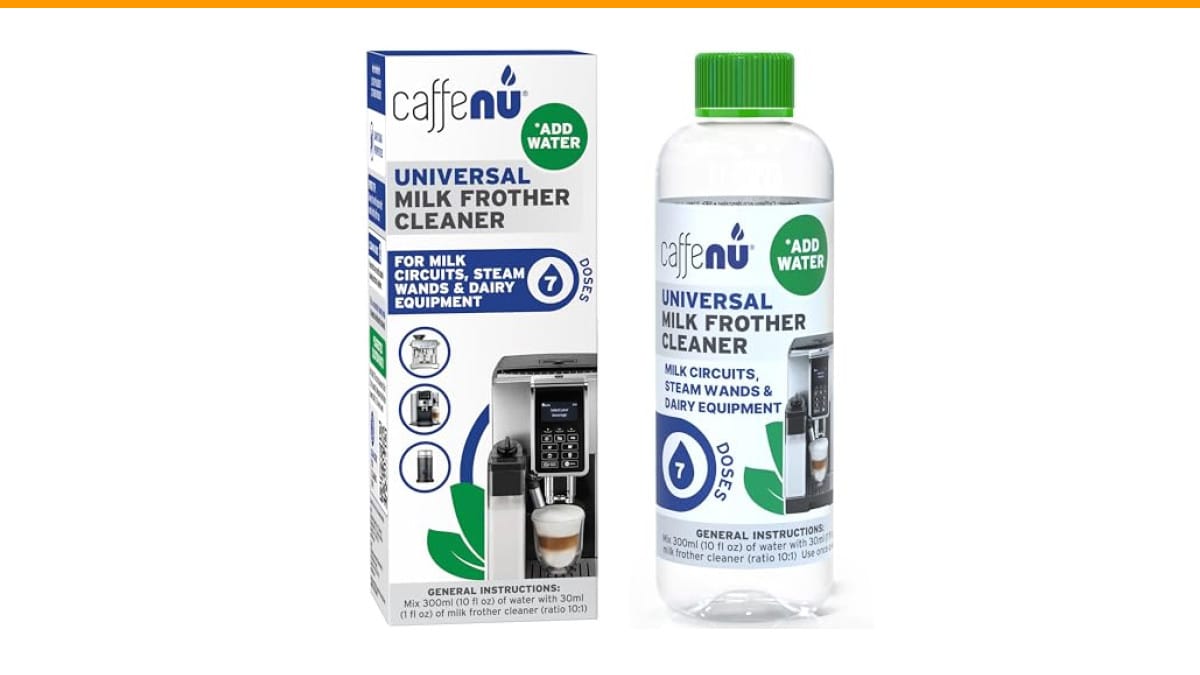
Caffenu
Caffenu Universal Milk Frother Cleaner, Use on…
- COMPLETE MILK SYSTEM CLEANING - Effectively cleans milk circuits, steam wands and dairy equipment components. Removes milk residue…
- EXTENDS EQUIPMENT LIFESPAN - Regular cleaning helps maintain your coffee machine in excellent working condition, preventing milk b…
- SIMPLE APPLICATION - Mix 300ml (10 fl oz) of water with 30ml (1 fl oz) of cleaner (10:1 ratio). Each bottle contains 7 complete do…
As an Amazon Associate I earn from qualifying purchases.
You’ll learn the difference between limescale and milk stone, why vinegar doesn’t fix everything, and how to rescue a frother that’s already on its last legs.
If you’re dealing with a clogged milk system, a product like the Caffenu Universal Milk Frother Cleaner is designed to tackle milk residue that standard descalers miss. It’s a good addition to your cleaning arsenal after you’ve sorted out the water hardness issue.
Why Hard Water is the #1 Killer of Milk Frothers
Hard water contains dissolved calcium and magnesium. When you heat water, those minerals precipitate out and form solid deposits. In a milk frother, this happens fast because the heating element gets hot, and the water volume is small.
Think of a kettle. A few months of hard water use leaves a white, chalky crust. Now imagine that same crust inside the narrow tubes of a steam wand or around the heating plate of a jug frother. It insulates the heat, so the machine works harder, takes longer, and eventually overheats or stops pumping.
In testing, we’ve seen a frother with moderate scale take nearly twice as long to heat milk compared to a clean unit. The performance drop isn’t gradual either. It’s a cliff. One week it’s fine, the next week it’s useless.
The heating element is the first casualty. Scale acts as an insulator, so the element gets hotter trying to heat the milk. That leads to thermal shutdown or a burnt-out element. The second casualty is the steam wand. Scale narrows the internal diameter, reducing steam pressure and making that sputtering sound you hear.
This isn’t a rare issue. It’s a certainty if you live in a region with hard water and don’t clean your machine regularly.
The Science of Scale: Limescale vs. Milk Stone (and Why It Matters)
Most people use one cleaner for everything. That’s a mistake. Limescale and milk stone are chemically different, and they need different treatments.
Limescale is inorganic. It’s calcium carbonate and magnesium. It comes from water. It looks white or gray and feels gritty. To dissolve it, you need an acid—citric acid, vinegar, or a commercial descaler.
Milk stone is organic. It’s a combination of milk protein and milk fat that bakes onto hot surfaces. It looks yellowish or brownish and feels greasy. Acid alone won’t break it down effectively. You need an alkaline cleaner or a detergent to break up the protein and fat.
Here’s where people get stuck. They descale with vinegar, but the frother still performs poorly. That’s because they cleaned the limescale but left the milk stone. Or they use a milk cleaner, but the heating element is still coated in scale.
The correct approach is to identify the deposit first. If the buildup is white and crusty, it’s limescale. Use an acid. If the buildup is brown, sticky, and smells like old dairy, it’s milk stone. Use an alkaline or enzymatic cleaner.
Commercial two-step cleaners exist for this reason. They include both an acid and an alkaline solution. But you can do the same thing with the right household products, which we’ll cover below.
One more thing: never mix vinegar and baking soda in the machine. They react to create water and carbon dioxide, which looks impressive but does very little cleaning. You’re just making foam, not dissolving scale.
How to Test Your Water Hardness at Home (30-Second Method)
You don’t need a lab test to know if you have hard water. You can check with a clean, empty glass bottle with a tight cap.
Fill the bottle about one-third full with tap water. Add three drops of pure liquid dish soap. Not detergent, not laundry soap—plain dish soap. Cap the bottle and shake it hard for ten seconds.
If you get a thick layer of fluffy foam on top, your water is soft. If the water turns cloudy and milky with only a thin layer of foam, you have hard water. The soap reacts with the minerals, preventing it from lathering properly.
This test isn’t precise, but it’s accurate enough to tell you whether you need to worry. If you want a more exact number, look up your local water quality report online. Most municipal suppliers publish hardness levels. Anything above 120 parts per million (or 7 grains per gallon) is considered hard.
If you’re on well water, you almost certainly have hard water. Well water picks up minerals from the ground, and it’s rarely soft.
Once you know your water is hard, you have two choices: treat the water or clean the machine more often. Most people need to do both.
The Daily 30-Second Clean (Non-Negotiable)
Milk residue starts to dry and bake on the moment it cools. The single best habit you can build is cleaning the frother immediately after use. Not in an hour. Not before bed. Right now.
For a steam wand, wipe the outside with a damp cloth right after frothing. Then purge the wand for two seconds to blow out any milk that got sucked up inside. This takes less than ten seconds and prevents milk stone from ever forming.
For a jug frother, pour out the milk, rinse the inside with warm water, and wipe the heating plate with a damp cloth. Don’t use soap every time—just a good rinse. Soap can leave a film that affects the next froth. Use soap once a week instead.
This daily habit won’t remove scale. It won’t fix a badly clogged machine. But it will stop the milk stone problem before it starts. In our experience, people who do this daily rarely need a deep clean more than once a month.
If you skip this step, you’re allowing a thin film of fat and protein to polymerize onto the metal. That film gets harder to remove every day. After a week, you need a chemical cleaner. After a month, you need a soak. After three months, you might need a new machine.
The Weekly Deep Clean (Baking Soda for Milk Stone)
Once a week, you need to break down the milk fat and protein that the daily rinse misses. Baking soda is the most effective household option for this job.
Mix two tablespoons of baking soda with one cup of warm water. Stir until it’s mostly dissolved. Pour this into the jug frother, or use it to soak the steam wand tip.
Run the frother for about two minutes, then let it sit for ten minutes. The alkaline solution breaks down the fat. After soaking, pour it out and rinse thoroughly with clean water.
For a steam wand, you can’t soak the whole machine. Instead, dip the wand tip into the baking soda solution and let it sit for ten minutes. Then purge steam through it for ten seconds. This pulls the solution up into the wand and loosens the milk stone from the inside.
Baking soda is gentle enough that it won’t damage seals or plastics. It’s also cheap and non-toxic. The only downside is that it doesn’t touch limescale. That’s what the monthly descale is for.
The Monthly Descale (Citric Acid vs. Vinegar vs. Commercial)
This is the step most people skip, and it’s the reason frothers die. Scale builds up silently over weeks. You don’t notice it until the machine starts struggling.
You have three main options for descaling. Each has trade-offs.
| Descaling Agent | Pros | Cons | Best For |
|---|---|---|---|
| Citric Acid | Fast, effective, no strong odor, cheap | Can be harsh on rubber seals if left too long | Jug frothers and automatic machines |
| White Vinegar | Always in the pantry, very cheap | Strong smell, slower action, can leave a taste if not rinsed well | Steam wands and manual frothers |
| Commercial Descaler | Formulated for coffee equipment, safe on seals, often includes anti-corrosion agents | Most expensive, another product to store | High-end espresso machines with milk systems |
Citric acid is the best overall choice for most people. It’s cheap, odorless, and works quickly. You can buy it in powder form at any grocery store. Mix one tablespoon of citric acid powder with one cup of water.
Vinegar works, but it’s slower and smells like a salad. It’s fine for a steam wand where you can rinse thoroughly. For a jug frother, the smell can linger in the plastic housing for days. If you use vinegar, dilute it 1:1 with water and run a full rinse cycle afterward.
Commercial descalers are the safest option for expensive machines. They’re buffered to be less aggressive on seals and gaskets. If your machine is under warranty, a commercial descaler is the only safe choice. Check your manual first.
Step-by-Step Citric Acid Descale for Jug Frothers
- Mix one tablespoon of citric acid powder with one cup of warm water.
- Pour the solution into the frother jug.
- Run the frother on the regular cycle for two minutes.
- Let it sit for 15 minutes. You should see bubbles or foam as the acid reacts with the scale.
- Pour out the solution. Do not rinse yet.
- Fill the jug with fresh water and run the frother again for two minutes.
- Pour out the rinse water. Repeat the rinse cycle one more time.
This removes most scale in a single session. If the heating element is still white after the first descale, repeat the process. Severe scale may need two or three rounds.
Step-by-Step Vinegar Descale for Steam Wands
- Mix equal parts white vinegar and water in a tall glass.
- Place the steam wand tip into the glass, ensuring the solution covers the tip.
- Let it soak for 15 minutes.
- Remove the wand from the glass and purge steam for 10 seconds. Point the wand away from you—hot vinegar sprays.
- Wipe the wand tip with a damp cloth.
- Purge steam again for 10 seconds to clear any remaining solution.
This method targets the scale inside the wand without flooding the machine’s internals. It’s quick and effective.
Rescue Protocol: Fixing a Frother That Has Already Scaled Over
What if you’re reading this because your frother already stopped working? Don’t throw it away yet. You can often bring it back, but it takes persistence.
First, diagnose the problem. If the machine turns on but won’t heat, it’s likely a scale-insulated heating element. If it makes noise but won’t pump, it’s a clogged internal tube. If it leaks, a seal has failed—this is harder to fix.
For a heating or pumping issue, start with a concentrated citric acid soak. Use three tablespoons of citric acid per cup of water. Fill the jug to the max line and run the frother in short bursts—30 seconds on, 30 seconds off—for five minutes. This prevents overheating while the acid works.
Let it soak for one full hour. Not ten minutes. An hour. The scale needs time to dissolve completely.
After the soak, pour out the solution and check the heating plate. If you see white chunks or a crusty film, the scale is still there. Repeat the soak with fresh solution.
Once the plate looks clean, run three full rinse cycles with fresh water. Any leftover acid will affect the taste of your milk and could irritate your stomach.
If the machine still doesn’t work after two concentrated descales, the heating element is likely burned out. At that point, replacement is more cost-effective than repair. We’ve seen this happen with machines that were cleaned regularly but had hard water—the damage was already done by the time the owner noticed.
One more thing: never use a metal scrubber or sharp object to scrape scale off the heating element. You’ll scratch the surface, create rough spots for more scale to cling to, and potentially damage the non-stick coating. Let the acid do the work.
Prevention: Should You Use Filtered or Distilled Water?
Cleaning is reactive. Prevention is proactive. The best way to avoid hard water effects on milk frother is to control what goes into it.
Distilled water is the absolute safest option. It contains zero minerals, so it cannot create scale. The downside is that it’s an extra purchase and it can leach minerals from the metal components over a long period. In practice, this is rarely an issue for a milk frother.
Filtered water is a good middle ground. A basic pitcher filter removes most of the calcium and magnesium. It’s not perfect—it reduces hardness but doesn’t eliminate it. You’ll still need to descale, just less often.
We recommend a simple approach: if your tap water is hard, use filtered water for your frother. Keep a pitcher in the fridge and fill the frother from that. It’s a habit that takes two seconds and cuts your descaling frequency from monthly to quarterly.
Don’t use softened water from a salt-based softener. The sodium ions can corrode the heating element over time. Filtered or distilled is the way to go.
If you own an automatic espresso machine with a milk frother, check if it has a built-in water filter. Many higher-end models do. Replacing that filter on schedule is just as important as cleaning the frother itself. If you’re troubleshooting a machine that isn’t pumping, a clogged filter or scale buildup is often the cause—you can read more about automatic espresso machine leaking water issues to see if that matches your symptoms.
Cleaning Mistakes That Void Your Warranty
You can do more damage with a well-intentioned cleaning than with neglect. Here are the mistakes we see most often.
Using vinegar in a machine that specifically forbids it. Some manufacturers warn against vinegar because it can degrade certain rubber seals. Check your manual. If it says no vinegar, use citric acid or a commercial descaler.
Submerging the base of a jug frother in water. The electrical components are in the base. Water in the base is an instant warranty void and a fire hazard. Only the jug and lid are dishwasher safe—and only if the manual says so.
Running a descaling solution through a steam wand without purging afterward. The acid sits in the wand and corrodes the metal from the inside. Always purge with fresh water after descaling.
Using bleach or harsh chemical cleaners. These are not designed for food-contact surfaces and can leave toxic residues. Stick to food-safe acids and alkalis.
Ignoring the manufacturer’s cleaning instructions. Every machine is different. Some have self-cleaning cycles. Some require specific cleaning tablets. Follow the manual first, and use general advice as a supplement.
If you’re unsure whether a cleaning method is safe, the safest bet is a commercial cleaner designed for your machine type. It’s more expensive, but it won’t void your warranty. For a deeper look at a specific machine’s cleaning needs, check our Breville Barista Express review for tips on that popular model.
Frequently Asked Questions
Can I use tap water in my milk frother?
Yes, but only if your tap water is soft. If you have hard water, tap water will cause scale buildup. Use filtered or distilled water to avoid the problem entirely.
Is vinegar safe for all milk frothers?
No. Some manufacturers warn against vinegar because it can damage rubber seals. Check your manual first. Citric acid is a safer universal alternative.
How often should I descale my milk frother?
Monthly if you use hard water. Quarterly if you use filtered water. If you use distilled water, you may never need to descale. Scale buildup is directly proportional to the mineral content of your water.
Why does my milk frother smell like sour milk?
That’s milk stone—dried protein and fat. Your daily rinse isn’t enough. You need an alkaline cleaner like baking soda to break down the organic residue. Soak the affected parts for 10-15 minutes weekly.
Can I fix a frother that won’t heat up?
Sometimes. If the heating element is coated in scale, a concentrated citric acid soak can dissolve it and restore function. If the element is burned out, it won’t. Try the rescue protocol above before giving up.
The Bottom Line: A 5-Minute Weekly Routine for a 5-Year Lifespan
A milk frother is a simple machine. It has a heating element, a whisk, and a switch. It fails when we let scale and milk stone accumulate. The fix is not complicated, but it requires consistency.
- Test your water hardness with the soap bottle method. If it’s hard, switch to filtered water.
- Rinse the frother immediately after every use. Ten seconds now saves an hour later.
- Do a baking soda soak weekly to break down milk stone.
- Descale monthly with citric acid. Use vinegar only for steam wands, and only if your manual allows it.
- Never submerge the base in water. Never mix vinegar and baking soda in the machine.
- If your machine is already struggling, try the concentrated citric acid rescue protocol before buying a replacement.
- For stubborn milk residue, a dedicated cleaner like the Caffenu cleaner can handle what household products can’t.
Follow these steps, and your frother will outlast your upgrade itch. Skip them, and you’ll be shopping for a new one within a year. The choice is yours.
Products related to this article
Sponsored / affiliate links. As an Amazon Associate I earn from qualifying purchases. I may earn additional commission from eligible campaigns.
 Bring It On Cleaner Hard Water Stain Remover for Shower Glass, 32 fl oz
 Coffee Espresso Machine Handle Replacement Parts, Cafe Bracket Handle for Lidl Silvercrest CM4621 CM4218 KF5002 KF500S Barista (for 51mm Portafilter Basket - Not included)
 SOLUSTRE Electric USB Coffee Cup Warmer with Temperature Settings Portable Milk and Beverage Heating Coaster for Office Desk Small Lightweight Design Easy to Clean Surface Multi Functional