You smell the coffee before you see it. You pour a mug, and it tastes like hot water with a faint memory of beans. The brew time has crept from 10 minutes to 15. The carafe drips when you pour. This is the moment you wonder: how long does a 12 cup coffee maker last, and is it time to spend money on a new one?
Most people guess the answer is a fixed number of years. It’s not. A $20 machine might die in 14 months, while a well-maintained mid-range unit can push past five years. The real answer depends on water, cleaning habits, and build quality. This guide walks through the numbers, the warning signs, and the financial framework to decide between a vinegar soak, a repair, or a replacement.

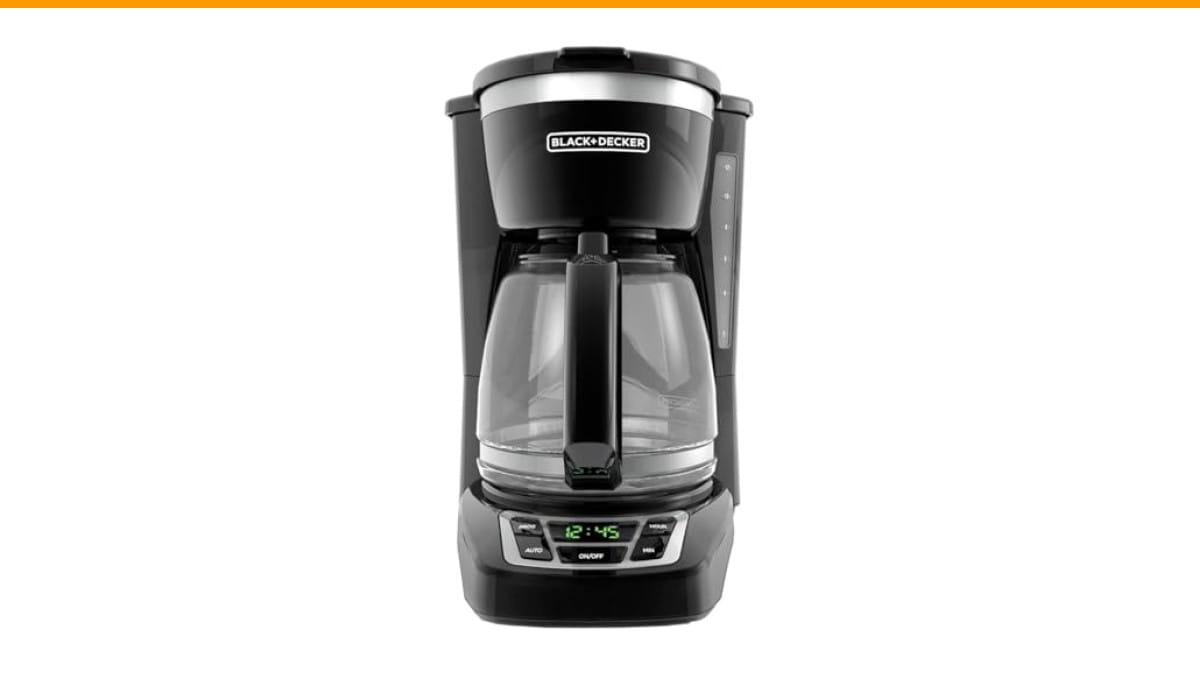
BLACK+DECKER
BLACK+DECKER 12-Cup Drip Coffee Maker with Vortex…
- 12-CUP DURALIFE GLASS CARAFE: The sturdy 12-cup* carafe has measurement markings for accurate filling and an easy-grip handle for…
- SNEAK-A-CUP FEATURE TO PREVENT DRIPS: This feature temporarily stops the flow of coffee so you can pour your first cup before brew…
- EASY-VIEW WATER WINDOW: The front-facing window shows you the exact amount of water that will turn into coffee, and the brew baske…
As an Amazon Associate I earn from qualifying purchases.
You’ll walk away knowing exactly what to inspect, how to test if your machine is dying, and a simple monthly routine that adds years to any drip coffee maker.
If you are in the market for a dependable workhorse, the Check Price on Amazon is a solid option. It includes a 12-cup Duralife glass carafe, a Sneak-a-Cup feature to stop drips mid-brew, and 2-hour auto shutoff for safety. It won’t win awards for espresso, but for standard drip coffee, it handles daily use well.
The Short Answer: How Many Years (and Cups) to Expect
A typical 12 cup drip coffee maker lasts between 2 and 5 years. That range covers budget units on the low end and better-built machines on the high end. In terms of brews, expect roughly 700 to 1,800 pots before the heating element or pump gives out.
Here is the catch. Those numbers assume average use—about one pot per day. If you brew three pots daily for a large household, you will hit the failure point faster. If you only brew on weekends, the machine might last a decade because the components simply don’t cycle as often.
Use this simple formula to estimate your own machine’s life: Total expected cycles (about 1,500) divided by your daily pots equals approximate lifespan in days. One pot a day gets you to roughly 4 years. Three pots a day drops that to under 18 months.
Lifespan by Coffee Maker Type (Drip, Espresso, Single-Serve)
The 12 cup drip machine is the baseline. But if you are comparing options, know that the category matters more than the brand.
Drip Coffee Makers
Standard drip machines are simple. A heating element warms water, a pump pushes it through a basket, and it drips into a carafe. Fewer moving parts means longer life. Expect 2 to 5 years for most models. The most common failure point is the internal tubing clogging with mineral scale, not the electronics.
Espresso Machines
Espresso machines run at 9 bars of pressure and have a pump, a boiler, and a group head. That complexity costs money to fix. A cheap pump espresso machine might last 3 years. A quality unit like a Rancilio Silvia can last 10 to 15 years with regular descaling and occasional gasket replacements. The boiler is the weak link; hard water will kill it quickly.
Single-Serve Pod Machines
Pod machines like Keurig models have a needle that punctures the pod and a pump that forces water through. The needle gets clogged with coffee grounds and the pump wears out. Expect 2 to 3 years for budget models, 4 to 5 for higher-end ones. They also have more plastic parts that crack with heat cycling.
The 5 Real Factors That Decide Lifespan (Not Just “Usage”)
Usage frequency matters, but these five factors determine whether your machine dies at year one or year five.
Water Quality and Scale Buildup
Hard water is the number one killer. Minerals like calcium and magnesium precipitate out when heated, forming scale on the heating element and inside the tubes. That scale acts as an insulator, so the element has to work harder to heat the same amount of water. It eventually burns out or the flow slows to a trickle.
If you have hard water, use filtered water or descale monthly. If you have soft water, you can stretch that to every three months. A simple test: if you see white flakes in your kettle, you have hard water and your coffee maker is suffering.
Build Quality vs. Brand Name
Brand name is not the same as build quality. A Mr. Coffee and a Technivorm both make drip machines, but the Technivorm has a metal housing, a commercial-grade heating element, and a warranty that covers years of heavy use. The Mr. Coffee has plastic gears and a thinner element. You pay for that difference.
Budget machines (under $40) typically use thinner wire and cheaper thermostats. Premium machines ($150+) use brass or stainless steel fittings. The price difference is a direct reflection of how long the internal parts will survive thermal stress.
Cleaning Frequency (The 80/20 Rule)
About 80% of coffee maker failures come from neglect, not manufacturing defects. Coffee oils go rancid, clog the basket, and attract mold. Mineral scale builds up silently. A machine cleaned monthly will outlast an identical unit cleaned twice a year by a significant margin—often double the lifespan.
You do not need fancy chemicals. A vinegar rinse every 30 to 60 days removes scale and oils. For a deeper routine, check our guide on cleaning coffee makers for step-by-step instructions.
7 Warning Signs Your Machine Is Dying (Beyond Bad Tasting Coffee)
Bad coffee is subjective. These signs are mechanical and objective.
- Brew time increased by 50% or more. If a pot takes 15 minutes instead of 10, scale is restricting water flow.
- The carafe is cold after brewing. The warming plate might be failing, or the element is not reaching temperature.
- Loud gurgling or hissing sounds. Air is getting into the system, often due to a failing pump or a cracked internal tube.
- Water pools under the machine. A leak in the reservoir or internal hose is a death sentence; plastic cracks with heat cycling.
- The heating element cycles on and off rapidly. You hear a clicking sound every few seconds. That means the thermostat is failing.
- You see rust or discoloration inside the water tank. That indicates metal corrosion, which will contaminate your brew.
- The machine trips your circuit breaker. That is a short circuit. Stop using it immediately.
If you see one of these signs, try a deep clean first. Sometimes a heavy descale restores flow. If the symptom persists after cleaning, the machine is done.
The Financial Check: Repair vs. Replace vs. Upgrade
Here is the decision framework you actually need. It is not about the purchase price alone. It is about cost per brew and the hassle factor.
The $5 Fix vs. The $100 Repair
A bottle of descaling solution costs about $5. A replacement carafe costs $15 to $25. A new heating element costs $30 to $50 in parts, plus your labor or a $100 service call. If the fix is cleaning or a new carafe, do it. If the internal element or pump is dead, replace the machine.
Here is the math. A $40 coffee maker that brews 1,000 pots costs 4 cents per pot. A $200 machine that brews 2,000 pots costs 10 cents per pot. The cheaper machine is actually more economical per cup, even if it dies sooner. Do not over-invest in a machine you use once a week.
Use this table to decide quickly:
| Situation | Cost to Fix | Cost to Replace | Recommendation |
|---|---|---|---|
| Clogged from scale | $5 (descaler) | $30 – $80 | Fix it with a vinegar soak |
| Cracked carafe | $15 – $25 | $30 – $80 | Replace the carafe (cheaper) |
| Dead heating element | $50 + labor | $30 – $80 | Replace the machine |
| Leaking reservoir | Not worth it | $30 – $80 | Replace immediately |
| Failing pump (espresso) | $80 – $150 | $200 – $500 | Repair only if the machine is premium |
One rule of thumb: if the repair costs more than 50% of a new equivalent machine, replace it. Labor is rarely worth it on a $40 drip maker.
The 10-Minute Monthly Maintenance Routine That Adds Years
You do not need a weekend project. Set a calendar reminder for the first Sunday of each month.
- Fill the reservoir with equal parts white vinegar and water.
- Run a full brew cycle without coffee.
- Let the machine sit for 30 minutes with the vinegar solution inside.
- Run two full cycles with clean water to rinse.
- Wipe the warming plate and exterior with a damp cloth.
- Wash the carafe and basket with warm soapy water. Do not put them in the dishwasher unless the manual says it is safe.
This routine takes 10 minutes of active time. It removes scale, dissolves coffee oils, and keeps the internal tubes clear. For a more detailed breakdown of the process, see our article on vinegar cleaning steps.
Skip this for six months and you will notice the brew time stretch. Skip it for a year and you are likely shopping for a new machine.
The Environmental Angle: When to Hold On vs. Let Go
Replacing a coffee maker creates electronic waste. The plastic housing, the heating element, and the circuit board all end up in a landfill. That is a real cost, even if you do not see it.
If your machine is under 3 years old and the fix is a $5 descale, hold on. The environmental cost of manufacturing a new unit is far higher than the small amount of vinegar you will use.
But do not let guilt keep a dead machine running. A unit with a failing heating element draws more power to heat the same water, wasting electricity. A leaking machine wastes water and can damage your countertop. At that point, replacing it is the greener choice.
When you do replace, check if your municipality has an electronics recycling program. Many do, and they accept small appliances. Better yet, if the machine just needs a carafe, buy that part instead of a whole new unit.
FAQs: The Questions You Actually Asked (But Competitors Missed)
Does a coffee maker last longer if you leave it on warm?
No. Leaving it on warm keeps the heating element cycling on and off to maintain temperature. That constant cycling wears out the thermostat faster than turning the machine off after brewing. If you drink your pot within an hour, just turn it off. If you need it hot for longer, use an insulated carafe instead of the warming plate.
Can I use vinegar instead of descaling solution?
Yes, white vinegar works well and costs a fraction of commercial descalers. Use a 1:1 ratio of vinegar to water. The downside is the smell; it lingers for a day or two. Commercial descalers are faster and often include anti-corrosion agents, but for a standard drip machine, vinegar is perfectly fine.
How do I know if my machine is clogged versus actually broken?
Run a brew cycle with only water and time it. If it takes longer than 15 minutes for a full pot, it is likely clogged with scale. If the water does not heat at all, the element is dead. A clog is fixable with descaling. A dead element is not worth fixing on a budget machine.
Is it worth buying a more expensive machine to make it last longer?
Only if you use it daily. A $150 machine that lasts 6 years costs 7 cents per pot. A $40 machine that lasts 2 years costs 5 cents per pot. The cheaper one wins on cost, but the expensive one wins on consistency and build quality. If you are a casual user, stick with a budget machine. If coffee is a daily ritual, the premium machine is a better experience.
Does the type of coffee filter matter for lifespan?
Yes, slightly. Paper filters trap more oils than metal mesh filters. Those oils can build up on the basket and internal parts if they pass through. Paper filters also prevent fine grounds from reaching the pump. Use standard paper filters as the manufacturer recommends. The BLACK+DECKER model mentioned above requires a standard paper filter for proper operation.
The Bottom Line: Don’t Gamble on a Timetable—Watch the Signs
Here is what to remember when you are staring at a slow-dripping machine:
- Most 12 cup drip makers last 2 to 5 years, or roughly 1,500 brew cycles.
- Hard water is the main cause of early death. Use filtered water or descale monthly.
- A 10-minute vinegar rinse every month can double the lifespan of any machine.
- If the repair costs more than 50% of a new machine’s price, replace it.
- A cracked carafe is a $15 fix. A dead heating element is a $50+ repair that is not worth it on a budget unit.
- Replacing a machine creates e-waste, but a leaking or inefficient machine wastes more energy than a new one saves.
- Watch the mechanical signs (brew time, noise, leaks), not just the taste of the coffee.
If you are replacing your current unit, the BLACK+DECKER 12-Cup model is a dependable choice with useful features like auto shutoff and easy programming. Check the current price on Amazon and compare it to your repair cost. For more on keeping any machine running longer, read our guide on coffee machine maintenance.
Products related to this article
Sponsored / affiliate links. As an Amazon Associate I earn from qualifying purchases. I may earn additional commission from eligible campaigns.
 HomeBeyond Espresso Coffee Maker 12 Cups, Classic Stovetop Espresso Maker, 600ml / 20oz Coffeemaker for Gas & Ceramic Stovetops (Silver)
 Stainless Steel Moka Pot Coffee Filter Disc for Espresso Brewing, Coffee Maker Replacement Filter Plate for Home Office Coffee Bar Cafe (FOR 4 Cups)
 Belly Moka Coffee Maker Stovetop Espresso Maker 9 Cup Aluminum Moka Pot Percolator 15oz 450ml Easy Brewing for Electric Ceramic Stoves Home Camping Italian Cuban Café Classic Black