You bought a compact espresso machine to save counter space and money. Six months later, the pump sounds like a blender full of rocks, or the steam wand dribbles instead of froths. Now you’re wondering: did I get a lemon, or is this just how these things go?
The honest answer is that compact espresso machines last anywhere from 3 to 10 years. That’s a wide range, and the gap comes down to three things: the type of machine, how often you use it, and whether you bother with maintenance. Most people never touch the descaling packet, and their machine pays the price. This guide breaks down real lifespan numbers for each type, explains what kills them early, and gives you a cost-per-year way to decide whether to repair or replace.

CASABREWS
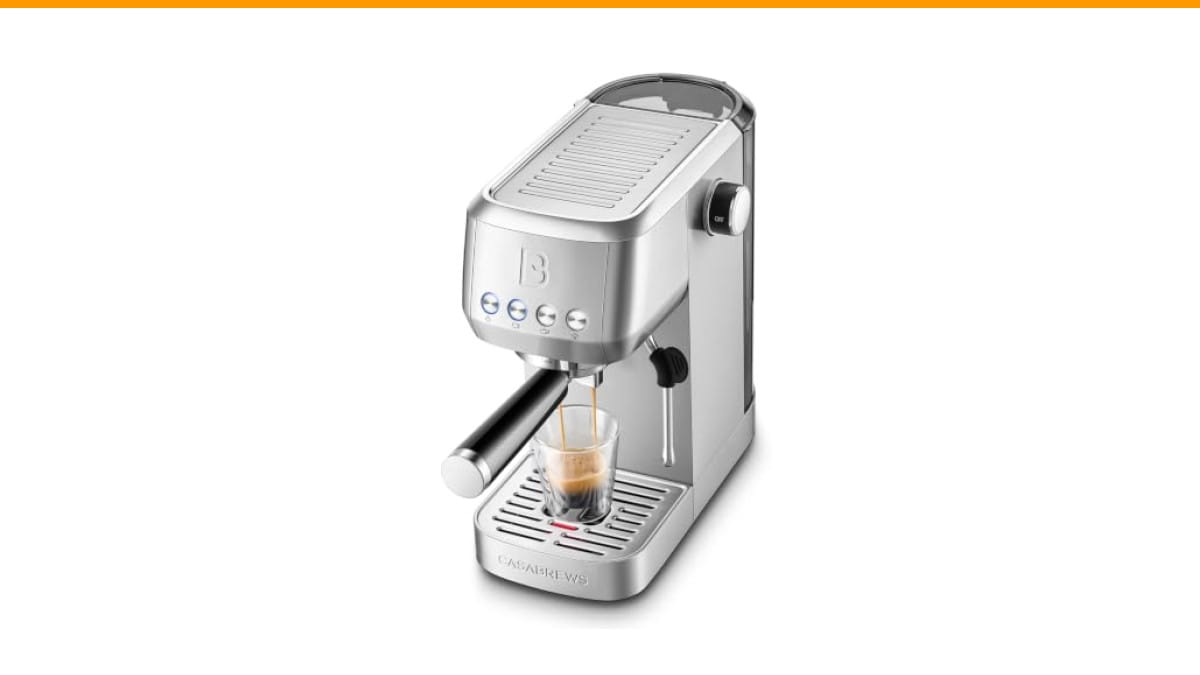
CASABREWS 3700 Essential Stainless Steel Espresso Machine…
- Make Your Favorite Espresso Coffee At Home: The CASABREWS coffee machine with milk frother allows you to prepare all your favorite…
- Professional 20-Bar Pressure System: A semi-Automatic 2-in-1 Espresso Maker with a 20 bar professional pump and a 1350 W powerful…
- Milk Frothing System: Our espresso machine with milk frother has a powerful steam wand that creates a creamy and rich micro-foam m…
As an Amazon Associate I earn from qualifying purchases.
You’ll also learn why a mid-priced compact machine like the CASABREWS 3700 Essential often outlasts a budget model by several years, even though both look similar on the outside.
If you’re shopping now, the CASABREWS 3700 Essential Stainless Steel Espresso Machine is a solid reference point. It’s a semi-automatic with a 20-bar pump and a steam wand, priced in the range where build quality starts to matter. We’ll use it as an example throughout this article because it represents the sweet spot between cheap throwaway machines and expensive prosumer gear.
Quick Answer: How Many Years Does a Compact Machine Last?
Here are the numbers you came for, with no sugarcoating:
- Manual lever machines: 3-5 years with regular use
- Semi-automatic machines: 5-10 years, with 7 as the realistic average
- Fully automatic machines: 4-7 years because of complex internals
These figures assume you use the machine once or twice daily and descale every 2-3 months. Skip maintenance and cut those numbers in half. A neglected machine with hard water can die in 18 months.
The biggest variable isn’t the brand. It’s the boiler material and pump quality. Compact machines use smaller boilers than full-size units, so they heat faster but also cycle more often. That cycling stresses the heating element and the thermostat. A cheap aluminum boiler will corrode; a stainless steel one won’t.
Compact vs. Full-Size: Why Size Matters for Lifespan
Compact machines pack the same components as full-size ones into a smaller frame. That means less insulation around the boiler, smaller water reservoirs, and cheaper vibration pumps instead of rotary pumps. Each of those choices affects longevity.
Vibration pumps are the norm in compact machines. They’re small, cheap, and noisy. They also wear out faster than the rotary pumps found in commercial and high-end home machines. A vibration pump typically lasts 5-8 years with daily use. A rotary pump can go 15 years. That’s a huge difference in a machine that costs under $500.
The boiler size matters too. A compact machine with a 200ml boiler will cycle on and off constantly during a shot. Each cycle expands and contracts the heating element, eventually causing micro-cracks. A larger boiler runs less often, so it lasts longer. This is physics, not marketing.
So when you buy compact, you’re accepting a shorter lifespan in exchange for counter space and a lower price. That’s fine as long as you know it going in. The trick is to buy a compact machine built well enough that the trade-off feels fair.
Average Lifespan by Compact Machine Type
Let’s get specific about each category. These are real-world numbers from owner reports and repair technicians, not manufacturer claims.
Manual Lever (3-5 years)
Manual lever machines like the Flair or the Rok have no pump and no heating element. You supply the pressure with your arms, and you heat the water separately. That simplicity should mean they last forever, and the mechanical parts mostly do.
What fails on lever machines are the gaskets and seals. The piston seal wears out after 2-3 years of regular use. Replacement seals cost $10-20 and take five minutes to swap. If you don’t replace them, the machine loses pressure and your shots turn sour.
Some lever machines use plastic levers or cheap pivot pins that snap under pressure. Check the build material before buying. A metal lever with replaceable seals will outlast you.
Semi-Automatic (5-10 years)
This is the category most home users should care about. The CASABREWS 3700 and similar machines fall here. You control the shot timing, the machine handles pressure and temperature.
Semi-automatics have three main failure points: the pump, the heating element, and the brew group gasket. The pump usually goes first, especially if you pull multiple shots back-to-back without letting it cool. The heating element fails if you run the machine dry or descale too aggressively. The gasket just wears out from normal use and costs $5 to replace.
With reasonable care, a semi-automatic should give you 7 solid years. Many owners report 10+. The key is replacing the $5 gasket every year or two and descaling on schedule. That’s it. The rest of the machine is simple enough to keep running.
Fully Automatic (4-7 years)
Fully automatic machines grind, tamp, brew, and discard the puck at the touch of a button. All those moving parts mean more things to break. The grinder burrs wear out, the brew unit jams, and the internal sensors fail.
These machines also have more plastic internals than semi-automatics. Plastic gears strip, plastic brew units crack, and plastic water paths develop leaks. Repairs on fully automatics often cost more than the machine’s value because the labor to access the internals is extensive.
If you want a fully automatic, budget for a 5-year lifespan and treat it as a disposable appliance. The best automatic espresso machines under $1000 will last longer than budget ones, but they still won’t match a simple semi-automatic for longevity.
The 5 Factors That Kill a Compact Machine Fast
You can buy the best compact machine on the market and still kill it in two years. Here’s what actually destroys them:
- Hard water without descaling. Limescale builds up on the heating element and acts as insulation. The element overheats, trips the thermal fuse, and dies. A $15 descaling kit would have prevented a $100 repair. If you have hard water, descale monthly.
- Leaving it on all day. Standby mode sounds convenient, but it keeps the boiler at temperature for hours. Every hour at temperature is wear on the heating element and thermostat. Turn it off when you’re done. The warm-up time on a compact machine is only 30-45 seconds anyway.
- Back-to-back shots without rest. Pulling four shots for a dinner party stresses the pump and boiler. Give the machine 2-3 minutes between shots to cool and reset. The pump needs time to shed heat.
- Running the pump dry. The pump relies on water for cooling and lubrication. Run it dry for even 10 seconds and you can scorch the internal seals. Always check the water level before brewing.
- Ignoring the drip tray. A full drip tray breeds mold and bacteria that can clog the internal drain lines. Empty it daily and wash it weekly. It takes 10 seconds.
None of these are exotic. They’re basic habits that most owners skip because the machine works fine until it doesn’t.
The Real Cost: Repair vs. Replace (with Dollar Figures)
When your machine breaks, the first question is whether to fix it. Here’s a simple rule: if the repair costs more than 50% of what you paid for the machine, replace it. That’s not a hard number, but it’s a good sanity check.
Let’s use a $250 compact semi-automatic as an example. A new pump costs $40-60 in parts plus $50-80 in labor if you pay a technician. That’s around $120, which is under the 50% threshold, so it’s worth fixing. A new boiler costs $80-120 plus labor, totaling $160-200. That’s getting close to the threshold. If the heating element and pump both fail at once, you’re looking at $250+ in repairs. At that point, buy a new machine.
Here’s the table showing typical repair costs for compact machines:
| Component | Parts Cost | Labor Cost | Total | Worth Fixing? |
|---|---|---|---|---|
| Brew gasket | $5-10 | $0 (DIY) | $5-10 | Always |
| Vibration pump | $40-60 | $50-80 | $90-140 | If machine is under $300 |
| Heating element | $50-80 | $60-100 | $110-180 | If machine is under $400 |
| Thermostat | $15-25 | $40-60 | $55-85 | Usually |
| Control board | $80-150 | $60-100 | $140-250 | Rarely |
DIY repairs are very doable on semi-automatics. There are YouTube videos for every common fix. If you’re handy, a $10 gasket replacement can add years to the machine. If you’re not handy, factor labor into the calculation.
One more thing: if the machine is leaking water from the base, that’s usually a failed seal or a cracked boiler. Cracked boilers are not worth fixing. Seals are. Look at the source before deciding.
Maintenance Schedule for Compact Machines (Monthly/Yearly)
Here’s a realistic schedule that won’t eat your weekends. Set a reminder on your phone and follow it.
Weekly: Empty and rinse the drip tray. Wipe the steam wand after each use and purge it for 2 seconds to clear milk residue. Backflush with water only (no detergent) if your machine has a blind basket.
Monthly: Descale with a citric acid solution or commercial descaler. Run it through the brew group and the steam wand. This is the single most important thing you can do for longevity. If you have soft water, you can stretch this to every 2 months.
Quarterly: Backflush with espresso machine detergent to remove coffee oils from the brew group. Replace the brew gasket if it looks worn or if the portafilter feels loose. Clean the shower screen with a brush.
Yearly: Replace the brew gasket regardless of condition. They’re cheap and a worn gasket causes pressure loss. Check the water tank for cracks and the power cord for damage. If your machine has a removable brew group (common on fully automatics), disassemble and lubricate it.
That’s it. Thirty minutes a month keeps a compact machine running for a decade. Most people skip the monthly descale and pay for it later. Don’t be that person. Read our guide on descaling at home if you’re unsure how to do it.
Signs Your Compact Machine Is Dying (Not Just Dirty)
Some problems are dirty machines. Others are genuine failures. Learn the difference before you spend money on repairs.
Dirty, not dead: Slow flow, weak crema, or sour taste usually means coffee oils have clogged the brew group. A backflush with detergent fixes it. If the steam wand sputters, it’s milk residue, not a mechanical failure.
Actually dying: The pump makes a high-pitched whine but no water comes out. That’s a failed pump or a blocked line. If the machine heats but never reaches pressure, the pump is likely done. If it leaks from the base, that’s a seal or boiler crack. If the heating element turns on but the water never gets hot, the thermostat or element has failed.
One reliable test: pull a shot and time it. If a double shot takes more than 35 seconds when it used to take 25, something is restricting flow. That could be a clogged shower screen or a failing pump. Clean first, then assess.
Also pay attention to strange noises. Grinding or rattling sounds from the pump area mean the pump bearings are failing. That’s a $50 part, but if you ignore it, the pump can seize completely and take the heating element with it.
Is a Cheap Compact Machine Worth It? (Cost-Per-Year Math)
Let’s do the math that most buyers skip. A $100 machine that lasts 2 years costs you $50 per year. A $300 machine that lasts 7 years costs you $43 per year. The expensive machine is cheaper over time, and it makes better coffee the whole time.
Here’s the table with real scenarios:
| Machine Price | Expected Lifespan | Cost Per Year | Notes |
|---|---|---|---|
| $100 | 2 years | $50 | Plastic internals, weak pump, no warranty support |
| $250 | 5-7 years | $36-50 | Better pump, stainless boiler, replaceable parts |
| $500 | 8-10 years | $50-63 | Rotary pump option, brass boiler, prosumer build |
| $1000+ | 10+ years | $100+ | Commercial-grade, but overkill for home use |
The $250-300 range is the sweet spot for compact machines. You get a stainless steel boiler, a decent vibration pump, and replaceable gaskets. The CASABREWS 3700 fits here, and it’s built to be serviced rather than tossed.
Cheap machines under $150 are built with plastic boilers and non-standard parts. When they break, you can’t find replacements. They’re designed to be disposable. If you only want a machine for a dorm room or a summer cabin, that’s fine. Just know you’ll buy another one in two years.
One caveat: a $300 machine only outlasts a $100 one if you maintain it. The descaling habit matters more than the purchase price. Skip the maintenance and both will die at the same time.
FAQs on Compact Espresso Machine Longevity
How often should I descale a compact espresso machine?
Every 4-6 weeks if you have hard water, every 8-12 weeks if you have soft water. The mineral content of your water is the single biggest factor in espresso machine lifespan. You can buy water hardness test strips for a few dollars to check. If the strips show high hardness, descale monthly without fail.
Can I use vinegar to descale my espresso machine?
You can, but you shouldn’t. Vinegar is acetic acid and it can damage the seals and gaskets inside your machine. It also leaves a smell that takes many rinses to remove. Use a proper espresso machine descaler with citric or lactic acid instead. It costs a few dollars more and protects your machine better.
Does leaving my machine on all day wear it out faster?
Yes. Every hour the boiler stays hot is an hour of thermal stress on the heating element and thermostat. Compact machines have small boilers that cycle frequently to maintain temperature. That cycling is what wears them out. Turn the machine off after you finish brewing. The warm-up time on most compact machines is under a minute.
Is it worth repairing a 5-year-old compact espresso machine?
It depends on the repair cost and the machine’s original price. Use the 50% rule: if the repair quote is less than half what you paid, fix it. If it’s more, replace it. A $60 pump replacement on a $300 machine is worth it. A $200 control board replacement on that same machine is not.
What’s the most common reason compact espresso machines fail?
Limescale buildup from hard water. It coats the heating element, causing it to overheat and trip the thermal fuse. This is preventable with regular descaling. The second most common cause is running the pump dry, which scorches the internal seals. Both are user errors, not manufacturing defects.
Final Verdict: Buy for Longevity, Not Just Price
Here’s what you should take from all of this:
- Plan for 5-7 years from a compact semi-automatic. That’s the realistic sweet spot for the category.
- Spend $250-350 if you want a machine that lasts. The $100 options are disposable by design.
- Descale monthly with hard water. This single habit doubles your machine’s lifespan.
- Turn the machine off after use. Standby mode is convenience, but it costs you years.
- Learn to replace the brew gasket yourself. It’s a $5 part that takes 5 minutes and prevents bigger problems.
- Use the 50% rule for repairs. If the fix costs more than half the machine’s value, buy new.
- Buy from brands that sell replacement parts. The CASABREWS 3700 is a good example of a machine you can actually service.
A compact espresso machine is a small appliance with a finite life. But with the right purchase and basic care, that life can stretch to a decade. The choice is yours: replace a $100 machine every two years, or maintain a $300 machine for seven. The math says the latter is cheaper, and the coffee is better too.
If you’re dealing with a machine that’s already struggling, check our guides on leaking water issues and deep cleaning before you give up on it. Sometimes a thorough clean is all it needs.
Products related to this article
Sponsored / affiliate links. As an Amazon Associate I earn from qualifying purchases. I may earn additional commission from eligible campaigns.
 Coffee Espresso Machine Handle Replacement Parts, Cafe Bracket Handle for Lidl Silvercrest CM4621 CM4218 KF5002 KF500S Barista (for 51mm Portafilter Basket - Not included)
 Meat Cutter Machine, Stainless Steel Electric Meat Slicer Machine with Three functional modes & Inclined Discharge Port Shredded Cutting Machine for Home Restaurants Supermarket (15mm)
 Linnkyfloa Coffee Espresso Maker Handle Replacement for Stovetop Moka Pot or Percolator, Black Plastic for Spare Part Compatible with Italian(9-12 Cup)