You buy a nice stainless steel mug, use it every morning for a few months, and then one day your coffee is lukewarm by the time you reach the office. The mug looks fine. No dents, no scratches. But something changed. This is the moment most people wonder: how long does an insulated coffee mug last, really?
The short answer is that a quality double-wall vacuum mug should give you 3 to 5 years of solid daily service. The longer answer involves understanding the difference between the mug’s physical lifespan and its daily heat retention performance. These are two separate things, and confusing them leads to either replacing a perfectly good mug too early or keeping a dead one too long.

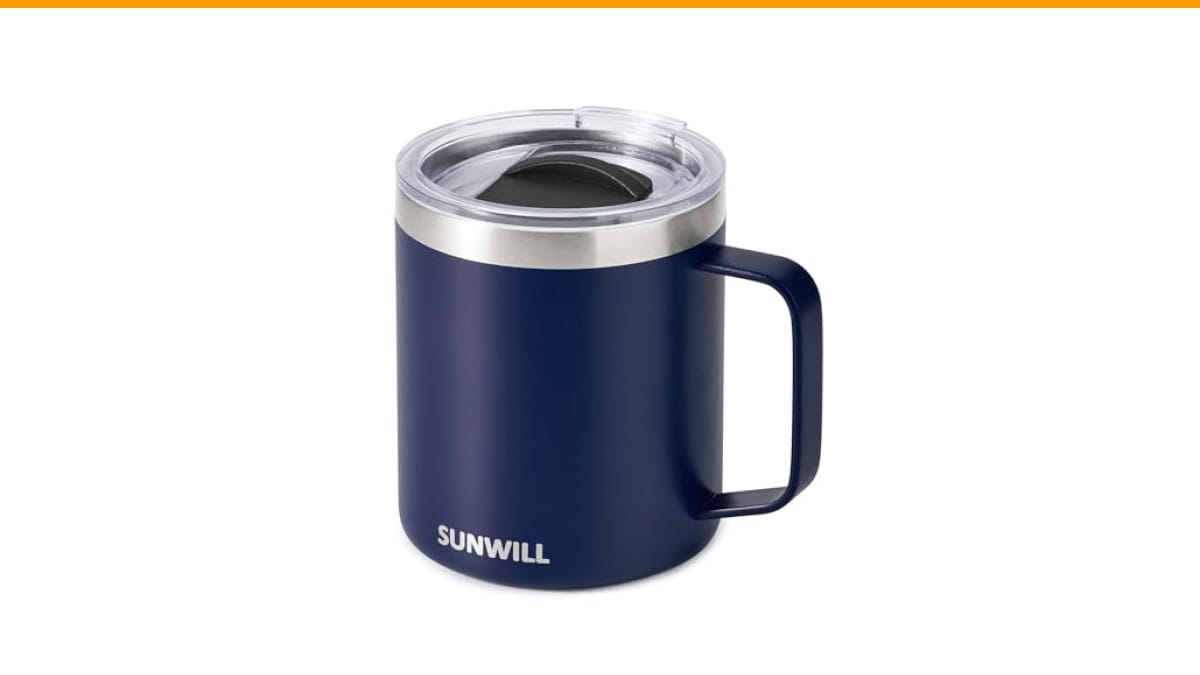
SUNWILL
SUNWILL Insulated Coffee Mug, Stainless Steel 14…
- NO-SWEAT, MESS-FREE DESIGN: Ideal for Hot & Iced Beverages. Keep your coffee, tea, or hot chocolate hot for 3h+, and iced coffee o…
- Ultra-Durable Powder Coating & Dishwasher Safe: Premium powder coated exterior provides a textured, comfortable grip that won't sl…
- Splash Resistant Sliding Lid: Designed to reduce splashes and keep your drinks cleaner during everyday use. The BPA-free lid featu…
As an Amazon Associate I earn from qualifying purchases.
In this guide, you’ll learn exactly what determines a mug’s lifespan, how to test if yours is failing, and what you can do to stretch its useful life. You’ll also get a clear picture of when replacement is the smarter move, both for your coffee and your wallet.
If you’re shopping for a new mug right now, the Check Price on Amazon is a solid 14 oz option. It uses double-wall 18/8 stainless steel with a splash-resistant sliding lid, and it holds heat for about 3 hours and cold for about 6. It’s a practical everyday choice, not a fancy showpiece.
What Does “Last” Actually Mean? Lifespan vs. Heat Retention
Let’s clear up the biggest confusion first. When someone asks how long an insulated mug lasts, they might mean one of two things:
- Physical lifespan: How many years the mug remains structurally sound — no rust, no cracks, no broken lids.
- Heat retention time: How many hours a single cup of coffee stays hot on any given day.
These are different metrics. A mug can have a 5-year physical lifespan but only retain heat for 2 hours by year three. Conversely, a cheap mug might fall apart in 18 months but keep drinks piping hot the entire time it works.
The physical lifespan is mostly determined by build quality: the thickness of the stainless steel, the quality of the vacuum seal, and the durability of the lid mechanism. Heat retention, on the other hand, is a performance metric that degrades over time due to wear, damage, and seal degradation.
Most people actually care about both, but they ask the question as if it’s one thing. So let’s break down each one.
The Honest Answer: How Many Hours Does a Good Mug Last?
Daily heat retention is what you experience every morning, so let’s start there. The numbers below assume you pre-heat the mug with hot water before pouring your coffee. Skipping that step cuts retention time by roughly 30-40%.
The 1-2 Hour Rule (Everyday Use)
Most standard insulated mugs in the $15-$30 range will keep coffee hot for 1 to 2 hours. That’s not a failure; that’s physics. A typical double-wall stainless steel mug with a plastic lid loses heat through the lid and through the thin steel at the rim. The vacuum layer slows heat transfer, but it doesn’t stop it.
If you drink your coffee within an hour, this is fine. Most people do. The mug does its job — it keeps your drink warm through the commute and the first meeting, not through the entire morning.
The 4-6 Hour Rule (High-End Vacuum Mugs)
Premium mugs with full vacuum insulation, tight silicone gaskets, and narrow openings can hold heat for 4 to 6 hours. Brands like Zojirushi and Yeti achieve this through better lid design and more efficient vacuum chambers. These mugs cost more, but they deliver a noticeably different experience.
The SUNWILL mug sits in the middle: about 3 hours of heat retention. That’s enough for a slow morning at home or a moderate commute, but not for a full workday of sipping.
Here’s the catch: these are numbers for a brand-new mug. The real question is how those numbers change after a year of daily use.
When Does a Mug “Die”? Signs of Insulation Failure
Vacuum insulation doesn’t wear out gradually like a battery. It fails suddenly, usually because the vacuum seal is compromised. Once air gets into the double-wall gap, the mug becomes little better than a single-wall cup. Heat transfers straight through the air gap, and your coffee cools in 30 minutes.
Two simple tests tell you if your mug has lost its vacuum.
The Lid Seal Test
The lid is the weakest link on almost every insulated mug. It’s made of plastic or silicone, and it degrades with heat, dishwashing, and repeated opening. A compromised lid lets heat escape from the top, which is the most direct path for heat loss.
Here’s how to test it: fill the mug with hot water, close the lid, and turn it upside down over a sink. Wait 10 seconds. If any water leaks, the seal is failing. A small drip might not seem like a big deal, but that same gap is letting heat pour out. Replace the lid if possible, or start shopping for a new mug.
The Exterior Heat Test
This test checks the vacuum wall itself. Fill the mug with boiling water, wait 5 minutes, and then feel the exterior. A properly insulated mug should feel room temperature on the outside. If the sides feel warm or hot, the vacuum is gone.
This happens for a few reasons. Dropping the mug on a hard floor can crack the inner or outer steel wall, breaking the vacuum seal. Extreme temperature changes, like putting a cold mug in a hot dishwasher, can also stress the metal and cause micro-fractures. Once that seal is broken, there’s no fixing it. The mug is done.
I’ve seen people keep using mugs like this for years, thinking they’re just getting older and less effective. They’re not. The coffee is cooling because the mug has essentially become a single-wall cup with a fancy exterior.
How to Extend Your Mug’s Life (Maintenance That Matters)
You can’t fix a broken vacuum, but you can prevent the common causes of failure. The maintenance routine below takes about 5 minutes a week and can add years to your mug’s life.
- Hand-wash the lid. Dishwasher heat and detergent degrade the silicone gasket over time. The mug body might be dishwasher safe, but the lid is the part that matters. Wash it by hand with warm soapy water and dry it completely before reassembling.
- Don’t microwave the mug. This seems obvious, but people do it. The metal body will arc and damage the interior surface, and the lid will warp. Both ruin the mug.
- Avoid dropping it on hard surfaces. A single hard drop can dent the exterior and compromise the vacuum. If you drop it and it lands on the rim or a corner, test the exterior heat test the next day.
- Pre-heat with hot water. This doesn’t extend the mug’s lifespan, but it makes the heat retention numbers meaningful. A cold mug steals heat from your coffee for the first 15 minutes. Pre-heating eliminates that loss.
- Clean the lid gasket regularly. Coffee oils and sugars build up under the silicone seal, making it stiff and less effective. Pop the gasket out once a month and wash it separately.
If you’re also maintaining your coffee brewing equipment, the same logic applies. A clean machine performs better and lasts longer. Check out our guide on coffee machine maintenance for the full routine.
Does Age Affect Performance? The Science of Wear and Tear
Let’s be direct: yes, age affects performance, but not in the way most people think. The vacuum layer itself doesn’t degrade with time. It’s a sealed space with no moving parts. What degrades are the components around it.
The lid seal is the first thing to go. After about 12-18 months of daily use, the silicone gasket loses its flexibility. It gets hard, cracks, or permanently compresses. This creates a tiny gap between the lid and the mug body. Heat escapes through that gap, and your coffee cools faster. The steel vacuum wall is still working perfectly; the lid is just letting you down.
The second factor is the rim. Every time you drink, your lips touch the steel rim. Over time, the finish wears down, and the metal becomes slightly thinner in that spot. This isn’t visible to the naked eye, but it increases heat transfer at the rim. The effect is small, maybe 5-10% of total heat loss, but it compounds with the lid issue.
Real-world testing shows that a well-maintained mug can retain 80-90% of its original heat retention capacity after 3 years. A neglected mug — one that goes through the dishwasher, gets dropped, and has a worn-out gasket — might retain only 50% after the same period. The difference is entirely in the maintenance.
For a deeper look at how cleaning habits affect your equipment’s longevity, read our piece on coffee maker cleaning frequency.
The Bottom Line: When to Replace and When to Keep
Here’s a practical decision framework. Run these checks in order, and you’ll know exactly what to do.
| Condition | Test Result | Action |
|---|---|---|
| Lid leaks when inverted | Water drips out | Replace the lid if possible; otherwise, replace the mug |
| Exterior feels hot with boiling water inside | Warm or hot to the touch | Vacuum is broken; replace the mug |
| Lid seal is stiff but not leaking | No drips, but lid is hard to close | Replace the gasket if available; hand-wash going forward |
| Mug is 3+ years old, all tests pass | Holds heat for 2+ hours | Keep using it; you’re getting good value |
| Mug is 5+ years old, all tests pass | Holds heat for 1-2 hours | Consider replacing for better daily performance |
There’s also an economic angle. A $25 mug that lasts 2 years costs about 3.4 cents per day. A $40 premium mug that lasts 5 years costs 2.2 cents per day. The premium mug is cheaper per day, assuming you don’t lose it. But if you’re the type who leaves mugs in the car or at the office, the cheaper mug might be the smarter buy.
One more thing: if your mug has sentimental value, keep it as a desk pen holder. Don’t use it for coffee. A mug with a broken vacuum is frustrating to use, and you’ll end up buying a replacement anyway. The old mug isn’t doing you any favors.
FAQs
Can I put my insulated mug in the dishwasher?
The stainless steel body can usually handle it, but the lid cannot. Dishwasher detergent and heat degrade the silicone gasket faster than hand washing. If you value your mug’s heat retention, hand-wash the lid. The body is fine either way, but the lid is the part that determines performance.
Why does my coffee taste like metal after a few months?
That’s usually a cleaning issue, not a mug failure. Coffee oils build up in the small crevices of the lid and the rim. If you’re not cleaning the gasket area regularly, those oils go rancid and affect the taste. Pop the gasket out, wash everything with warm soapy water, and the metallic taste should disappear. If it doesn’t, the stainless steel might be degraded, and it’s time to replace the mug.
Does pre-heating the mug actually matter?
Yes, and it matters a lot. A cold stainless steel mug absorbs heat from your coffee for the first 10-15 minutes. Pre-heating with hot water for 30 seconds brings the mug up to temperature, so all the heat goes into your coffee instead of warming the mug. This can add 30-45 minutes of drinkable temperature.
Is a 14 oz mug big enough for a standard coffee order?
For most home users, yes. A standard drip coffee is 8-12 oz. A 14 oz mug gives you room for a large order or a splash of milk. If you’re brewing directly into the mug, make sure it fits under your coffee maker’s spout. Low-profile designs like the SUNWILL mug are made for this purpose.
How do I know if my mug is actually vacuum insulated?
Look for the double-wall construction. Turn the mug over and check the bottom — there should be a visible seam or a small vent hole. That’s where the vacuum was pulled during manufacturing. If the mug has a single layer of steel visible at the rim, it’s not vacuum insulated. Also, a true vacuum mug will not sweat on the outside with cold drinks. If you see condensation, it’s not vacuum sealed.
What You Should Remember
- A quality insulated mug lasts 3-5 years with normal use; a premium one can go longer.
- Daily heat retention (hours) and physical lifespan (years) are separate things. Don’t confuse them.
- The lid seal is the first component to fail. Hand-wash it and replace the gasket when it gets stiff.
- If the exterior feels hot with boiling water inside, the vacuum is broken. Replace the mug.
- Pre-heat your mug with hot water to get the full 3-6 hours of retention.
- Dropping the mug is the fastest way to kill the vacuum. Handle with care.
- Replacing a $25 mug every 2 years costs about the same per day as a $40 mug every 5 years. Buy for your habits, not the marketing.
Your mug is a tool. Treat it like one, and it’ll serve you well for years. Ignore it, and you’ll be buying a new one every winter. The choice is yours.
Products related to this article
Sponsored / affiliate links. As an Amazon Associate I earn from qualifying purchases. I may earn additional commission from eligible campaigns.