You measured the counter, checked the cabinet height, and still bought a machine that blocks the toaster. Or worse, you bought one that sounds like a jackhammer at 6:30 AM. Most compact espresso machines fail not because they make bad coffee, but because they don’t fit the person who bought them.
This guide isn’t a list of specs. It’s a fit test. You’ll learn how to match a small espresso machine to your exact kitchen constraints, your schedule, and your tolerance for noise and maintenance. By the end, you’ll know which size class you need, which heating system suits your routine, and what hidden costs to expect before you buy.

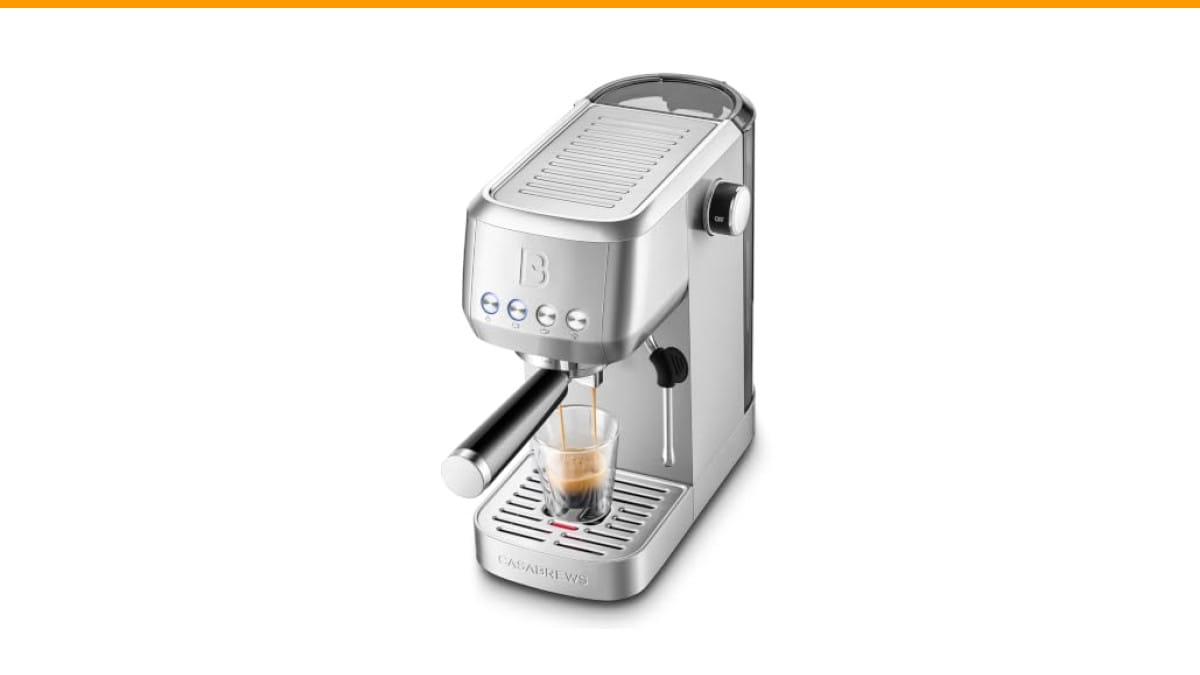
CASABREWS
CASABREWS 3700 Essential Stainless Steel Espresso Machine…
- Make Your Favorite Espresso Coffee At Home: The CASABREWS coffee machine with milk frother allows you to prepare all your favorite…
- Professional 20-Bar Pressure System: A semi-Automatic 2-in-1 Espresso Maker with a 20 bar professional pump and a 1350 W powerful…
- Milk Frothing System: Our espresso machine with milk frother has a powerful steam wand that creates a creamy and rich micro-foam m…
As an Amazon Associate I earn from qualifying purchases.
If you want a solid starting point, the CASABREWS 3700 Essential Stainless Steel Espresso Machine checks most of the boxes for a typical home setup. It packs a 20-bar pump and a steam wand into a frame that fits under most upper cabinets, and it includes a detachable 43.9 oz water tank. We’ll use it as a reference point throughout this guide.
What ‘Compact’ Really Means: Size Tiers, Not Just Inches
Manufacturers call everything from a 5-inch-wide manual lever to a 15-inch-wide semi-commercial beast ‘compact.’ That’s useless. You need size tiers that match real kitchen layouts.
Here are the three practical tiers I use when testing machines:
- Ultra-slim (under 7 inches wide): Travel machines like the Wacaco Picopresso and some manual levers. These live in drawers or backpacks. They make excellent shots but lack steam wands and water tanks.
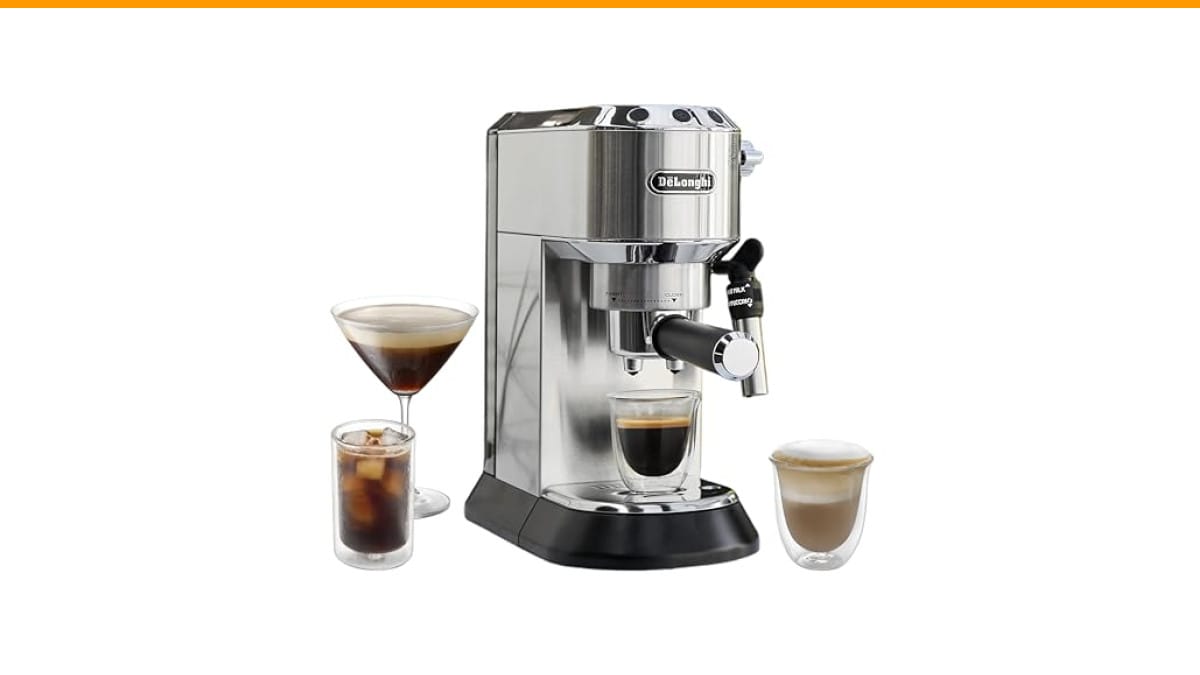
- Countertop slim (7 to 10 inches wide): The sweet spot for most apartments. Machines like the Dedica and Bambino fit here. They leave room for a grinder next to them.
- Compact-full (10 to 13 inches wide): Machines like the CASABREWS 3700 and Gaggia Classic Pro. These are still small but take up a real footprint. You need a dedicated spot, not a shared corner.
Measure your space before you look at any machine. Write down the width, depth, and height of your target spot. Then check two things most people miss: the height with the portafilter inserted (you need to slide a cup under it) and the clearance above the machine to open the water tank lid.
I’ve seen people buy a great machine and then realize they can’t fill the tank without pulling it out from under a cabinet. That’s a daily annoyance you don’t want.
The 6 Questions to Ask Before Buying
Skip the marketing copy. Ask these six questions instead. Your answers will narrow the field faster than any spec sheet.
1. How much noise can you tolerate?
Vibration pumps are loud. Most compact machines use them. Rotary pumps are quiet but they’re rare in small machines and cost more. If you live in an apartment with thin walls or make coffee before the household wakes up, this matters.
In my testing, the Breville Bambino runs noticeably quieter than the Dedica. The CASABREWS 3700 sits in the middle—loud enough to hear in the next room, but not jarring. Manual levers like the Flair are silent until you add a separate electric kettle.
Read reviews specifically for noise complaints. Don’t trust the decibel ratings on spec sheets; they’re measured in labs, not kitchens.
2. How long are you willing to wait for heat-up?
Thermocoil and thermoblock machines heat up in 3 to 5 seconds. Boiler machines take 10 to 15 minutes to reach proper temperature. That’s the biggest quality-of-life difference between compact machines.
If you’re a single-cup person in a hurry, a thermocoil machine like the Bambino wins. If you make several drinks back-to-back for guests, a boiler holds temperature better and recovers faster between shots.
The CASABREWS 3700 uses a 1350 W heating system with a 20-bar pump. It warms up quickly enough for daily use, but it’s not a single-second instant heat like the Bambino. You’ll wait about a minute for the ready light.
3. How much water do you actually use?
Small tanks mean more refills. A 35 oz tank gives you roughly 4 to 5 double shots before refilling. A 44 oz tank like the CASABREWS gives you 6 to 7. That’s fine for most households.
But consider your workflow. If you make a shot and then steam milk, you’ll use more water. If you backflush or rinse the group head after each shot, you’ll drain the tank faster than you think. Some machines have removable tanks that make refilling easy. Others require a pitcher and a steady hand. Check which type you’re buying.
4. What portafilter size are you willing to use?
Compact machines use either 51mm or 54mm portafilters. The standard commercial size is 58mm. Smaller portafilters mean smaller doses—usually 14 to 16 grams instead of 18 to 20.
That’s fine for milk drinks. It’s limiting for straight espresso shots. You’ll also find fewer aftermarket baskets and accessories for 51mm and 54mm. If you plan to upgrade your basket or tamp later, check what’s available for that size before you buy.
The CASABREWS uses a standard 51mm portafilter with both single and double baskets included. The Dedica also uses 51mm. The Bambino uses 54mm, which has slightly better accessory support.
5. Do you need real milk frothing?
A steam wand with a single hole produces decent microfoam but takes practice. A wand with multiple holes steams faster but is less forgiving. Some compact machines use a pannarello wand—a plastic sleeve that auto-froths. Those are fine for cappuccinos but terrible for latte art.
If you want to pour rosettas, skip the pannarello. Get a machine with a proper stainless steel wand that you can angle into the pitcher. The CASABREWS 3700 includes a steam wand that creates acceptable microfoam for home use. It’s not a commercial steamer, but it gets the job done after a few tries.
6. How much maintenance are you willing to do?
Small boilers scale up faster than large ones. The heating element is closer to the water, and the smaller volume means minerals concentrate quicker. You’ll descale more often with a compact machine than with a full-size one.
Thermocoil machines are easier to descale because there’s no boiler to soak. Boiler machines need a more thorough descale that takes longer. If you have hard water, budget for descaling every 2 to 3 months. That’s not a one-time cost; it’s a recurring chore.
If you skip descaling, you’ll get weak shots, longer heat-up times, and eventually a dead machine. Check our descaling guide for the proper steps.
Best Compact Machines by Type
You can’t compare a manual lever to a semi-automatic. They serve different people. Here’s the breakdown by type.
Best Overall Compact Semi-Auto: Breville Bambino vs. Dedica
The Bambino wins for heat-up speed and steam power. It uses a thermocoil, so it’s ready in about 3 seconds. The steam wand produces dry, powerful steam that rivals machines twice its price. It also has pre-infusion, which helps with even extraction.
The Dedica is slimmer and cheaper. It looks better on a counter and takes up less space. But its steam wand is weaker, and the 51mm portafilter limits your upgrade path. The Dedica also has a reputation for a finicky drip tray that fills fast.
If you have the counter space, buy the Bambino. If you’re truly tight on space and care more about looks, the Dedica works, but you’ll fight its limitations.
Best Budget Compact: CASABREWS vs. Stilosa
The CASABREWS 3700 offers a 20-bar pump, a stainless steel body, and a larger water tank. It feels more substantial than its price suggests. The included tamper and baskets are usable, which isn’t always true at this level.
The Stilosa is cheaper and uses a 51mm portafilter like the CASABREWS. But it has a smaller tank and a lighter build. In side-by-side testing, the CASABREWS produced a richer crema and more stable temperature on back-to-back shots.
Neither machine will confuse you with a commercial espresso bar. But for a first machine on a budget, the CASABREWS gives you more room to grow without upgrading immediately.
Best Manual Compact: Flair Neo Flex vs. Wacaco Picopresso
Manual levers give you total control and zero noise. The Flair Neo Flex is a countertop lever that makes excellent shots with a pressurized basket included for beginners. It’s compact but requires a kettle and a scale.
The Wacaco Picopresso is a portable hand-pump that fits in a bag. It makes surprisingly good espresso for its size, but it takes practice and arm strength. Neither has a steam wand, so you’ll need a separate frother for milk drinks.
If you want espresso quality and don’t mind a ritual, go manual. If you want convenience and milk drinks, buy a semi-automatic instead.
Milk Frothing on a Small Machine: Steam Wand Power vs. Auto Frothers
Small machines have small boilers, which means limited steam power. A dedicated steam wand can take 30 to 60 seconds to texture milk on a compact machine. That’s fine if you’re making one drink. It’s slow if you’re making three.
Auto frothers—like the ones built into capsule machines—are foolproof but produce thicker foam, not microfoam. You can’t pour latte art with them. They also take up counter space if they’re separate units.
My advice: if you drink mostly lattes or cappuccinos, buy a machine with a real steam wand and practice. The first week will be frustrating. By week two, you’ll produce foam that’s good enough for home. By week three, you’ll wonder why you ever considered an auto frother.
If you drink straight espresso or Americanos, skip the steam wand entirely and save your money.
Maintenance & Descaling: The Hidden Cost of Compactness
Small machines get dirty faster than large ones. The smaller group head and shorter internal plumbing trap coffee oils and minerals more quickly. You’ll need to backflush with a cleaning tablet every 2 to 4 weeks if you use the machine daily.
Descaling frequency depends on your water hardness. If you use filtered water, you can stretch it to 3 months. If you use tap water in a hard-water area, expect to descale monthly. The process takes 20 to 40 minutes, plus a rinse cycle. It’s not hard, but it’s a recurring chore.
The CASABREWS has a removable drip tray and a detachable water tank, which makes routine cleaning easier. The group head is accessible for wiping. That’s more than some budget machines offer.
Neglect descaling and you’ll notice weak shots and long heat-up times. Eventually, the machine will stop working. A $15 descaling solution is cheaper than a new machine. Follow our maintenance routine to keep it running.
Quick Comparison Table
Here’s how the machines discussed stack up on the specs that matter for a compact setup.
| Machine | Width | Heating | Noise | Heat-Up | Milk Wand | Price Tier |
|---|---|---|---|---|---|---|
| Breville Bambino | 7.7 in | Thermocoil | Moderate | ~3 sec | Excellent | Mid |
| Dedica | 6.9 in | Thermoblock | Moderate-Loud | ~30 sec | Weak | Budget-Mid |
| CASABREWS 3700 | ~10 in | Boiler | Moderate-Loud | ~1 min | Good | Budget |
| Gaggia Classic Pro | 9.4 in | Boiler | Loud | ~10 min | Good | Mid |
| Flair Neo Flex | ~5 in | None | Silent | N/A (kettle) | None | Budget |
| Wacaco Picopresso | ~2.5 in | None | Silent | N/A (kettle) | None | Budget |
Check the current price on Amazon for each model. Prices shift frequently, and the table above reflects general tiers, not specific numbers.
FAQ
Are compact espresso machines too loud for apartments?
Most are noticeable. Vibration pumps create a whining noise during extraction and a louder buzz during steaming. The Bambino is quieter than most. Manual levers are silent. If noise is a dealbreaker, buy a manual lever or place the machine on a rubber mat to absorb vibration.
Is a 20-bar pump better than a 15-bar pump?
Not for the coffee. Standard espresso extraction happens at 9 bars. A 20-bar pump just means the machine has headroom. Many budget machines advertise high pressure but don’t regulate it well. Look for a machine with a pressure gauge or a reputation for stable pressure, not raw bar numbers.
Can a compact machine make professional-quality espresso?
It can make excellent espresso, but not with the consistency of a commercial machine. Small boilers and limited temperature control mean you’ll see more variation between shots. A PID controller helps but adds cost. For home use, a compact machine with a good grinder beats a prosumer machine with a bad grinder.
Do I need a special grinder for a compact machine?
Yes. The portafilter size affects your dose, but the grind quality matters more. A burr grinder is essential. Blade grinders produce uneven particles that cause channeling and bitter shots. Even a budget burr grinder like the Baratza Encore works better than a blade grinder.
How often should I replace the water filter in a compact machine?
Every 2 to 3 months, depending on your water usage and hardness. If you notice a mineral taste or slower flow, replace it sooner. Some machines have built-in filters; others use external ones. Check your manual for the recommended interval.
Bottom Line: Match the Machine to Your Counter, Not Your Ego
Buying a compact espresso machine is about trade-offs. You can’t have silent, instant heat, powerful steam, and a tiny footprint in one package. Something has to give.
- Measure your space before shopping. Know your width, depth, and height limits.
- Check noise levels in real reviews. Don’t trust lab specs.
- Choose thermocoil for speed, boiler for stability, manual for silence.
- Match the water tank size to your daily drink count.
- Get a real steam wand if you drink milk drinks. Skip it if you don’t.
- Budget for descaling every 2 to 3 months. It’s not optional.
- Spend more on a grinder than on the machine. It matters more.
The CASABREWS 3700 is a reasonable starting point for most home users. It’s not perfect—the steam wand takes practice, and the boiler needs time to stabilize—but it’s a solid first machine that won’t break the bank. Check its current price on Amazon to see if it fits your budget.
If you want a broader view of machine types, read our comparison of automatic and semi-automatic machines. And if you’re already dealing with a loud machine, our guide on fixing noisy espresso machines might help.
Products related to this article
Sponsored / affiliate links. As an Amazon Associate I earn from qualifying purchases. I may earn additional commission from eligible campaigns.
 Coffee Espresso Machine Handle Replacement Parts, Cafe Bracket Handle for Lidl Silvercrest CM4621 CM4218 KF5002 KF500S Barista (for 51mm Portafilter Basket - Not included)
 AirheadStorm Coffee Espresso Moka Stove Pot Handle, Mocha Pot Handle, Moka Express Handle Replacement Handle Parts for Espresso Pots 1 3 6 9-12 Cups(6 Cup)
 Quick Heating Cup Warmer, Three Temperature Settings, Splashproof and Portable, for Coffee, Milk, Lightweight ABS Material