You know the scenario. You brew a fresh cup, get pulled into a meeting or a long drive, and thirty minutes later you take a sip. It’s lukewarm, watery, and disappointing. Or the opposite: you grab a mug that claims to keep coffee hot for eight hours, but it’s still scalding at lunchtime and you’ve burned your tongue twice. Most people pick an insulated mug based on price or how it looks on the shelf. That’s backwards.
Choosing the right insulated coffee mug comes down to matching the mug to your drinking speed, your environment, and how much you care about the taste of your coffee. A mug that works great for a long commute might be terrible for a desk job. A vacuum-sealed monster that keeps coffee hot for twelve hours will frustrate you if you drink your cup in twenty minutes. This guide walks through the real decisions — insulation type, material, lid design, fit — so you can buy with confidence and stop wasting money on mugs that don’t match your routine.
You’ll also learn a few tricks most buyers miss, like the pre-heating hack that dramatically improves heat retention and why the lid gasket is the most important part of the mug you never think about.
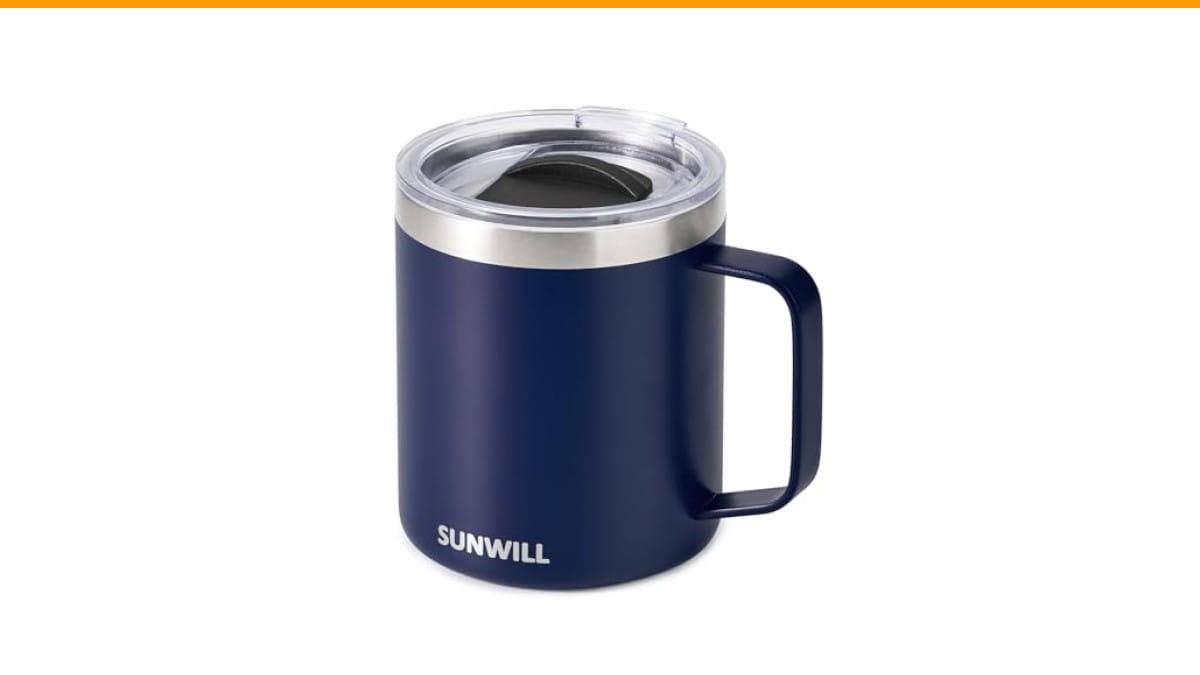
One option that checks many boxes for a wide range of users is the SUNWILL Insulated Coffee Mug, a 14-ounce stainless steel tumbler with a splash-resistant sliding lid. It’s a solid middle-ground choice — not too big, not too small, and the powder-coated exterior gives it a grip that most bare-metal mugs lack. We’ll reference it as a practical example throughout this guide, but the decision framework applies to any mug you’re considering.
The 5-Minute Rule: How to Match a Mug to Your Drinking Speed
Here’s the first question nobody asks: how fast do you actually drink your coffee? Not how fast you’d like to, but how fast you really do. Sit with that for a second. Most people fall into one of three camps.
The sipper nurses a cup for two to three hours. They take small sips between tasks, and the coffee goes cold before it’s half gone. This person needs a mug with strong heat retention — double-wall or vacuum insulation, ideally with a lid that seals well. A 14-ounce capacity works well because it holds enough volume without making you feel like you’re carrying a thermos.
The gulper finishes a cup in fifteen to twenty minutes. They drink coffee like it’s a task to complete. For them, heavy insulation is actually a liability. A mug that keeps coffee at 180°F for six hours means the first sip is always too hot. A thinner-walled mug or a double-wall mug with a wider opening allows faster cooling. The SUNWILL mug holds heat for about three hours, which is a nice sweet spot — hot enough for a slow morning, but not so insulated that you wait forever for it to cool.
The grazer takes a sip every ten minutes, maybe over an hour or two. They want the coffee to stay warm but not scalding. A mug with moderate insulation, like the 3-6 hour range, works best. Too much insulation and the coffee stays painfully hot; too little and it’s cold by the second half.
Test yourself honestly. If you’re a gulper, stop reading the specs about heat retention and focus on lid design and capacity. If you’re a sipper, insulation is your top priority. This one decision filters out half the mugs on the market before you even look at materials.
A quick note on capacity: 12 ounces is the standard coffee mug size. 14 ounces gives you a little extra room for milk or a slightly larger brew. 16 ounces and up starts to feel like a travel thermos. Choose the capacity that matches your typical pour, not the biggest number on the box.
Insulation Tech: Why “Vacuum” Beats “Double-Wall” (and When It Doesn’t)
You’ll see two terms on almost every insulated mug: double-wall and vacuum insulation. They’re related but not the same. Double-wall means the mug has two layers of steel with a gap between them. That gap slows heat transfer, which is better than a single wall but not the best.
Vacuum insulation takes that gap and removes the air from it. With no air molecules to transfer heat, the mug essentially stops losing heat through the walls. A vacuum-insulated mug can keep coffee hot for 8 to 12 hours, while a standard double-wall mug might only last 2 to 4 hours. That’s a massive difference in real-world use.
But here’s the catch: vacuum insulation is heavier and more expensive. It also doesn’t help if you drink your coffee quickly. The SUNWILL mug uses a double-wall 18/8 stainless steel design that keeps drinks hot for 3+ hours and iced drinks cold for 6+ hours. That’s less than a vacuum mug but more than enough for most morning routines, and it keeps the weight down.
For iced coffee lovers, the cold retention matters just as much. A mug that keeps ice from melting for six hours means your iced coffee doesn’t get watered down by lunch. The same physics that trap heat also trap cold.
One more thing: check the construction quality. A vacuum mug is only as good as its seal. If the vacuum seal fails — which can happen after a drop or over years of use — the mug loses most of its insulation power. Double-wall mugs don’t have this failure mode, which makes them more forgiving for rough handling.
So the rule is simple. If you need coffee hot for more than four hours, buy vacuum insulated. If you drink within three hours or you plan to throw the mug in a backpack, double-wall is lighter, cheaper, and less likely to fail catastrophically.
Material Matters: Steel, Plastic, and the Ceramic Lining Difference
Most insulated mugs are stainless steel, but the grade and lining matter more than you’d think. 18/8 stainless steel (also called 304) is the standard for food-grade use. It resists rust and doesn’t impart a metallic taste to your coffee. Cheaper mugs sometimes use lower-grade steel that can affect flavor, especially with acidic coffee.
Here’s the taste factor most people ignore: coffee is mildly acidic, and metal can react with it. High-quality stainless steel like 18/8 doesn’t leach into your coffee, but some people still notice a slightly metallic edge compared to drinking from ceramic. If you’re sensitive to that, look for a mug with a ceramic or enamel coating on the interior. These coatings preserve the coffee’s flavor profile better but can chip over time, which ruins the mug’s integrity.
The exterior finish matters for grip and durability. Powder coating, like the finish on the SUNWILL mug, provides a textured surface that’s easier to hold than bare polished steel. It also resists scratches and peeling better than painted finishes. If you’re rough on your gear, powder coating is a worthwhile upgrade.
Plastic components are another consideration. The lid, the gasket, and any internal mechanisms should be BPA-free. Most reputable brands use food-grade plastic, but it’s worth checking. A cheap plastic lid can warp in the dishwasher or absorb odors over time. The SUNWILL mug’s lid is BPA-free and dishwasher safe, which simplifies cleanup.
One honest caveat: dishwasher-safe doesn’t mean dishwasher-proof. The high heat and harsh detergents in a dishwasher can degrade the seal on the lid gasket faster than hand washing. If you want your mug to last, hand-washing the lid is a smarter habit. We’ll cover this more in the maintenance section.
The Lid is the Leak: A Breakdown of Seals, Latches, and Sip Styles
People spend hours comparing insulation specs, then buy a mug with a lid that leaks all over their laptop bag. The lid is the most important part of the mug, and it’s also the most overlooked. Let’s break down the three main lid types.
Sliding lids have a small plastic piece that slides open and closed. They’re easy to use one-handed and mostly splash-resistant, but they’re rarely leak-proof. The SUNWILL mug uses this design, and it’s a good fit for desk work or short commutes where the mug sits upright. Don’t toss a sliding-lid mug sideways in a bag and expect your bag to stay dry.
Straw lids have a hole for a reusable straw. They’re excellent for iced coffee and cold drinks, but they’re terrible for hot coffee — you’ll burn your mouth. If you mostly drink cold brew, a straw lid is a great choice. If you drink hot coffee, skip it.
Chug or flip lids open fully with a latch or a button. They allow bigger sips, which is good for gulpers. The trade-off is that they’re more complex, with more parts that can break or get lost. A broken latch on a flip lid renders the mug nearly useless, and replacement lids can cost half the price of a new mug.
Here’s a practical test: when you’re evaluating a mug, look at the lid seal. Is it a silicone gasket? Silicone creates a better seal than plastic-on-plastic contact. Can you operate the lid with one hand? If you’re driving or typing, a two-handed lid is a dealbreaker. Does the lid come off easily for cleaning? If the gasket is stuck in a crevice you can’t reach, you’ll never clean it properly, and mold will grow.
The splash-resistant lid on the SUNWILL mug is a good middle ground. The sliding closure reduces splashes during everyday use, and it’s smooth enough to open with one hand. It’s not leak-proof, so it’s not for backpackers, but for a desk or car cup holder, it works well.
Fit and Function: Cup Holders, Weight, and the “Desk vs. Car” Dilemma
Here’s the question that trips up more buyers than any other: where will you actually use this mug? The answer changes everything.
The Commuter’s Checklist
If you drink coffee in the car, the first spec to check is the base diameter. Standard car cup holders are about 3 inches wide. Many insulated mugs, especially those with wide bases for stability, don’t fit. The SUNWILL mug, for example, has a wide base that provides stability on desks but won’t fit standard car cup holders. That’s a trade-off the manufacturer states openly.
For commuting, you also want a lid that seals well enough to survive a bumpy road. A splash-resistant lid is the minimum; a leak-proof lid is better if you’re tossing the mug into a bag. Weight matters too — a heavy vacuum mug is fine for a short drive, but if you’re carrying it on a train or a hike, every ounce counts.
The Desk Warrior’s Checklist
If the mug stays on your desk all day, the priorities shift. Stability becomes important — a wide base prevents accidental spills when you reach across your keyboard. The no-sweat exterior matters because condensation will form on a poorly insulated mug and leave a water ring on your desk. The SUNWILL’s double-wall design prevents exterior condensation, which is a subtle but essential feature for desk use.
For desk workers, capacity matters more than insulation. A 14-ounce mug lets you brew a full cup without refilling, and the low-profile design fits under most standard coffee makers. That’s a convenience you won’t appreciate until you’ve tried to fit a tall tumbler under a drip machine and ended up with coffee all over the counter.
If you’re hiking or camping, prioritize durability and leak-proofing over everything else. A powder-coated exterior resists scratches from rocks and gear. A fully sealed lid prevents leaks in a backpack. Weight is a real consideration, but not as much as you’d think — a 14-ounce mug filled with water or coffee weighs about a pound and a half, which is manageable for most day trips.
The Hidden Cost of Cleaning: Gaskets, Dishwashers, and Long-Term Care
Nobody thinks about cleaning when they buy a mug, but it’s the hidden cost that determines how long the mug lasts. The gasket inside the lid is the trouble spot. It’s the rubber ring that creates the seal, and it’s also a magnet for coffee oils, mold, and bacteria. If you can’t remove the gasket from the lid, you can’t clean it properly, and that mug will eventually smell like stale coffee no matter how many times you rinse it.
Look for a lid where the gasket pops out easily. The SUNWILL lid doesn’t have a removable gasket, which is a minor downside — you’ll need to be diligent about cleaning the crevices with a small brush. It’s not a dealbreaker, but it’s worth knowing before you buy.
The dishwasher question is more nuanced than the marketing suggests. Most stainless steel mugs are dishwasher safe, and the SUNWILL mug is no exception. But the heat and detergent will degrade the lid’s plastic and the gasket’s silicone over time. If you run your mug through the dishwasher daily, expect the lid to wear out in six to twelve months. Hand-washing the lid and gasket extends that lifespan significantly.
Here’s a maintenance routine that works: after each use, rinse the mug immediately with hot water. Once a week, wash the mug and lid with mild soap and a bottle brush. Once a month, soak the lid in a vinegar solution to break down coffee oils. This routine takes about five minutes per week and keeps the mug tasting fresh for years. For more on keeping your coffee gear clean, check out our guide on cleaning coffee maker.
Replacement lids are the hidden cost. Most brands sell lids separately, but they’re not cheap — often $10 to $15, which is a third of the mug’s price. If you lose or break a lid, you’re better off buying a new mug in many cases. That’s a strong argument for choosing a mug with a durable, simple lid design over one with complex mechanisms that can fail.
The Pre-Heating Hack: A Pro-Tip for Maximum Heat Retention
Here’s a trick that most mug manufacturers don’t tell you: pre-heating your mug doubles its effective heat retention. The physics are simple. The steel walls of the mug absorb heat from your coffee. If the walls start cold, they steal heat from the coffee during the first few minutes, dropping the temperature by 10 to 15 degrees. If you pre-heat the walls, they don’t steal that heat.
To do it: fill the mug with hot water from the tap or kettle, put the lid on, and let it sit for two minutes. Dump the water, dry the inside quickly, then pour your coffee. You’ll notice the coffee stays hot for noticeably longer — usually an extra 30 to 60 minutes, depending on the mug’s insulation quality.
This hack works for cold drinks too. Pre-chill the mug with ice water before pouring in your iced coffee, and the ice will melt slower. It’s a free upgrade that costs nothing and takes two minutes. If you’re the type of person who wants maximum performance from your gear, this is the single most effective habit you can adopt.
For the SUNWILL mug, pre-heating pushes its 3-hour hot retention closer to 4 hours, which makes it competitive with pricier vacuum mugs for most morning routines. It’s not magic, but it closes the gap between double-wall and vacuum insulation in real-world use.
The Verdict: Our Top Pick for Different Lifestyles
After testing mugs across all these categories, here’s how we’d break it down. The SUNWILL Insulated Coffee Mug is our pick for the desk worker who wants a reliable, no-fuss mug that fits under the coffee maker, doesn’t sweat, and cleans up in the dishwasher. It’s not the most insulated mug on the market, and it won’t fit a car cup holder, but it nails the core requirements for a stationary coffee drinker.
| Lifestyle | Best Mug Type | Key Specs to Prioritize | SUNWILL Fit? |
|---|---|---|---|
| Commuter (car or train) | Vacuum insulated with leak-proof lid | Must fit cup holder, sealed lid, 12-16 oz | No — wide base doesn’t fit cup holders |
| Desk worker | Double-wall with splash-resistant lid | Stable base, no-sweat exterior, dishwasher safe | Yes — ideal for this use case |
| Hiker / camper | Vacuum insulated with rugged exterior | Leak-proof, durable powder coating, 16-20 oz | Partial — durable but not leak-proof |
| Iced coffee lover | Double-wall with straw lid | Cold retention 6+ hours, straw-friendly lid | Yes — 6+ hour cold retention |
| Gulper (fast drinker) | Single-wall or thin double-wall | Wide opening, moderate insulation | Maybe — 3-hour retention is moderate |
For the commuter, we’d recommend a vacuum mug with a fully sealed lid, even if it costs more. For the hiker, prioritize leak-proofing above all else. But for the desk worker who wants a reliable daily driver, the SUNWILL’s combination of stability, no-sweat design, and dishwasher-safe construction makes it a strong value. Check the current price on Amazon to see if it fits your budget.
FAQ: Your Burning Questions Answered
Can I put my insulated mug in the dishwasher?
Most stainless steel mugs are dishwasher safe, but the lid is the weak point. The heat and detergent degrade the plastic and silicone gasket over time. Hand-wash the lid and gasket to extend their life. The SUNWILL mug is dishwasher safe, but you’ll get more years out of it if you wash the lid by hand.
Why does my coffee taste metallic in a stainless steel mug?
Cheaper steel grades can react with coffee’s acidity, producing a metallic flavor. High-quality 18/8 stainless steel (like 304) doesn’t have this issue. If you’re still sensitive, look for a mug with a ceramic or enamel interior coating. The trade-off is that these coatings can chip over time.
How do I get the stale coffee smell out of my mug?
Coffee oils build up in the lid gasket and the crevices of the mug. Soak the lid and mug in a solution of one part white vinegar to three parts hot water for 15 minutes. Rinse thoroughly. For stubborn odors, sprinkle baking soda inside the mug, add a little water, and scrub with a bottle brush. Our guide on descaling coffee machine has similar tips for your brewing equipment.
Is a vacuum-insulated mug worth the extra cost?
Only if you need coffee hot for more than four hours. Vacuum insulation adds weight and cost, and it can make coffee too hot to drink for the first hour. If you drink within three hours, a quality double-wall mug like the SUNWILL is lighter, cheaper, and perfectly adequate.
What’s the ideal capacity for an insulated coffee mug?
12 ounces matches a standard coffee cup. 14 ounces gives you room for milk or a larger brew. 16 ounces and up starts to feel like a thermos. Choose the capacity that matches your typical pour — a bigger mug doesn’t keep coffee hotter, it just holds more of it.
What to Do Next: Your Action Plan
You’ve got the framework. Now here’s the short version to act on.
- Time your drinking speed for one day. Sippers need strong insulation; gulpers need less.
- Decide where the mug will live: desk, car, or backpack. That determines lid type and base width.
- Check the base diameter against your car’s cup holder before buying. Wide bases are stable but don’t fit.
- Look for a removable gasket in the lid. It’s the difference between a clean mug and a mold farm.
- Pre-heat your mug with hot water for two minutes before filling. It adds 30-60 minutes of heat retention for free.
- Hand-wash the lid, even if the mug is dishwasher safe. The gasket will last twice as long.
- If you drink iced coffee, prioritize 6+ hour cold retention and a straw-friendly lid design.
Choosing an insulated coffee mug doesn’t have to be a gamble. Match the mug to your habits, not the marketing claims. If you’re a desk worker who wants a reliable, low-maintenance option, the SUNWILL Insulated Coffee Mug is a solid place to start. And if you’re wondering how to keep your whole coffee setup in top shape, our guide on maintaining coffee machine covers the rest of your gear.
Products related to this article
Sponsored / affiliate links. As an Amazon Associate I earn from qualifying purchases. I may earn additional commission from eligible campaigns.