You bought a Keurig because it promised a quick, clean cup of coffee. Six months later, you’re staring at a drawer full of pods, a dusty frother, and a machine that brews slower than it did on day one. The problem isn’t your coffee maker. It’s that you picked accessories without a plan.
Most buying guides list forty products and tell you everything is essential. That’s a lie. Half of what you’ll find on Amazon won’t fit your specific model, and a quarter of it solves problems you don’t have. This guide works differently. You’ll learn how to choose Keurig accessories by first identifying your machine’s generation and your actual brewing flaw, then matching the right tool to that single issue. You’ll walk away with a short list, not a shopping cart full of regrets.
IMPRESA
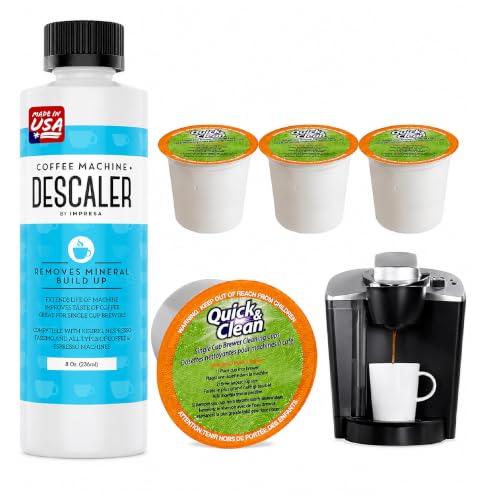
IMPRESA Coffee Machine Descaler & Cleaning Bundle…
- Comprehensive Cleaning Kit: IMPRESA offers a meticulous maintenance solution for coffee machines with its Coffee Machine Descaler…
- Long-Lasting Descaler Solution: Our descaler for coffee maker effectively removes limescale and mineral buildup. Regular use every…
- Enhance Coffee Flavor: The coffee machine cleaner included in our kit eliminates oils and residues, removing bitterness for improv…
As an Amazon Associate I earn from qualifying purchases.
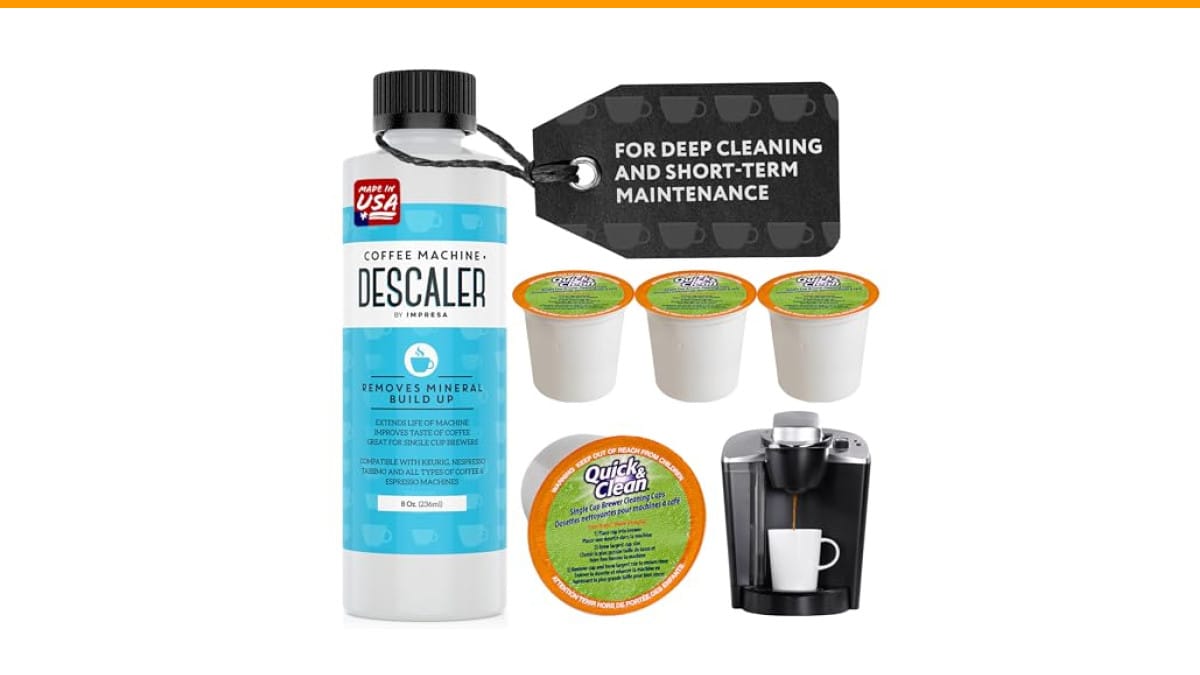
One purchase worth making before you buy anything else is a proper cleaning kit. The IMPRESA Coffee Machine Descaler & Cleaning Bundle handles both mineral scale and coffee oil residue, two problems that cause most Keurig breakdowns. It’s compatible with K-Duo and K-Cup brewers, and the included pods work weekly to keep flavor clean between deep descales.
Start Here: Match the Accessory to Your Keurig Model
Keurig made three main generations of machines, and they are not interchangeable. Buying a K-Cup holder or water filter without knowing your generation is how you end up with a drawer full of useless plastic.
Keurig 1.0 (pre-2026): These older machines read a simple barcode on the pod rim. They accept any K-Cup, including third-party brands and most reusable pods. The K-Mini, K15, and original K-Classic fall into this group. Accessories are easy here — almost everything works.
Keurig 2.0 (2026-2026): This generation added DRM-style technology. The machine reads a proprietary code and rejects pods it doesn’t recognize. That means many reusable pods and off-brand K-Cups simply won’t brew. If you own a K250, K350, or K460, you need a reusable pod specifically labeled for 2.0 compatibility, or you’ll get the dreaded ‘not recognized’ error.
K-Supreme and K-Elite (2026-present): Modern machines dropped the DRM restriction. They brew almost anything, but they added a MultiStream technology that changes water distribution. A reusable pod designed for older machines may brew weak coffee because the water doesn’t soak the grounds evenly. Look for reusable pods that explicitly mention K-Supreme compatibility.
Here’s the practical rule: before you buy any accessory, flip your machine over and find the model number. Then check the product listing for that exact number. If a listing says ‘compatible with most Keurig models,’ treat it with suspicion. The safest bets are accessories that list your specific model in the title.
For a deeper look at a common modern machine issue, see our guide on K-Supreme brew volume problems.
Diagnose Your Coffee Problem Before You Buy Anything
Most people buy a new accessory because their coffee tastes bad or the machine acts up. But the accessory rarely fixes the root cause. Let’s match symptoms to solutions.
Weak or Sour Coffee? Fix Extraction, Not the Machine
If your coffee tastes watery or sour, the water is passing through the grounds too fast. You don’t need a new machine. You need to slow down extraction.
The cheapest fix is a reusable K-Cup with a finer mesh filter. The standard Keurig paper pod uses a coarse grind that extracts quickly. A stainless steel reusable pod lets you use a finer grind, which increases contact time and pulls more flavor out of the beans. Start with a grind size similar to table salt, not powder. Too fine, and you’ll clog the mesh.
Another culprit is stale coffee. If you’re using pre-ground supermarket coffee in a reusable pod, it’s likely weeks old. Buy whole beans and grind them right before brewing. The difference is night and day.
Finally, check your brew size. A K-Elite with a 6-ounce cup setting will produce stronger coffee than a 10-ounce setting with the same pod. Adjusting the serving size is a free fix you can test right now.
Leaking or Messy Brews? The Pod and Basket Solution
A leaky Keurig usually isn’t a broken pump. It’s a pod that doesn’t seal properly. The puncture needle pierces the pod, but if the pod sits too high or too low, water escapes around the rim.
Reusable pods are the usual culprit. Many third-party pods have a slightly different rim thickness than official K-Cups. That half-millimeter difference breaks the seal. If you see water pooling under the pod holder, try a different reusable brand — one with a silicone gasket around the rim. The silicone compresses and creates a proper seal.
Another cause is a clogged exit needle. Coffee grounds accumulate inside the needle that pierces the bottom of the pod. Over time, this restricts flow and causes backup. A simple cleaning brush, one with stiff bristles, clears this in about 30 seconds. This is a maintenance accessory, not a fun upgrade, but it solves more ‘leaking’ problems than any replacement part.
The Essential Accessory Tier List (Budget to Premium)
Let’s be realistic about what you actually need. Here’s how to choose Keurig accessories based on your budget and your willingness to maintain them.
Under $15: Reusable Pods, Brushes, and Basic Filters
This tier is where you fix functional problems. A good stainless steel reusable K-Cup costs between $8 and $12. Look for one with a fine mesh and a silicone ring. Avoid the cheap plastic ones — they crack within a month and impart a plastic taste to your coffee.
A needle cleaning brush costs about $5. It’s a thin, rigid brush that fits into the pod holder’s exit needle. You’ll use it more than you think. Also in this tier: a simple charcoal water filter for your reservoir. These last about two months and reduce chlorine taste. They don’t soften water, but they improve flavor noticeably if your tap water is heavily chlorinated.
Skip the fancy pod storage carousels at this price. They’re usually flimsy and hold fewer than 12 pods. You’ll outgrow them fast.
$15–$40: Storage Drawers, Frothers, and Water Filters
Once your machine works reliably, you can think about convenience. A countertop K-Cup drawer or turntable in this range holds 30-50 pods. The best ones have a clear lid so you can see what’s inside. A rotating turntable works well if you have counter space; a drawer slides under the machine if you don’t.
A milk frother is the most common ‘upgrade’ purchase. The cheap battery-operated whisk models ($15) work fine for hot milk but struggle with cold foam. A standalone electric frother ($30-$40) heats and froths simultaneously, which is what you want for lattes. It’s not a necessity, but it’s the single accessory that turns a Keurig from a black-coffee machine into a latte machine.
For water quality, a pitcher filter (like a Brita) is more effective than the in-reservoir charcoal stick. It removes more contaminants and you can use it for your kettle too. It takes up counter space, so weigh that trade-off.
$40+: Carafes and Advanced Cleaning Kits
If you brew for more than one person, a thermal carafe is worth the money. The K-Duo and K-Elite have carafe options, but the included glass carafes lose heat fast. A double-walled stainless steel carafe keeps coffee hot for hours without a hot plate, which also means no burnt taste.
Advanced cleaning kits fall into this tier because they bundle descaler with cleaning pods. The IMPRESA bundle is a good example — one 8-ounce descaler bottle gives you two treatments, and the four pods handle weekly oil removal. This kit costs more than a single bottle of vinegar, but it’s formulated for coffee machines and won’t leave a residual smell. Vinegar works in a pinch, but it can damage internal seals if used too frequently.
Reusable K-Cups: The Real Cost and Waste Breakdown
People choose reusable pods to save money and reduce waste. Both goals are valid, but the math isn’t as obvious as it seems.
A box of 24 name-brand K-Cups costs roughly $18. That’s $0.75 per cup. A reusable pod costs about $10 and lasts for years if you don’t lose it. A 12-ounce bag of decent whole beans costs around $15 and makes about 20 cups using a standard 2-tablespoon scoop. That’s $0.75 per cup too — essentially the same price as K-Cups.
Wait, that doesn’t save money. Here’s the catch: with a reusable pod, you control the dose. You can use 1.5 tablespoons instead of 2, which stretches the bag to 26 cups and drops the cost to $0.58 per cup. Or you can buy beans in bulk (2-pound bags) and get closer to $0.45 per cup. The savings appear when you adjust your habits, not automatically.
The environmental math is clearer. A K-Cup is a #5 plastic shell with an aluminum foil lid and a paper filter. The plastic is technically recyclable, but most municipal programs don’t accept it because of the mixed materials. Over a year, a daily K-Cup user creates about 8 pounds of plastic waste. A reusable pod creates zero plastic waste from the pod itself. The coffee grounds go in your compost or trash.
One honest caveat: reusable pods require cleaning. If you’re the type who tosses the pod and walks away, a reusable pod will sit in your sink and breed mold. You need to rinse it immediately after use, or at least within a few hours. If that sounds like a chore you’ll skip, stick with disposable K-Cups and focus on other accessories.
Compatibility Cheat Sheet for Keurig 1.0, 2.0, and K-Supreme
Let’s make this simple. Here’s a table that shows which accessories work with which machine generations. Use it before you add anything to your cart.
| Accessory | Keurig 1.0 (pre-2026) | Keurig 2.0 (2026-2026) | K-Supreme / K-Elite (2026+) |
|---|---|---|---|
| Reusable K-Cup (standard mesh) | Works | Often blocked by DRM | Works, but may brew weak |
| Reusable K-Cup (2.0 compatible) | Works | Works | Works |
| Pod storage drawer / turntable | Works | Works | Works |
| Milk frother (standalone) | Works | Works | Works |
| Water filter (in-reservoir) | Check size | Check size | Check size |
| Thermal carafe (brand-specific) | Rare | Rare | K-Elite / K-Duo only |
| Descaling solution | Works | Works | Works |
| Needle cleaning brush | Works | Works | Works |
The ‘check size’ entries matter more than people think. A reservoir water filter for a K-Mini is shorter than one for a K-Elite. If you buy the wrong length, it floats or blocks the water intake. Measure your reservoir depth before ordering.
For 2.0 owners, the DRM issue is the biggest trap. Many third-party reusable pods claim 2.0 compatibility but fail after a few uses. Read recent reviews — not the overall rating — to see if buyers report the ‘not recognized’ error. If you see that word in reviews, move on to another brand.
Maintenance Accessories That Prevent Costly Repairs
Keurig machines fail for predictable reasons. Scale buildup blocks the heating element, and coffee oils clog the needles. Both are preventable with the right accessories.
Descaling is the most important maintenance task. Hard water leaves calcium deposits inside the boiler. Over time, these deposits insulate the heating element, making it work harder and eventually fail. A descaling solution breaks down these minerals. You should descale every three to four months, or more often if you have very hard water. The IMPRESA descaler is a solid choice because the 8-ounce bottle splits into two treatments, so you know exactly when to do the next one.
Cleaning pods are the second line of defense. They contain a mild detergent that dissolves coffee oils. These oils go rancid over time and make your coffee taste bitter or stale, even with fresh beans. Use one cleaning pod weekly, or at least every time you switch coffee flavors. If you only drink one type of coffee, monthly is fine.
Don’t forget the external parts. A damp microfiber cloth wipes down the drip tray and the exterior. The drip tray collects overflow and splatter, and if you leave it wet, it gets slimy. Remove it and wash it with dish soap weekly. This isn’t an accessory purchase — it’s a habit — but it prevents the most common complaint about Keurig machines: the smell.
If your machine is already showing signs of scale, like a slow brew or a loud boiling sound, check our troubleshooting guide for persistent descale lights before you call customer support.
The 5-Minute Daily Routine to Keep Your Station Clean
A clean machine makes better coffee and lasts longer. Here’s a routine that takes less time than brewing your second cup.
- Rinse the reusable pod immediately. After brewing, pop out the pod, knock the grounds into the trash, and rinse the basket under hot water. 20 seconds, done.
- Wipe the drip tray. Use a paper towel or a dedicated cloth to wipe up any splatter. This prevents sticky residue from building up.
- Empty the pod bin. If you use disposable K-Cups, empty the used-pod container when it’s half full. Don’t wait until it overflows.
- Check the water reservoir. Top it off with fresh water. Don’t leave it empty, and don’t let water sit in it for more than a day or two — it picks up a flat taste.
- Run a water-only cycle before your first cup. This flushes any residual oils from the previous day’s brew. It takes 30 seconds and noticeably improves flavor.
That’s it. The weekly routine adds a needle brush cleaning and a cleaning pod cycle. The monthly routine adds a full descale. If you stick to this, you’ll avoid 90% of the repair issues that send people to buy a new machine.
Frequently Asked Questions: Model-Specific Answers
Can I use a reusable K-Cup in a Keurig 2.0 machine?
Only if the reusable pod is specifically marked as 2.0 compatible. The 2.0 machines use optical recognition to verify pods. Standard reusable pods often have a rim that doesn’t reflect light correctly, triggering the ‘K-Cup not recognized’ error. Brands like Perfect Pod and EZ-Cup make 2.0-compatible versions. Read the product title carefully — if it doesn’t say 2.0, it probably won’t work.
Why does my Keurig K-Elite brew weak coffee even with a fresh pod?
Three likely causes. First, the exit needle is clogged with coffee grounds, restricting flow. Clean it with a brush. Second, you’re using the ‘Strong’ brew setting but with a larger cup size — the ‘Strong’ setting only adds about 30 seconds of steeping time, not more coffee. Third, your machine needs descaling; scale buildup reduces water temperature, which under-extracts the coffee. Descale first, then test.
What’s the difference between a cleaning pod and a descaling solution?
Cleaning pods remove coffee oils and residue from the brew path. They taste like nothing and contain a mild detergent. Descaling solution removes mineral scale (calcium, lime) from the internal heating element and water lines. You need both. Cleaning pods handle flavor issues; descaling prevents mechanical failure. Using one instead of the other leaves the machine half-dirty.
Are cheap generic water filters as good as Keurig brand filters?
For basic chlorine removal, yes. Generic charcoal filters work about the same. The difference is fit and lifespan. Keurig brand filters are sized precisely for each reservoir, so they sit correctly. Some generic filters are slightly too short or too wide, which means they float or block the intake valve. Check the dimensions against your reservoir depth. If the generic fits, it’s fine. If it doesn’t, the $2 savings isn’t worth a clogged machine.
Does a milk frother work with any Keurig model?
Yes, because a standalone frother doesn’t connect to the machine. It’s a separate device. You brew coffee into your mug, then froth milk separately and pour it in. The only Keurig models with built-in frothers are the K-Cafe and K-Latte, but even those benefit from a standalone frother for cold foam or larger batches. If you want a latte, buy a standalone frother — it’s cheaper than upgrading your whole machine.
Final Verdict: The Only 3 Accessories You Truly Need
After all this diagnosis, here’s the short list. If you buy nothing else, buy these three.
- A reusable K-Cup with a silicone rim. It fixes weak coffee, saves you from buying disposable pods, and works with most modern machines. Budget $10-12.
- A needle cleaning brush. It prevents clogging and leaking. It costs $5 and takes 30 seconds to use. This is the highest-ROI purchase you can make.
- A descaling solution and cleaning pod bundle. The IMPRESA kit covers both maintenance tasks for months. It’s the difference between a machine that lasts 2 years and one that lasts 5.
Everything else — pod storage, frothers, carafes, fancy filters — is a convenience upgrade. Buy those only after the basics are handled and you know your machine brews clean, hot, consistent coffee. That’s how you choose Keurig accessories without wasting money on a drawer full of gear you don’t need.
Products related to this article
Sponsored / affiliate links. As an Amazon Associate I earn from qualifying purchases. I may earn additional commission from eligible campaigns.