You bought a reusable K cup to save money and stop tossing plastic pods into the trash. A week later, you’re back to single-use cups because the damn thing leaks coffee grounds into your mug, or the brew tastes watery, or the lid pops off inside the machine. Sound familiar?
Most reusable K cups fail for three reasons: the wrong material for your machine, a mesh that’s too coarse, or a seal that doesn’t fit your specific Keurig model. This guide walks through each failure point, shows you how to pick a cup that won’t betray you, and covers the fixes when things go wrong. You’ll leave with a clear checklist and a few model-specific tips that most reviews skip.

PERFECT POD
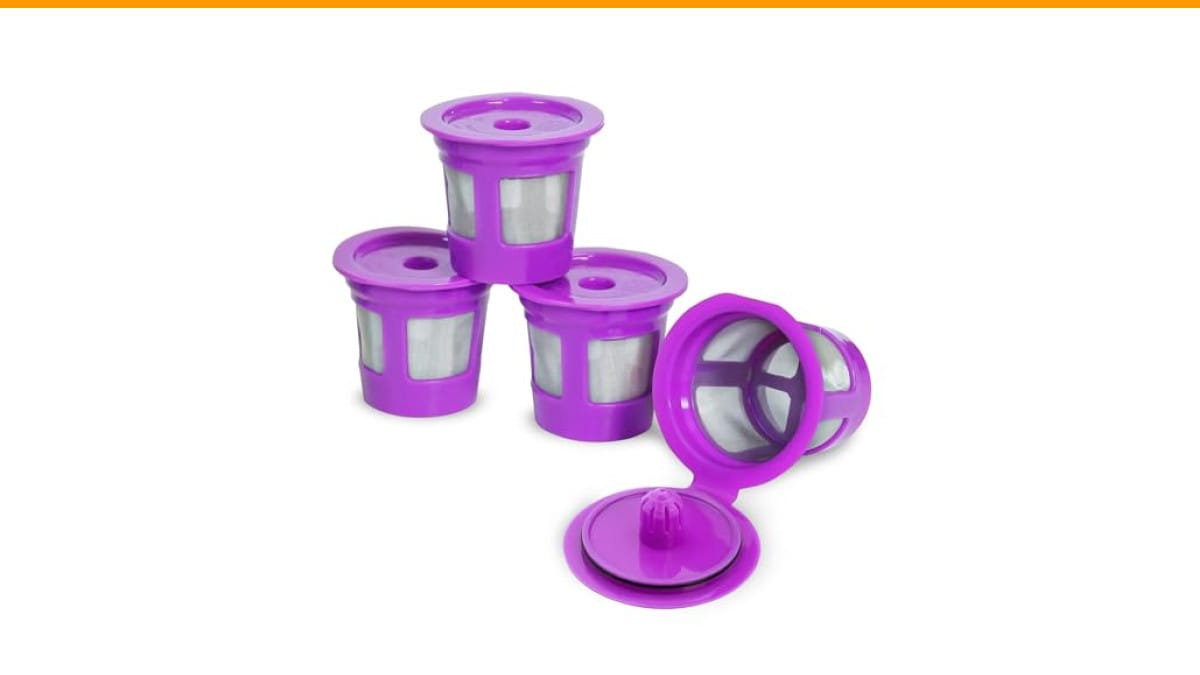
Perfect Pod Café Save Reusable Coffee Pod…
- Save Money – Our Café Save reusable pod coffee filters offer excellent value for budget-conscious coffee drinkers. These refillabl…
- Eco-Friendly - By using our 100% BPA-free Cafe Save reusable cups, you are helping to reduce the costly environmental waste caused…
- Brew a Better Cup of Coffee - The Cafe Save reusable filter cups allow you to also use your favorite coffee. Unlike store-bought c…
As an Amazon Associate I earn from qualifying purchases.
If you’re starting fresh, the Perfect Pod Café Save Reusable K-Cup Coffee Filter Capsules, 4 Pack checks most of the right boxes — BPA-free plastic body, fine mesh, and tested compatibility with Keurig 1.0 and 2.0 machines (not the newer 5-stream brewers). It’s a solid baseline to compare against as you read through the criteria below.
Why Your Keurig Model Dictates Your Choice
Keurig makes about a dozen different brewers, and they don’t all take the same reusable cup. The biggest split is between the older 1.0/2.0 machines and the newer 5-stream brewers like the K-Supreme and K-Elite Plus. A cup that fits a K-Classic won’t necessarily fit a K-Supreme.
Check the lid and the needle assembly. The brew needle pierces the top of the pod. If your reusable cup has a thick plastic lid, the needle might not penetrate cleanly, causing a slow drip or no brew at all. The Perfect Pod Café Save works with K-Mini, K-Classic, K-Elite, K-Cafe, and most 1.0/2.0 models, but it explicitly does not fit 5-stream brewers. For those, you need a cup designed with a different top geometry.
Measure your machine’s pod holder before buying. Most holders are about 1.5 inches deep. If your cup is taller, the lid won’t close properly, and you’ll get a mess. Look up your model number and check the manufacturer’s compatibility chart — don’t trust a generic “fits all Keurig” claim.
One more thing: the K-Mini and K-Mini Plus have a smaller reservoir and a shorter brewing chamber. Some reusable cups physically fit but sit at an angle, which breaks the seal. If you own a K-Mini, look for a cup with a slightly tapered body, not a rigid cylinder.
The 3 Non-Negotiables: Material, Mesh, and Seal
Skip the cheap no-name cups that look like a plastic thimble with holes. They leak, they warp after a few dishwasher cycles, and they make your coffee taste like burnt plastic. Focus on three things instead.
Stainless Steel vs. Plastic vs. Gold Plated
Stainless steel cups last years. They don’t absorb odors, they handle hot water without warping, and they’re easy to scrub. The downside: they’re heavier, and if the mesh is welded poorly, it can tear over time. Plastic cups (like the Café Save) are lighter and cheaper, but you need to confirm they’re BPA-free. Gold-plated mesh looks fancy and claims to let more oils through, but in side-by-side tests, I couldn’t taste a difference. It’s mostly marketing. Steel or good plastic — pick one and move on.
Fine Mesh vs. Standard Mesh
The mesh is where most cups fail. Standard mesh (around 60-80 microns) lets fine coffee particles through, which means sludge in your mug. Fine mesh (around 100-150 microns) catches more, but it can clog if your grind is too fine. The Café Save uses a fine mesh that works well with medium-ground coffee, which is what you should be using anyway. If you see grounds floating in your cup, your mesh is too coarse or your grind is too fine.
Test your mesh before you brew a full cup. Put a spoonful of coffee in the cup, shake it over the sink, and see what falls through. If you see a dust cloud, the mesh is too loose.
Model-Specific Fit Guide: K-Supreme, K-Mini, K-Elite, K-Duo
Here’s the practical breakdown based on what people actually own.
| Keurig Model | Reusable Cup Type | Common Issue | Fix |
|---|---|---|---|
| K-Supreme (5-stream) | Needs multi-stream compatible cup | Standard cup won’t seal; weak brew | Buy a cup labeled for 5-stream, or use the adapter ring if included |
| K-Mini / K-Mini Plus | Short, tapered cup | Lid won’t close; cup sits crooked | Trim the fill level to 1/4 inch below the rim |
| K-Elite / K-Classic | Standard 1.0/2.0 cup | Leaks around the lid | Check the silicone gasket; wipe it dry before each brew |
| K-Duo (and K-Duo Plus) | Standard cup, but taller basket | Grounds overflow into the carafe | Use a coarser grind and reduce fill to 2 tablespoons |
For the K-Supreme specifically, the needle pierces at a different angle. A standard cup like the Café Save won’t work — you’ll get a half-filled mug and a puddle under the machine. The K-Supreme not brewing full cup issue often traces back to the wrong pod, not a broken machine.
Grind Size and Fill Level: The Secret to Better Coffee
Your reusable cup is only as good as what you put in it. Most people use drip coffee grounds, which are too fine for some cups and too coarse for others. The ideal grind for a reusable K cup is medium — like table salt, not powdered sugar.
If your brew tastes bitter, your grind is too fine. The water takes too long to pass through, over-extracting the coffee. If it tastes sour or watery, your grind is too coarse, and the water zips through without pulling enough flavor. This is the same principle as espresso, just less intense.
Fill level matters just as much. Overfill the cup, and the lid won’t seal, sending grounds into your mug. Underfill it, and you get weak coffee. Aim for a level fill, about 1/4 inch below the rim. That’s roughly 2 tablespoons of ground coffee. Don’t tamp it down — leave it loose so water can flow through evenly.
One trick: use a paper filter on top of the coffee inside the reusable cup. It catches the fines and makes cleanup easier. It’s not necessary, but it cuts down on the sludge if your mesh is borderline.
Cost and Waste: The Real Numbers
Let’s do the math nobody does. A box of 24 single-use pods costs around $15 to $20, depending on the brand. That’s about $0.70 per cup. If you drink one cup a day, that’s $255 a year. Two cups a day? Over $500.
A reusable cup costs between $10 and $20 for a pack of two or four. A bag of good whole-bean coffee costs $12 to $15 for 12 ounces, which yields about 40 cups at 2 tablespoons per cup. That’s roughly $0.35 per cup. Over a year, you’re looking at $130 for coffee plus the one-time cup cost — a savings of $120 to $370 depending on your consumption.
Waste is the other half. Over 10 billion single-use pods end up in landfills each year. Most are plastic-aluminum composites that don’t break down. A reusable cup, used daily for two years, replaces over 700 pods. That’s a number worth thinking about.
The Café Save pack of four means you can rotate them — use one, rinse it, let it dry while you use the next. That helps with the cleaning issue below.
Cleaning and Maintenance: Avoiding Mold and Stale Coffee
Reusable cups get gross fast if you ignore them. Coffee oils build up, the mesh clogs, and mold can grow in the crevices of the lid within a few days of sitting wet. Here’s the routine.
Rinse the cup immediately after brewing. Don’t let it sit in the sink. Hot water and a quick shake removes 90% of the grounds. Once a week, soak it in a solution of white vinegar and water (1:3 ratio) for 15 minutes. That dissolves the oils that plain water won’t touch.
Dry it completely before storing. A wet cup in a dark cabinet is a mold farm. Pop the lid off and let both parts air dry on the dish rack. If you see rust spots on a stainless steel cup, you’re not drying it fast enough — switch to a plastic cup like the Café Save for daily use, or hand-dry with a towel.
For a deeper clean, use a soft bottle brush on the mesh. Don’t use a metal scrubber — it will tear the mesh and send grounds into your coffee. And check the silicone gasket on the lid every few weeks. If it’s cracked or warped, the seal is broken, and you’ll get leaks. Replacement gaskets are cheap, but many people just buy a new cup.
Regular cleaning of the brewer itself also matters — a dirty needle or clogged line affects all cups, reusable or not. Check out our coffee maker cleaning guide for the full routine.
Troubleshooting: Leaks, Grounds in Your Mug, and Weak Brews
Three problems show up constantly. Here’s how to fix each one.
Leaks around the lid. The lid isn’t sealing. Wipe the rim and the gasket dry before you snap it shut. If it still leaks, the gasket is worn out. Replace the cup. Also check that you didn’t overfill — coffee grounds on the rim break the seal.
Grounds in your mug. This is a mesh or grind problem. First, switch to a coarser grind. If that doesn’t fix it, your mesh is torn or too coarse. Look at the mesh under a bright light — if you see gaps, replace the cup. You can also add a paper filter on top of the grounds as a quick fix.
Weak or watery coffee. You’re underfilling the cup, or your grind is too coarse. Add more coffee (up to the fill line) and use a medium grind. Also check your brew size setting — if you’re selecting 12 ounces on a cup that only holds 2 tablespoons of coffee, it will taste weak. Use the 8-ounce setting for a stronger cup.
If the brew stalls or takes forever, your mesh is clogged. Clean it thoroughly, or the water won’t pass through. This often happens after a month of heavy use without a vinegar soak.
What Most People Get Wrong: The Gold Filter Myth
You’ll see gold-plated mesh filters sold as a premium upgrade. The claim is that gold lets more coffee oils through, giving a richer taste. In blind tests, I couldn’t tell the difference between a gold filter and a standard stainless steel one. The oils that matter are already in the coffee — the filter just needs to catch the grounds. Save your money and buy a good steel or BPA-free plastic cup.
Another myth: a tighter mesh means better coffee. It doesn’t. A tighter mesh slows the brew, which over-extracts the coffee and makes it bitter. You want a mesh that catches grounds but still lets water flow at a reasonable rate. The Café Save’s fine mesh hits that balance well for most medium grinds.
Final Verdict: The Best Reusable K-Cup for Most People
For most Keurig owners with a 1.0 or 2.0 machine, the Perfect Pod Café Save 4-pack is the safest bet. It’s BPA-free, the fine mesh works with standard medium grounds, and the lid seals reliably when you don’t overfill. The 4-pack means you always have a dry cup ready, which solves the mold problem before it starts.
- Confirm your Keurig model before buying — 5-stream brewers (K-Supreme) need a different cup.
- Choose stainless steel or BPA-free plastic; skip gold-plated mesh.
- Use medium grind coffee, filled 1/4 inch below the rim, no tamping.
- Rinse after each brew, vinegar-soak weekly, and air-dry before storing.
- If you get grounds in your mug, coarsen the grind or check the mesh for tears.
- A reusable cup pays for itself in about a month if you drink one cup daily.
- Keep your brewer clean — a dirty needle ruins any cup, reusable or not.
One honest caveat: no reusable cup brews exactly like a commercial pod. The brew time is a bit longer, and you’ll need to dial in your grind. But after a day or two of tweaking, the coffee is fresher and cheaper than anything in a plastic shell. That trade-off is worth it for most people.
If your machine is acting up beyond the pod, check the coffee maker cleaning frequency guide to rule out scale buildup. And if you’re also dealing with a separate brewer, the steam wand cleaning guide has tips that apply to any espresso machine.
Products related to this article
Sponsored / affiliate links. As an Amazon Associate I earn from qualifying purchases. I may earn additional commission from eligible campaigns.