You just packed up your kitchen for a move, or maybe you’re putting the espresso machine away for a few months while you travel. You think you can just unplug it, wipe it down, and shove it in a closet. Three months later you pull it out, and the first shot tastes like old coffee oil and mildew. The group head is clogged, and there’s a faint musty smell you can’t get rid of.
Storing an automatic espresso machine is not the same as storing a toaster. These machines hold water, they hold coffee oils, and they have internal pumps and valves that will seize up if left with stale water inside. This guide walks you through the entire process, from draining every drop of water to choosing the right cover. You’ll know exactly what to do before you store it, and what to do when you pull it back out.

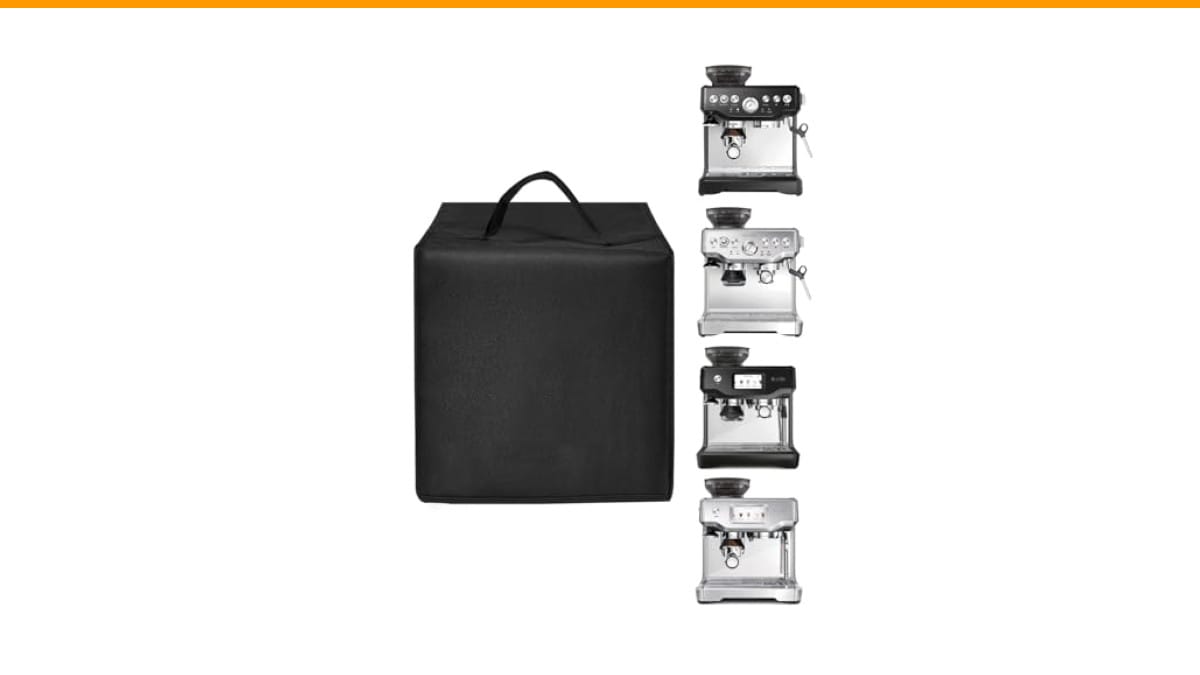
EiiJugaloo
Espresso Machine Cover for BES870XL/ BES880BSS/BES876BSS Coffee…
- Coffee Maker Cover size:15.8"W x 15.4"D x 15.8"H (40x39x40cm),cover compatible with Express Espresso Maker BES870XL/BES870BSXL/BES…
- Waterproof Nylon: Cover made of durable heavy duty 600D nylon, it is waterproof, scratch resistant and anti-static; it provides re…
- Kitchen Protective Cover:Keep the kitchen and dining room clean; avoid the trouble of dust, oil smoke and cooking steam; prolong t…
As an Amazon Associate I earn from qualifying purchases.
If you’re storing a Breville model like the BES870XL or BES880BSS, a fitted cover makes a big difference. The EiiJugaloo espresso machine cover is sized for those specific machines, and it’s made from waterproof 600D nylon. It keeps dust and kitchen grease off the machine while it sits, and the bottom opening lets air circulate so moisture doesn’t get trapped inside.
Why Most People Store Their Machine Wrong
The biggest mistake is treating an espresso machine like a dry appliance. It’s not. Even after you think you’ve emptied it, there’s water sitting in the boiler, in the pump, and in the internal tubing. That water becomes a breeding ground for mold and bacteria. It also leaves mineral deposits behind as it evaporates, which can clog the tiny passages in the brew group.
Another common error is storing the machine with the portafilter locked in. The residual coffee oils in the basket go rancid, and the rubber gasket in the group head gets compressed and deformed. You’ll end up with a leaky seal on your next shot.
The third mistake is skipping the descale before storage. You might think, “I’ll just descale it when I bring it out again.” But scale that sits for months hardens into a crust that’s much harder to remove. It’s far easier to descale while the machine is still warm and the system is running.
Step-by-Step: How to Prepare Your Machine for Storage
Do this on a day when you have about an hour. You don’t need special tools, just a few things you probably already own: a descaling solution, a soft cloth, a small brush, and a towel.
- Run a full descaling cycle. Follow your machine’s instructions. This removes mineral scale while the system is still functional. If you skip this, the scale will harden and become nearly impossible to remove later. We have a detailed guide on how to descale if you need a refresher.
- Flush with clean water. Run two full reservoirs of fresh water through the machine. This clears out any remaining descaling solution, which can corrode internal parts if left sitting.
- Run a cleaning cycle on the brew group. Use a cleaning tablet or the machine’s self-clean function. This removes coffee oils from the internal lines and the group head. Oils go rancid over time and will ruin the flavor of your first shots after storage.
- Empty the drip tray and knock box. Wash them in warm soapy water and dry them completely. Don’t put them back in the machine until they’re bone dry.
- Remove and clean the portafilter and baskets. Wash them, dry them, and store them separately. Leave the portafilter unlatched. This takes pressure off the group head gasket.
- Drain the boiler. This is the step most people miss. If your machine has a hot water wand, open it and let it run until no more water comes out. For machines with a removable water tank, take it off and let the machine pump out whatever water remains in the lines. Some machines have a dedicated drain valve; check your manual.
- Dry everything you can reach. Use a microfiber cloth to wipe the interior of the water tank compartment, the drip tray area, and the group head. Leave the machine open for a few hours so any remaining moisture can evaporate.
Once you’ve done all that, the machine is ready to sit. But how you sit it matters just as much as how you clean it.
Choosing Between a Cover, a Cabinet, or a Box
You have three main options for where the machine lives during storage. Each has trade-offs, and the right choice depends on how long you’re storing it and where it’s going.
| Storage Method | Best For | Pros | Cons |
|---|---|---|---|
| Fitted fabric cover (like the EiiJugaloo) | Short-term storage (1-3 months) in the same kitchen | Protects from dust and grease; breathable; easy to put on and off | Doesn’t protect from humidity or pests; not for long-term storage |
| Closed cabinet or pantry | Medium-term storage (3-6 months) in a dry indoor space | Blocks light and dust; stable temperature | Can trap moisture if the space isn’t ventilated; hard to access |
| Cardboard box with packing material | Long-term storage (6+ months) or moving | Full protection from bumps, dust, and light | Can trap moisture if the machine isn’t completely dry; bulky |
For most home users, a fitted cover is the sweet spot. It keeps the machine clean on the counter, and you can still use it tomorrow morning if you change your mind. The EiiJugaloo cover has a handle on top, so lifting it off is easy, and it folds flat when you don’t need it. It’s not a climate-controlled vault, but it does the job for the typical break between daily use.
If you’re storing for more than a few months, skip the fabric cover and go with a cardboard box. Put the machine in a plastic bag first, but only after you’re 100% sure it’s dry. A bag traps moisture, so it’s a double-edged sword. The box protects against physical damage, and the bag protects against humidity. Just make sure the machine is completely dry before you seal it.
What to Do When You Take It Out of Storage
Don’t just plug it in and pull a shot. The machine has been sitting, and the internal seals may have dried out slightly. Here’s the restart routine that works well.
First, inspect the machine. Look for any signs of moisture, mold, or pests. If you see anything, you’ll need to clean it before running water through it. Check the power cord for damage, especially if it was stored in a box with other items.
Fill the reservoir with fresh water and run a few flush cycles without any coffee in the portafilter. This rehydrates the pump and clears out any dust that settled in the lines. Run at least two full reservoirs through the machine. The first flush might look a little cloudy; that’s normal. The second flush should be clear.
If you stored the machine with the portafilter unlatched, check the group head gasket. It might have dried out and become brittle. Run a flush and watch for leaks. If you see water dripping from the sides of the portafilter when you lock it in, the gasket may need replacing. It’s a cheap fix and takes about five minutes.
Finally, pull a blank shot (no coffee) and check the temperature and flow. If everything looks normal, you’re ready to make coffee again. If the flow is slow or erratic, there might be a clog. A second descale cycle usually clears it.
If you run into problems like loud noises or leaks after restarting, these issues are common. Check our guides on loud noises and water leaks for specific fixes.
Frequently Asked Questions
How long can I store an espresso machine with water in it?
You shouldn’t. Even a week of sitting water can start growing bacteria. Two weeks is pushing it. If you know you won’t use the machine for more than a few days, drain the boiler and empty the reservoir. It takes two minutes and saves you from a nasty cleaning job later.
Can I store my espresso machine in the garage or basement?
Only if those spaces are dry and temperature-controlled. Garages and basements often have high humidity and big temperature swings, which cause condensation inside the machine. That condensation leads to rust and electrical problems. If you have no other option, put the machine in a sealed plastic bin with a desiccant pack, and check on it monthly.
Should I leave the portafilter locked in while storing?
No. The spring in the group head gasket stays compressed, and the gasket can take a set, meaning it won’t spring back to its original shape. You’ll get leaks. Also, any coffee residue left in the basket goes rancid. Take the portafilter out, clean it, and store it next to the machine.
Is it okay to store the machine on its side?
Never. Water can get into parts of the machine that aren’t designed to get wet, like the electronics or the grinder burrs. Always store the machine upright. If you’re moving, keep it upright in the car, or at least secure it so it doesn’t tip over.
Do I need to descale before or after storing?
Both, actually. Descale before storing to remove existing scale while the machine works properly. Then descale again after storage to remove any new deposits that formed from residual moisture. The second descale is usually quicker and lighter, but it’s worth doing for the sake of your machine’s longevity.
What to Remember When You Pack It Away
- Always descale and clean the machine before storage, not after.
- Drain every drop of water you can, then leave the machine open to air dry for a few hours.
- Remove the portafilter and store it separately.
- Use a fitted cover for short breaks, a cardboard box for long-term storage.
- Never store the machine on its side or in a damp space.
- When you bring it out, flush two full reservoirs of water before pulling your first shot.
- Check the group head gasket for cracks or deformation after long storage.
Storing an automatic espresso machine properly takes about an hour of work. Skipping that hour can cost you a repair bill or a machine that tastes off for weeks. Do it right, and your machine will be ready to go whenever you are. If you’re deciding between an automatic and a semi-automatic for your next purchase, our comparison of automatic vs semi-automatic machines might help you choose.
Products related to this article
Sponsored / affiliate links. As an Amazon Associate I earn from qualifying purchases. I may earn additional commission from eligible campaigns.
 Coffee Espresso Machine Handle Replacement Parts, Cafe Bracket Handle for Lidl Silvercrest CM4621 CM4218 KF5002 KF500S Barista (for 51mm Portafilter Basket - Not included)
 Linnkyfloa Coffee Espresso Maker Handle Replacement for Stovetop Moka Pot or Percolator, Black Plastic for Spare Part Compatible with Italian(9-12 Cup)
 Wrenmor Replacement Handle For Coffee Espresso Moka Stove Pot, Black Plastic Accessory Compatible With 1/3/6/9/12 Cup Sizes For Easy Installation And Long-Lasting Use(1 Cup)